
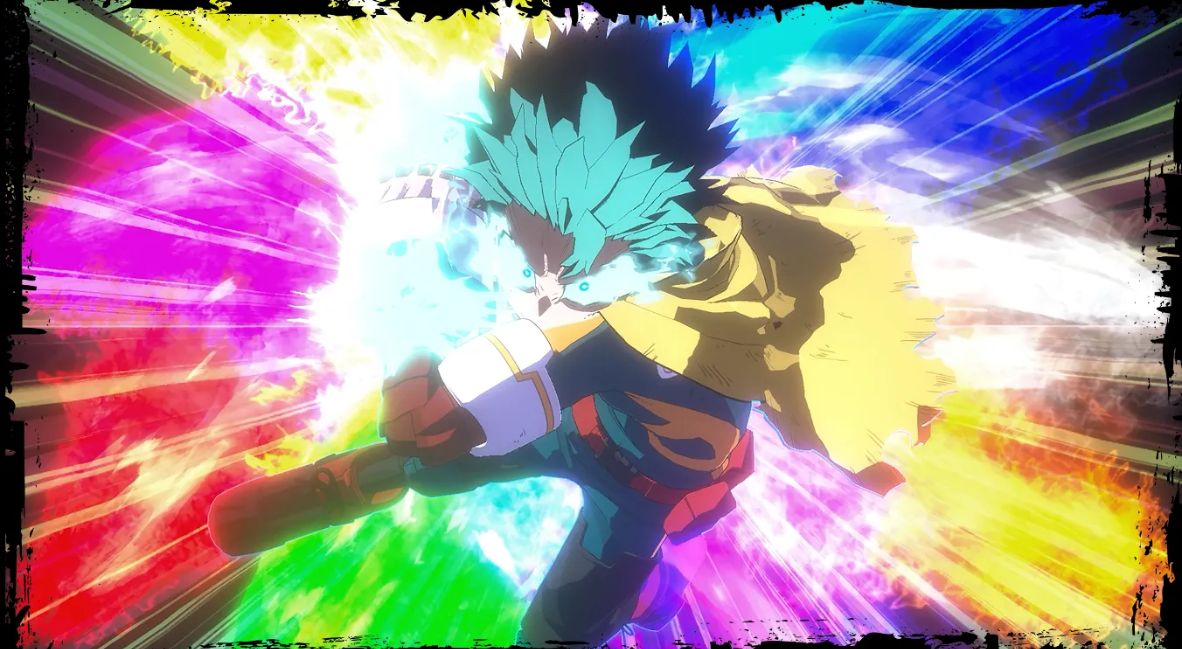
In 2014, we were introduced to Izuku Midorya and the rest of UA’s Class 1-A. In 2026, we get to experience the final battle between All For One and One For All in My Hero Academia All’s Justice, by Byking and Bandai Namco. For a series full of stellar fights and unique depictions of superpowers (or quirks), it hasn’t had the greatest track record as a type of game that’d work best for its move to video games: arena fighting.
All’s Justice is supposed to be the culmination of 10 years of Kohei Horikoshi’s work. For the most part, the game has struck something, just not gold.
My Hero Academia All’s Justice kicks off part of the way through season 7. The final battle between One For All/the heroes and All For One/villains has begun. Naturally, all best-made plans fall apart in the heat of battle. During the chaos of the Heroes trying to separate all the villains to gain the upper hand on their foes’ quirks (plus cause less damage to the city), Deku is ripped to another fight entirely.
Bakugo, Aizawa, and other heroes are now forced to deal with Shigaraki without the help of Deku. We get to play through the final fights and more in the conclusion of the timeless battle between good and evil.
The game is divided into four main modes (in addition to Multiplayer): Story mode, Team-up Missions, Archives Battles, and Hero’s Diary Missions. Each mode tackles storytelling in different ways. Story mode is your classic mode in anime fights, letting you relive the more current moments in the story.
My Hero Academia All’s Justice gives players the ability to relive their favorite series and also explore the world.
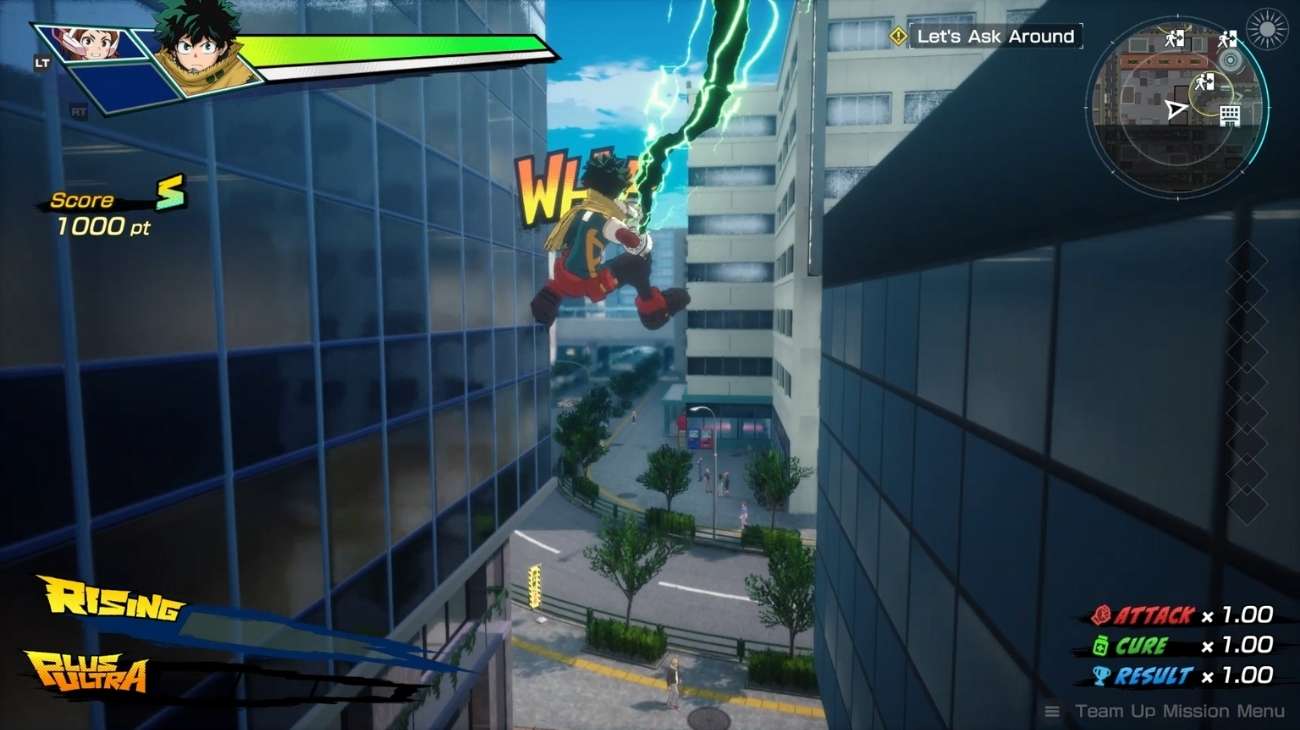
Team-up Missions are stories about class 1-A training in a VR room made by Mei Hatsume. Hero’s Diary is a spin-off of Team-up missions, giving a more personal look at interactions between class 1-A, expanded by unlocking more characters to use for Team-up Missions. Archive Battles are unlocked historical My Hero Academia fights, like All Might vs. Nomu, Shigaraki, and Kurogiri from Season 1.
As for the fighting mechanics themselves, they are surprisingly basic. Even if some heroes are designed with great inspiration for their execution as fighting characters. Yet, given how varied the quirks are used in the series, having all fighters have basically six to eight moves and combos is disappointing, to say the least.
That’s including every character having only one or two Plus Ultra moves that aren’t as epic as they could be for their ultimate moves that we’ve actually seen from the show and manga. They’re just quick flashes in the pan that result in bland mid-fight animations for some damage. Being spammable (as you can stock up 3 Plus Ultra charges) makes the weaker Plus Ultra moves even weaker.
For those who aren’t as good at fighting games, there is a mode called “normal” control mode. This executes combos for you as you hit attack buttons. Yet the “manual” mode is where you have full control of pulling off counterattacks (like a parry), your four quirk moves, or two to three basic attacks. Such a confusing naming scheme for choosing how you want to control your character.
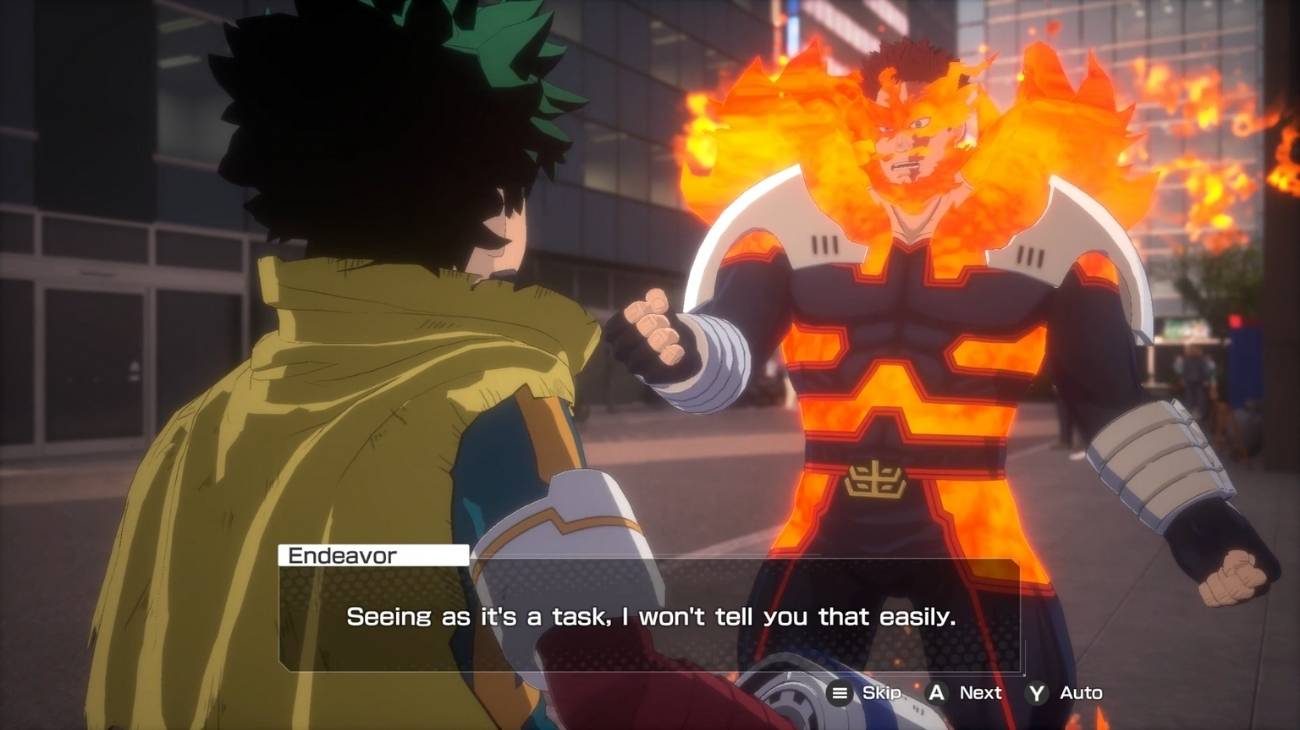
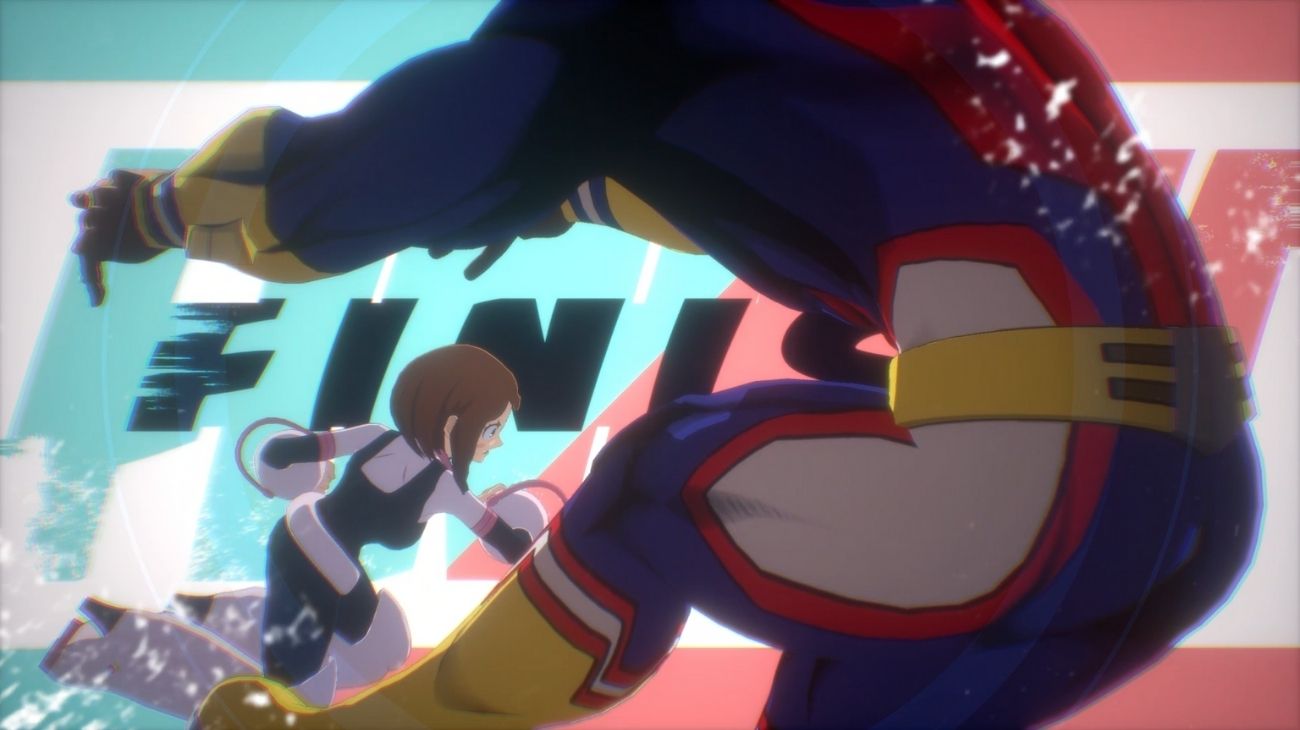
However, fights do tend to look cinematic if you get into a flow. Without many recovery options or combo stoppers, you can easily catch a foe in a destructive combo. Tie in character changes, where you can switch to an allied character mid-combo or even to execute two Plus Ultra moves back-to-back, you can quickly take an enemy down from full to near death in a matter of seconds.
Pulling it off is epic, and reminiscent of big show fights where heroes team up to take a villain down. Getting caught in one, though, as a player, is heartbreaking, as you just can really only sit there and take it if you’re out of charges to stop an attack.
Yet, as mentioned before, there are some inspired hero designs here. Lady Nagant, especially, was a lot more fun to use than expected, given that her main attack is just firing her elbow sniper. She can switch ammo types from armor-piercing to explosive on the fly. Similarly, she can charge attacks to deal more damage. Just playing her requires you to stay as far away from an opponent as possible.
On that note, fighter movement is quite clunky. They’re slow on the ground, so closing distances is an elongated process. If there is any verticality to a level, you’d better hope your fighter can jump. If not, then there will be moments where an NPC is just watching you from the top of a building until you can destroy it. With only nine stages to choose from, most of them not very different from one another, this isn’t much of an issue.
My Hero Academia All’s Justice offers a new epilogue, but ultimately retells what we have already seen.
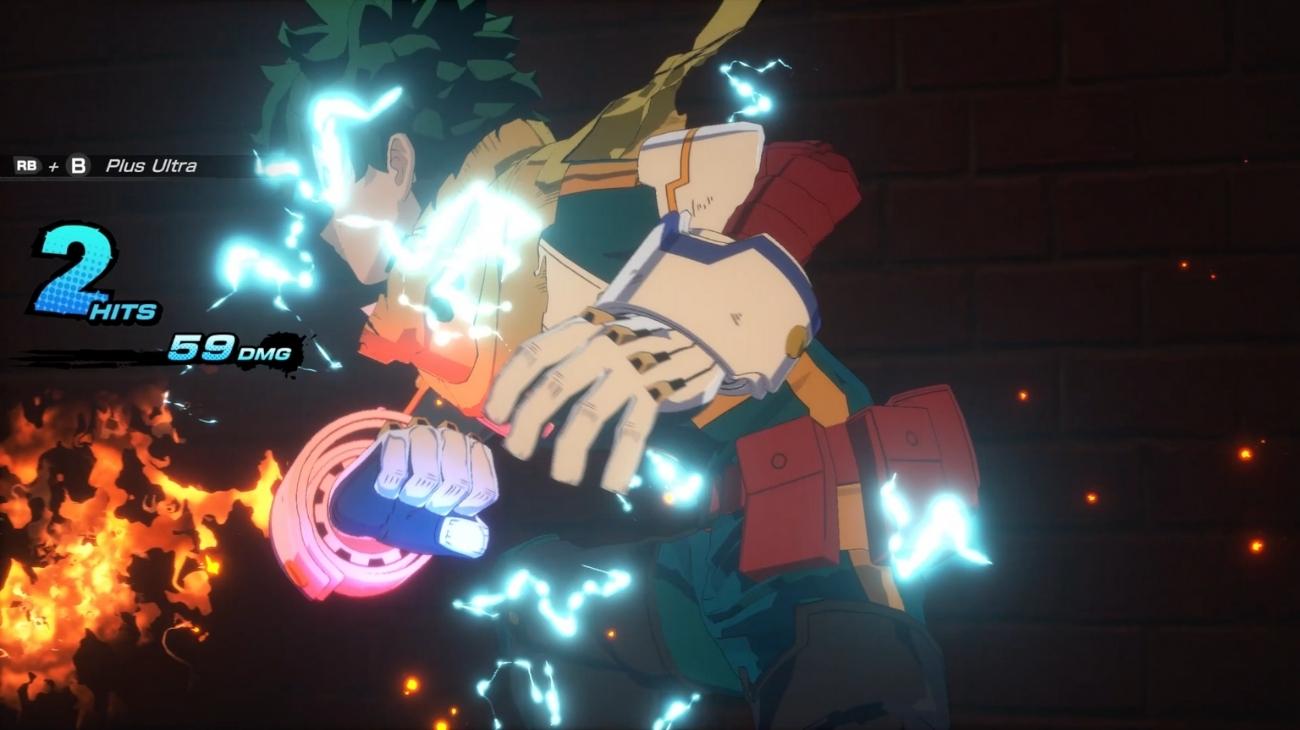
Frankly, if you’ve watched the anime through the end or read the manga, then the story mode will simply be a retelling (excluding the epilogue). Nothing really is added to the main story except for some great 3D animated cinematics. What does help, compared to other anime-based fighting games, is how well-voiced My Hero Academia All’s Justice is. That is mostly due to the anime having a stellar voice cast in both the dub and the sub. So, copying over the voice lines really just helps make every story beat more impactful.
Even during story-mode boss fights, the struggle and internal monologues players had are still emphasized. Voice lines regularly play to pull you in more to the action. The timing of their occurrence made each fight more gripping than just fighting to reach the next story beat.
What seems like a miss is the mix of GIFs and slide shows for some story beats and full 3D animations for others. Like pre-fights would be more slower-paced moments portrayed by slide shows (still with spoken lines), and post-fights will get the flashier moments to show how the fights really ended. Not just a victory splash screen and on to the next fight.
Yet the story mode is held back by keeping fights limited to basic encounters against NPCs. Only one fight out of the 15+ story battles actually feels like it’s against a big bad, and even then, its emotional beats are held back by the gameplay. To make bigger fights “tougher”, enemies are given basically a breakable shield. Once broken, they are staggered and take more damage. But until then, they barely recoil to hits unlike normal foes, and deal massive amounts of damage.
Plus, lining up two to three of the same fight back-to-back isn’t nearly as fun as the developers may have hoped. Particularly when the only change between these fights is your controlled fighter or the enemy starts and stays in their powered-up “Rising” mode for the whole fight.
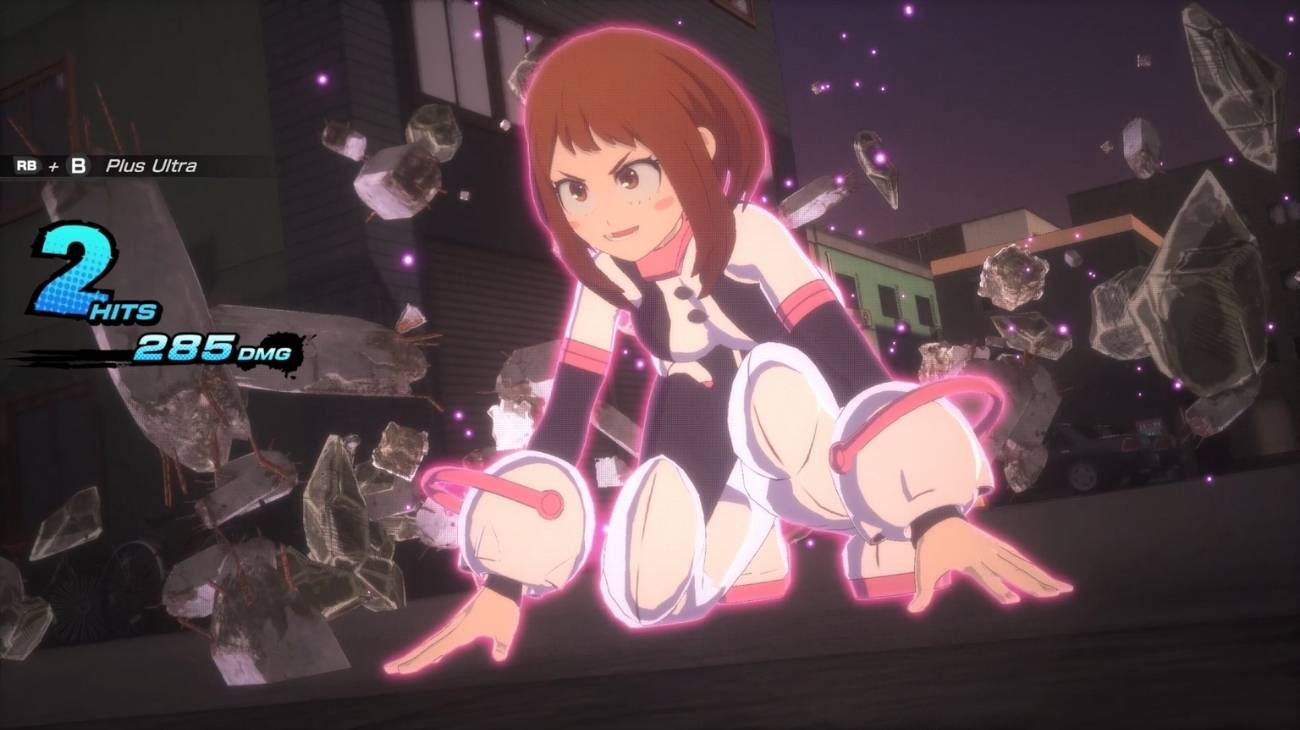
For the most part, Story Mode is a fun way to experience the climactic, action-packed fights fans expected over the course of the whole series. The worst aspects are at the end, against Shigaraki, and the final All for One battle involving all of 1-A. They’re just three to eight fights in the same scenario. Losing one fight in the sequence will send you back to square one.
Like fighting the final iteration of All for One is supposed to be Davids fighting Mega Goliath. But having to do eight fights back-to-back, no breaks, and the enemy being able to kill you before you even can react just plainly sucks. Even if the fights during retries get easier, the risk of getting to the seventh or eighth bout and getting nailed by an impossibly strong and undodgeable attack wave is just flat-out horrible design.
There are not even special ultimate “Plus Ultra” attacks to conclude the biggest battles. Your controlled fighter will just do their normal Plus Ultra attack against an enemy that basically stands there, takes it, and then insta-kills you to move on to the next round.
The Deku vs. Shigaraki fight is especially egregious since it’s the same Deku Plus Ultra move over, and over, and over again while losing his quirks. For a game to try to encapsulate the finale of a well-beloved series, it’d have been nice to see hands-on experiences of the final fights have more TLC, or just feel more epic in general than a basic anime arena fighter with good cinematics slapped on.
Archive battles, simply from the fact that they are unlocked over time by progressing Team-up Missions, makes experiencing the series’ great classic moments a little less impactful. Why not just give us free rein to play through all eight+ fights once we finish the main story? Even then, they are also limited ,just like the story mode is. Moreso having premade NPC fights than having a moment to relive a big part of the MHA history. At least with these fights, we get more arenas to fight in than in story mode. Fighting on the same rocky terrain five times in a row can get a bit rough.
The addition of more modes for extra time to be spent with 1-A is a nice addition, via Team-up Missions and Hero’s Diary Missions. Yet, their differences from the other two modes make them much weaker and ultimately hurt the overall product. Instead of being a selectable battle, Team-up Missions give you free rein in a VR version of a town.
Fights get too repetitive in My Hero Academia All’s Justice thanks to poorly optimized character movement.

This means that you can traverse buildings, help NPCs, and complete parkour challenges in what’s basically a sandbox with different missions. Other heroes, ranging from UA students, pro heroes, and Shiketsu High students, will also appear to fight you or help you complete your missions.
For how mobile many of the heroes are in the show, they are shockingly clunky to actually control in an open-area environment. Deku, especially, is almost impossible to control when using Blackwhip to swing around. No Float? No super strength jump? Nothing. Just blackwhip to get you around. Many side objectives are located on the roofs of buildings. Just to get on top of one can be numbingly irritating. Similarly, the missions themselves aren’t deep, borderline repetitive in execution.
Start the mission, get told to go to a specific area to complete some training. Fight some generic villains along with a character from the roster. Move on to the next target area, repeat until you’re done. Your health is carried over to whatever you do next, whether it be side missions or main objectives in this mode.
But to heal requires sacrificing a buff from a recruited ally once you die, or 10% of your overall mission score sucks even more. Particularly when most fights are just throwing a massive amount of enemies at you in a way that the base fighting mechanics aren’t really made for.
Like in a multi-enemy fight, you just simply can’t dodge with the right stick. That’s now the way to switch targets. And if you get caught up in a swath of attacks from multiple sources, there’s a high risk you’ll just straight up lose without any way to escape. Gone is either your progress or 10% of your score.
My Hero Academia All’s Justice is close to matching its franchise power, but falls short due to technical hiccups.
Why is the score so important? Well, that determines your overall mission grade. Mission grades grant awards for character or profile customization. There are some stellar costumes to unlock via this method. For instance, some of the unlocked costumes are the fantasy outfits from the second popularity poll (and third anime ending credits art). Plus lots of color options for base suits for all heroes and villains.
Hero Diary missions are much more chill. These are more personal stories of interactions between 1-A students in their day-to-day lives. Getting a peek at how, for example, Uraraka hangs out with Yaoyorzu and Asui outside of classes is cute. It’s not all about hero training and fighting.
These characters are humans (just with special powers). And the missions give good rewards too. Even if some of the three missions each 1-A classmate gets are just walking sims around the city or slide shows.
My Hero Academia All’s Justice fails to capture the cinematic splendor of the finale of All For One and One For All’s showdown. Bland fights, poorly optimized character movement, and repeated battles take what could’ve been the chance to create a playable form of what fans of the series have wanted.
Even the good 3D animations tend not feel worth it after struggling to beat an eight-round fight. For an anime arena fighter in general, this is definitely on the weaker end. My Hero Academia All’s Justice deserves more justice than what we get here.
My Hero Academia All's Justice
-
Rating - 6/106/10
TL;DR
My Hero Academia All’s Justice fails to capture the cinematic splendor of the finale of All For One and One For All’s showdown. Bland fights, poorly optimized character movement, and repeated battles take what could’ve been the chance to create a playable form of what fans of the series have wanted.