


Iron Lung isn’t just unique among video game adaptations. It’s unique for a wide-release major motion picture, period. Based on the video game of the same name by David Szymanski, Iron Lung is the passion project of gaming YouTuber Mark Fischbach, known online and primarily in this review as Markiplier. Markiplier’s film bypasses all traditional channels of development and release, with Fischbach self-funding the project and, initially, intending to release it in a few dozen theaters across the United States.
As it turns out, Markiplier’s fanbase is not one to be trifled with: strong demand led most, if not all, major theater chains to pick up the film, rocketing it to genuine box office success and making back its budget several times over. Such a story is all well and good, but is there anything behind the mythologizing of the Iron Lung?
The answer is an emphatic yes. Iron Lung is a remarkably accomplished debut for Markiplier behind and in front of the camera. A slow-burning submarine voyage into cosmic dread, more inspired than much of the modern horror genre, Iron Lung fundamentally trusts its audience.
Iron Lung (2026) knows how to use a slow-burning plot for peak horror.
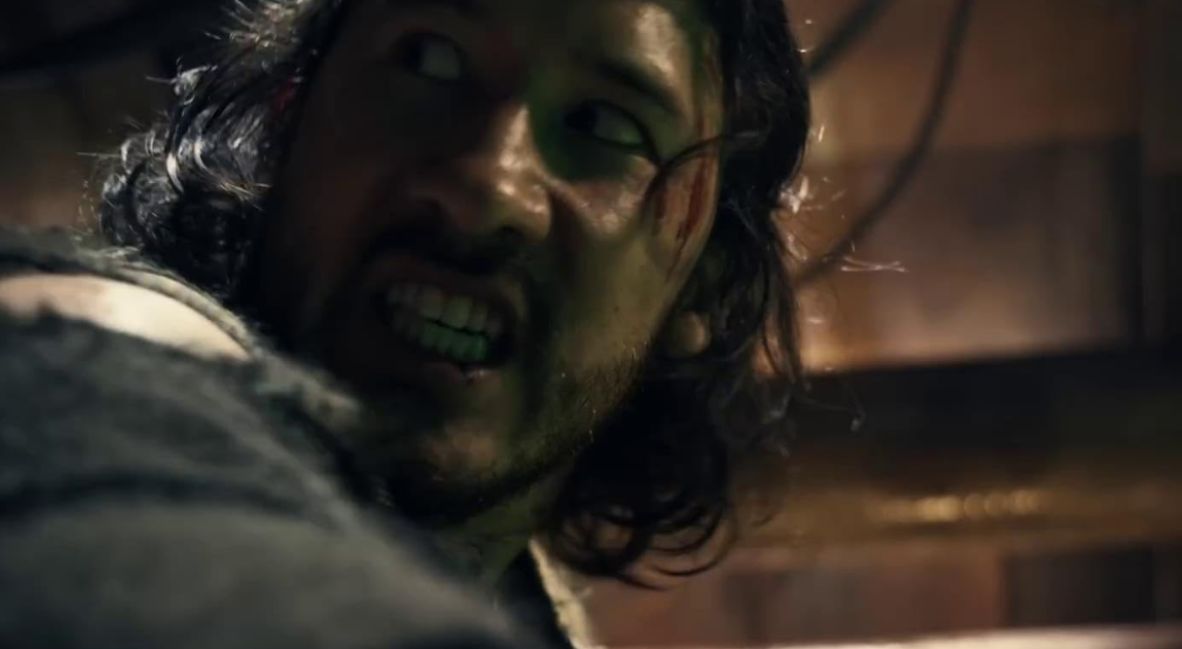
One day, in the far future, all the stars and planets disappear. In the aftermath of this event, known as “The Quiet Rapture”, the only life left is on spaceships and stations. Those left alive theorize that the key to saving life as we know it lies in the oceans of blood that have begun to form on desolate moons. Simon (Markiplier), a convict looking for freedom, is offered a chance at just that in exchange for exploring these bloody oceans.
Welded shut into a submarine where his only method of sight is an X-ray camera, Simon must use the submarine’s crude instruments to navigate the sub and take pictures of his discoveries to earn his release. What Simon discovers is that his release may not be worth what he discovers at the floor of the blood sea.
Iron Lung wastes no time getting into the thick of what it’s going to be. For the first third or so of the film, it’s a perfect adaptation of the video game. That means it’s a lot of purposeful tedium. Aside from outside calls on a speaker from Ava (Caroline Rose Kaplan), the film is nearly silent as Simon navigates the blood ocean, taking almost illegible black-and-white X-ray photographs that provide the only real hints of what exactly he’s coming up against. That isolating blind exploration is what earned as many fans of the game as it did detractors. In the film, it’s utterly necessary.
The viewer’s patience is rewarded as Simon’s routine begins to shift.
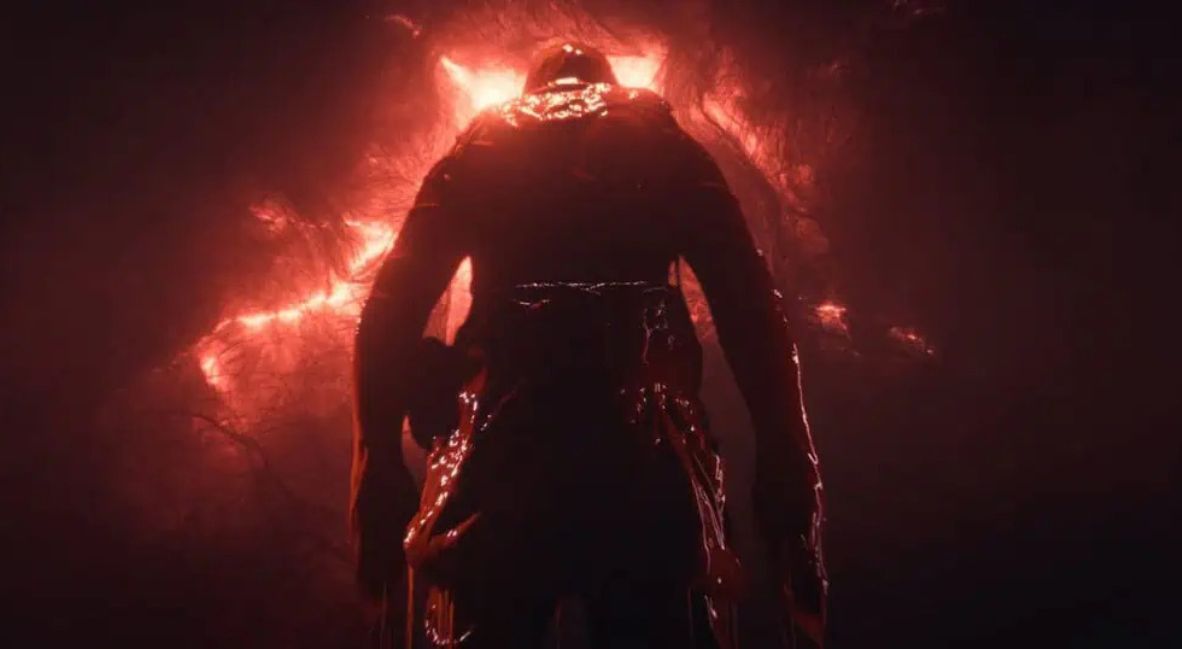
Through his recreation of the intentional mundanity of the video game’s design, Markiplier sets a baseline for what Simon’s exploration is supposed to look like so that when things start to go off the rails, it really matters. Fischbach’s script is nothing if not methodical. Information is doled out piecemeal, making the little bits of lore and character development we get feel highly important.
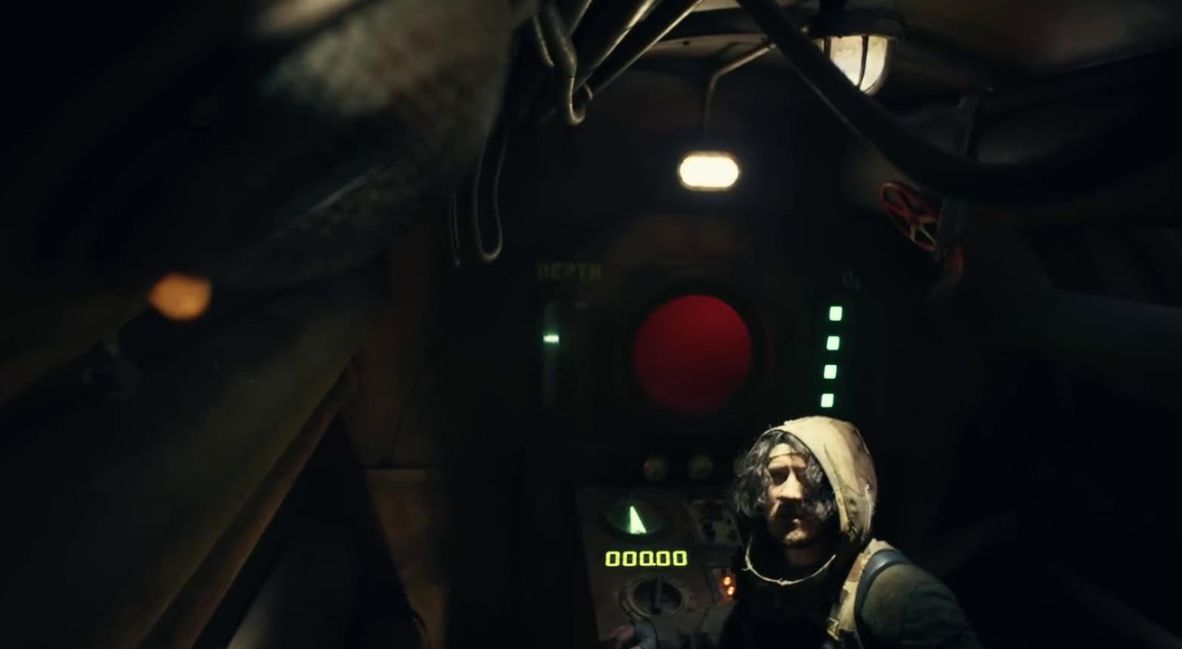
Simon’s internal struggles and the glacial buildup of the eldritch horror outside the submarine begin to mount, rewarding the viewer’s patience. The submarine, a complex set mounted on a hydraulic arm, becomes a character in and of itself. That might be obvious, considering almost the entirety of Iron Lung takes place within its confines. Still, Markiplier and cinematographer Phillip Roy never stop finding interesting ways to shoot the thing.
Through a roving camera, the use of Dutch angles, and other cinematic tricks, the “iron lung” becomes a reflection of Simon’s mind, his only respite from the horrors of the blood ocean and the prison that keeps him from the world. Its claustrophobic confines, containing little more than a control panel, a camera button, a computer, and a tiny crawlspace, wrap around the viewer like a cocoon. For Iron Lung to work, it needed to nail the submarine. The next thing it needed down pat was its lead character. How does Simon fare?
Mark Fischbach delivers convincing terror.
Fischbach is fantastic as Simon. His character is mysterious, sympathetic, and sarcastic; none of those are easy emotions to nail. Yet Markiplier does it with aplomb while adding in the hardest emotion of all to portray- fear. Fischbach is so convincing at portraying his mounting terror, particularly in a late film sequence where he pleads, “I just want to live”, that his fear transmits to the audience, making them buy completely into the project. Markiplier commands the screen as Simon without ego in a truly star-making turn that serves as the engine for the film.
Due to Markiplier’s work in front of and behind the camera, we get to know the inside of the submarine and Simon so thoroughly that each sparse off-screen voice role, such as that of fellow YouTuber Seán McLoughlin (aka jacksepticeye), each crude X-ray image, and each slight nudge of the submarine takes on a massive significance. The dominoes start to fall, the electronic trudging of Andrew Hulshult‘s score picks up, and Simon’s sanity and the cosmic terror of the blood ocean collide in a finale that can only be described as a total existential nightmare.
Using the most amount of fake blood ever in a movie, beating out the 2013 entry into the Evil Dead franchise, Iron Lung‘s third act takes a major swing in expanding the visual language of the film. It’s a metal as hell finale that brings the story to an explosive head while also leaving a great deal of mystery.
Markiplier earns his spot in the cinematic landscape.
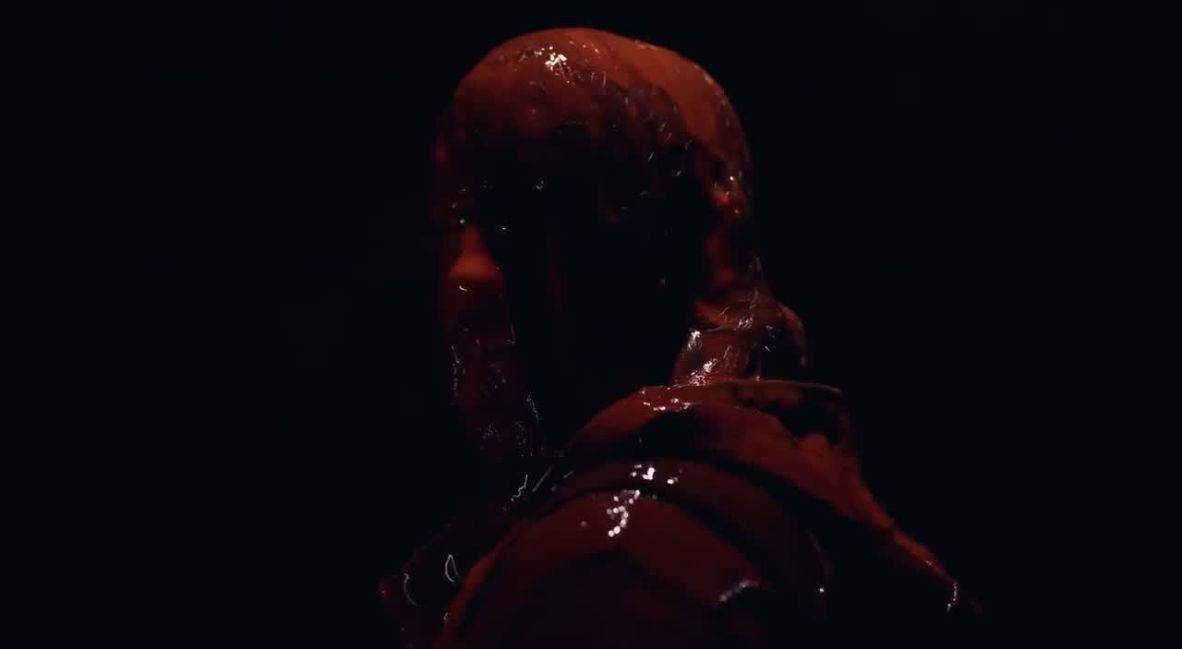
This lack of clarity is invigorating, as it implicitly trusts its audience to draw their own conclusions about the tense, claustrophobic, esoteric journey they’ve just been on. Never has a film been so primed for audiences to watch “explained” videos afterward to smooth out the shaggy edges of the film they’ve just watched.
Iron Lung is impressive in so many regards. As a film by a YouTuber, a video game adaptation, and a low-budget independent horror, it punches so far above its weight that it creates a new space for itself. Markiplier’s feature directorial, starring, and screenwriting debut is major regardless of whatever box you try to put it in.
Given the film’s ongoing success, this won’t be the last we hear of Markiplier in cinema, and the overall film landscape might be better off for it. Iron Lung is the sort of out-of-nowhere success so disrupting that the film itself being good is a post-script. How lucky are we, then, that Iron Lung is not just good; it’s nearly perfect at everything it sets out to accomplish.
Iron Lung (2026) is now playing in theaters everywhere.
Iron Lung (2026)
-
Rating - 9/109/10
TL;DR
Iron Lung is a remarkably accomplished debut for Markiplier behind and in front of the camera. A slow-burning submarine voyage into cosmic dread, more inspired than much of the modern horror genre, Iron Lung fundamentally trusts its audience.