
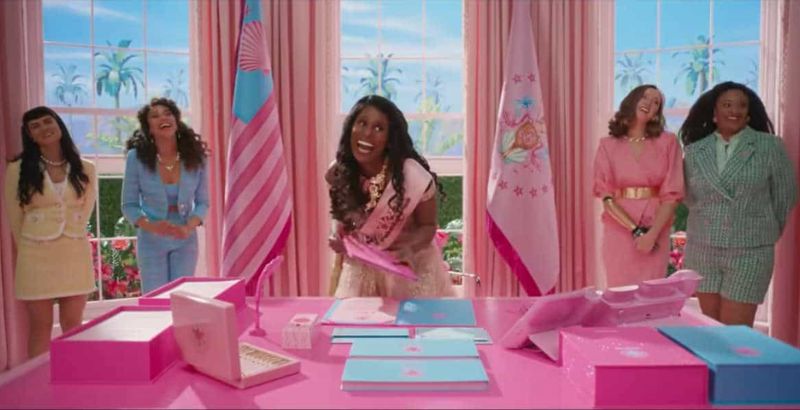
The recent release of the Barbie movie has sparked a heartwarming trend on social media, with countless women sharing their excitement and dressing up in pink to celebrate the film at theaters. Amidst the celebration of this film, there have been negative comments targeted at Black women who have done the same for supporting the Barbie film. Even outwardly suggesting that Barbie is a film primarily for white women. It has been extremely frustrating to see the discourse online about this film because it reminds me of people who once told me Barbie dolls were for white girls, not Black girls growing up. Fact, the first Black Barbie was created in 1967. Barbie has been for us.
Witnessing this outpouring of support and discourse surrounding the film rekindled memories of my relationship with Barbie. Watching the Barbie movie and seeing the genuine enthusiasm of so many Black women has brought back complex feelings about my childhood connection with Barbie dolls, prompting me to reflect on the doll’s significance in my life.
Growing up, my mother went to great lengths to buy Black Barbie dolls for me and my sisters. The hours we spent together styling their hair and creating unique stories for each doll are some of my fondest memories. I now realize that my mother’s deliberate choice to provide me with Black Barbies was a transformative act of representation. Through these dolls, I saw myself positively reflected in the toys I played with, and I remain deeply grateful to my mother for her thoughtful efforts.
Unlike some experiences of being told Barbies were for white girls, my mom never imposed such limitations on me. Instead, she empowered me to play with dolls resembling me, reinforcing that Barbies are for all girls, regardless of race or ethnicity. My Black Barbie dolls were simply Barbie to me, and they played a crucial role in shaping my self-perception and identity.
Unfortunately, as I grew older, societal pressures and harmful stereotypes began to take a toll on my relationship with Barbie. Like many young girls, I was about 9 or 10; I reached a point where I felt compelled to distance myself from the dolls I once loved. The reasons were numerous—believing I was too old to play with them, facing mockery for my collection, and feeling the weight of expectations that being a strong Black woman meant distancing myself from soft, feminine, and “childish” things.
Regrettably, I turned my back on Barbie and a cherished part of my childhood. Looking back as an adult, I wish I could have reassured my younger self that Barbies are indeed for Black girls too, and there is strength in embracing all aspects of oneself. I now know I do not have to choose between strength and femininity, but I can have both.
Black women and girls have long faced the burden of societal expectations, being forced into restrictive boxes that deny their individuality and perpetuate harmful stereotypes. This experience is not limited to just one race or background; many women from diverse communities can relate to the pressures of conforming to societal norms.
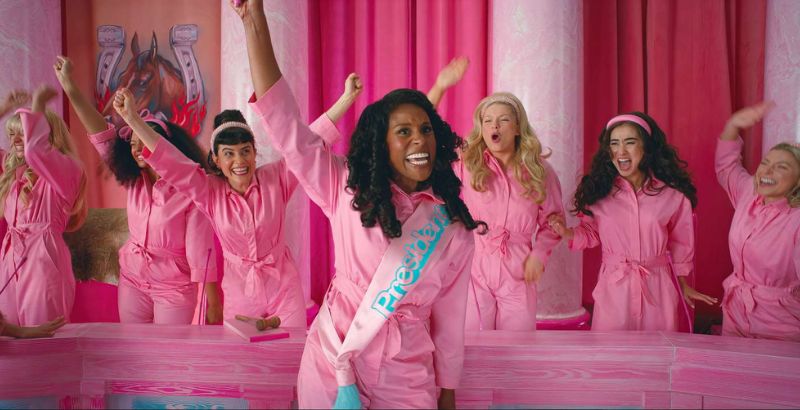
For years Black women have been subjected to certain expectations that often contradict one another. We are expected to embody strength, resilience, and self-sufficiency, often at the expense of expressing vulnerability or asking for support. This pressure to be unyielding and endure pain stems from historical stereotypes perpetuating the myth of the “Strong Black Woman,” inadvertently denying us the freedom to experience the full range of human emotions.
Greta Gerwig’s Barbie isn’t inherently for white women, as some would have you believe in the “discourse.” Ultimately, a huge significance of the film lies in its ability to challenge existing norms, inspire minds of all ages, and tell a story that people of all backgrounds can find relatable on one level or another. The movie’s celebration of self-discovery, feminism, self-worth, and evolution is highly relatable to anyone. It reminds us that as people, we can not be all things to everyone, but we should be able to be true to ourselves.
The film fosters empathy and understanding among different groups through shared experiences and values unique to all genders without excluding any race. Simply put, just because the movie stars Margot Robbie, who is the “Stereotypical Barbie,” does not mean the story and themes are inherently unique to white women and not for any other woman or person to enjoy.
Now as I embrace this newfound understanding, I realize my love for Barbie was never misplaced. It was a source of joy and empowerment that I should have held onto throughout my journey into adulthood. The Barbie movie has allowed me to reconnect with that part of myself, instilling a sense of pride in embracing my childhood loves and recognizing the strength in embracing both softness and strength as a Black woman.
Barbie is for Black women too.