
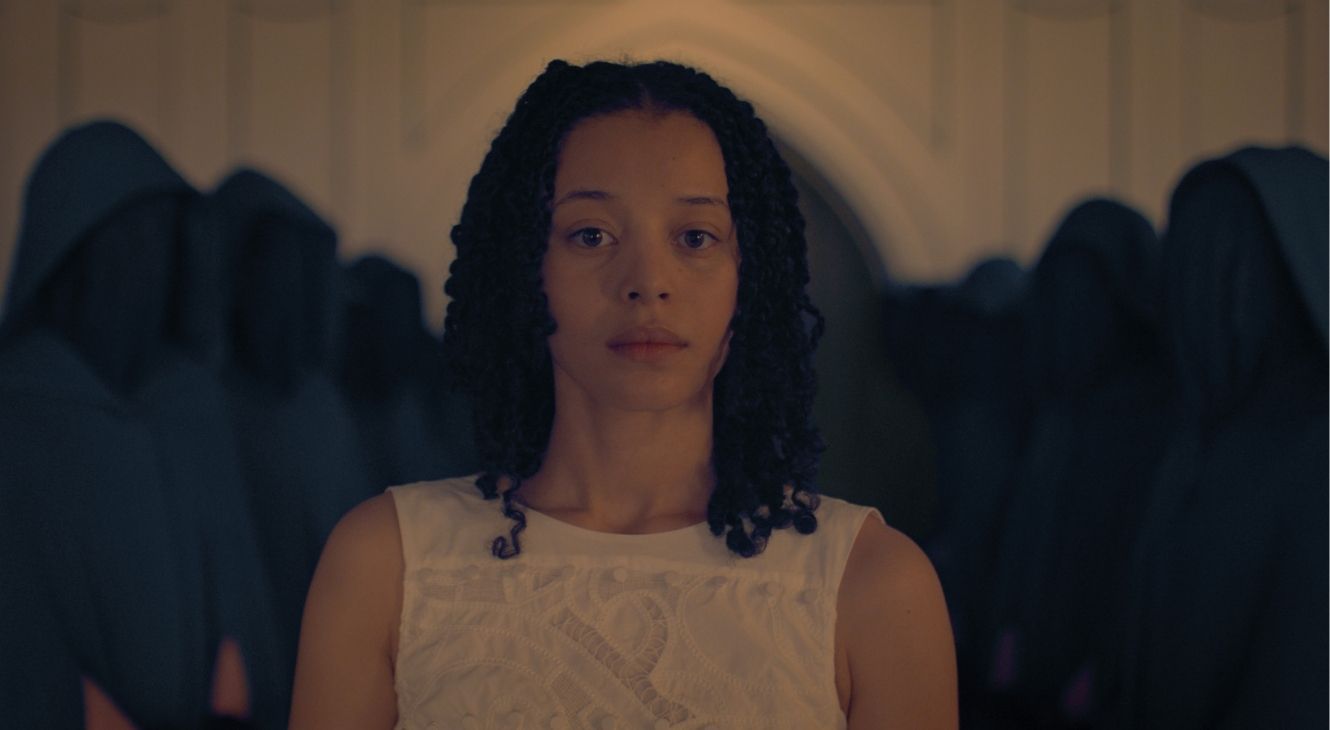
Adolescence is a hotbed of emotion, a volatile mix of ups and downs that can buckle under restraint, making for an interesting exploration in The Testaments. What happens, then, when all an adolescent experiences is restraint, raised in an authoritarian regime that prides itself on the restrictions it imposes on gender and identity? While a simplistic description of Margaret Atwood’s Gilead, this is where The Handmaid’s Tale sequel series sets its sights.
Unfortunately, from its lack of subtlety to its so-so characterization, and by treading an all-too-familiar path in the oversaturated YA dystopian landscape, The Testaments reads weaker than its predecessor. Shifting between three different perspectives (much like the novel of the same name), viewers get a sense of Gilead since the ending of The Handmaid’s Tale. This is a Gilead that is steadily losing ground, its territory and casualty losses mounting as its fight against the rebellion group Mayday intensifies.
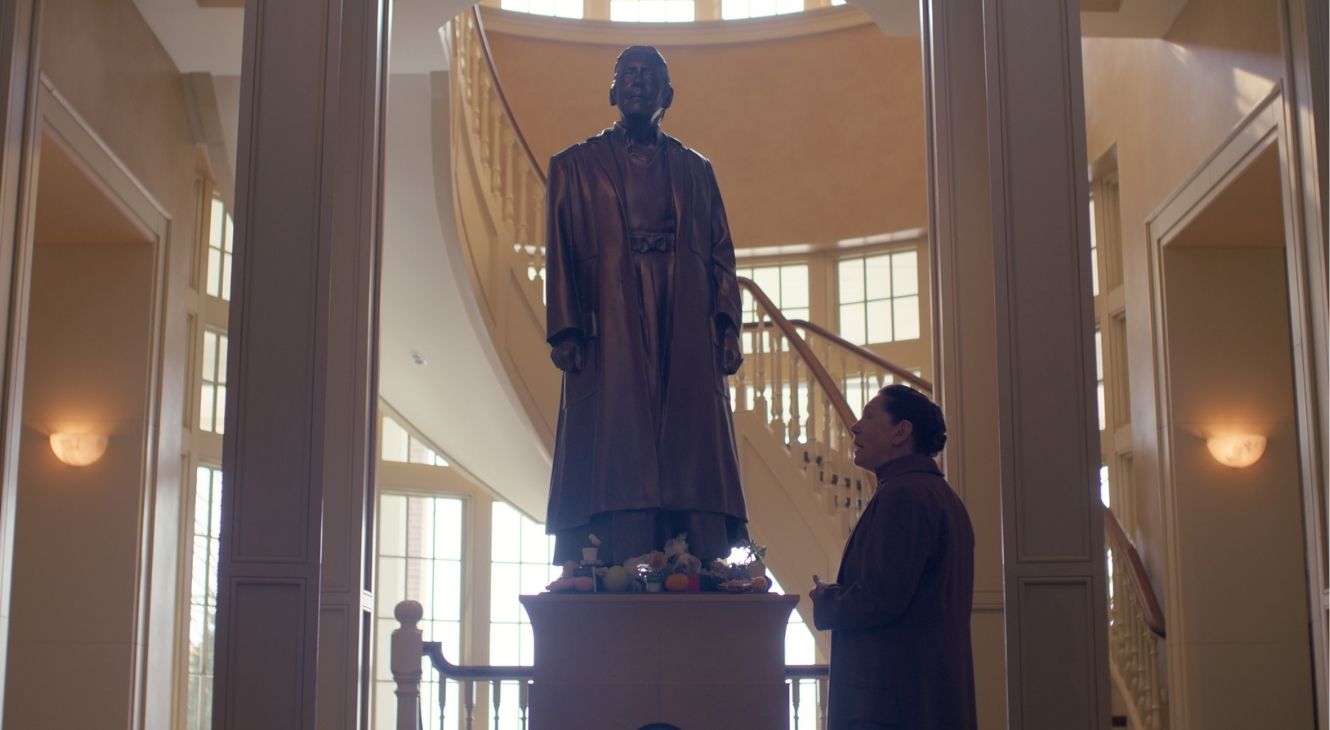
For the young privileged girls of Gilead being groomed for the marriage market, they are mostly none the wiser. Throughout The Testaments, we see the privileged girls, typically daughters of high-ranking Gilead Commanders with one notable exception, go to school and learn under the tutelage of the Aunts. The Matriarch of this school is Aunt Lydia (Ann Dowd), whose presence is more subdued in this iteration. Her statue may loom tall in this school, but this Lydia is more pensive and battle-weary. She is one of the perspectives we hear from this season.
The Testaments pulls back the curtain on the privileged female youth in Gilead and the horrors of grooming.
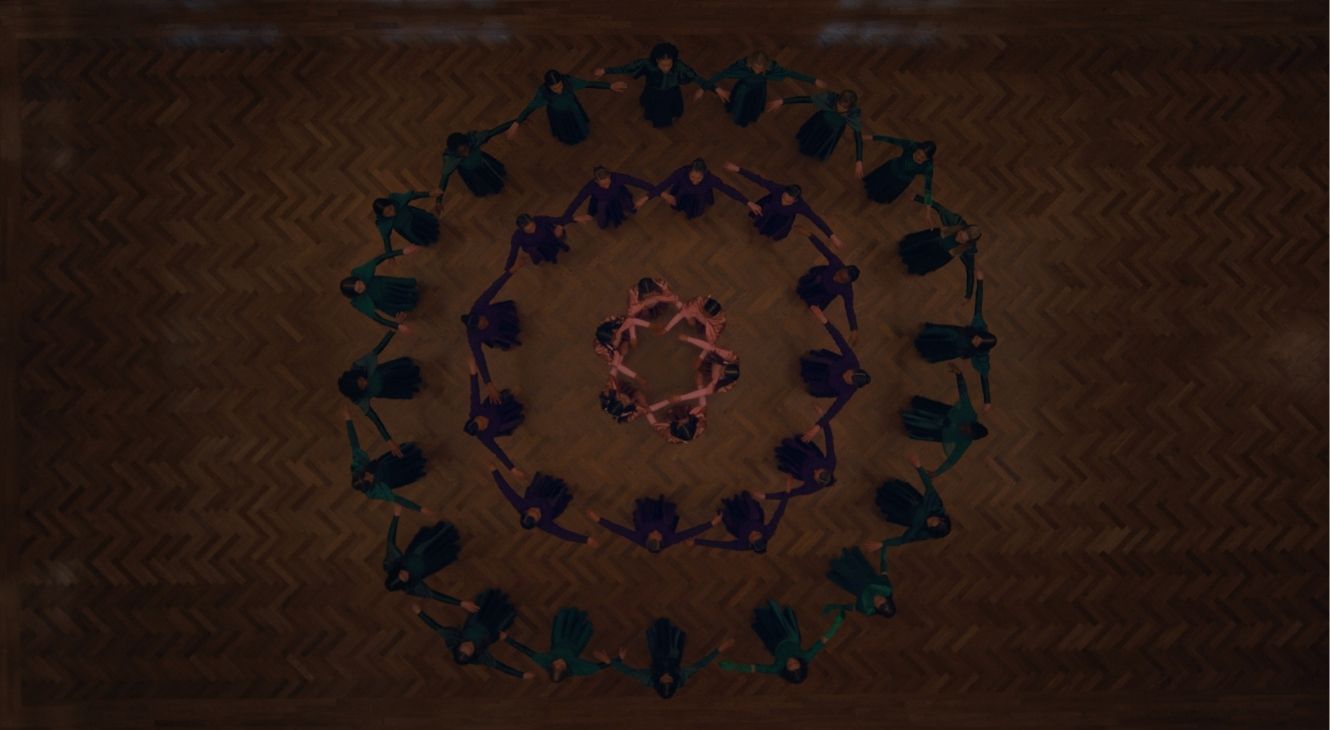
The girls are given different categories dependent on their age and status within Gilead society. Pinks are little girls. Pearls, like Daisy (Lucy Halliday), another of the perspectives featured in The Testaments, are foreign girls recruited into Gilead to serve a litany of purposes within society, unless circumstances change. Plums, like Agnes (Chase Infiniti), the final member of the trio of perspectives, are being trained for marriage, with the color symbolizing their readiness for that path. A Plum only becomes Green when it gets its period, indicating it is ready for marriage and childbirth.
This may be a lot of explanation, but this breakdown is essential for diving into the space The Testaments thrusts us into. Within the echelons of this “high society,” and none-too-subtly, the life of girls like Agnes is designed for marriage and childbirth within the rigid boundaries of obedience set up and reinforced by everyone around them. This creates a natural tension that slowly simmers as, one by one, each girl’s circumstances change. It’s a coming-of-age, but into what? Tradition or the horrifying realization that this is not what it is meant to be?
As Agnes, Chase Infiniti handles the restraint and pressure placed on Agnes with care. Agnes’ bursts of rebellion are small and subtle, but even such actions would garner a heavy punishment. She offers a look at a child who has grown up knowing nothing beyond Gilead’s rigid rule, and at the privilege in a society that so quickly punishes disobedience, which is flimsy at best. One wrong move and it could ruin her life or even kill her. Yet, as The Testaments heightens the stakes, Agnes’ unraveling and breaches in propriety are all the more striking.
As an outsider, Pearl Girl, Daisy sees horror through fresh eyes, while others relish in its normalcy.
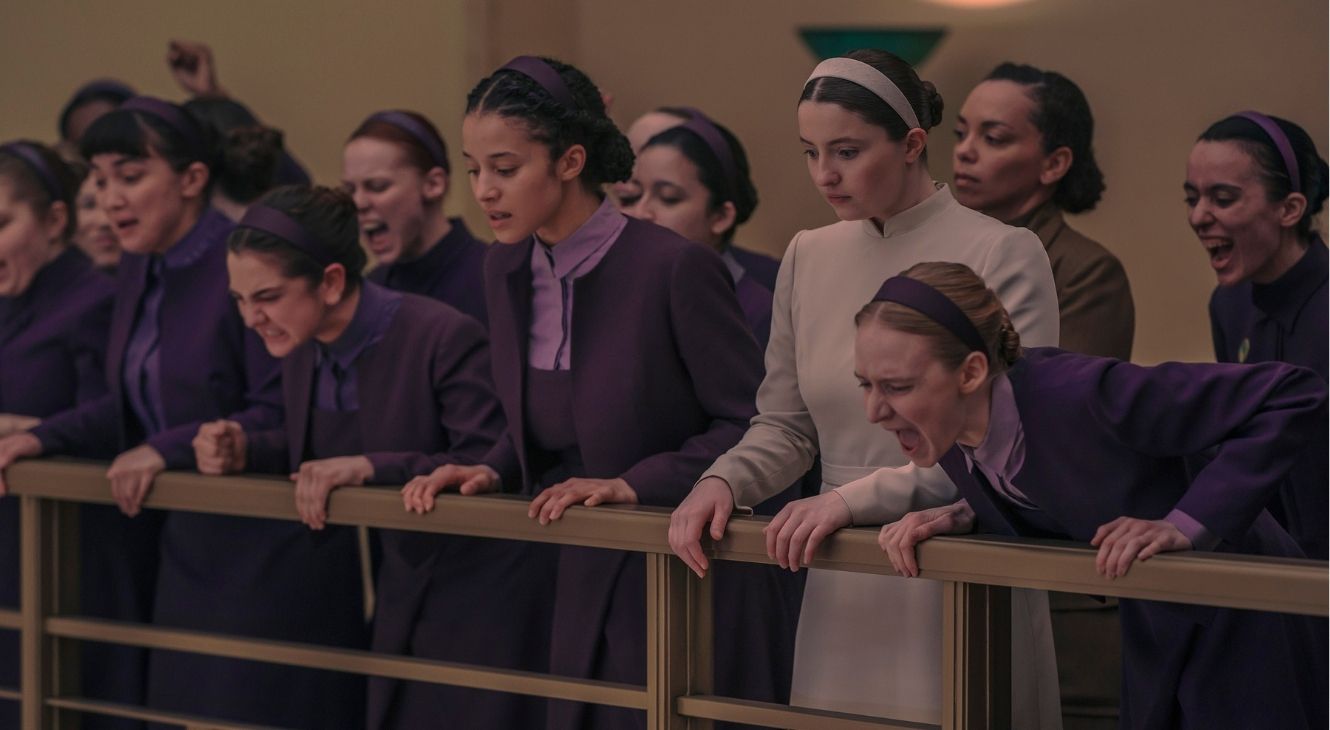
You wouldn’t guess that from the voiceover work in The Testaments, a tactic that only emphasizes the YA feelings of it all along with some of the series’ rough dialogue. Each perspective featured “testifies” to their experience. There’s a disconnect in most of the voiceover work, not helped by some of the dialogue meant to be delivered, but in certain highly emotional moments, the direction, combined with the voice performance, underdelivers. It ultimately weakens the stakes in certain scenes.
Similarly, of the young women we’re introduced to, some stand out more than others. Sadly, Daisy and her storyline are one of the weaker links. As an outsider in the world of Gilead, particularly one who learned about the authoritarian nation in school (which comes with its own biases), Lucy Halliday faces an interesting challenge in navigating Daisy’s adaptation to her surroundings. Some of Halliday’s strongest work is in the earlier episodes when Daisy sees Gilead’s violence firsthand, and an episode later on shows how the pressure is getting to Daisy.
Unfortunately, as The Testaments progresses, Daisy starts to seem more one-note and less deep. Teenagers are tricky to write, especially ones like Daisy, who should have more depth than is presented onscreen. Best described as “the privileged judging the privileged,” the character has moments that suggest lost opportunities for Halliday to create a more visible inner world. Yet, whether it’s Halliday’s performance or the way the character was written, she ends up almost one-note and, unfortunately, the storyline one might want to pass over most.
Daisy is arguably the weakest-written character of The Testaments.
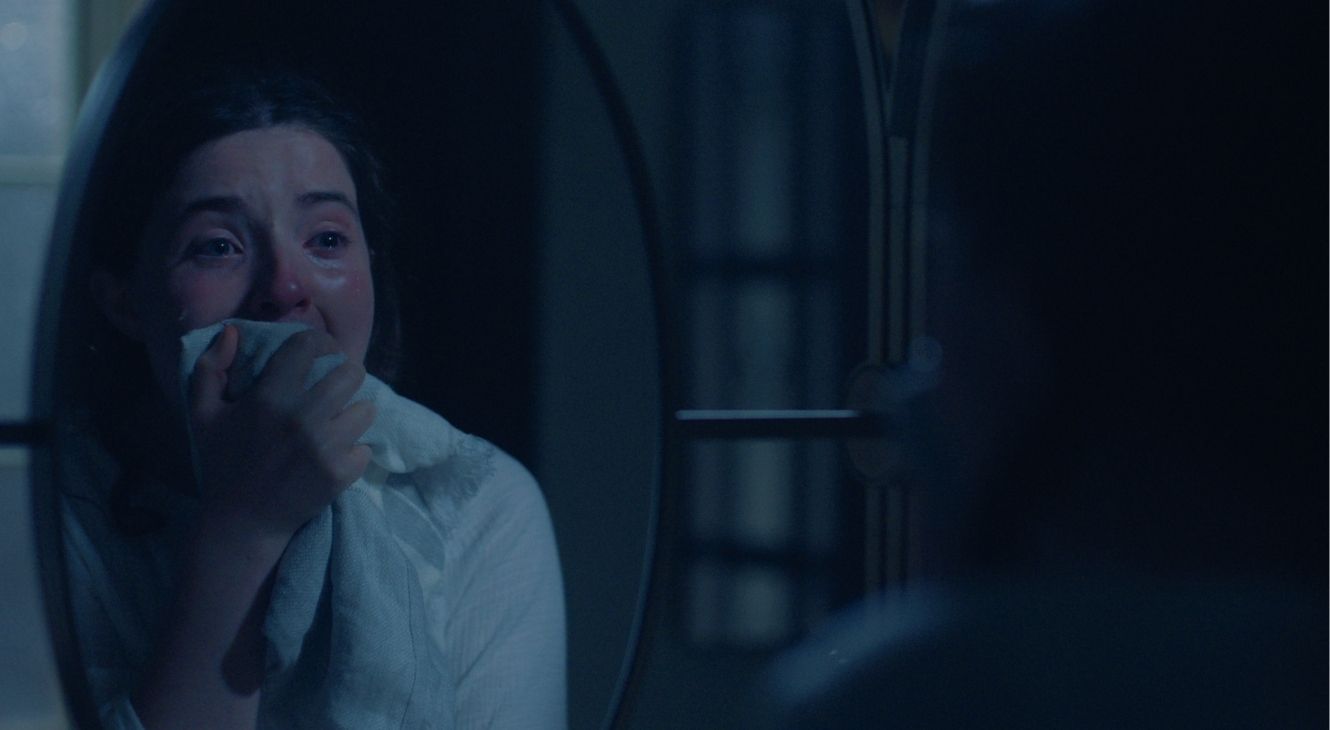
While Agnes and Daisy take up most of the focus in The Testaments, the girls in their lives shape and change them. One of these girls is Becka. Played by Mattea Conforti, Becka has one of the strongest storyline developments, held together by Conforti’s compelling performance. Becka’s friendship with Agnes contains multitudes, highlighting different aspects of Gilead’s society, but most importantly, how friendship can transform into a lifeline when all seems lost. By the end of the series, you wish you could spend more time with Becka, and that speaks volumes.
Friendship is not encouraged in this world. Having friends means having secrets, and in a world where one slip-up can bring everyone down, isolation is encouraged. Yet for the girls we meet in Gilead, friendship can save them. It can give them strength, but it can also wound them. We see this play out in the insular world of the school for these girls, and how the tightening grip of their futures spurs them to seek each other out for comfort.
One group that seeks to tear these girls apart (for their greater good) is Mayday, and, frankly, they come across as incredibly incompetent in The Testaments. Their operatives are not subtle in the world of Gilead, and in most instances, when featuring their agents, they are far too obvious about their secrecy. Granted, none of these people are trained spies, but there are many times when their efforts are facepalmingly ridiculous that they completely take you out of the scenario.
The transition from an adult-driven series to YA has its hiccups, and it shows in The Testaments.
This points to a larger issue in The Testaments, where the writing attempts to adapt to a younger audience. Its predecessor, The Handmaid’s Tale, focused predominantly on the adults of Gilead, and the writing reflected that, targeting an older audience in the process. While The Testaments keeps the adults of the world in focus still, with Aunt Lydia, Aunt Vidala (Mabel Li), and Agnes’s stepmother, Paula (amazingly played by Amy Seimetz) commanding those storylines and stealing scenes, this series is very much about the youth.
Keeping this in mind, you can see where showrunner Bruce Miller and his team try to transition this into something younger. Certain needledrops are aimed at keeping things hip, but, in execution, are more tone-deaf and awkward depending on the scene. A monologue in the final episode tries to capture a youthful exuberance and defiance, but both the writing and delivery underwhelm. These tiny missteps build into bigger ones, making the series struggle at times to find its legs in the shadow of The Handmaid’s Tale.
With its serious subject matter, the characters of Gilead, and the natural tension stoked just by Gilead being Gilead, The Testaments does have much going for it. However, its cringeworthy dialogue, the outside influence of Mayday, and Daisy’s unevenness drag down what could have been a stronger opening season. If The Testaments gets a second season in this cautious TV environment, less is more might be the thing needed to ensure it grows into something stronger. The recipe is there for success. It just can’t be forced, or it shows badly.
The Testaments premieres April 8 on Hulu and Disney+ with three episodes, then weekly thereafter.
The Testaments Season 1
-
Rating - 6.5/106.5/10
TL;DR
With its serious subject matter, the characters of Gilead, and the natural tension stoked just by Gilead being Gilead, The Testaments does have much going for it. However, its cringeworthy dialogue, the outside influence of Mayday, and Daisy’s unevenness drag down what could have been a stronger opening season.