

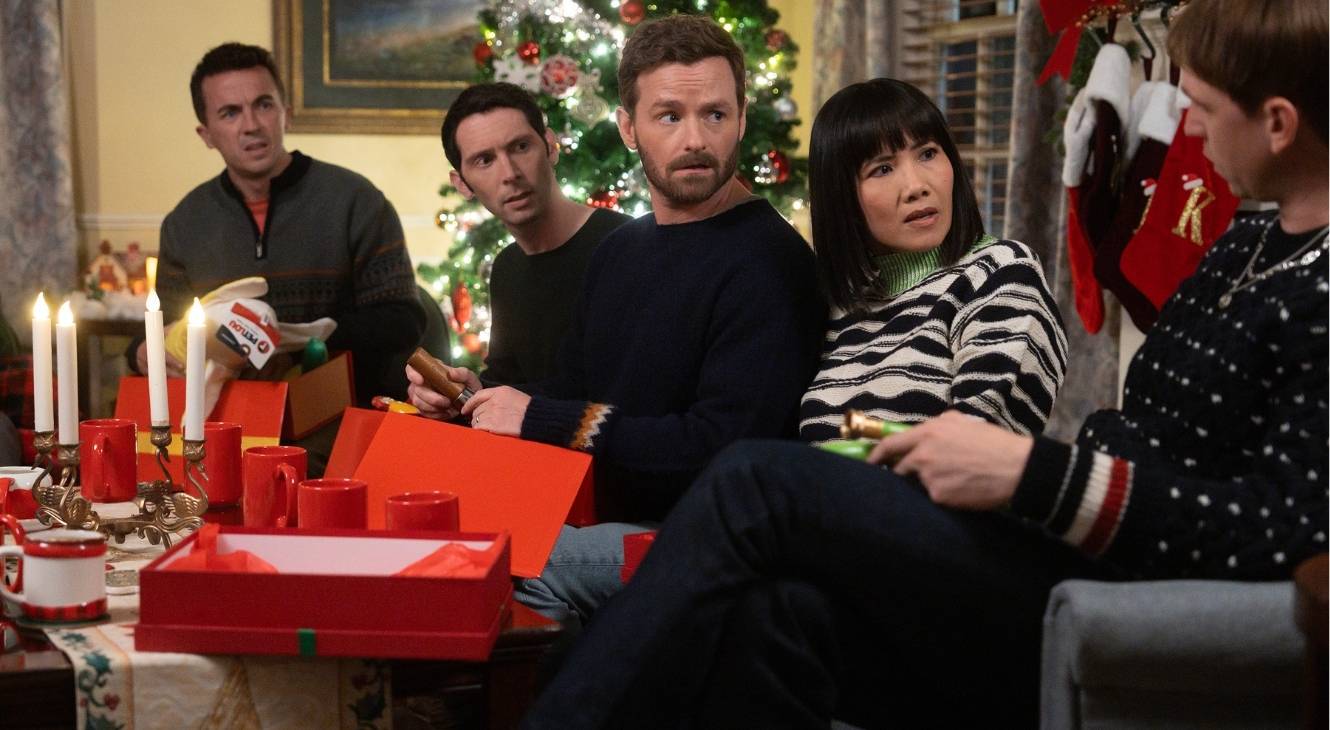
Few sitcoms have aged as honestly as Malcolm in the Middle. It never relied on laugh tracks or idealized families to land its humor. Instead, it thrived in dysfunction, speed, and a simple truth: life is not fair, and it is not going to wait for you to catch up. With Malcolm in the Middle: Life’s Still Unfair, creator Linwood Boomer returns with something that feels less like a revival and more like a continuation of a conversation that never really ended.
Across four tightly connected episodes, the series builds toward a 40th-anniversary celebration for Hal and Lois that delivers exactly what longtime fans expect. Something is going to go wrong. What makes this return stand out is that the show understands the chaos was never the point. What matters is what that chaos reveals now that everyone has had time to grow, drift, and change.
The miniseries’s biggest strength is that it refuses to reset its characters. Malcolm (Frankie Muniz) has not escaped his upbringing. Malcolm has carried it into adulthood and tried to outthink it. As a single father, he approaches parenting like a system to optimize. He anticipates problems before they happen, builds contingencies for every possible outcome, and convinces himself that awareness is the same thing as control.
Malcolm in the Middle: Life’s Still Unfair doesn’t reset the characters; it only strengthens them.
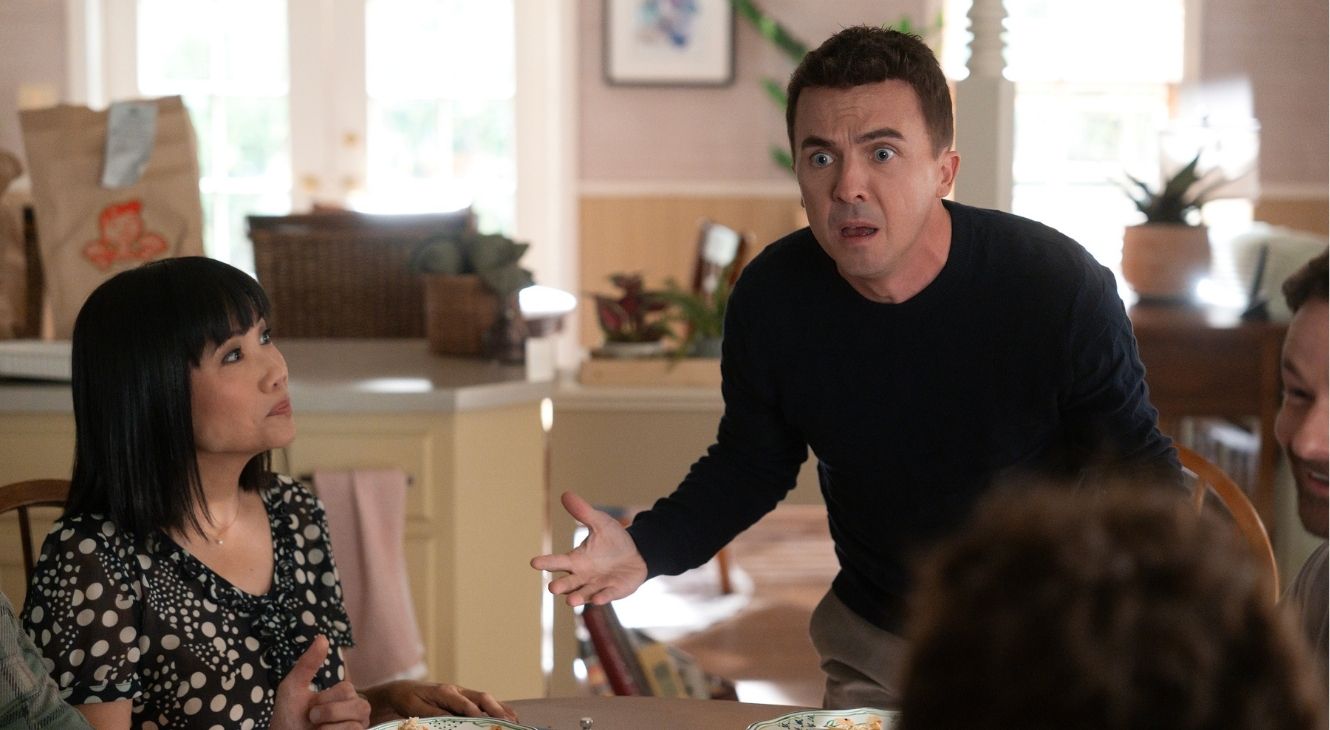
That approach does not hold, even if Malcolm is a great dad on paper. He has a great job, a loving partner, and seemingly none of the stress that highlighted his life. However, his daughter Leah (Keeley Karsten) inherits Malcolm’s intelligence and emotional awareness, but not the defenses that helped him survive. She processes everything in real time and struggles with a world that does not reward that level of sensitivity.
Extending Malcolm in the Middle: Life’s Still Unfair’s fourth-wall-breaking to her perspective reinforces that this is no longer just Malcolm’s story. It is about what gets passed down, intentionally or not. Dysfunction has not disappeared. It has adapted to a new generation that understands it more clearly, but is not necessarily better equipped to handle it. When the truth finally comes to light, shattering Malcolm’s illusion, the story places Malcolm yet again in the middle as he tries to logic his way out of his own lies.
Each episode in Malcolm in the Middle: Life’s Still Unfair builds toward Lois and Hal’s 40th anniversary party, using a structure that feels familiar on the surface. The audience knows the rhythm of this show and knows something will spiral. The difference is that the chaos is no longer just situational. It is cumulative. Every character arrives carrying distance, resentment, and unresolved truths that have had years to settle into something heavier.

One of the most effective choices in Malcolm in the Middle: Life’s Still Unfair is how it brings back its extended cast without turning those appearances into gimmicks. Familiar faces return in ways that feel purposeful, whether it’s Francis reconnecting with people from his past, Malcolm crossing paths with old friends, or Piama (Emy Coligado) stepping into a more active and defined role within the family dynamic.
At the same time, the revival makes room for new characters, particularly through Leah’s experiences at school, where the same emotional chaos that defined Malcolm’s childhood plays out in a different context. Those additions expand the world rather than replace it, allowing the show to bridge generations without losing its identity as chaotic commentary.
In the original series, chaos was a response to instability. Here, it is the result of avoidance. The explosion at the center of the story is not just funny because it escalates, but because it exposes what everyone has been trying to manage quietly. The writing remains sharp without becoming cruel, and even as Malcolm in the Middle: Life’s Still Unfair leans into more adult dynamics, it never loses its sense of inclusivity. It does not punch down or rely on cheap discomfort. Instead, it uses that chaos to create space for multiple perspectives, allowing each character to bring their version of the truth into the same room.
Malcolm in the Middle: Life’s Still Unfair leans into the adult lives of our faves and never loses sight of what makes them tick.
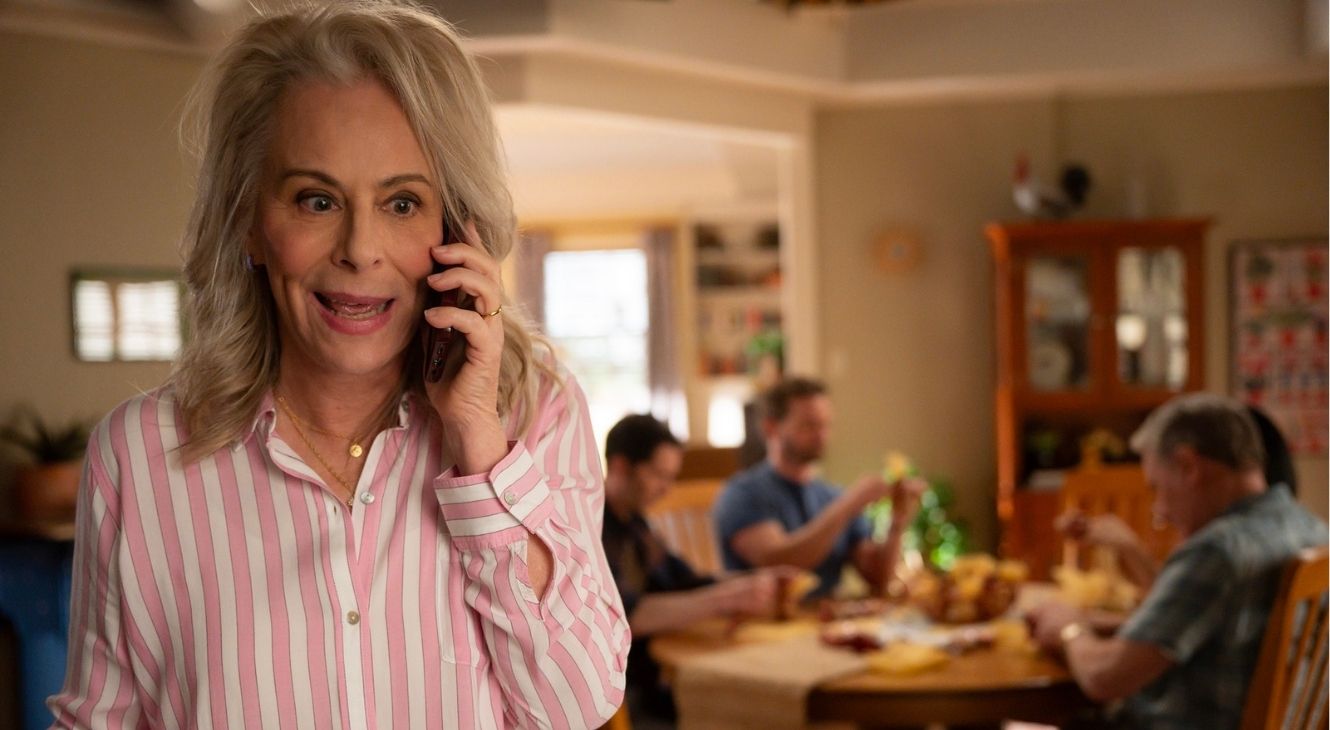
One of the clearest throughlines in Malcolm in the Middle: Life’s Still Unfair is the idea that secrets are not a form of protection. They are a form of control. Malcolm spends much of the revival trying to curate his life by deciding what others should and should not know. He hides his family from his new partner, Tristan (Kiana Madeira), rewrites his past, and withholds information from his daughter in an attempt to maintain stability.
When those choices unravel, the damage is not just about the lie itself. It is about what was taken from the people around him. They were not given the opportunity to understand, respond, or make their own decisions with the full picture in front of them. Malcolm in the Middle: Life’s Still Unfair is clear in how it frames this. Keeping something from someone who deserves to know it does not spare them. It removes their agency and undermines their ability to trust.
What follows is not a clean resolution, but a series of conversations that matter more than any immediate outcome. Malcolm in the Middle: Life’s Still Unfair recognizes that honesty does not fix everything, but it does allow people to move forward with clarity instead of assumptions. That distinction grounds the entire miniseries and gives its emotional beats weight without forcing a sense of closure that would feel unearned.

If Malcolm represents control, Hal (Bryan Cranston) represents something far more vulnerable. His role in the revival expands beyond comic relief into something that quietly anchors the entire story. Hal is confronting a shift in identity as his children move further into their own lives, and the version of himself that existed purely as a father starts to feel less defined.
Malcolm in the Middle: Life’s Still Unfair explores this through a mix of physical comedy and surreal introspection, allowing Hal to articulate fears that have always been present beneath the surface. His instinct to say yes, to show up, and to give everything he has to his family becomes both his strength and his uncertainty. Without that constant need, he is forced to reconsider his role and who he is outside it.
Even in its most absurd moments, Malcolm in the Middle: Life’s Still Unfair treats that internal conflict seriously. Hal’s understanding of himself as someone who exists to support others and to provide joy and stability, even when it is not acknowledged, becomes one of the most honest reflections in the series. It reinforces why he has always worked as a character and why he resonates even more strongly now.
Even in the midst of absurdity and silliness, the series remains grounded.

Time has not softened the family. It has refined how they interact with each other. Reese (Justin Berfield) and the family’s youngest child, Kelly (Vaughan Murrae), move away from purely physical conflict into something more calculated, where their dynamic reflects a more adult form of rivalry. Francis (Christopher Masterson) continues to navigate his place within the family, still shaped by the role he was given growing up, even as he tries to move beyond it.
Lois (Jane Kaczmarek) remains the constant. Her approach has not changed, and that consistency is what keeps everything from completely falling apart. She operates with a clear sense of priority, addressing what needs to be fixed first and dealing with everything else as it comes. She does not frame herself as perfect, but she does not hesitate to take control when things start to unravel.
That dynamic is what allows the show to maintain its identity. The relationships feel older and more complex, but they are still grounded in the same patterns that defined them before. The difference is that those patterns now carry greater consequences and greater awareness among everyone involved. The emotional maturity that layered the original series is on full display in Malcolm in the Middle: Life’s Still Unfair.
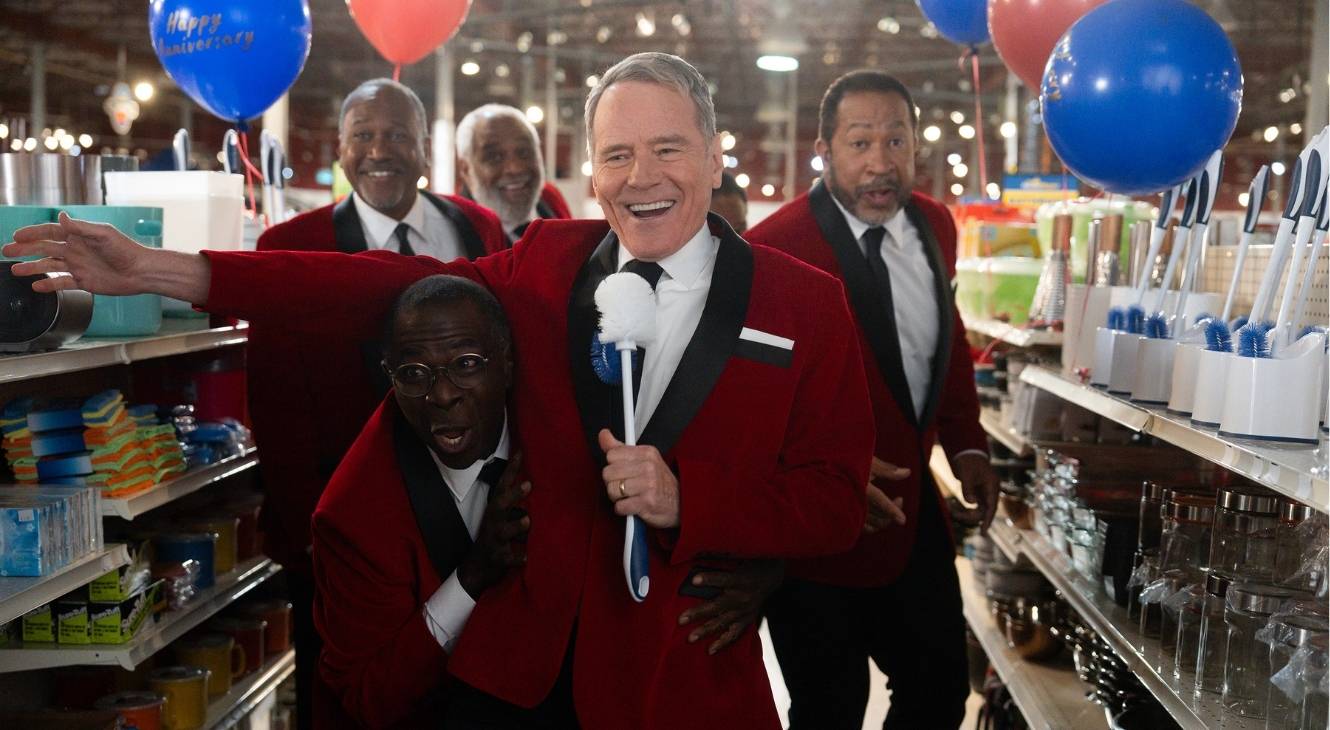
Part of what makes this revival resonate is the shift in perspective it invites from its audience. The characters have aged, but so has the viewer. Where it was once easy to identify with Malcolm or Francis, there is now a stronger pull toward Hal’s perspective. That shift is less about age and more about responsibility, about understanding what it means to hold things together even when there is no clear solution.
Malcolm in the Middle: Life’s Still Unfair does not try to resolve that tension. It doesn’t give a playbook for living with a chaotic family. Instead, it allows space for reflection. It raises questions about growth, about whether change means becoming better or simply becoming more aware of the same patterns. It also acknowledges that being the person who disrupts or breaks away from those patterns comes with its own complications that do not resolve cleanly over time.
By the time Hal’s and Lois’s anniversary collapses into the kind of large-scale chaos the show is known for, Malcolm in the Middle: Life’s Still Unfair returns to what has always made it effective. This family is not defined solely by dysfunction, but by a shared understanding of it, and their ability to exist within that space together, recognizing each other’s flaws without fully resolving them, is what allows them to keep moving forward.
Through chaos, moments of reflection arrive that are not only necessary but vital to the story.

The parents’ 40th anniversary functions almost like a clip episode in spirit, pulling together relationships, histories, and long-running tensions into one place, but it never leans on nostalgia to carry it. Instead, it uses those connections to show how much has changed and how much has stayed the same.
The revival does not suggest that things become easier or fairer here. Instead, Malcolm in the Middle: Life’s Still Unfair that those challenges become more manageable when they are experienced collectively. The humor, the conflict, and the resolution all exist within that shared experience, reinforcing that connection matters more than perfection.
What ultimately makes Malcolm in the Middle: Life’s Still Unfair work is its understanding that the show was never about fixing anything. It was about living through the mess and finding a way forward anyway. This revival does not try to recreate the past or lean on familiarity to carry it. Instead, it uses the time that has passed to ask what all of that chaos actually turned into and what responsibility comes with it now.

The result is a return that feels earned rather than revisited. It remains connected to everything that came before while allowing the characters to exist as they are now, shaped by distance, choices, and consequences they can no longer ignore. It recognizes that growth does not erase dysfunction, but it does force you to confront your role in it. That perspective is what gives Malcolm in the Middle: Life’s Still Unfair its weight and allows it to move forward without losing what made it matter in the first place.
More importantly, it proves that this show still works at this stage of its life. The humor lands, the dynamics feel sharper, and the writing still finds ways to elevate itself beyond what the genre typically asks of it. If this were a one-time return with one last chaotic family gathering, it would be enough. But the way these episodes reposition every character, reestablish their relationships, and introduce new points of tension makes it clear there is still more story to tell.
By its end, Malcolm in the Middle: Life’s Still Unfair reunites the family without losing its unpredictability, opening the door for the story to continue chaotically.
Malcolm in the Middle: Life’s Still Unfair premieres Friday, April 10th, on Hulu and Hulu on Disney+.
Malcolm in the Middle: Life’s Still Unfair
-
Rating - 9/109/10
TL;DR
Malcolm in the Middle: Life’s Still Unfair reunites the family without losing its unpredictability, opening the door for the story to continue chaotically.