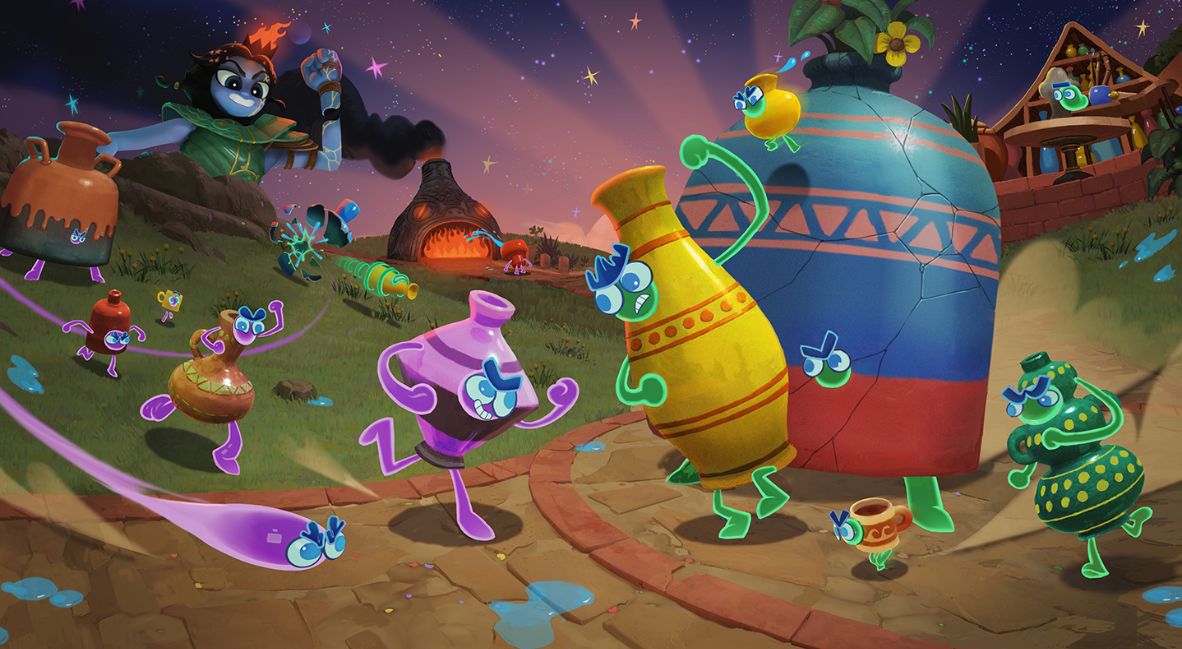
I played just one match with Kiln, in which two teams of four faced off in a competitive race to extinguish the other team’s kiln. It’s not every day we get a new Double Fine game, and even less often is that game a genuinely fun and unique multiplayer beat-’em-up, tower defense, MOBA type of . . . thing. Regardless of the label, I came away from my time with the game at PAX East in Boston excited and wanting more, mostly because our demo was relatively short.
Each match begins with you sculpting your playable pot of clay. You’ll shape it, size it, smooth it out, and even decorate it with various paint jobs, stickers, and quirky little attachments. It’s not all cosmetic, however, as the shape and size of your pot determines how you move and what moveset you’ll load in with.
You can switch your pot between deaths, so you’re not entirely locked into any one strategy throughout a match. The creation portion of Kiln is fun in that it serves as both an opportunity for artistry and self-expression and as a way to inform your strategy going into the match if you’re after that coveted win.
Double Fine’s Kiln offers fun and robust combat, even if it’s just for bragging rights.
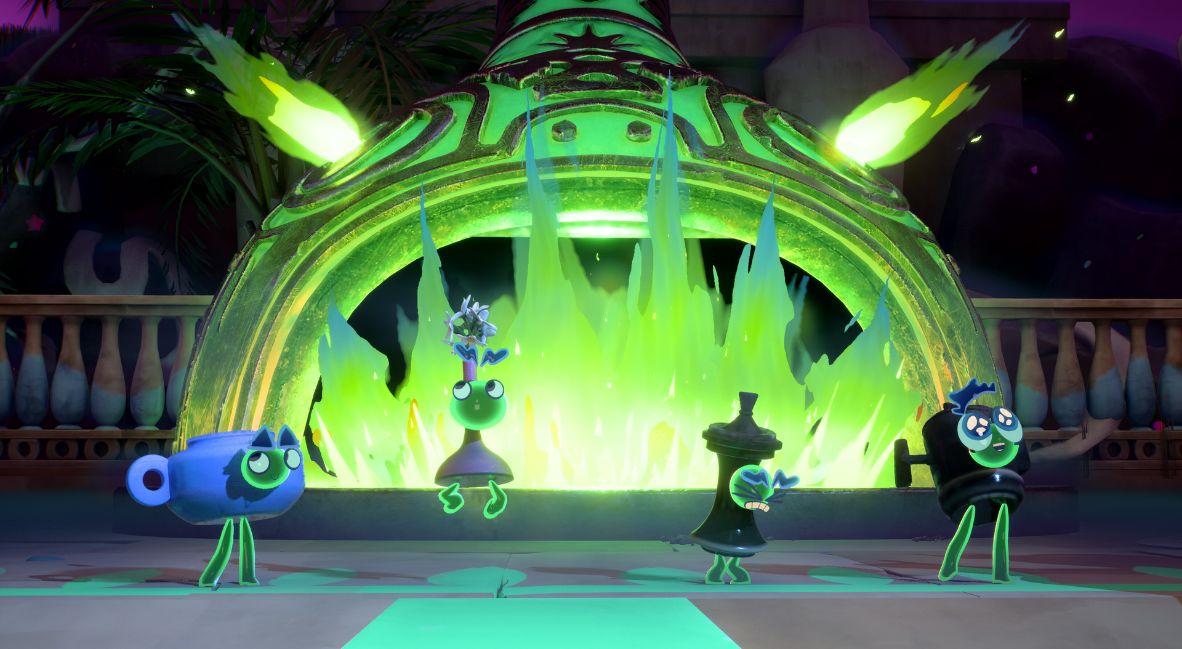
Putting out the enemy’s kiln is the bread and butter of the experience, and doing so requires each player to fill their pots up with water, making it safely into enemy territory, and dumping their load into the flame. Sounds easy, right? Wrong.
The arenas are relatively small, with plenty of environmental hazards to trip you. My particular play session was in the middle of a literal disco dance floor that lit up, and if I stood on any of the illuminated tiles, my little guy would start dancing, rendering me vulnerable to an onslaught of the other team’s attacks. And boy did that happen often.
Another way to expunge your water supply is by sprinting, which I didn’t realize until well into my match – I’d arrive at my objective hoping I’d move the enemy’s flame bar down a significant chunk, only to be confounded by the fact that my arsenal was tapped dry. There’s a gauge in the lower right corner of the screen that keeps track of water, and I had only just noticed that sprinting depletes it.
From there, I was able to form my plan of attack in a much more efficient way. I appreciate friction in games like this that truly require you to learn its systems, and despite the simplicity of Kiln as a whole, there’s a lot to learn.
Kiln’s learning curve is its weak spot.
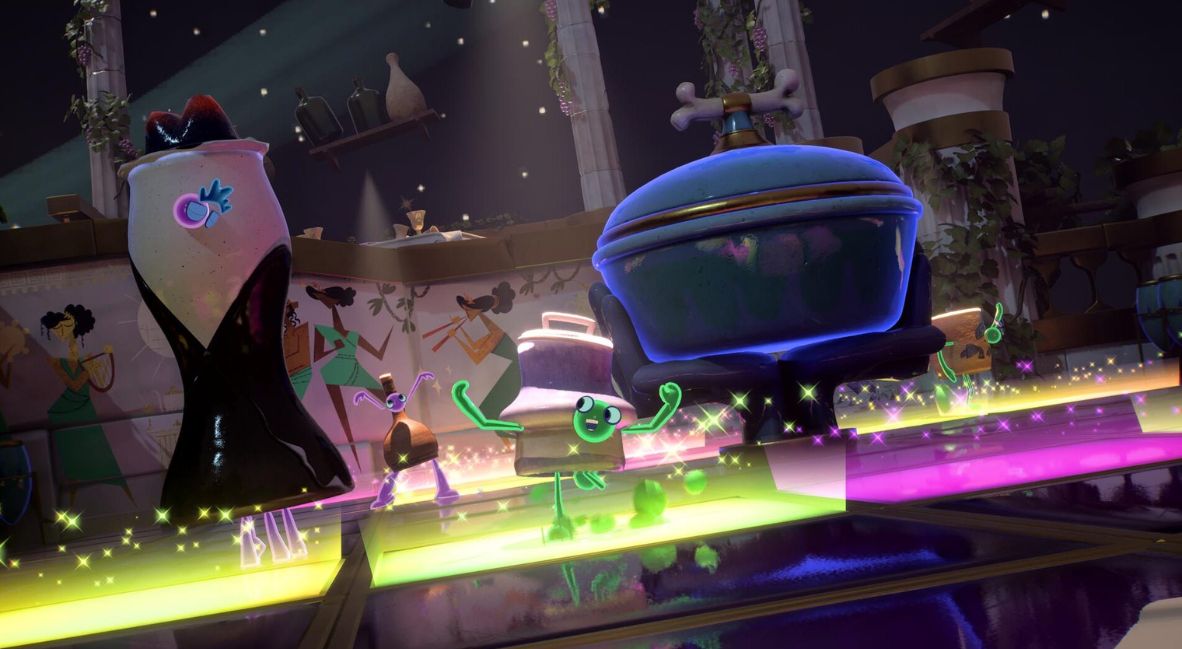
Combat is super fun, and I often found myself ignoring the objective to hunt down and shatter enemy pots, something I’m proud to say I did nine times in one match.
There are no killstreak rewards or further bonuses for taking out your opponents other than hindering their attack on your kiln, but the bragging rights of getting the most kills in a match were enough for me. Once our foe’s kiln was extinguished, the match was over, and we were taken to a results screen that displayed each player’s stats.
Kiln comes with a bit of a learning curve when you’re first starting out, especially with the clay-throwing process. Many players around me weren’t aware that you had to press “X” to shelf your pot, then fire it so it would be used in the next match. So folks would proudly craft their bespoke character, only to be forced to use one that wasn’t theirs. Aside from that, its multiplayer offering is undoubtedly fun, but I’m curious to see how long a game like this will last.
Kiln launches April 23 for PlayStation 5, Xbox Series X|S, and PC.