

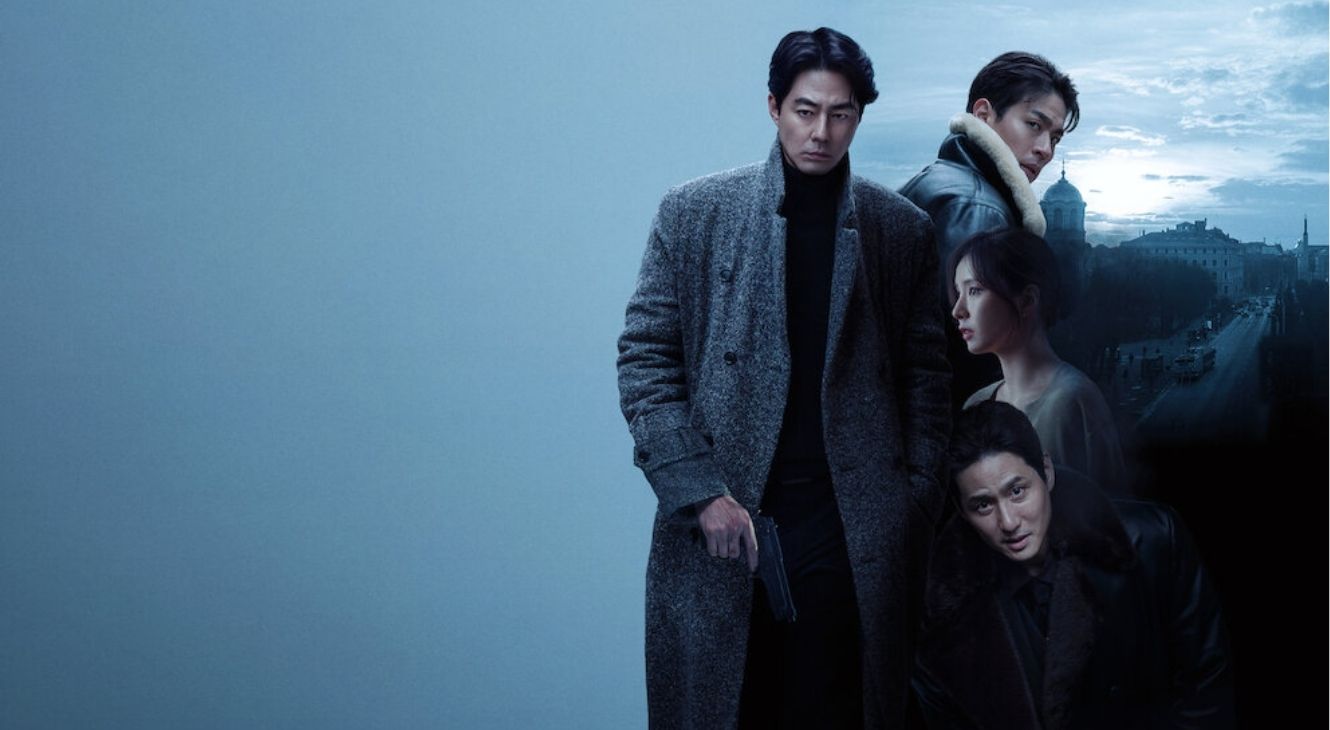
Originally released in South Korean theaters in February before making its way to the United States as a Netflix Original in late March as a near-shadow drop, Humint is an action movie to watch. Whether it’s Smugglers, Veteran, Escape from Magdishu, or I The Executioner, writer-director Ryoo Seung-wan knows how to do action.
And it’s no surprise that his latest film Humint is filled with some of the most distinctive hand-to-hand combat and an homage to a famous Kim Jee-woon gunfight, making this espionage thriller memorable.
Set in Vladivostok, Russia, Humint follows four characters: Park Geon (Park Jeong-min), Manager Jo (Zo In-sung), Hwang Chi-seong (Park Hae-joon), and Chae Seon-hwa (Shin Sae-Kyeong). Each of the characters has their paths tied together through violence, guilt, and dedication to a state that would sooner kill them than honor their service. As they become entangled with each other, the intensity swells.
Ryoo Seung-wan’s Humint is at its best when the action is the center of the moment.
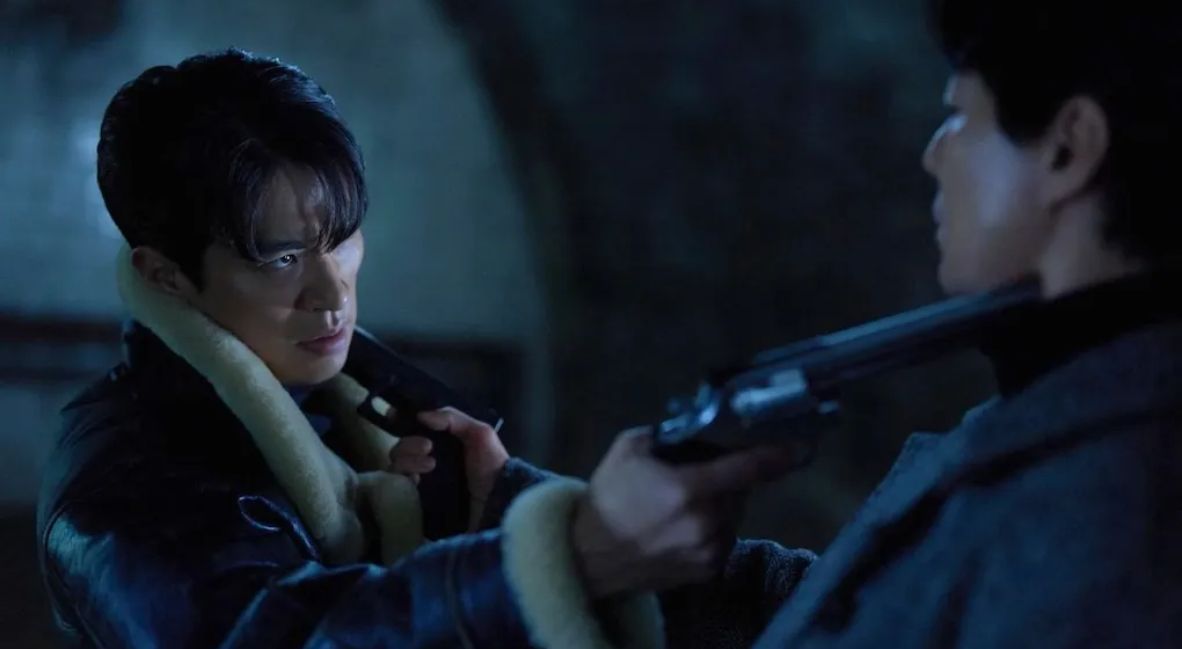
South Korean National Intelligence Service Manager Jo is assigned to track an international crime syndicate operating near the border. In the process, he discovers a drug and human trafficking ring, only for his superiors to ignore the human toll of their intelligence gathering and push him toward building a bigger place and not interfering just yet.
But having already lost one informant, Manager Jo isn’t looking to repeat the mistake, and his guilt only deepens as it begins to surface. His informant, Chae Seon-hwa’s circumstances become unweildy and put him closer to being responsible for yet another death.
Chae Seon-hwa is at the center of the intelligence. A worker at a North Korean restaurant in the city, she finds herself pulled between her current life and a new one. Turn against the state or don’t. But that gets even more complicated when she is forced into a high-risk situation, and North Korean State Security Official Park Geon is sent to investigate a recent security breach, and the roads begin to lead to her. The situation is complicated by Park Geon, the North Korean consul general, whose personal interests conflict with the official mission.
Each character is defined by their approach to combat, and sells their personalities.
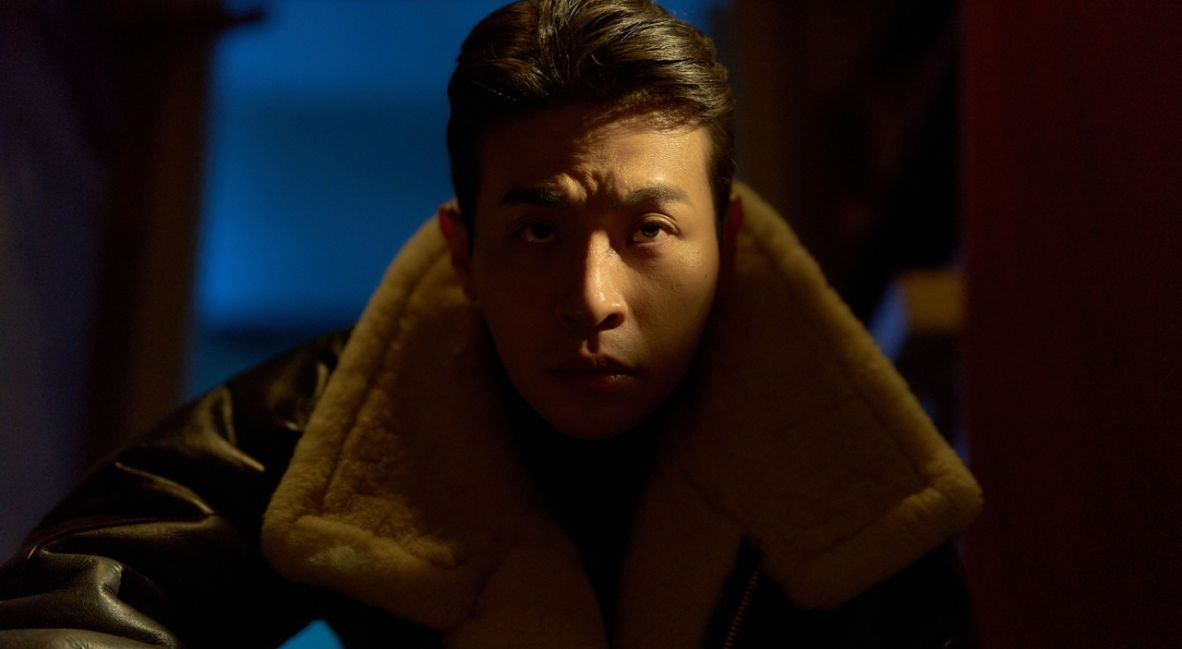
Humint struggles with its pacing, with long sections of the story bogged down by convoluted politics that feel more boring than intriguing. The lulls in the film are its biggest issues, as we move rapidly among the three men closing in on Chae Seon-hwa, for better and worse. The moments of story buildup don’t work to ramp up tension nearly as well as what we see during each physical conflict.
Ryoo Seung-wan is an action visionary, and when he allows violence to tell his story, it all snaps into place. Instead of small bits of downtime creating a narrative that strengthens an action movie, the action sequences are the important tissue that keeps you invested when the espionage starts to feel like quicksand.
More importantly, director Ryoo puts on his very best display of storytelling through action by curating each character’s fighting style directly for them. While creatively constructing situations where a person can’t just use a gun to escape, the fight sequences are choreographed to stand shoulder to shoulder with some of the best out there. Whether it’s bare-knuckle fights, gunfights, or high-speed car chases, the film showcases a range of action styles that build on one another, shifting with each character’s relationship to the others.
Zo In-sung’s performance as Manager Jo shines through the actor’s physicality.
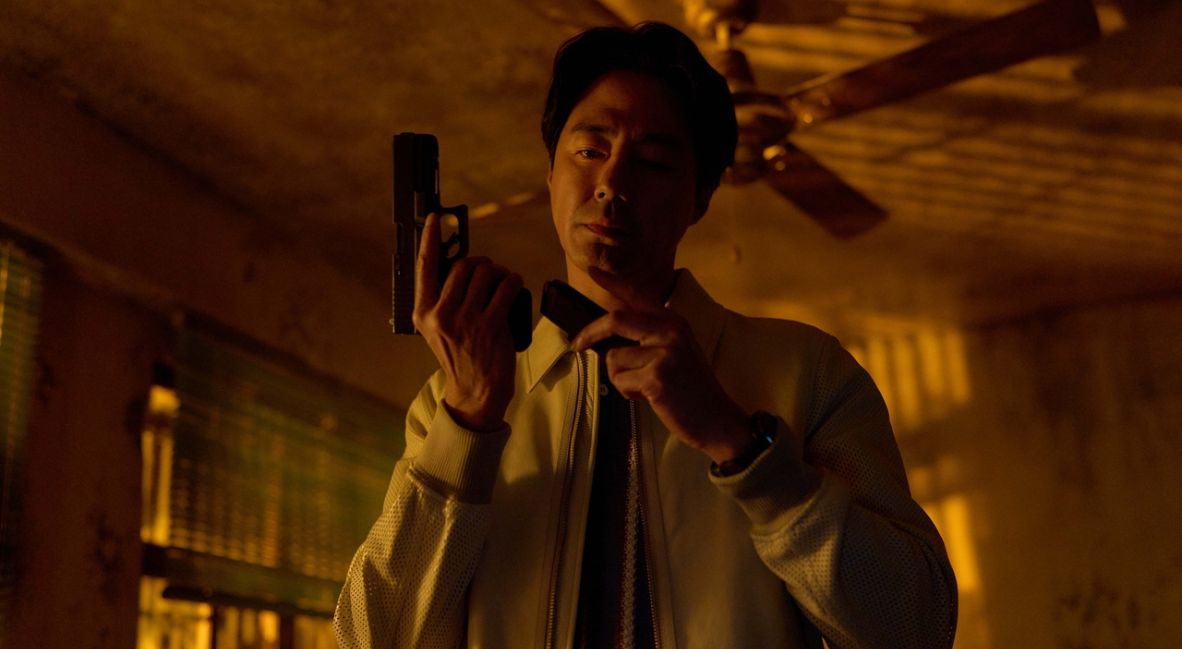
While every action sequence bolsters the film, the first fight sequence we see, with Zo In-sung as Manager Jo, sets the stage and expectations for the rest of the film. Unable to use a gun, lest he let everyone in the building know what he’s doing, Manager Jo fights off thugs looking to assault and drug his informant.
Manager Jo checks his gun, flips it to hold the muzzle, and wields it like a blunt weapon, and then proceeds to have a stunning one-versus-many fight. While director Ryoo plays with our expectations by showing us a hallway bathed in red light, this isn’t a hallway fight.
Still, it is close-quarters combat that is both creative and increasingly violent the longer the scene goes on. This opening fight doesn’t have to happen, but for Manager Jo, he isn’t about to abandon the informant he has promised to save. Only he’s too late.
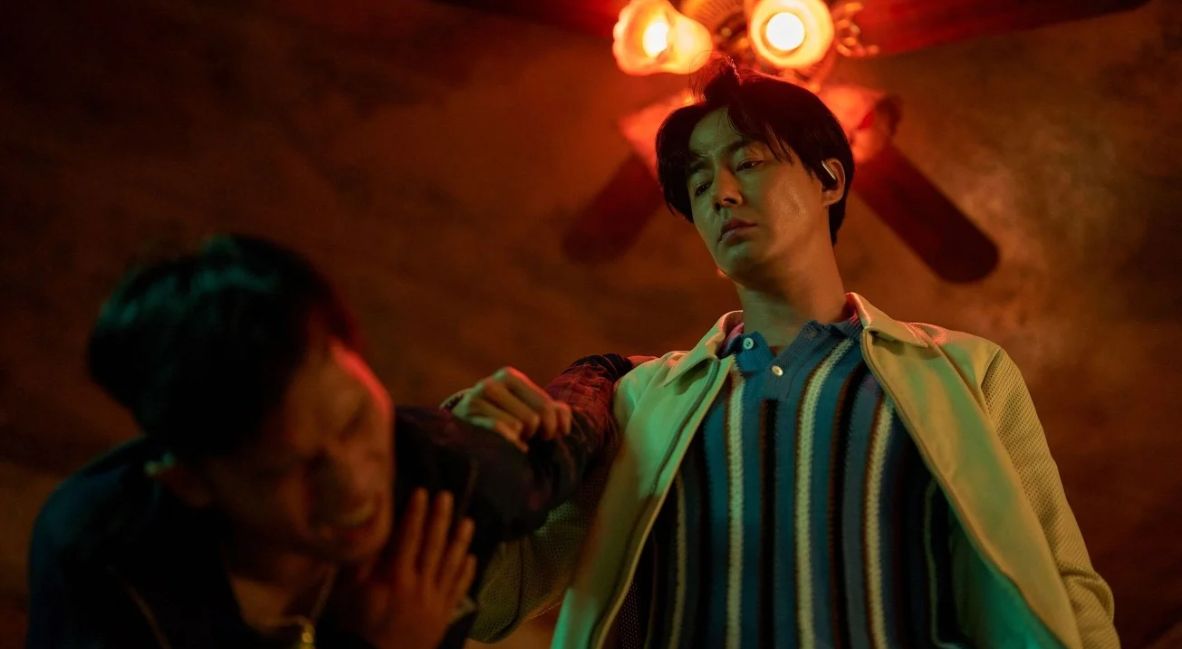
This early part of the film paints Manager Jo’s path in Humint. We see him go against orders and fight to rescue his informant, but it’s too late, and she dies. Every single choice that Jo makes after this point is to run further away from the reality of it. Every choice he makes is to avoid losing yet another person who put his trust in them.
As Manager Jo, Zo In-sung delivers a powerful, physical performance that actually outshines everyone in the film. Whether it’s the desperation in his actions or his restrained approach to fighting, everything about him is compelling. But more importantly, because he looks like he is always holding back just a little, his presence becomes more threatening as we enter the film’s third act and all paths converge in a final fight.
Manager Jo is the sensitive one in Humint. His part of this interconnecting story is to stop Chae Seon-hwa’s capture and keep North Korean forces from finding her out and executing her. But the North Koreans are already informed of the betrayal, leaving Park Geon and Hwang Chi-seong looking for the source of the leak.
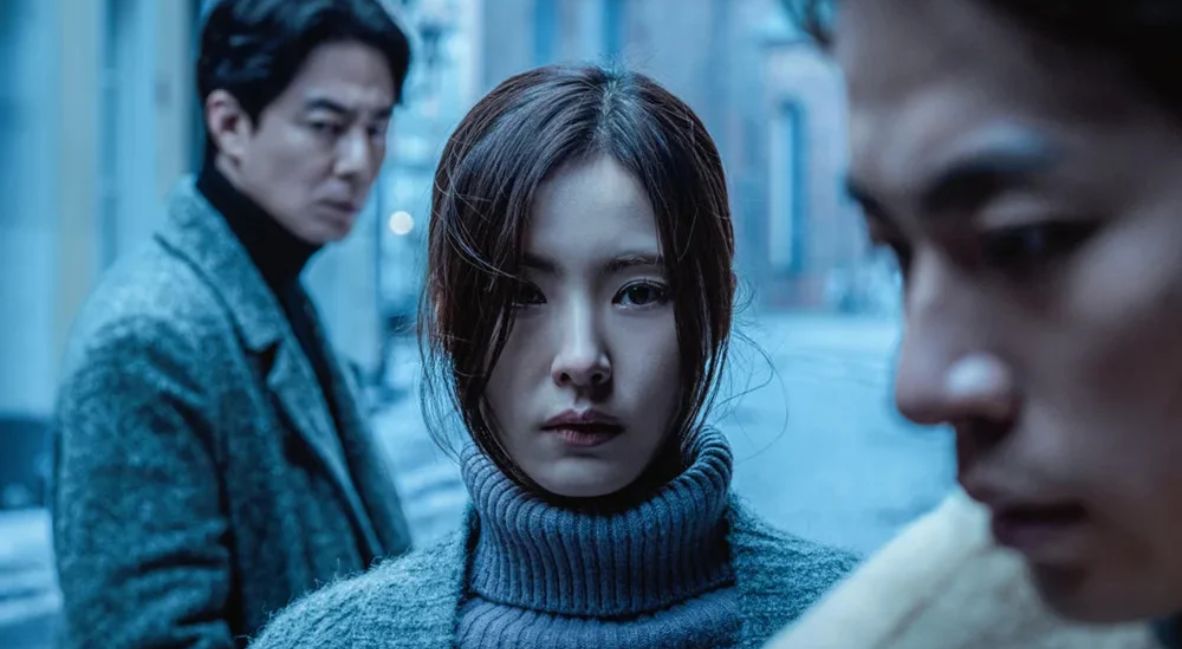
Where Hwang Chi-seong is straightforward in his dedication to his country, Park Geon’s dedication is tested when his connection to Chae Seon-hwa is slowly revealed. Park Geon is stuck in the middle.
He doesn’t want to oppose the North Korean government, but also does not want to let go of the woman he loves. Park Geon hits a gray streak by the end of the film. He isn’t on any side, but his own. But that means he has to adjust his allegiances in the moment, making him unpredictable.
In addition to the action, the choice to shoot in Latvia helps the film capture the crisp, cold atmosphere you’d expect in Russia, while the costume design creates a timeless effect. While smartphones make appearances every now and again, the most interesting part of Humint was how it constructed the world. With a signature jacket that defies being labeled by one generation of fashion, the buildings, set design, and lack of reliance on tech make the film even more compelling.
While much of the middle of the film is overly complicated, it’s bookended with some of the sharpest action that Ryoo Seung-wan has brought to the screen just yet. Humint could use more action and less hang-wringing, but the gunfights, hand-to-hand combat, and chase sequences will keep you in your seat and asking when Ryoo Seung-wan’s next film will be out next.
Humint isn’t selling itself on its espionage, but it is ready to smash through the door and demand to be seen. With stellar action performances that culminate in one of my favorite third acts of the year so far, Ryoo Seung-wan’s spy thriller is more than worth your time.
Humint is streaming now, exclusively on Netflix in the United States.
Humint
-
Rating - 7/107/10
TL;DR
Humint isn’t selling itself on its espionage, but it is ready to smash through the door and demand to be seen.