
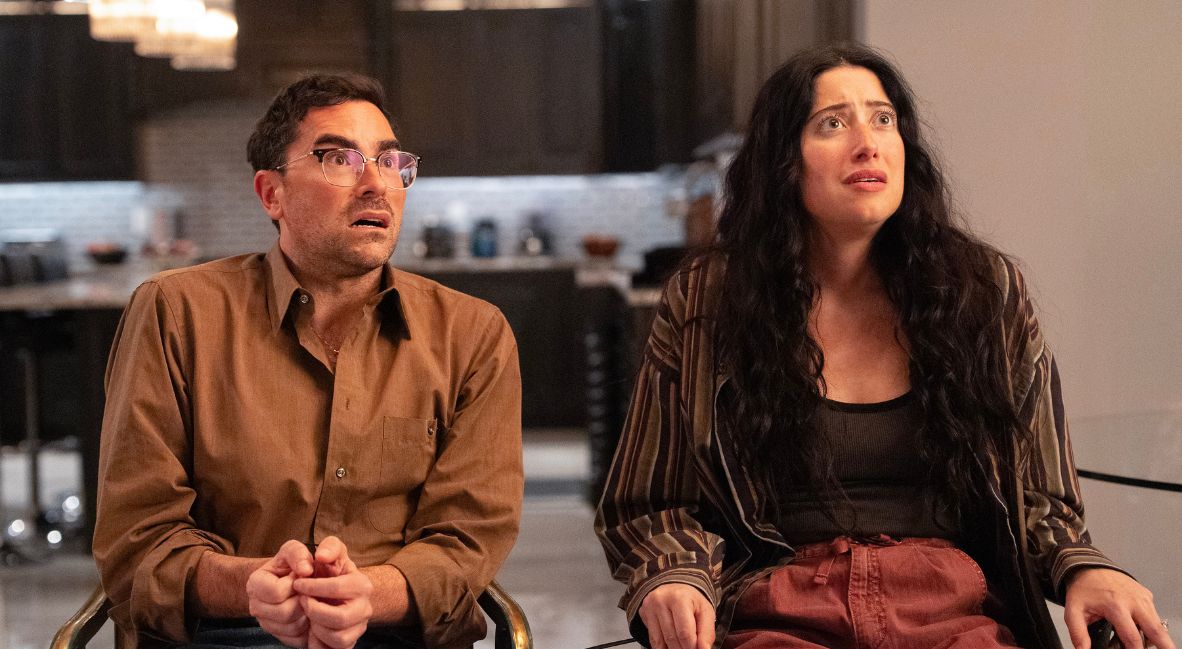
The most defining element of the shaky start of Netflix’s Big Mistakes is its relentless noise. Created by Dan Levy along with Rachel Sennott, the series builds on the two competing narrative sensibilities. Levy brings the familial dysfunction present in his claim to fame, the much warmer Schitt’s Creek, while Sennott weaponizes the screeching, irony default of her (equally loud) HBO series, I Love LA.
The combination is, at times (especially at the start), decidedly aggravating, as each character performs vocal acrobatics to talk over the others. But by the time the series settles into its friction-bound groove, it reveals a steady, stressful structure.
But it takes a moment, and the unsteady beginnings are almost the series undoing, which can’t help but paint one portion of the story as much more palatable than the other. It’s yet another instance where, yes, it is perfectly fine and worthwhile to tout unlikable characters as the story’s centerpiece.
We will always need more messy women. But, unfortunately, in this case, it’s not that the characters are flawed. It’s that some of them are constantly making the worst decisions to the point that it’s hard to root for them. And, worst of all, asks that we treat these missteps like they’re even possibly relatable despite being mind-numbingly stupid.
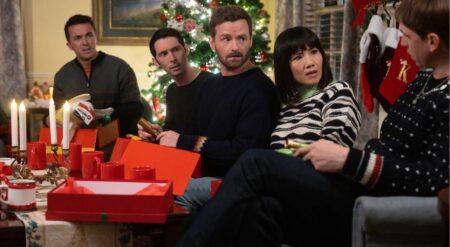
Familial dysfunction rules the court at the start of Big Mistakes.
Big Mistakes opens with a scorching back-and-forth between family members that makes quick work of showing the series hand. Nicky (Dan Levy) and Morgan (Taylor Ortega) sit and watch as their mother, Linda (Laurie Metcalf), and their do-gooder youngest sister, Natalie (Abby Quinn), help take care of their ailing grandmother.
Linda is brutal in her indictment of her two eldest, asking why they can’t make her mother’s death easier on her. The dysfunction sucker punches us on the nose and then never relents, ensuring we know the family is in chaos inside and out.
This makes Nicky and Morgan’s day jobs—a local pastor and school teacher—all the more disconcerting. Neither possesses an easy calm; both are frazzled and constantly trading barbs, despite clearly having a lot in common.
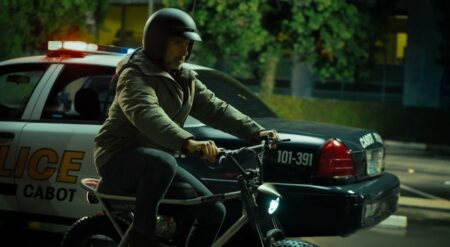
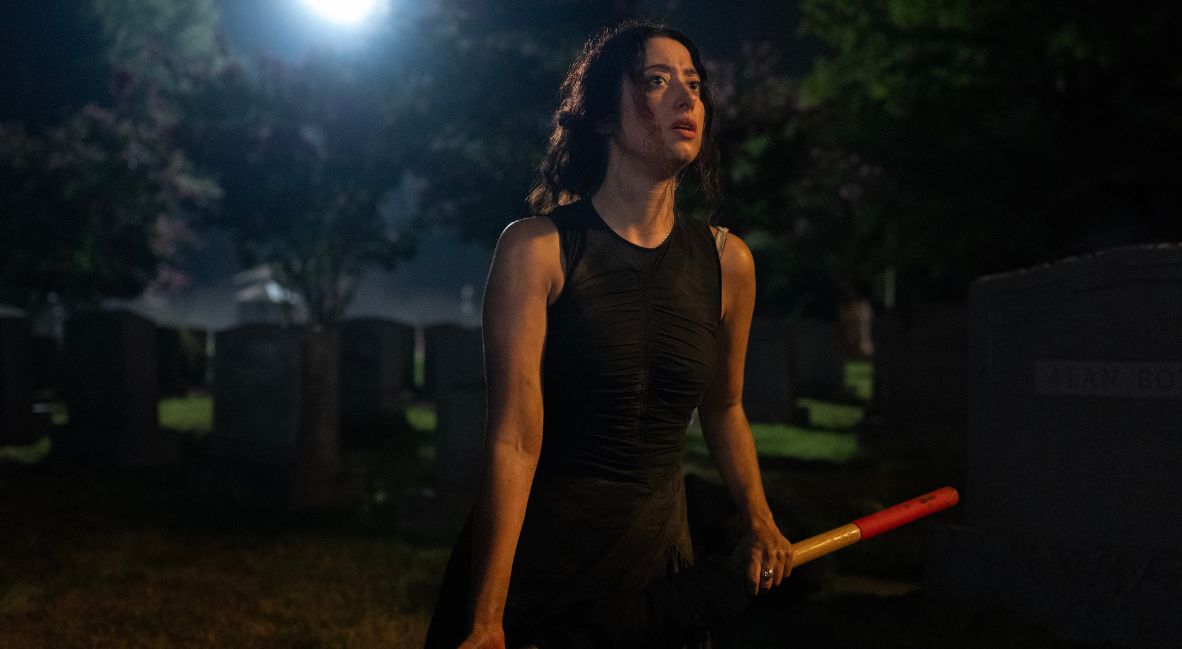
Their lives change drastically, however, after Morgan (in the first of many idiotic decisions) steals what she thinks to be a cheap necklace from a local retailer despite the clerk’s very insistent warning not to touch it. The said necklace is not cheap; it is very, very expensive, and it ties the two siblings to the insidious world of organized crime.
The series asks us to buy into the many ways Nicky and Morgan worsen an already bad situation.
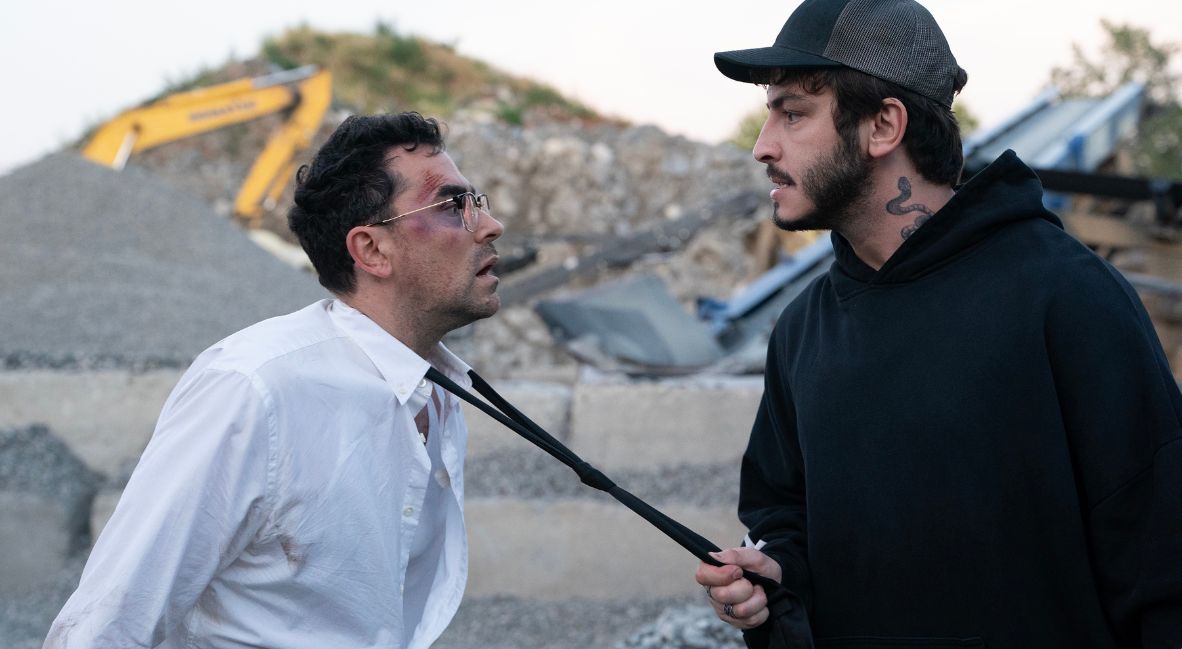
How the two go from pastor and school teacher to having to dig up graves and helping peddle cocaine forces you to go along with the fundamental, uh, mistakes the two keep making. Just set aside any desire for reason and enjoy the ride as the two entrench themselves further into the underbelly that sees them asking for favors on their own accord, letting recently incarcerated men into their mother’s home, and snorting coke with Brazilian gangsters in Miami. C’est la vie.
Despite its central premise, built on the many fumbling ways Nicky and Morgan handle the increasing levels of stress and stakes they face, Big Mistakes finds its strongest thematic cues in how the siblings adapt to the changes. Morgan finds herself, at least momentarily, enjoying some of the small odd jobs that she’s forced to help facilitate.
Meanwhile, Nicky is having a very real conflict of faith, both in remaining a pastor while forced to work for these criminals and in grappling with the desire to come out to his boyfriend. Because while his church accepts he’s gay, they don’t want him practicing.
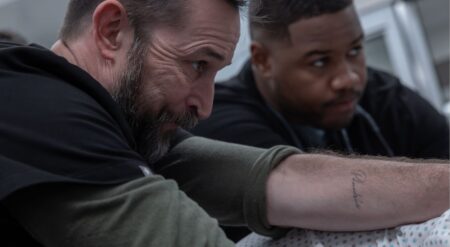
Nicky, played by Dan Levy, offers up the most compelling character-driven arc.
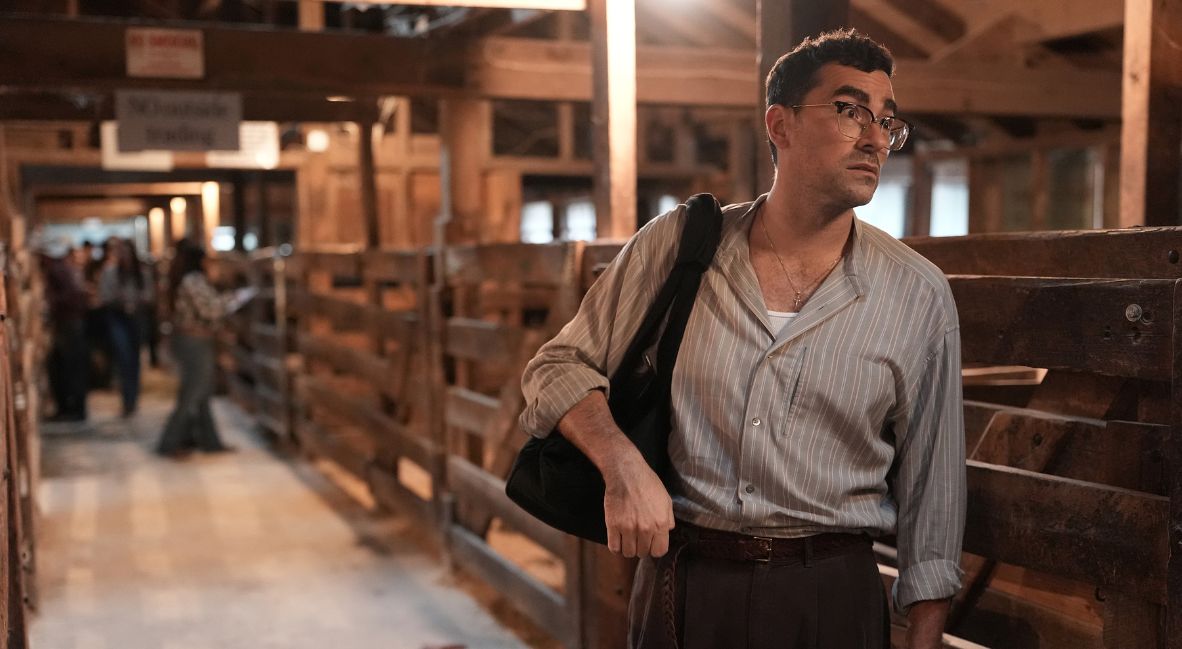
It’s also interesting to see how Nicky and Morgan’s activities translate into the world around them. As Linda runs for Mayor, the two face greater internal strife, knowing that one wrong move could derail her entire campaign. Meanwhile, Morgan is having to contend with her long-term boyfriend, Max (Jack Innanen). A relationship that she seems repulsed by most of the time but has no clue how to untangle herself from it, something that grows harder the more the season presses on.
But it really is Nicky’s grappling with his faith and what it means to be good—to do good—that gives Big Mistakes such stifling tension. And what’s more interesting is when that goodness comes into play—and what he is and isn’t willing to sacrifice his morals on. Taking money from people who believe it’s a donation to the church? Fine, if in a pinch. Revealing a secret shared in an unlikely moment of intimate connection that will literally save his skin? No can do.
It’s this that makes Nicky a compelling character: He’s an imperfect man who knows that, in his religion’s eyes, he is sculpted by the perfect God to be an imperfect mouthpiece through which to share his wisdom. His constant internal battle and Levy’s pitch-perfect bouts of blazing meltdowns do terrific work in maintaining the necessary imbalance. Nicky wants to “be good” but finds himself unable to fully remove himself from the mess suffocating his livelihood.
Big Mistakes struggles with its specific brand of above-it-all comedy.
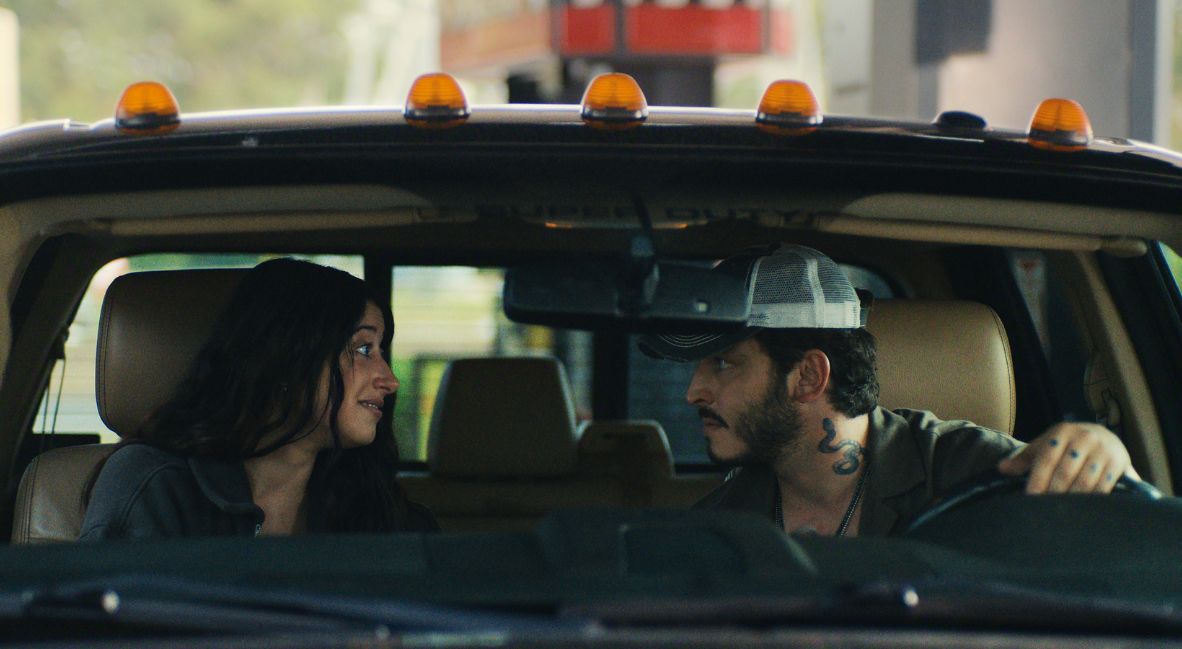
It does present a slight tonal shift between Nicky and Morgan, as the latter is a bit laissez-faire about everything. And it’s here that the writing from Sennott and Levy does a disservice to what it ultimately is: a biting dark comedy. Because it leans too heavily into a Gen-Z comedy aesthetic where nobody cares about anything and it’s uncool to try.
It’s a brand of comedy that I can’t help but chafe at because it expects us to laugh at characters who are both desperately unlikable and have no moral standing to operate on. They’re along for the ride. And Morgan embodies this through her constant inactivity and passivity as a character.
From her rightful disinterest in her boyfriend, to constantly messing up situations and blaming anyone but herself, to her belief that coke addiction is based on the person, not the drug, there’s a lot of personality with no depth. We don’t know what makes her tick, and from the writing, it seems to be an accident rather than a deliberate decision.
The entire cast is solid and helps build out even the slightest characters.
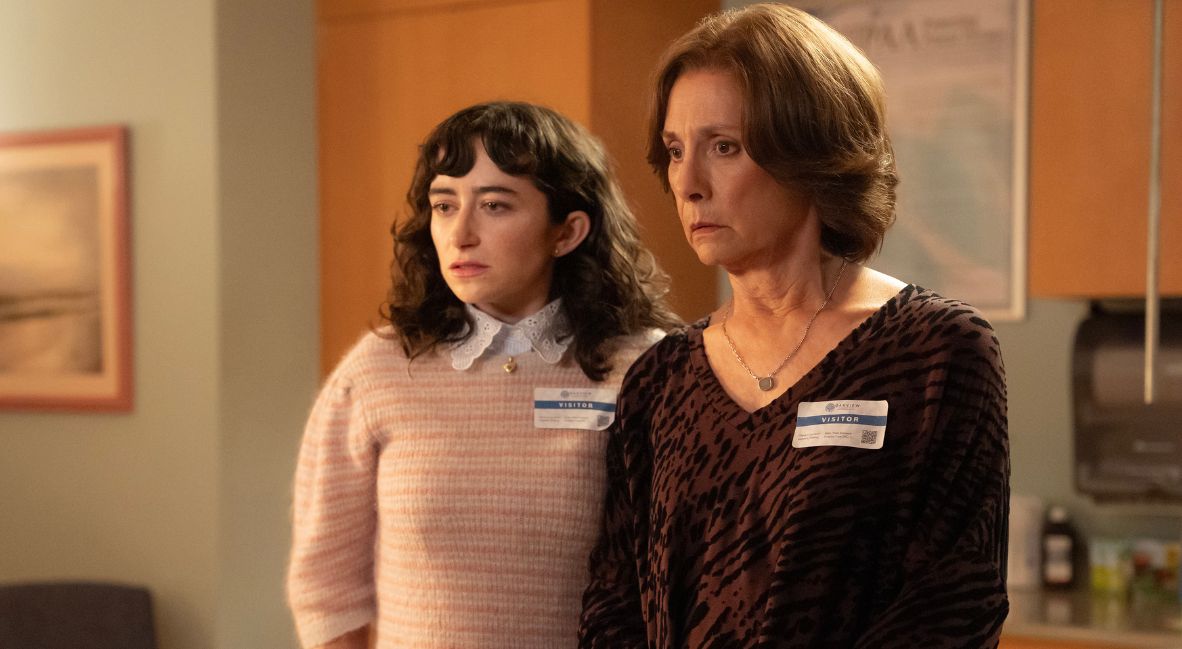
It’s not fun to root for a character who takes no stakes in her own life or those around her. Ortega, unfortunately, succumbs to the shout-first nature of the writing, though she and Levy have strong sibling chemistry. It’s just a shame the writing seems so disinterested in writing Morgan with real substance or interiority.
On the whole, however, the cast is solid. Metcalf goes all in as Linda, a woman incapable of not sharing her thoughts on just about anything, a bully to her children but also their biggest defenders when the going gets tough. Levy is suitably ruffled throughout, a welcome change as he increasingly relaxes in front of the camera. (funny, considering the character’s increasingly taut stature.)
An unexpected standout is Boran Kuzum as Yusuf, the member of the crime syndicate who first forces Morgan and Nicky into this mess. Kuzum reveals moments of vulnerability and doubt to a character who, at first, is shoving the two siblings into the back of the van to do his dirty work.
Despite a shaky foundation, the end of Big Mistakes leaves us wanting more.
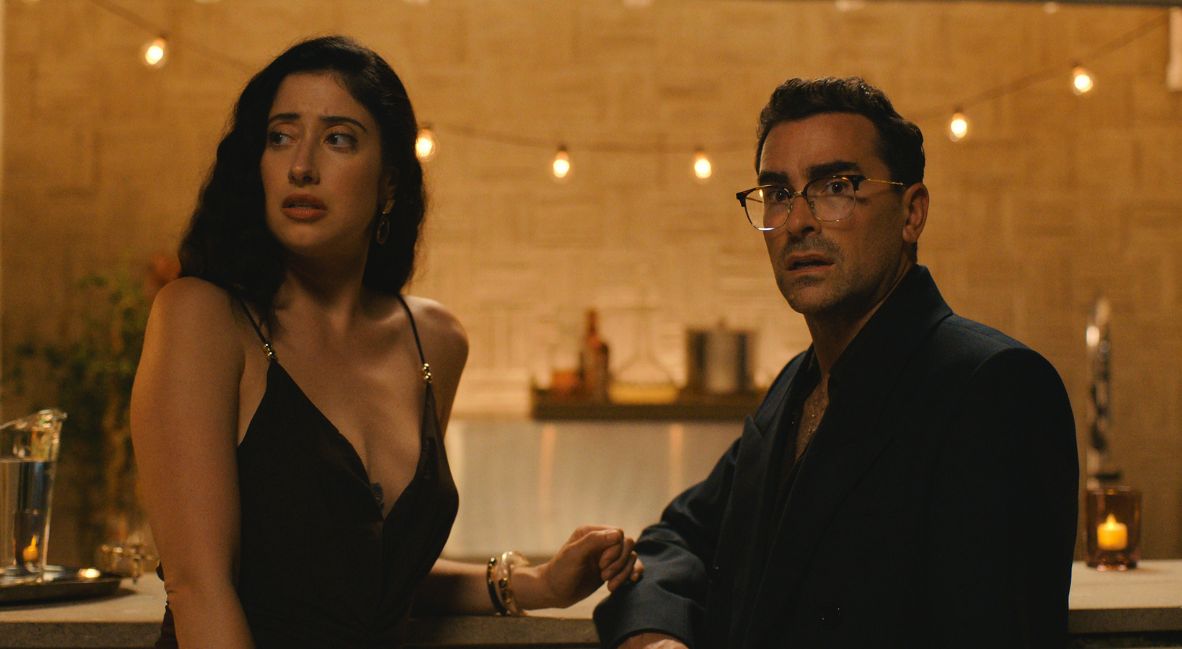
But more than anything, Big Mistakes earns its shortcomings by delivering a fantastic end with a major, Season 2-promising reveal. Every glaring question about just how Morgan and Nicky can make it home alive is answered in an unassuming moment of dread as we realize just how well and truly screwed they are. It’s a chilling moment, made more so by the fact that it seemed, for a moment, like they were in the clear, even if there was potential for deep, personal fallout.
Big Mistakes looks better than most Netflix series, though it still succumbs to a certain flat style of lighting. But there’s a pulsing personality to the direction that helps give the series its frenetic energy. The characters are talking and moving at breakneck speed, and the visual style follows suit.
Despite its carousel of irritations, Big Mistakes is effective by the end of the season. The urgency of their predicament and the layers of ways in which their world could come crashing down around them make for strong entertainment as we wait to see just how (or if) Nicky and Morgan can untangle themselves from this impossible mess.
The series takes too long to get to the real action, believing that the barbed back-and-forth is engaging enough on its own when the real magic lies in how their actions unleash such immeasurable potential for catastrophe. It’s not so much that we don’t care about how the characters got here. It’s just that we care more about how they process the mess they’ve made.
Big Mistakes is available now, exclusively on Netflix.
Big Mistakes
-
Rating - 7/107/10
TL;DR
Big Mistakes is effective by the end of the season. The urgency of their predicament and the layers of ways in which their world could come crashing down around them make for strong entertainment as we wait to see just how (or if) Nicky and Morgan can untangle themselves from this impossible mess.