
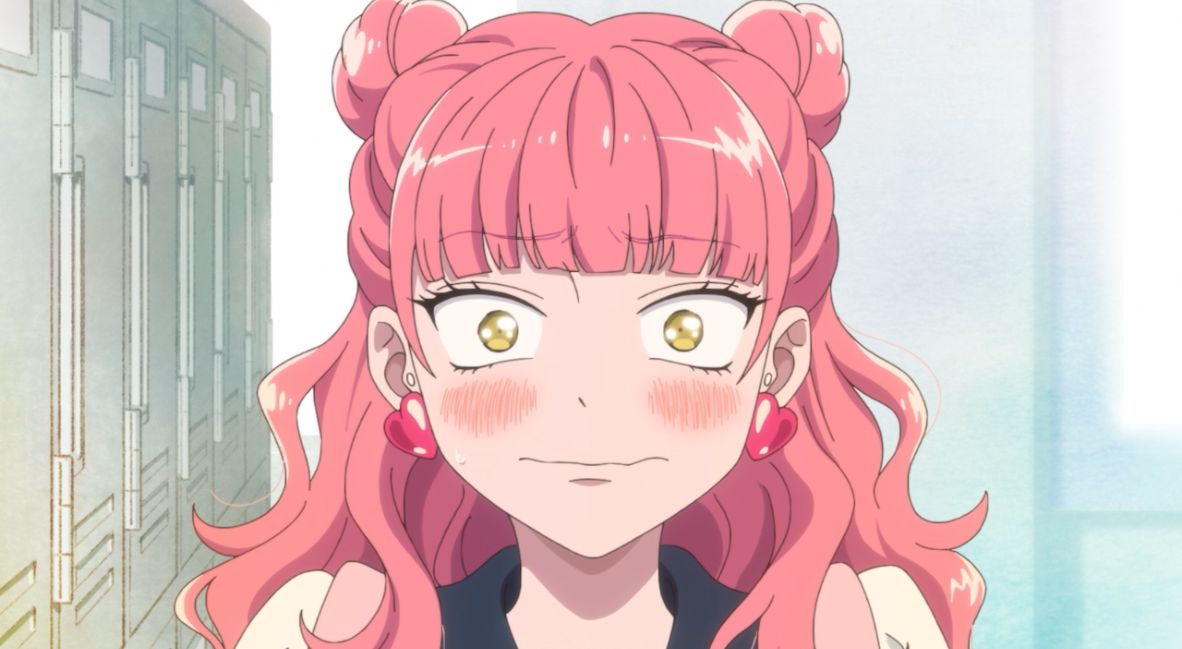
Two moments immediately declare You and I Are Polar Opposites as an instant winner. The first is the introduction of the teenage protagonist, Miyu Suzuki (Sayumi Suzushiro), a loud, wrecking ball of a teen ruled by impulse. She’s great – perfect teenage mayhem is bottled in just a few short moments. The second is the opening, a glorious, vivacious spin that establishes the tone with striking immediacy. This series is going to charm the pants off of you.
Based on the series written and illustrated by Kōcha Agasawa and produced by Lapin Track, You and I Are Polar Opposites, like Tamon’s B-Side, Journal With Witch, and more, adds to the resounding delight of the shojo/josei renaissance.
A coming-of-age romance, the series is overrun with an infectious atmosphere that energizes the story. Blending familiar tropes with distinctive visuals, character designs, and performances, the series adaptation is a lovable combination of old and new ideas.
One of the best decisions comes straight out of the gate, with the central romance between Suzuki, who is outgoing and popular, and the reserved, quiet Yuzuku Tani (Shogo Sakata). We learn about Suzuki’s crush on Tani immediately, as she tries to get him to interact with her in class and finds reasons to hang out, even if it’s just for a short walk after school. By the end of the premiere, they’ve both admitted their feelings to one another, allowing their romance to develop through their attempts to get to know one another better, rather than a will-they/won’t-they narrative pull.
Suzuki and Tani are the focus, but the entire ensemble is wonderful.
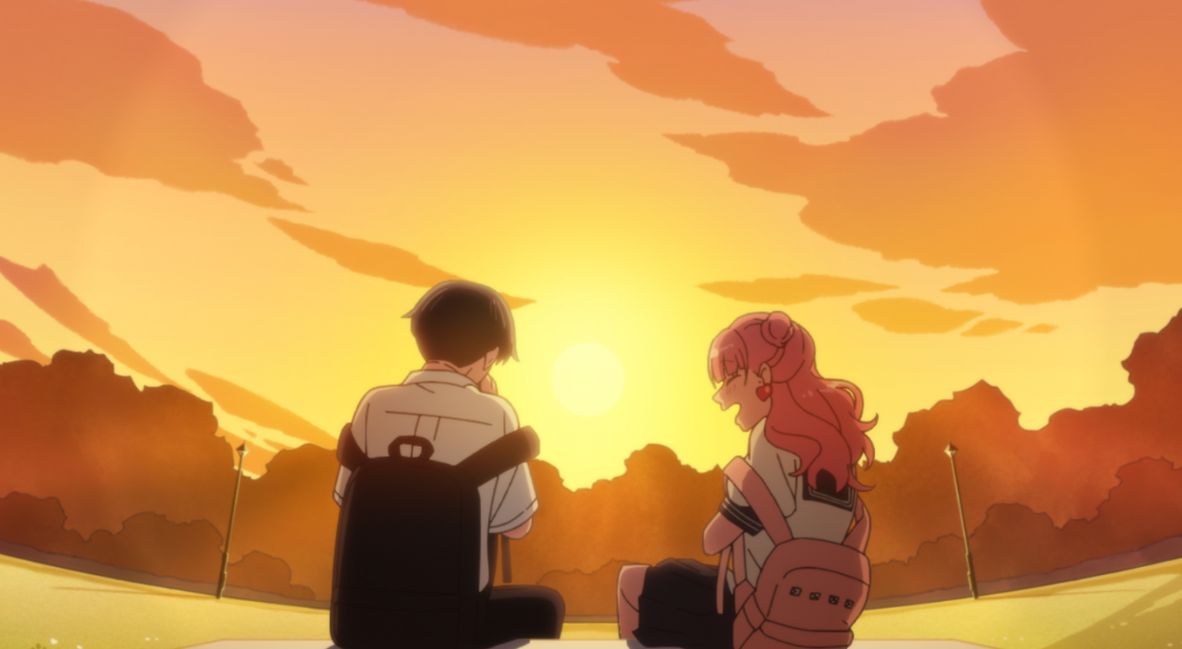
The developing relationship between Suzuki and Tani is sweet, wholesome, and utterly believable. One of the great strengths of You and I Are Polar Opposites is an acute understanding of what it means to be a teenager. No one is written with adult dialogue or composure while cosplaying as a teen.
They’re all relatable because they feel real. From Tani looking up how to talk to a new girlfriend, to Suzuki and her friends all killing time after school with mundane, childish activities with cheap toys, there’s a surprising amount of authenticity to the characters.
It’s evident not just in the moments of romance but in how the characters interact and talk to one another. From the casual nature of Suzuki’s interactions with her childhood friends to the constantly stressed Shuji Taira (Wataru Katoh) and his inner monologue, where he questions everything he’s ever done at any given moment, the writing leans on the sincerity and awkwardness of youth.
Friendships are just as important as romance in You and I Are Polar Opposites.
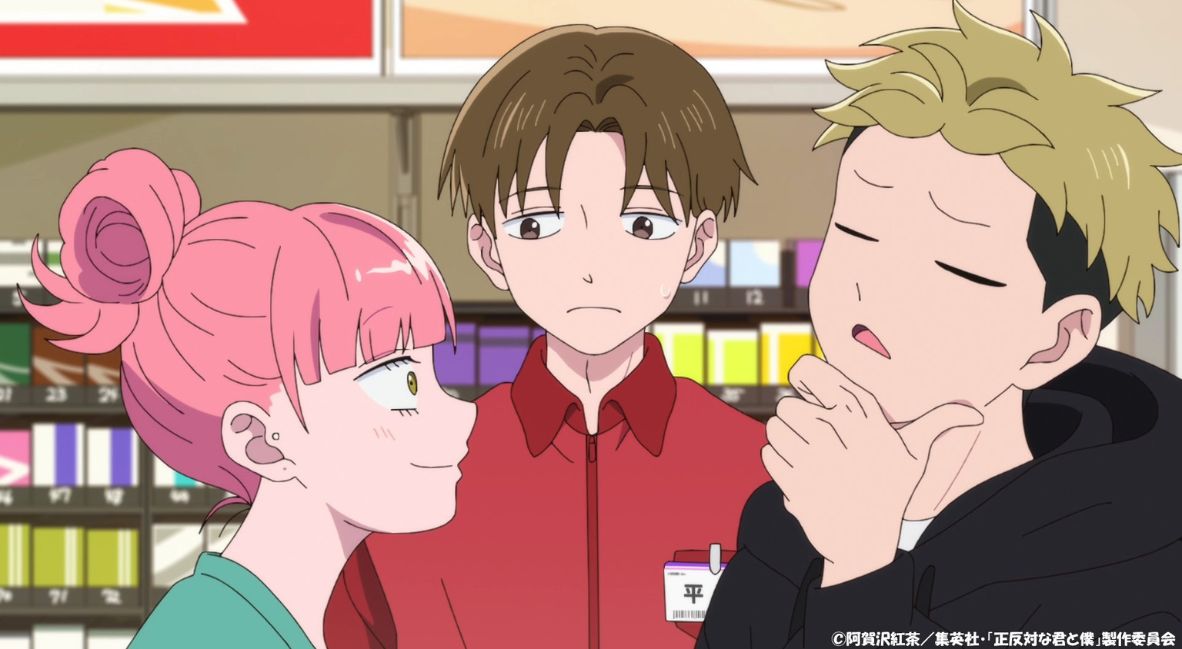
Like any great romance anime, You and I Are Polar Opposites knows it needs to have a strong ensemble. While Suzuki and Tani are the driving force, the series finds just as much joy in the supporting pairs. And each plays within the ‘opposites attract’ scope without making too fine a point of it. Kentaro Yamada (Anji Iwata) and Natsumi Nishi (Kokoro Ōmori) are tooth-rottingly sweet; Yamada’s easy-going nature is a natural balm for Nishi’s shy demeanor.
While Yamada and Nishi’s romance develops, Taira and the aloof Shino Azuma (Miyuri Shimabukuro) also spark a will-they/won’t-they dynamic, though it’s not as obvious yet. More than anything, Taira and Azuma remind us that while love is its own journey, friendships are just as integral to our coming-of-age story.
And while there’s certainly a hint of more to their dynamic, it’s been interesting to watch how the two former middle school classmates reacclimate with one another, especially as the two manage to balance one another out, offering what the other lacks.
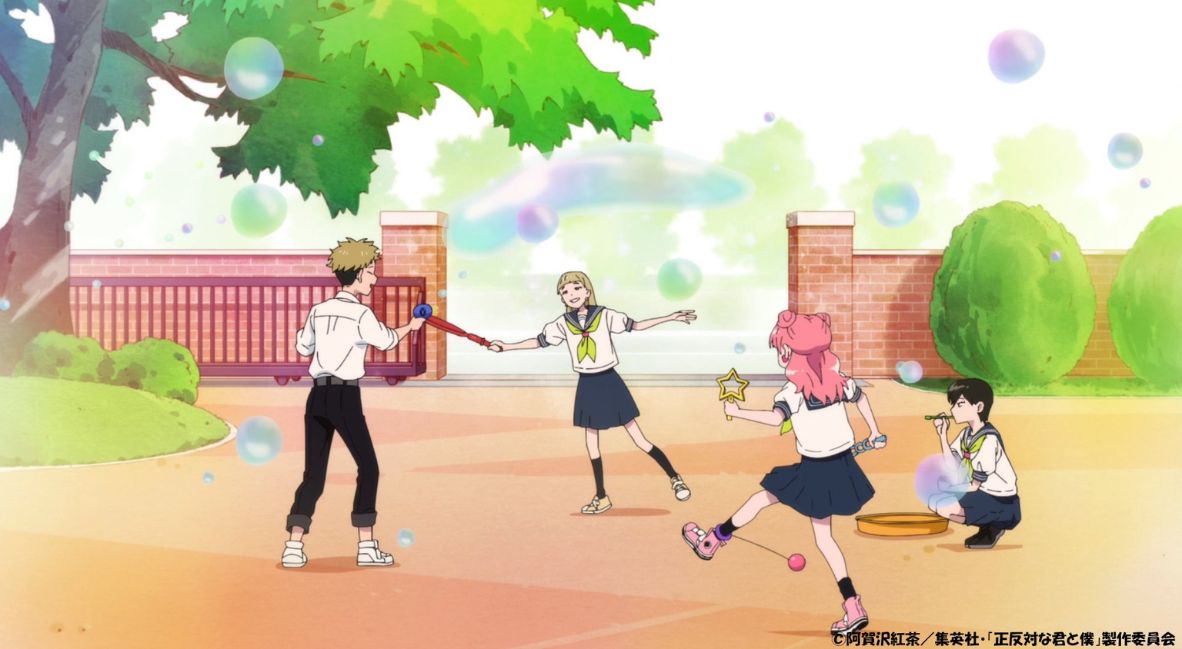
Friendships are a key part of the series, especially as Suzuki and Tani’s romance helps bring people together. Tani, while content enough in his introverted nature, is happy to have a friend group. Taira, meanwhile, can come out of his shell, less focused on how others perceive him.
Azuma can exist rather than constantly be expected to be someone she isn’t or give something as proof of friendship. The palpable sweetness of the series is so effective because it allows small interactions and moments to further endear the characters to us.
Case in point, a moment on a school trip where Tani realizes at the very end he’d have liked to go all out in the experience, silly hats and all. It’s a small beat, but it does a lot to show both how the character has changed and how much room he still has to grow.
Suzuki’s infectious energy gives the series greater life.
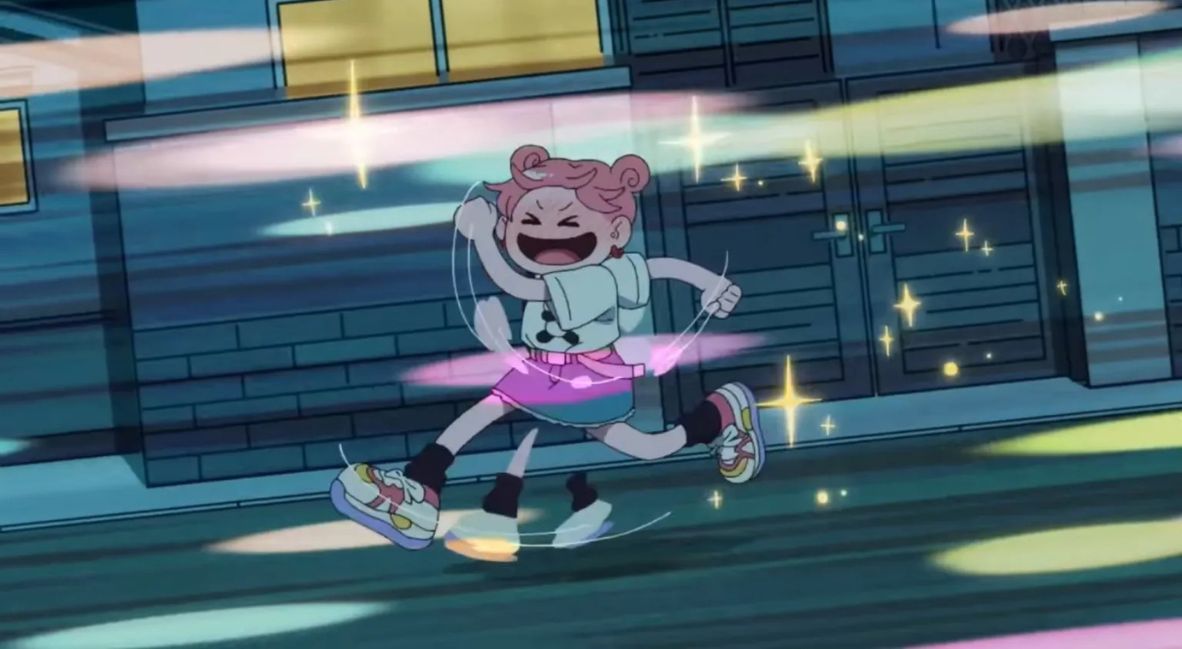
The energetic charm of the story and its characters carries over to the aesthetics as well. Directed by Takakazu Nagatomo with music from Tofubeats, the story comes alive with potent vibrancy and a dreamy, breezy score that plays to the buoyancy of youth.
While harsh, contrasting colors are used in the makeup of the world (and in Suzuki’s character design), it never reads as overbearing. The overt saturation instead helps give it a singular flavor, as if the playfulness of the characters and the spirited youth that defines the series couldn’t help but spill over the narrative margins and into the visual storytelling as well.
This bubblegum blend of pop-art aesthetic with Adventure Time stylings works wonders in encapsulating the vivid reality of Suzuki’s world and personality. She’s so bursting with life and energy that it wouldn’t feel right to dull the page with muted, naturalistic coloring. Her spark and delightful, contagious energy fuel the series, both in the characters and in its overall tone and look.
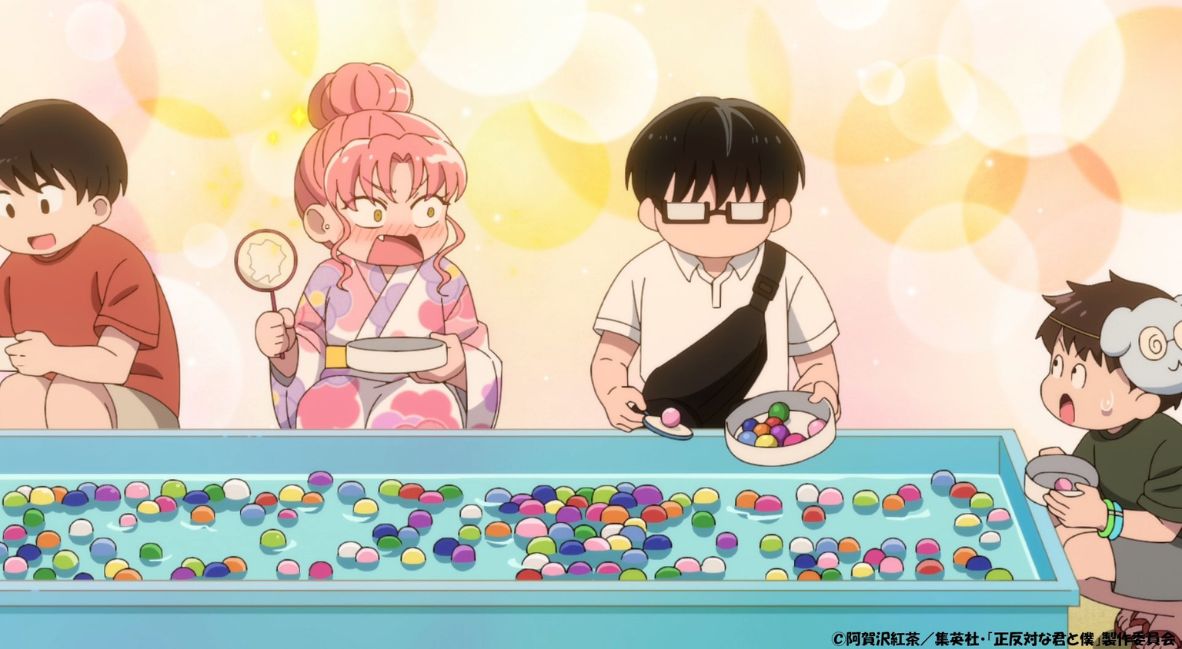
A particular highlight is the way in which You and I Are Polar Opposites visually signals a teenage girl’s descent into a full, raccoon goblin person. For all the effort she puts into how she looks, the more authentic version of her is the one where all of the details are sanded down, leaving shapes stacked on top of one another, adorned with her signature fangs. Similarly is the understated note of how loud she is, her presence so often first heard, rather than seen.
These details are what make You and I Are Polar Opposites Season 1 such a thrill to watch, beyond the desire for more romance anime. The series, despite playing in some familiar tropes, refuses to rest on the expected. And so much of that is due to the bold character work.
These characters are so knowable, from Nishi’s friend declaring she has a vague dislike for anyone she hasn’t spoken to before, to Taira’s incessant worry about being perceived, their idiosyncrasies enrich the world, but the writing never tries to make them larger-than-life for the sake of being anime protagonists. Instead, the draw to them is that they are all fundamentally, wonderfully, normal.
You and I Are Polar Opposites Season 1 delivers heartfelt hilarity.
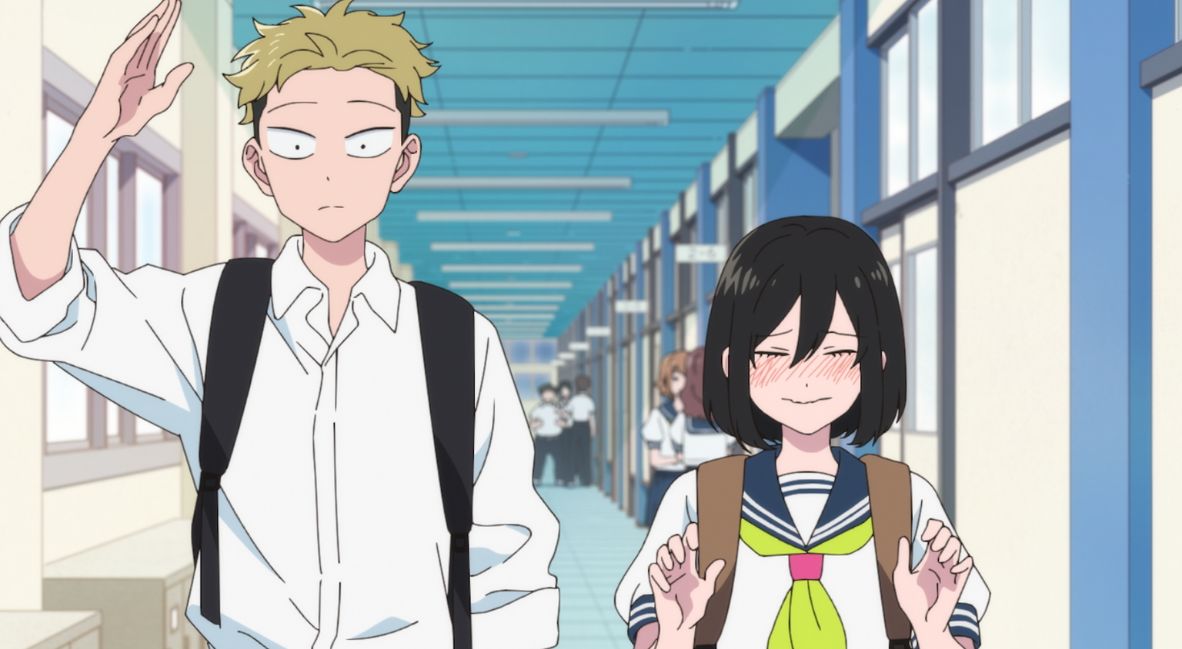
Or, rather, as normal as any teenager in the throes of adolescence and puberty can be. This is where much of the humor derives. It is easily the funniest anime of the year so far, laden with physical gags, one-liners, and devastatingly brutal observations.
Each performer gives extra emphasis to their character’s most distinctive, “polarizing” qualities, from Sayumi Suzushiro’s chirpy delivery, Anji Iwata’s nonchalant good nature, or Wataru Katoh’s attempted droll attitude overrun by evident, brimming panic. The characters, their sense of humor, their friendships, and romance – it all feels lived in and well-established.
You and I Are Polar Opposites Season 1 delights with an abundance of charm, making it one of the best series of the year so far, and certainly one of the biggest surprises. With a combination of classic tropes and settings given new life with a fresh approach and excessive personality, the series is a triumphant deluge of color and wholesomeness that instantly changes the tide of any sour mood.
You and I Are Polar Opposites Season 1 is available to stream now on Crunchyroll.
You and I Are Polar Opposites Season 1
-
Rating - 9/109/10
TL;DR
You and I Are Polar Opposites Season 1 delights with an abundance of charm, making it one of the best series of the year so far, and certainly one of the biggest surprises.