


From its opening episode, Starfleet Academy Season 1 establishes that its battles won’t be fought primarily in space. There are no massive fleet engagements, no ships being torn apart in spectacular combat sequences, and very few of the kinds of external crises that typically define Star Trek finales. Instead, the season places its conflict somewhere much closer to home. The real struggle facing the Federation isn’t a hostile alien species or a rival power in the quadrant. It’s themselves.
Set in the post-Burn era introduced in Star Trek: Discovery, Starfleet Academy Season 1 takes place in a moment when the Federation is still rebuilding both its infrastructure and its identity. Warp travel has only recently stabilized, Starfleet’s reach has contracted, and the realities of a fractured galaxy are still testing the ideals that once defined the Federation.
Rather than exploring those tensions through large-scale political conflict, Starfleet Academy Season 1 chooses a smaller, more personal lens. The Academy becomes the place where the next generation decides what those ideals will look like going forward. Each cadet arrives carrying their own version of that question.
Caleb Mir’s arc in Starfleet Academy Season 1 becomes the emotional backbone of the series.
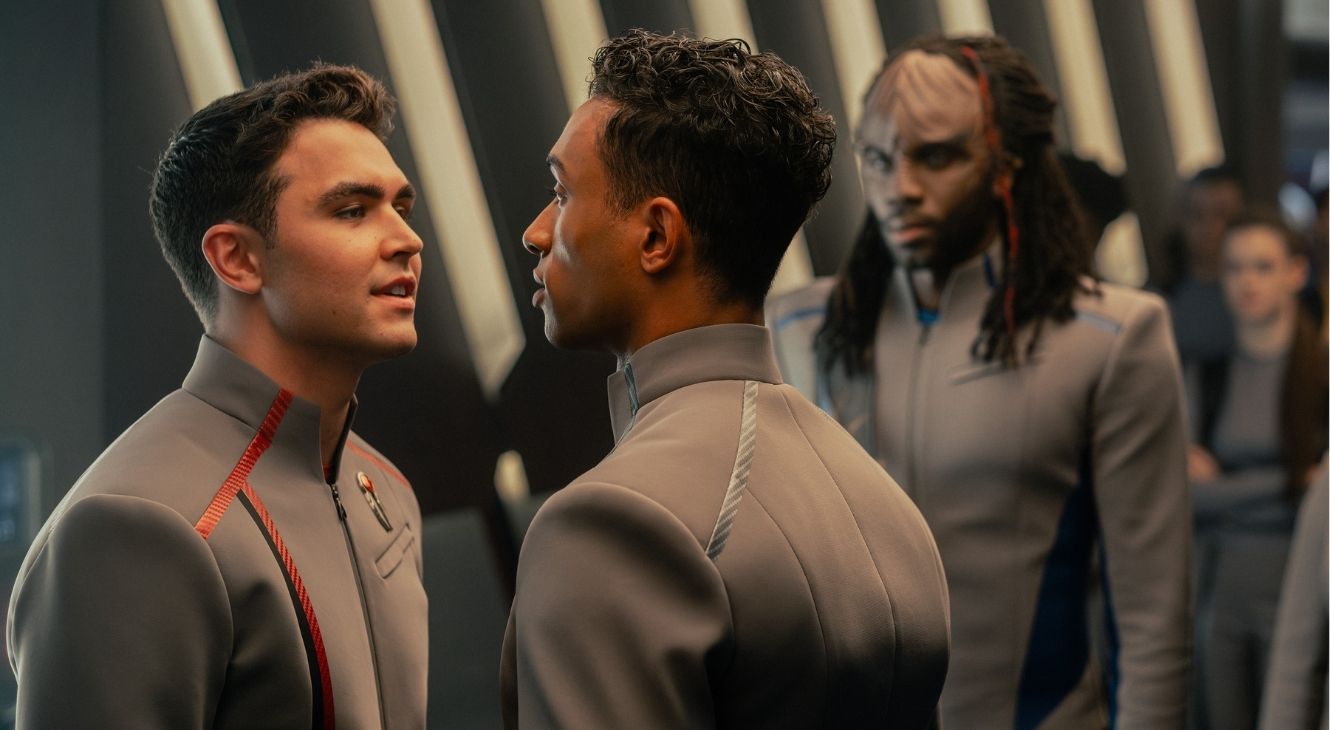
For Caleb Mir (Sandro Rosta), the Academy represents a chance to escape a past defined by instability and survival. Raised in circumstances where trust was often a liability, Caleb begins the season treating Starfleet less as a calling and more as an opportunity to survive in a different environment. His arc gradually becomes the emotional backbone of the series, particularly as the mystery surrounding his mother and his connection to the Federation unfolds. Caleb’s struggle is never about whether he is capable of succeeding at the Academy. It’s about whether he can allow himself to believe in something larger than the instincts that kept him alive growing up.
Genesis (Bella Shepard), meanwhile, enters the Academy carrying the expectations of leadership before she is entirely ready for them. Throughout Starfleet Academy Season 1, she wrestles with the tension between the authority placed on her and the uncertainty she still feels internally. The show repeatedly places her in situations where command decisions must be made long before she feels fully prepared. By the finale, when she finally sits in the captain’s chair during the operation aboard the Athena, the moment feels less like a symbolic milestone and more like the natural culmination of the lessons she has spent the year learning.
Sam (Kerrice Brooks) provides one of the season’s most unique arcs. As a synthetic character still learning to understand emotion and empathy, her journey reflects the series’ broader interest in internal development. Her time with the Doctor (Robert Picardo) fundamentally changes how she processes the world around her, forcing her to navigate relationships and responsibilities with a level of emotional awareness neither of them has ever experienced before. That transformation becomes especially important in the later episodes, where Sam’s ability to recognize connections becomes the thing that helps stabilize Caleb when he begins to spiral back toward isolation.

The rest of the cadet class reinforces that idea by expanding what Starfleet looks like in this new era. Jay-Den (Karim Diané) stands out immediately as a character who would have felt radical in earlier Star Trek series: a proud Klingon who openly embraces being gay while pursuing a career in Starfleet medicine. His presence doesn’t erase Klingon tradition so much as reinterpret it, showing that honor and compassion can coexist in ways previous generations might not have imagined.
Darem (George Hawkins) brings a different tension to the class. As a prince, leadership has always been expected of him, but his arc isn’t about claiming that power. Instead, it explores what it means to reject the assumption that leadership must come from hierarchy or birthright. Throughout the season, Darem slowly learns that responsibility can look very different when it’s rooted in choice rather than obligation.
Tarima (Zoë Steiner) pushes the boundaries of what audiences have previously seen from Betazoids. Rather than simply repeating the empathic abilities associated with characters like Deanna Troi, the series introduces a deeper and more intense psychic connection that feels both familiar and new. Starfleet Academy Season 1 doesn’t discard established Trek lore, but it does suggest that the Federation is entering a period where those traditions are being expanded by people who experience them differently.
The cadets represent the diversity of the Federation and how these clashing perspectives help everyone grow.

Taken together, the cadets reflect a Federation that is far more diverse than the one that existed before the Burn. Their differences aren’t treated as obstacles to overcome, but as perspectives that strengthen the institution they are preparing to serve. The Academy becomes a space where those perspectives collide, challenge one another, and ultimately reshape what Starfleet will look like moving forward.
That internal transformation mirrors the larger political reality unfolding beyond the Academy’s walls. Rebuilding the Federation after the Burn is not a simple process of flipping a switch and restoring the past. Bringing worlds like Betazed and the Klingons back into alignment with the Federation requires diplomacy, patience, and a willingness to acknowledge past mistakes.
The adults in the series, leaders like Chancellor Ike and officers who become instructors, are responsible for that work of institutional repair. But while they rebuild the structures of the Federation, the cadets are quietly shaping its future. What makes these arcs resonate is the way the show frames Starfleet itself.
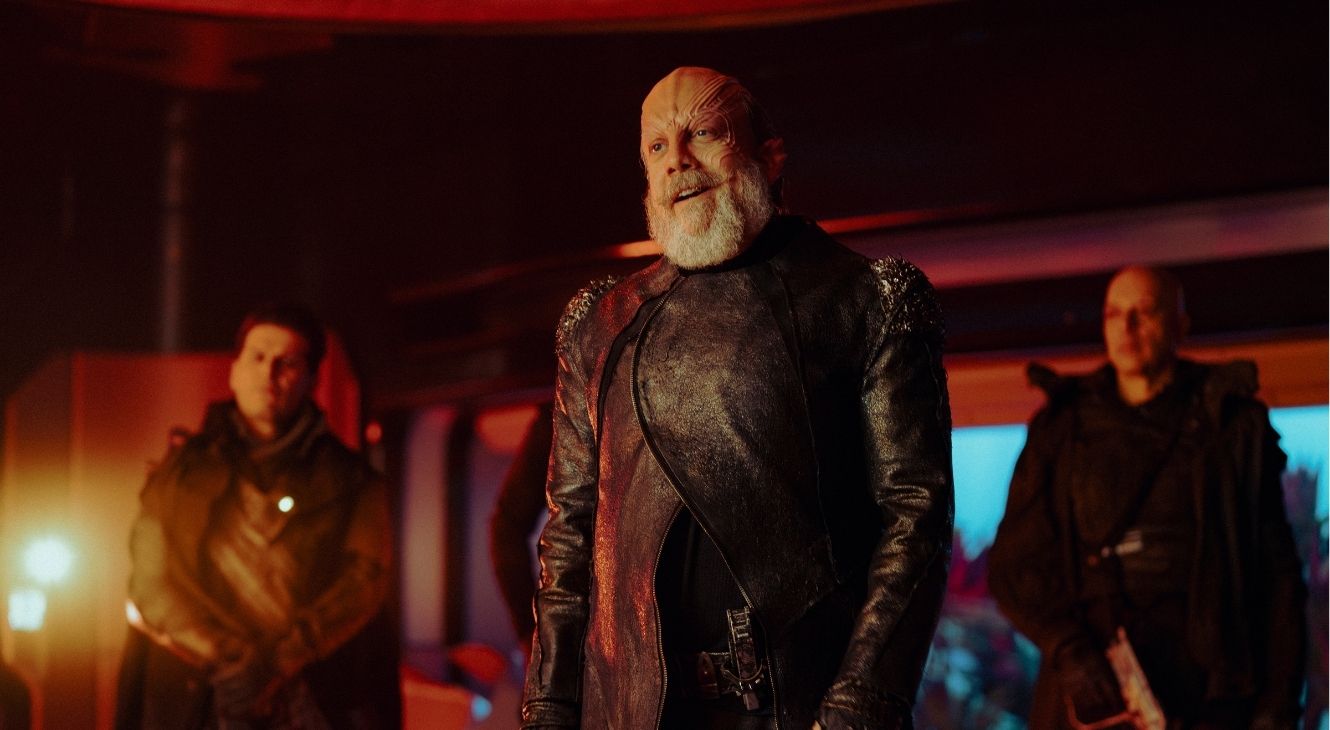
Throughout Starfleet Academy Season 1, Starfleet is not portrayed as an institution of flawless heroes. Instead, it is presented as a framework for growth. The cadets are not expected to arrive at the Academy already embodying the ideals of the Federation. They are expected to learn how to live up to them. That distinction becomes especially important as the season introduces Nus Braka (Paul Giamatti), whose resentment toward the Federation forms the central external conflict of the story.
Braka’s grievances are not invented out of thin air. Like several of the cadets, his worldview is shaped by experiences where the Federation failed to live up to its promises. Raised on a mining colony where he felt abandoned by the very institution that claimed to protect the galaxy, Braka views Starfleet’s ideals as a form of hypocrisy. His plan to isolate the Federation rather than destroy it reflects that philosophy. If the Federation truly believes in its principles, he argues, then it should be forced to confront the consequences of the harm those principles failed to prevent.
The finale’s quadrant-wide trial between Braka and Chancellor Ike (Holly Hunter) crystallizes the season’s central argument. Ike does not attempt to prove that the Federation has always made the correct decisions. Instead, she argues that the Federation’s strength lies in its willingness to confront its failures and continue striving toward something better. That perspective echoes across the cadets’ own journeys, where progress rarely arrives through perfection and almost always emerges through difficult self-reflection.
Braka challenges the Starfleet and, ultimately, shows how the Federation itself can learn from its mistakes.
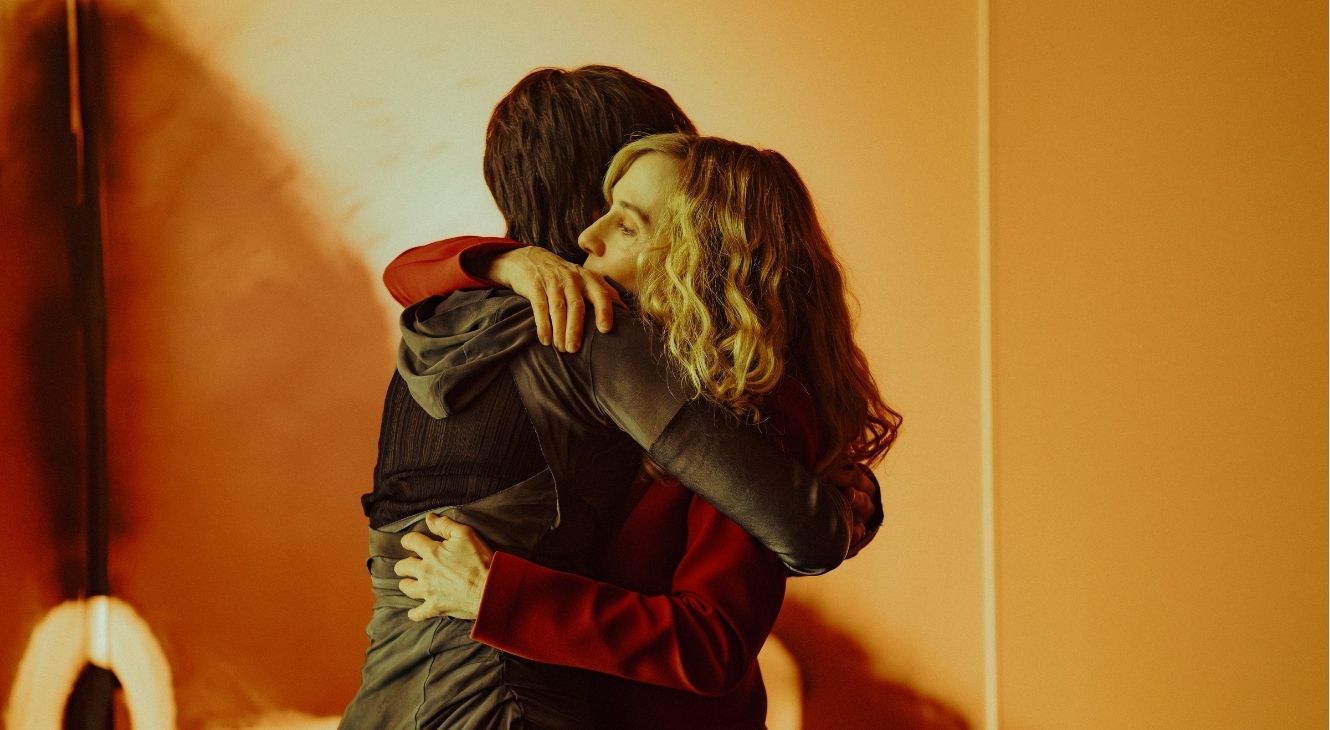
Caleb’s realization in the finale captures that theme most clearly. When he tells his mother, “I can be a part of this world without forgetting where I come from. Without forgetting you,” he articulates the balance Starfleet Academy Season 1 has been building toward. The Academy is not asking its students to abandon their past. It is asking them to decide what they want to do with it.
That distinction separates Caleb from Braka. Both characters were shaped by environments where the Federation failed them. Both carry scars that cannot simply be erased. But where Braka allows those experiences to define every decision he makes, Caleb begins to see the possibility of moving forward with the support of the people around him.
The cadets’ mission aboard the Athena in the finale reinforces that idea by placing them in a situation where Starfleet’s ideals must be practiced rather than debated. The operation to disable Braka’s galaxy-destroying mines forces the cadets to function as real officers rather than students. Science, navigation, medicine, and command all come into play simultaneously, demonstrating that the Academy has been preparing them for far more than classroom exercises.
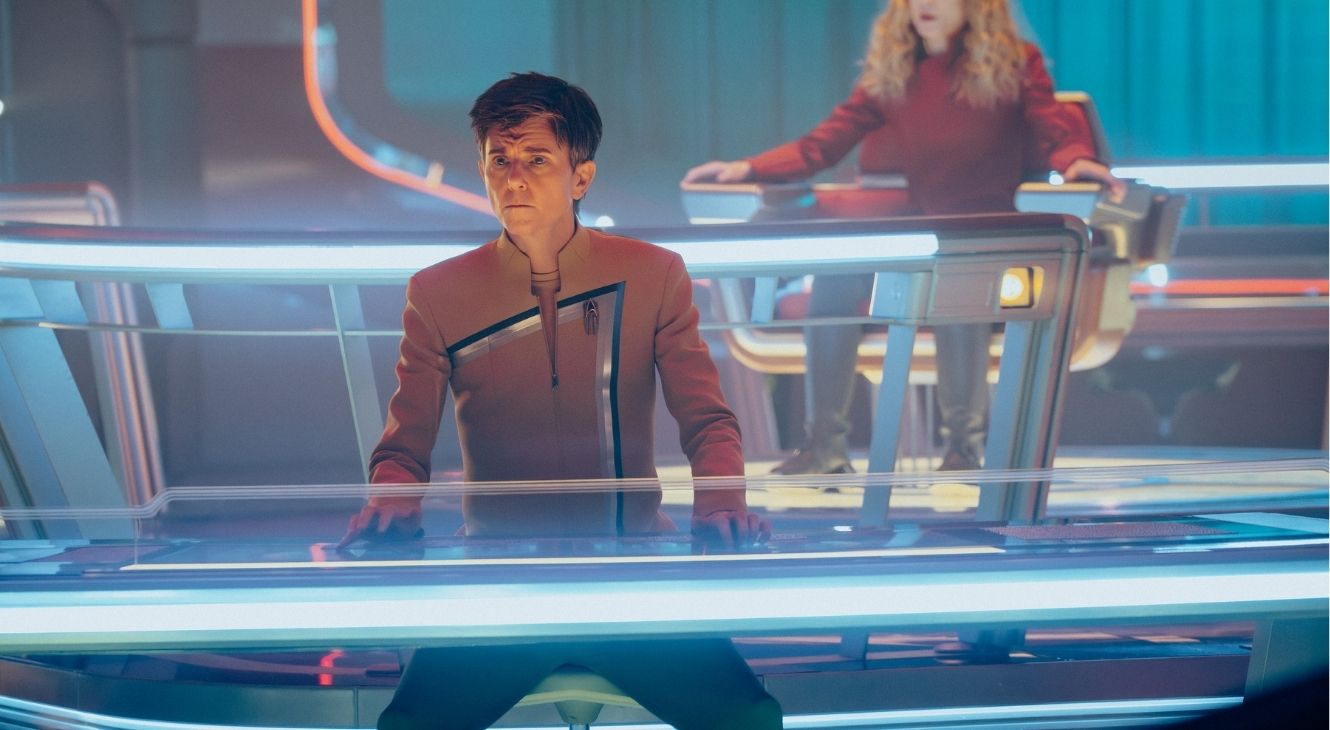
Starfleet officers are not defined solely by technical expertise. They are defined by the ability to remain calm, collaborative, and thoughtful under pressure. The cadets succeed not because they are individually brilliant but because they trust one another enough to operate as a team. Their instructors, including Commander Reno (Tig Notaro), reinforce that lesson throughout the season by grounding the cadets in the idea that Starfleet training is as much about character as it is about knowledge.
In that sense, Starfleet Academy Season 1 ultimately functions as a reaffirmation of what Star Trek has always believed about the future. The Federation is not perfect. It has never been perfect. Its ideals are aspirational, and its history contains moments where those ideals were not upheld. But the reason those ideals continue to matter is that new generations continue choosing to believe in them.
By the end of Starfleet Academy Season 1, the cadets are still far from finished products. They are still learning who they are and what kind of officers they want to become. What has changed is their understanding of what Starfleet represents. The Academy has given them more than technical training. It has allowed them to decide what those ideals will look like when they carry them into the galaxy.
By the season finale, we can see how the cadets have grown, yet there is still more to go.

And if Starfleet Academy Season 1 proves anything, it’s that the future of Starfleet will not be shaped by people who have already figured everything out. It will be shaped by people who are still learning and willing to keep trying anyway.
That idea sets up an exciting direction not only for next season, but for Star Trek itself. If the franchise continues to respect the past while remaining aspirational about the future, there’s room for stories like Starfleet Academy to push the universe forward without abandoning what has always made it special. The ideals of exploration, service, and compassion are still at the center of the story; they’re simply being carried by a younger, more diverse generation, hungrier to prove that those ideals still matter in a galaxy that has changed.
If the Starfleet Academy Season 1 is any indication, the next chapter of Star Trek may not just belong to legendary captains and historic ships. It may belong to the cadets who are still figuring out who they are and who are determined to boldly go anyway.
Star Trek: Starfleet Academy Season 1 is streaming now on Paramount+.
Starfleet Academy Season 1
-
Rating - 9/109/10
TL;DR
If the franchise continues to respect the past while remaining aspirational about the future, there’s room for stories like Starfleet Academy to push the universe forward without abandoning what has always made it special.