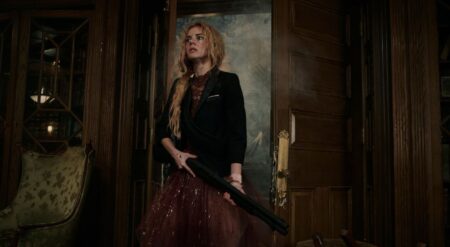

One of the biggest misconceptions about video game adaptations is that they are easy to make. Just get the right people involved – a director who is familiar with the source material, the developer, Troy Baker – have them replicate exactly what’s experienced on our consoles/PC and boom: absolute cinema. Of course, as recent examples have shown, this doesn’t guarantee that a given film will be great…or, as in the case of The Mortuary Assistant (2026), even very good.
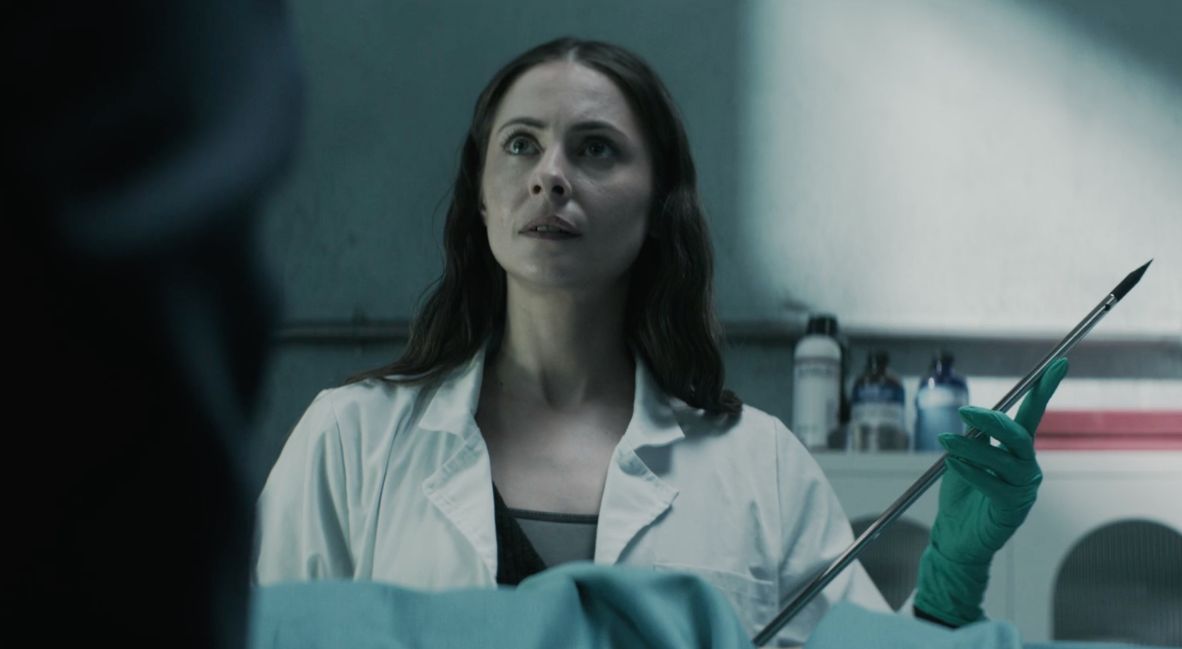
The Mortuary Assistant has some of the “right” ingredients. It’s directed by Jeremiah Kipp (Slapface) and features an intriguing premise co-written by Tracee Beebe and Brian Clarke (the creator of the game). The casting is great; both Willa Holland and Paul Sparks are convincing as the game’s protagonists, Rebecca Owens and Raymond Delver, respectively. It even has a promising start, with a premise centered on grief, mortality, and demonic possession.
Like the game, viewers are introduced to Owens as she prepares a corpse for embalming in front of her employer, Delver. The process is unsettling; if it isn’t the close-up shots of a gaping mouth being wired shut or the sounds of tubes being forced into an open gut, it’s Delver’s overbearing presence that disturbs. The muted lighting and airy, yet unnerving music heighten this feeling. It’s clear that something is amiss long before the dead start moving on their own.
The Mortuary Assistant (2026) has all the right ingredients, just not great execution.
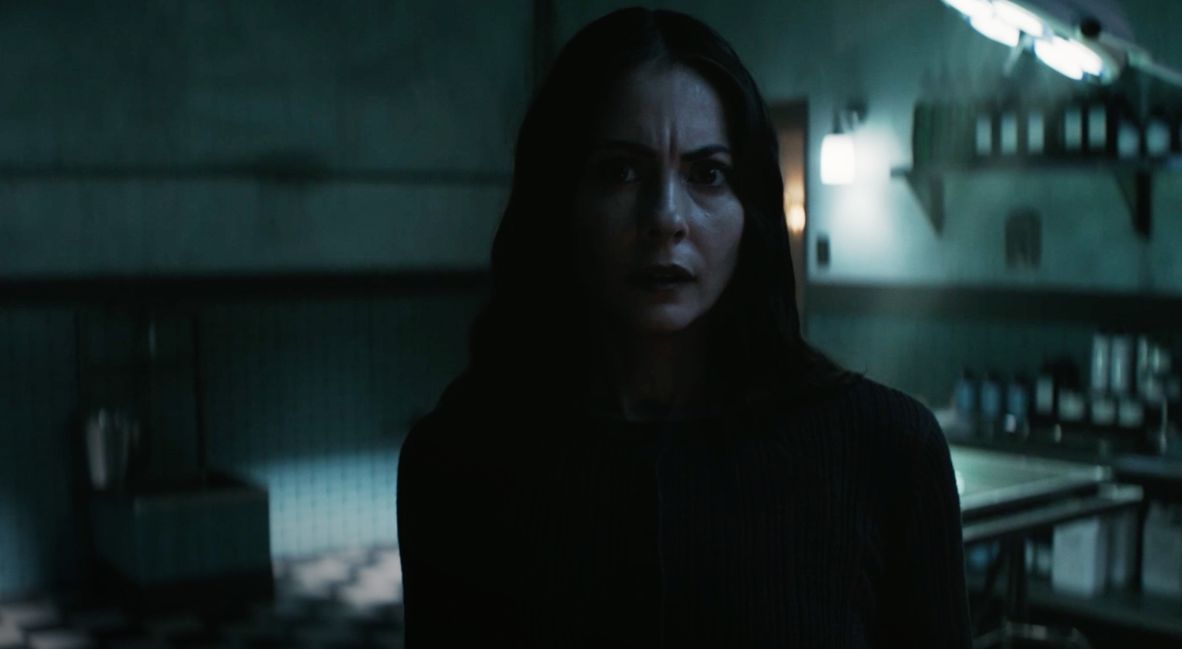
This uncomfortable atmosphere sets the stage for the haunts to come. It isn’t maintained throughout, however, due to several factors. One being an overabundance of game-related content. Considering that Clarke helped write the script, it makes sense that he’d want to incorporate as much of the source material as possible.
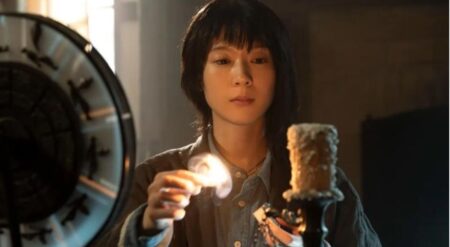
The idea is to give fans what they want. The problem is that nearly everything makes the cut, even the stuff that doesn’t completely fit within the larger scope of the film. There’s a moment where the lights go out in the morgue, forcing Owens to look for a light source.
Instead of using a flashlight or matches, she burns a letting strip – the small scraps of paper used to identify demons. This is before she learns of their purpose, which leads to a confusing moment: who’d set their employer’s seemingly important documents on fire just to find a fuse box? There are other bits of lore and/or dialogue that are haphazardly referenced as well. Most of which don’t align with what’s actually happening on screen.
The Mortuary Assistant’s frequent jump scares are also evidence of this. Happening at a rapid pace, one after another, many fail to instill fear. Take the infamous “old lady banging on the window” bit. Its impact is undermined by another entity – echoing another frightening moment from the game – showing up at the same time. Both of these spooky events are poorly mashed together to seemingly fill a quota. Worst still, the film’s overall lack of subtlety.
The jump scares mount but only to fill a horror quota.
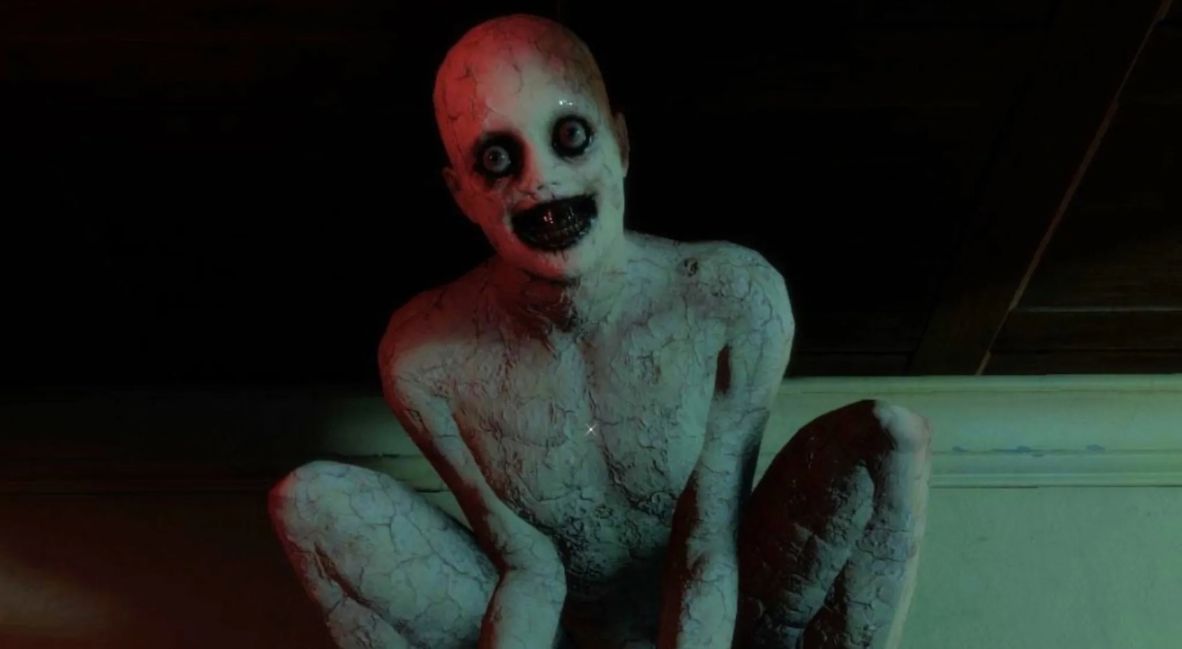
In the game, Owens is plagued by shadowy figures, the recently deceased, and one particularly disturbing pale-skinned individual. Most of the time, they are hidden in plain sight or held just offscreen, allowing players to stumble into them.
In the film, there’s barely any misdirection to speak of. Seeing a monster standing across the street in broad daylight isn’t the same as witnessing a hard-to-make-out figure peeking through a slightly opened door. Most of the “monsters” are kept front and center. And since they typically appear one after another, they inadvertently drain The Mortuary Assistant of its dreadful atmosphere.
The Mortuary Assistant struggles to match its source material’s vibe because it borrows too much, while failing to mimic what actually happens in-game. That said, the film does have some bright spots. The casting is great. Paul Sparks is damn near perfect as Delver; his dry line delivery emphasizes Delver’s seemingly apathetic demeanor. Willa Holland does a good job of playing a constantly confused and frightened Owens. She fares better when played opposite Sparks, a few awkward scenes notwithstanding.
Shudder’s The Mortuary Assistant ends up a bloated and confusing adaptation.
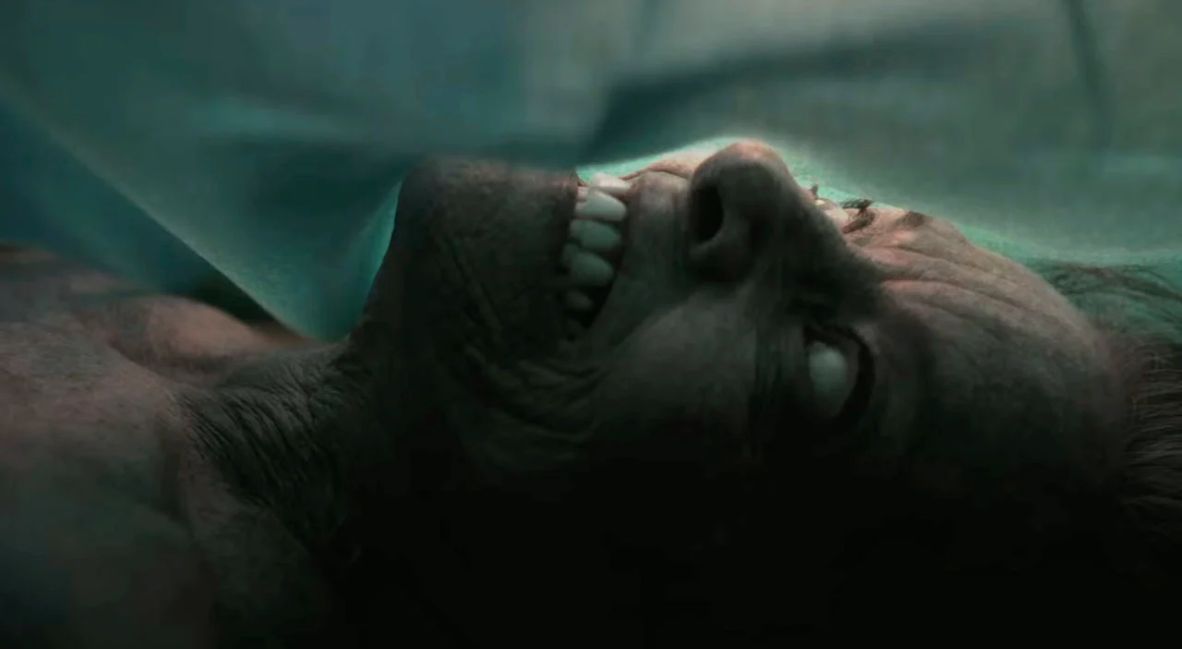
Good practical effects, an eerie score, and some decent body horror – The Mortuary Assistant has all the makings of a solid horror film. At the very least, given who’s involved, it should’ve met fan expectations, critical analysis be damned. Sadly, the film doesn’t quite meet that bar.
The Mortuary Assistant, like recent examples, proves that making a good video game adaptation is difficult. It succeeds in certain areas – the casting is great, it has solid practical effects, and some decent body horror. Unfortunately, in trying to adhere to its source material (without fully understanding how certain game-related elements would translate on film), it undermines any potential scares. The result is an overstuffed experience that’s mundane at best and outright forgettable at its worst.
The Mortuary Assistant has the right ingredients. This includes a talented cast, good practical effects, and writers who’re familiar with the game it’s based on. Unfortunately, it incorporates popular moments/elements from its source material without fully understanding how they would translate on film, resulting in a bloated and occasionally confusing experience. That and its lackluster scares make The Mortuary Assistant a difficult movie to recommend.
The Mortuary Assistant is in theaters now and will stream exclusively on Shudder on March 27, 2026.
The Mortuary Assistant (2026)
-
Rating - 4/104/10
TL;DR
The Mortuary Assistant has the right ingredients. This includes a talented cast, good practical effects, and writers who’re familiar with the game it’s based on. Unfortunately, it incorporates popular moments/elements from its source material without fully understanding how they would translate on film, resulting in a bloated and occasionally confusing experience.