The Dreadful creeps with a sense of mounting horror, comes close to genuine scares, then steps back into exposition when characters dare to speak at all. Repeat for an hour and a half, and you’ve got yourself The Dreadful, a historical horror film that is all historical setting, with drops of horror but no genuine thrills or chills.
Inspired by the Japanese horror classic Onibaba, writer-director Natasha Kermani‘s loose remake sets the action in fifteenth-century England during the Wars of the Roses. The film follows Anne (Sophie Turner), a young woman whose husband Seamus (Laurence O’Fuarain) is off fighting in the war.
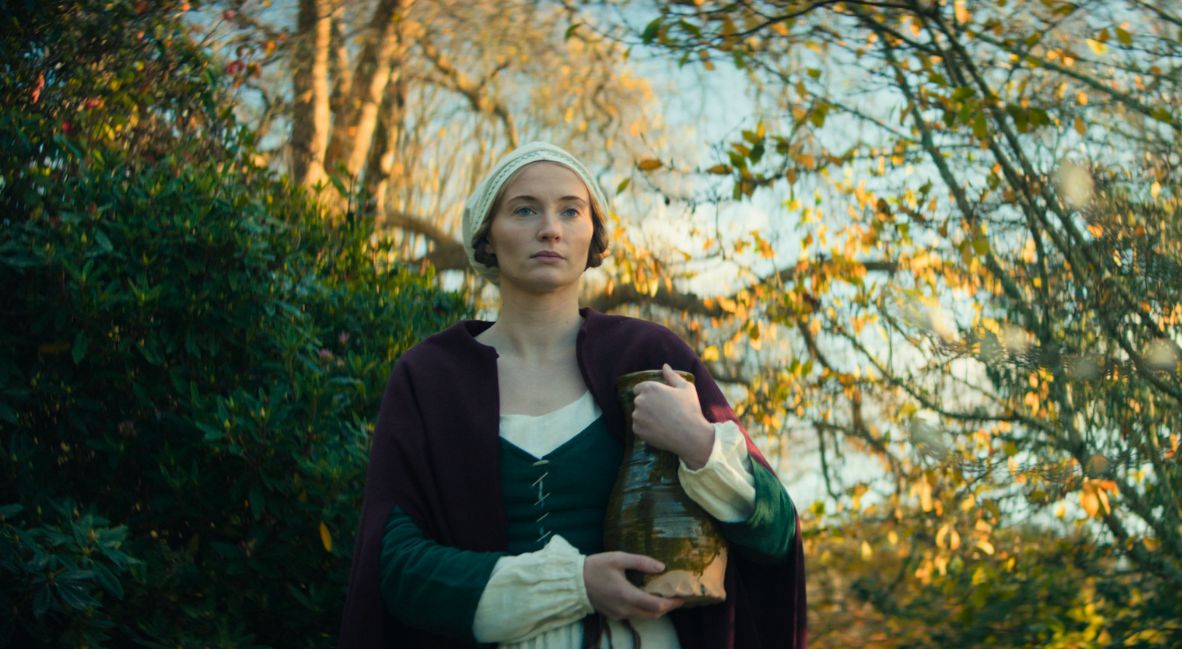
Anne tends her garden with as much care and faith as she attends the local church. Anne shares her rundown, rural cottage with her light-fingered mother-in-law, Morwen (Marcia Gay Harden), who pickpockets a wealthy church patron. Their conversations largely consist of waiting for Seamus to return from the war.
The Dreadful barely engages with the characters.
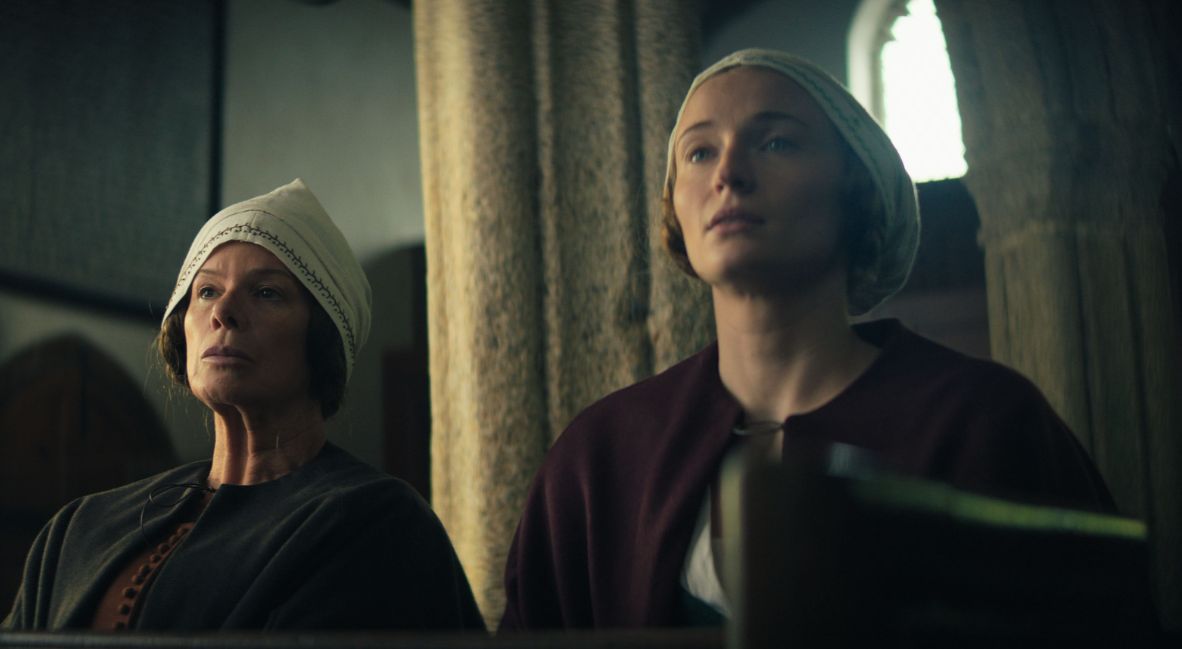
The film might as well be waving a huge banner, reminding you that this is a historical film and that women at this time were expected to revolve their lives around men. Before an actual man has any actual, present significance in the story, this is truly all we know about them: Anne gardens, Morwen steals, and both are waiting for Seamus to return.
Anne and Seamus’ childhood friend Jago (Kit Harington) returns from the war with bad news: Seamus is dead. Anne and Morwen grieve, but Anne relies on Jago for comfort. Morwen, on the other hand, grows suspicious that Anne and Jago will fall in love and eventually leave her behind.
She’s shown to have violent tendencies against men, and Jago’s return only reminds her of what she lost when Seamus died. If Morwen’s increasing instability isn’t enough, the countryside is being threatened by a masked knight committing a string of murders.
The film desperately wants to be a meaningful portrait of female rage.
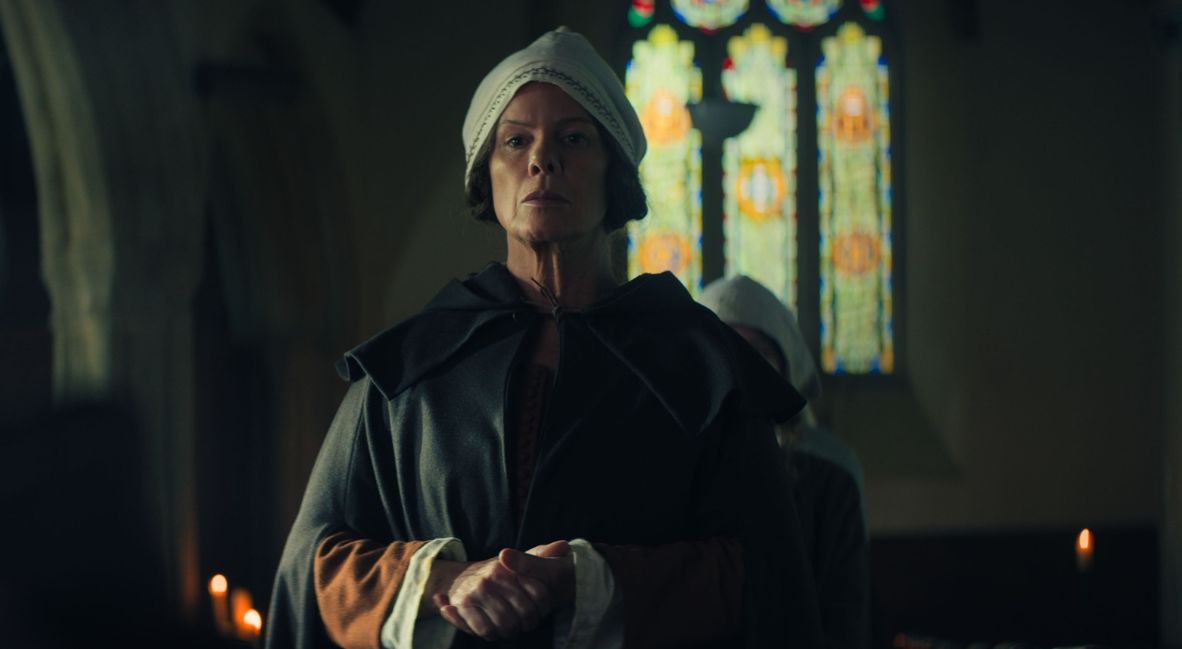
There are flashes of insight in The Dreadful, a film that wants so badly to be about female rage and agency. Horror is often a vehicle for metaphors for grief and trauma, and setting the film in the 1400s at least makes The Dreadful stand out from its contemporaries in this way. There’s a dreamlike quality to the film’s color grading and Julia Swain’s cinematography, which beautifully frames nature as something to be admired and feared.
The atmosphere of The Dreadful is visually engaging, but it cannot compensate for the film’s slow-burning nature. A slow-burning, when well-paced, builds dread and creeps into a satisfying conclusion. Here, it’s more of a slog. Turner and Hayden are good foils for one another, but Turner’s chemistry with Harington is nonexistent.
They’re capable actors here, but as lovers, they’re unconvincing. They formerly played siblings on Game of Thrones, and Turner has been quoted on talk shows saying she and Harington were “retching” while filming a kissing scene. It does not make for believable yearning or romance.
The Dreadful intends to create a narrative about agency in an age of oppression and dependency. Anne feels stifled by Morwen’s desire to stay together, as Anne serves as the final connection to Seamus. Morwen’s own fear of abandonment makes her pitiable.
Sophie Turner and Kit Harrington can’t muster up the chemistry to sell the main story.
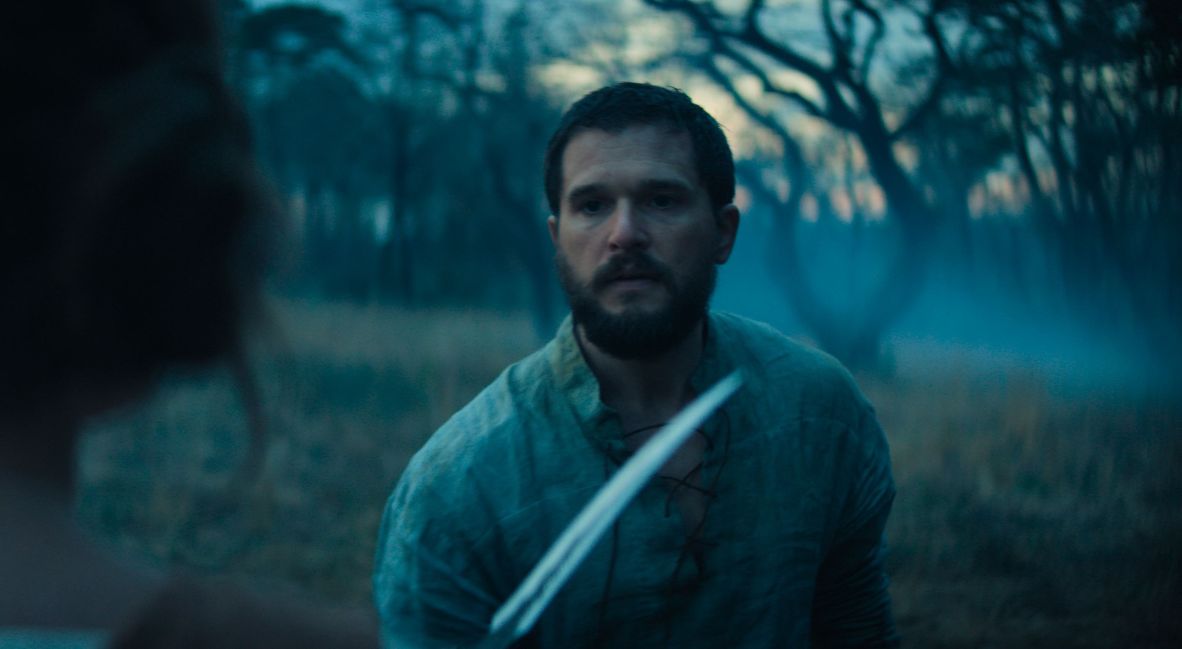
But neither woman’s situation is fully-realized enough to be more than a series of slow, beautiful shots punctuated by perfunctory dialogue. There’s a clear desire to make The Dreadful seem folkloric, with the threat of the murderous knight looming in the woods. (See The Green Knight for a more effective use of medieval folklore imagery.)
Anne’s quest for freedom and building attraction toward Jago feels insignificant until the film’s final scenes. We’ve hardly gotten to know Anne before the credits roll, instead getting to know her lush, gloomy world and her mumbling, miserable mother-in-law far better.
Unfocused and underdeveloped, The Dreadful presents a dreamlike vision of historical horror without delving deeply into what makes for an immersive horror experience. A good cast and a well-created sense of setting set up a visually engaging experience, but the writing falls flat. Any sense of dread dissipates just as it starts to get interesting or say something insightful about agency or grief. It’s not a dreadful film (the jokes write themselves), but unfulfilled potential? That’s the most dreadful part of all.
The Dreadful is available now in theaters and on VOD.
The Dreadful
-
Rating - 4/104/10
TL;DR
Unfocused and underdeveloped, The Dreadful presents a dreamlike vision of historical horror without delving deeply into what makes for an immersive horror experience.