


Museum of Innocence, a Turkish drama directed by Zeynep Gunay Tan, written by Ertan Kurtulan and Orhan Pamuk, explores the life of wealthy business manager Kemal (Selahattin Pasali). While he has success, popularity, and a lovely fiancée, his world is soon turned upside down when a chance encounter reunites him with a distant cousin, by marriage, Füsun (Eylül Kandemir), who soon dominates all his thoughts and becomes the center of a lifelong obsession.
Fictional storytelling often explores the human condition. What makes us tick, what motivates us, and what makes us the individuals we are. These explorations, even when they lead us down darker paths in the human psyche, can be compelling and enlightening. However, to succeed, they must provide several cornerstone elements that allow the audience to appreciate what they are saying. Museum of Innocence provides none of these.
The most glaring problem that kneecaps the story from the word go is the nature of Kemal’s fixation with Füsun. He has one chance encounter with this younger woman, in which nothing of note happens, and he is obsessed with her until his dying day.
Museum of Innocence gets off to a rough start, but takes a true nosedive around the midway point.

That he could see and feel some form of physical desire for her, sure, she’s attractive and significantly younger than him, which is a big bonus for many men, so it’s easy to see how a relationship-ruining fling could be in the cards. But obsession? Despite how many times Kemal tells us that Füsun has become his everything, Museum of Innocence constantly fails to show us why.
In fact, when the two aren’t taking a roll between the sheets, they largely seem absolutely terrible for each other. Kemal consistently refuses to advance their relationship because of his official engagement to another woman, Sibel (Oya Unustasi), while Füsun threatens to leave him whenever she doesn’t get what she wants. Yet somehow, the love deepens.
Museum of Innocence gets off to a rough start, but takes a true nosedive around the midway point. Having done something exceptionally cruel to Füsun, Kemal finds himself completely without his love for several episodes. During this time, the character melts into the biggest man-child TV has ever offered us. He mopes and pushes everything away, because the woman he loved, but cruelly insulted, dared to leave his life. And it stays in this phase of the narrative for what feels like an eternity.
Pasali sells Kemal’s agony incredibly well.

Now, to give credit where it’s due, Pasali sells Kemal’s agony incredibly well in Museum of Innocence. His depression and misery are palpable, making you believe that the character is really enduring these emotions. Just due to who the character is, you simply do not care.
The only reason you feel anything during this stretch of the series is due to Unustasi’s performance as Sibel. Kemal’s fiancée is extremely likable and does everything she can to support and restore her love’s energy. That she is saddled with this loser is infuriating.
The final stretch towards the finish line sees Kemal make ever-worse decisions, leaving little room for empathy or concern. He ruins everything he touches in the name of his “love.” And as the credits rolled, I wasn’t even sure how the narrative expected me to feel about the character. My mind can only assume that Museum of Innocence is meant as a cautionary tale about how one can cross the line between love and obsession. And yet…
Museum of Innocence spends far too much time lingering on Kemal’s self-induced misery not to drown in it.
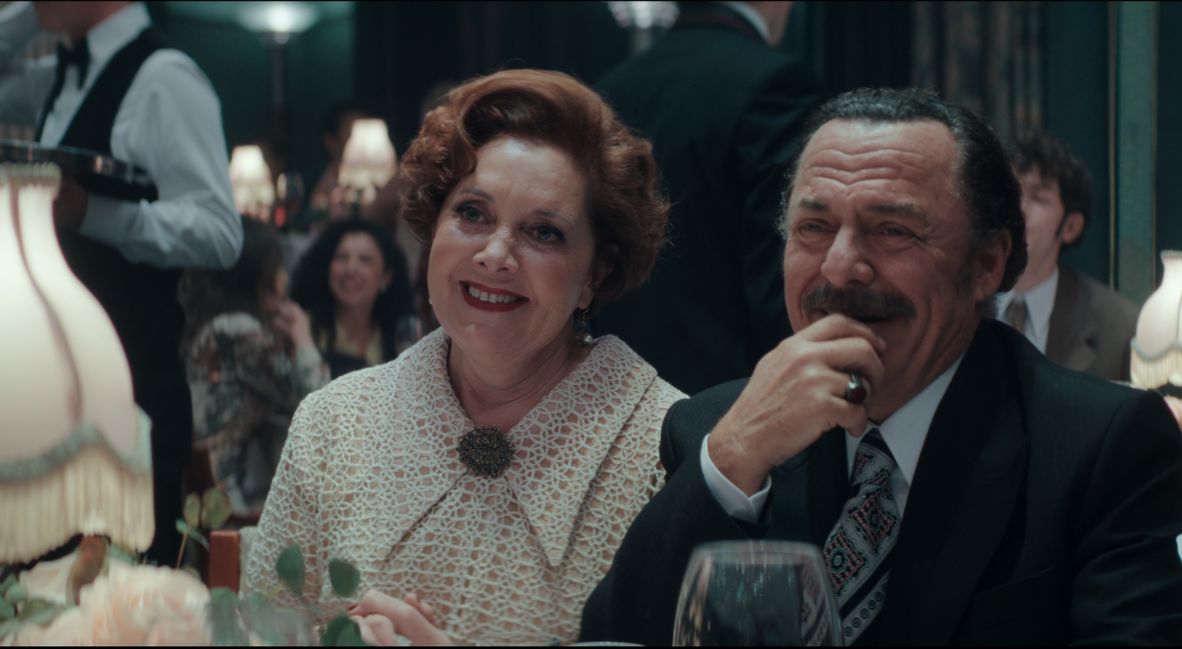
There are just enough moments when the character feels framed as a tragic, pitiable figure. Like I was expected to feel bad for this man, for whom fate had strapped to the rolling boulder of unrequited love. I can’t say for certain how I was supposed to feel about him. And while leaving elements open to viewer interpretation can be engaging, characters like this shouldn’t prompt questions about what the series thinks of them.
Whatever the series’s intent, this format is entirely the wrong one for telling this tale. If you could compress Museum of Innocence into a two-hour movie, I could see that working. Establish Kemal, let him descend into self-destruction, and then take him to the finish line. It could work as an engaging tale with that time constraint. But with roughly eight and a half hours of video, the series spends far too much time lingering on Kemal’s self-induced misery not to drown in it.
The technical side of Museum of Innocence manages to get a bit of extra emotion out of even the most languishing moments of the show. Skillful camerawork enhances actors’ emotions, elevating their performances. The score further melds with these efforts, as the series tries to engage you with Kemal’s overly long pity party desperately.
Museum of Innocence is bad. Despite strong acting and technical execution, the core narrative is bereft of compelling concepts. It drags on so long that what is good here is lost, as you at first want the series to move on, and eventually beg for it to end.
Museum of Innocence is streaming now on Netflix.
Museum of Innocence
-
Rating - 5/105/10
TL;DR
Museum of Innocence is bad. Despite strong acting and technical execution, the core narrative is bereft of compelling concepts.