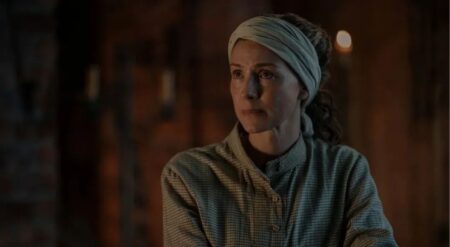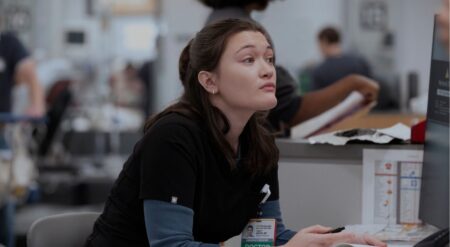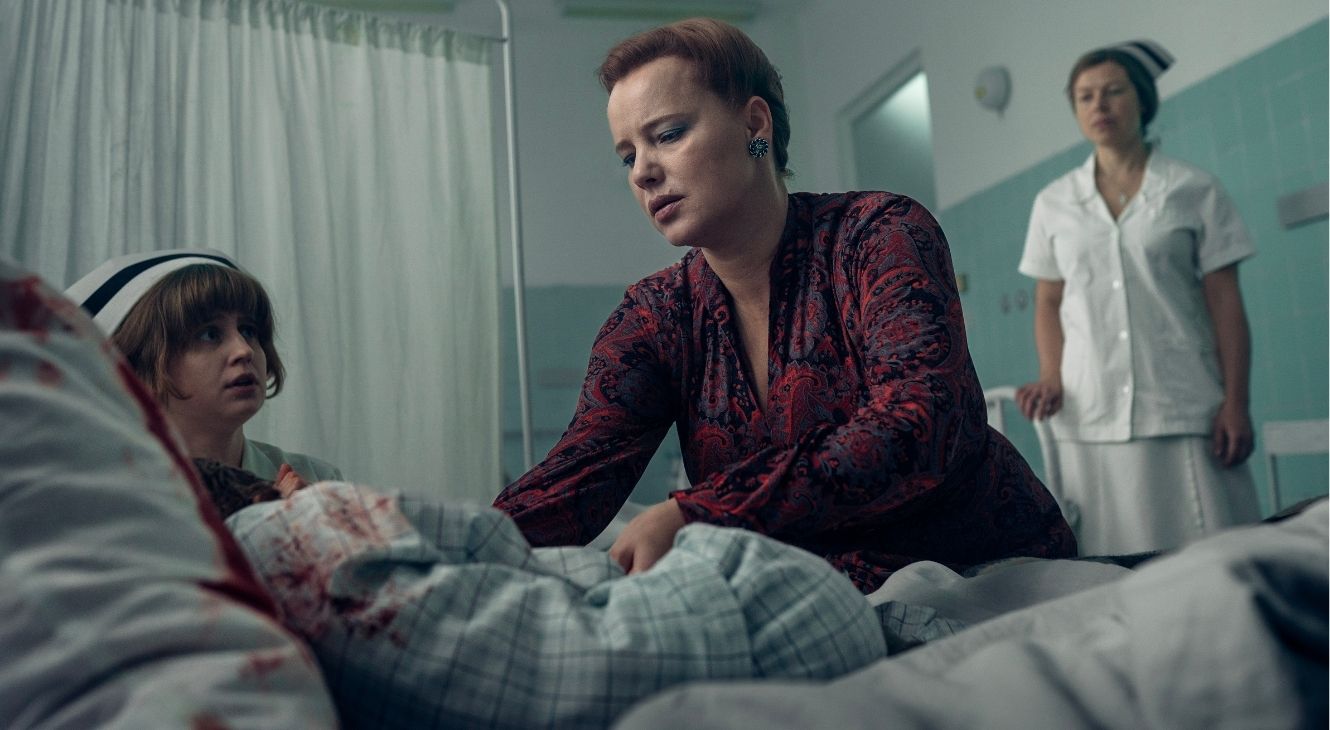
Lead Children (Olowiane dzieci) is an all-too-relevant story that will resonate with many, with a hopeful note that keeps the series from fully venturing into despair. While understandable comparisons will be made to HBO’s Chernobyl, there is a little more positivity to be found amid the uphill battle fought by the series’ protagonist, Jolanta Wadowska-Król (Joanna Kulig). And that feeling is what’s needed more than ever today.
Opening in media res, the scene is highly intense. It sparks intrigue immediately before plunging us back in time to where everything began for Jolanta, when she first started working as a doctor in Szopienice. Fiery and unafraid to speak her mind, Jolanta is ruffling feathers with her brusque, matter-of-fact behavior long before she even starts digging. This immediately helps her stand apart from those around her, including her husband (Sebastian Pawlak), who would prefer to keep the peace than challenge anyone head-on, even if it means he ultimately loses to maintain the status quo.
The status quo, as presented by director Maciej Pieprzyca and screenwriter Jakub Korolczuk in Lead Children, is part of the problem for the smelter community in Szopienice. The same community that Jolanta has been assigned to serve as a doctor, and once she starts noticing how unhealthy the children are, she starts asking questions. And asking questions is dangerous in a sociopolitical climate that relies on compliance with the Party and those in power, like Zdzisław Grudzień (Zbigniew Zamachowski), who benefit most.
Jolanta is unrelenting in her quest to serve the community, even if it earns her enemies.
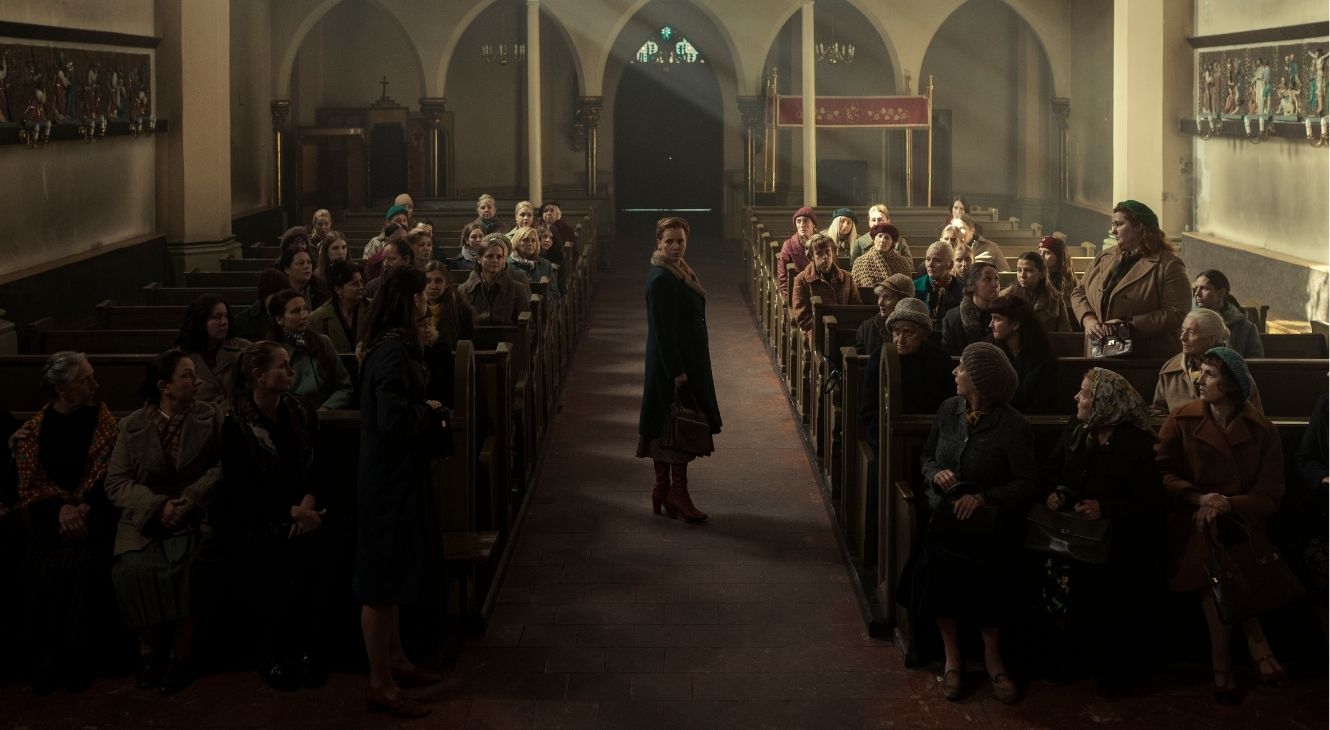
In this briskly paced series, Lead Children makes it clear early on that Jolanta is not only a threat but also an outsider to the Silesian community. A natural “us versus them” dichotomy presents itself, especially once she starts attacking the community’s source of income – the smelting plant – as toxic and the source of what is making the children of the community sick. If the outsider status wasn’t clear from this point on in the series, the visual clues in how Jolanta presents herself to the world speak volumes.
This outsider status extends to her foe and, arguably, the most fascinating character of Lead Children, the Secret Police officer Hubert Niedziela (Michał Żurawski). As someone whose bread and butter is manipulation, we see him, across the series, moving people like chess pieces, imagining himself more in control than he actually is. Jolanta is the only one who truly challenges him, and it is this challenge that ultimately causes him to unravel. That, and his denial that any power he accrues can easily be taken away.
It is these two similar yet contrasting characters that provide one of the more intriguing dissections. Part of that is due to the direction, writing, and performances depicted onscreen. Żurawski offers an incredibly nuanced yet broad range. This pays off not just in demonstrating Niedziela’s manipulations but also the growing internal conflict as everything he holds dear is soon threatened. In contrast, Kulig is assured and almost unshakable, that is, until things escalate to the point of no return for Jolanta when she gets too close to the truth.
Lead Children never shies away from highlighting the hypocrisy of those in power and the system itself.
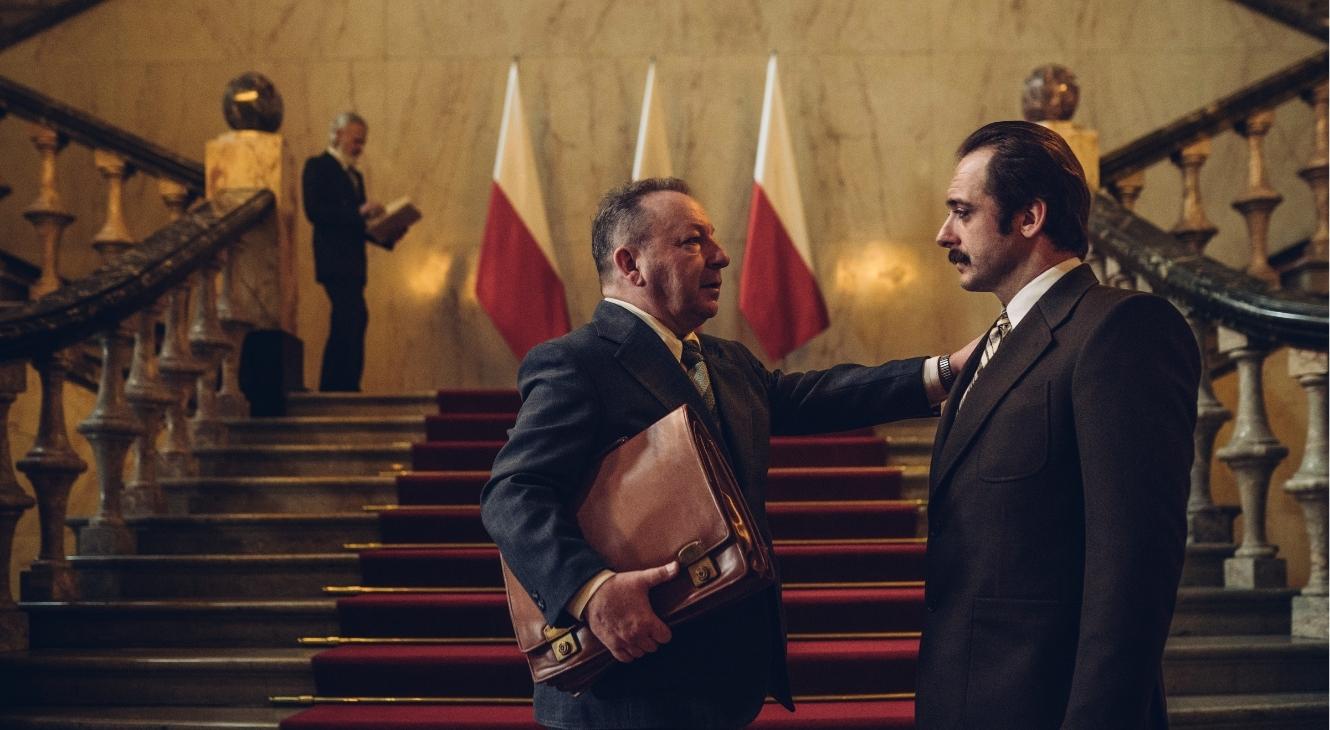
Through Jolanta’s persistence and actions, a spot of hope emerges in a series that never pulls its punches on the ugly realities of ’70s Polish society. The impact of the lead on the children is brutal, and Pieprzyca never shies away from showing us this. There is no sugarcoating what’s happening to the children, nor is there any doubt about the multiple layers of how this crisis developed. Yet the real terror lies in how the government and all its players conspire and are encouraged to work against its citizens and fellow man.
It is people like Jolanta, those who question and poke and prod, that inspire change. They inspire hope, and Lead Children shows us how incredibly hard it is to stand up against those in power. Yet her questioning doesn’t come from a selfish place. It is all in pursuit of serving the community she’s meant to take care of, and that is the key to true quality leadership.
Sadly, Lead Children remains relevant today, particularly in cases of government negligence and oversight. Yet this story, inspired by the real Jolanta Wadowska-Król’s actions, is a much-needed example of how we should always question, always wonder, always want the best, rather than accept what is merely comfortable and peaceful. It is not easy. It is never easy. Lead Children offers us hope amid the turmoil and pain endured in pursuit of necessary change.
Lead Children is now streaming on Netflix.
Lead Children
-
Rating - 8/108/10
TL;DR
Sadly, Lead Children is still relevant viewing today, particularly in cases of government negligence and neglect. Yet this story, inspired by the real Jolanta Wadowska-Król’s actions, is a much-needed example of how we should always question, always wonder, always want the best, rather than accept what is merely comfortable and peaceful.