
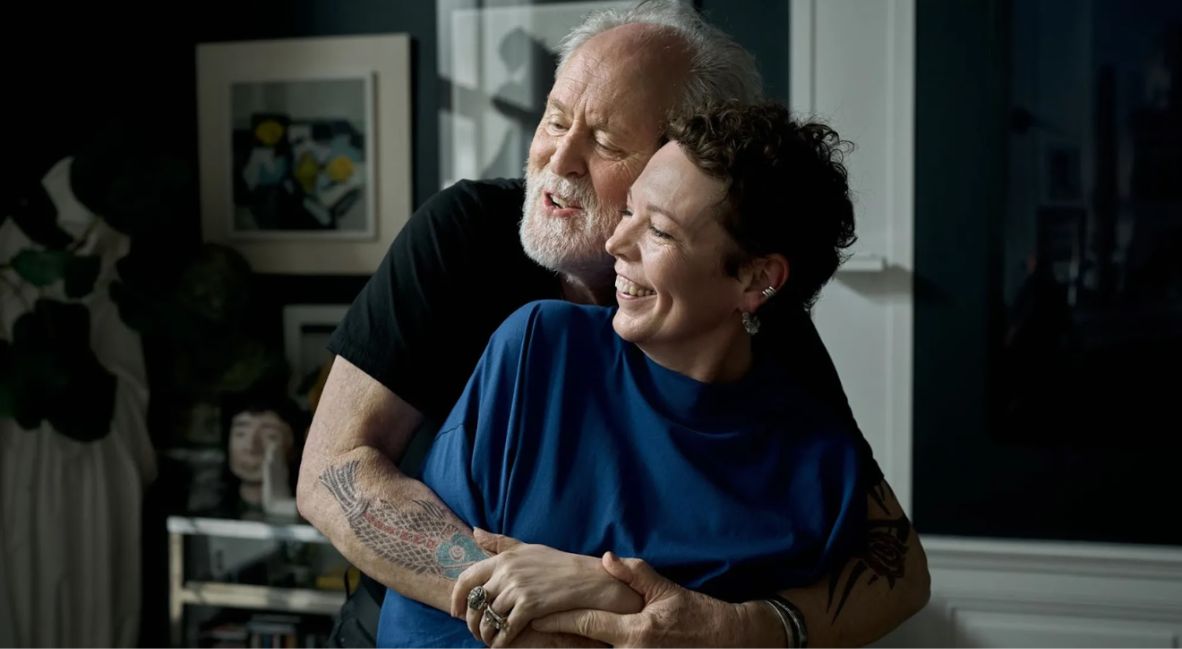
Directed by Sophie Hyde and written with Matthew Cormack, Jimpa is a raw, deeply personal family drama about legacy, queer identity, and the emotional cost of idolizing people who were never built to carry that weight. Starring Olivia Colman, John Lithgow, and Aud Mason-Hyde, the film brings three generations into uneasy proximity and refuses to let any of them leave unchanged.
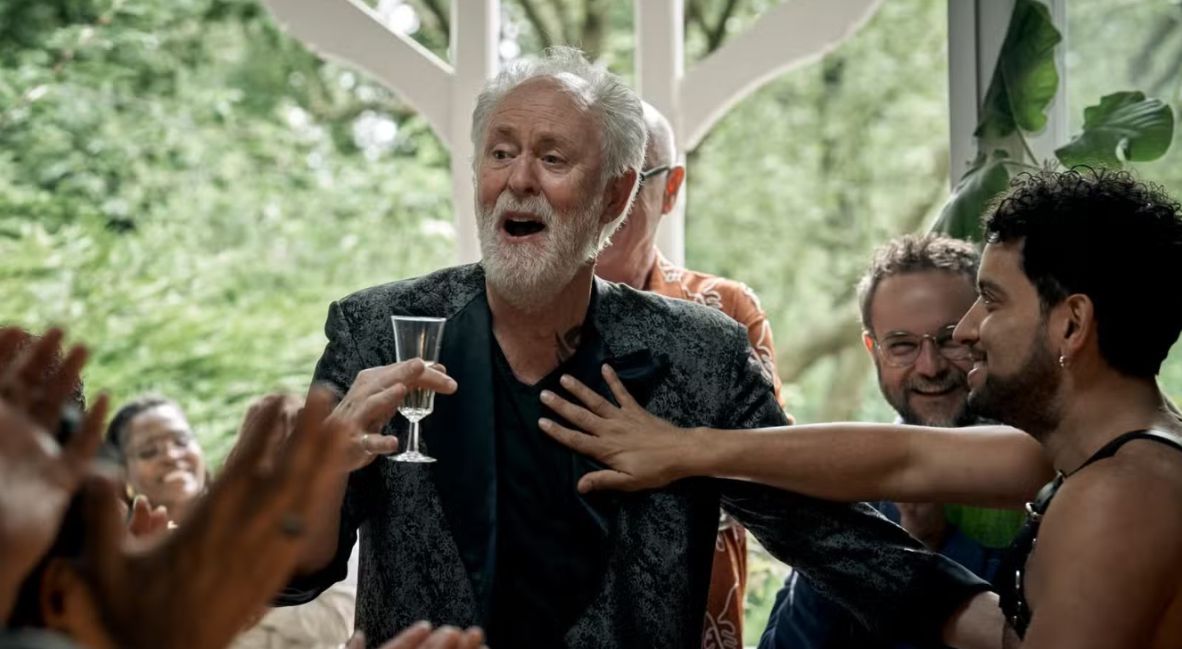
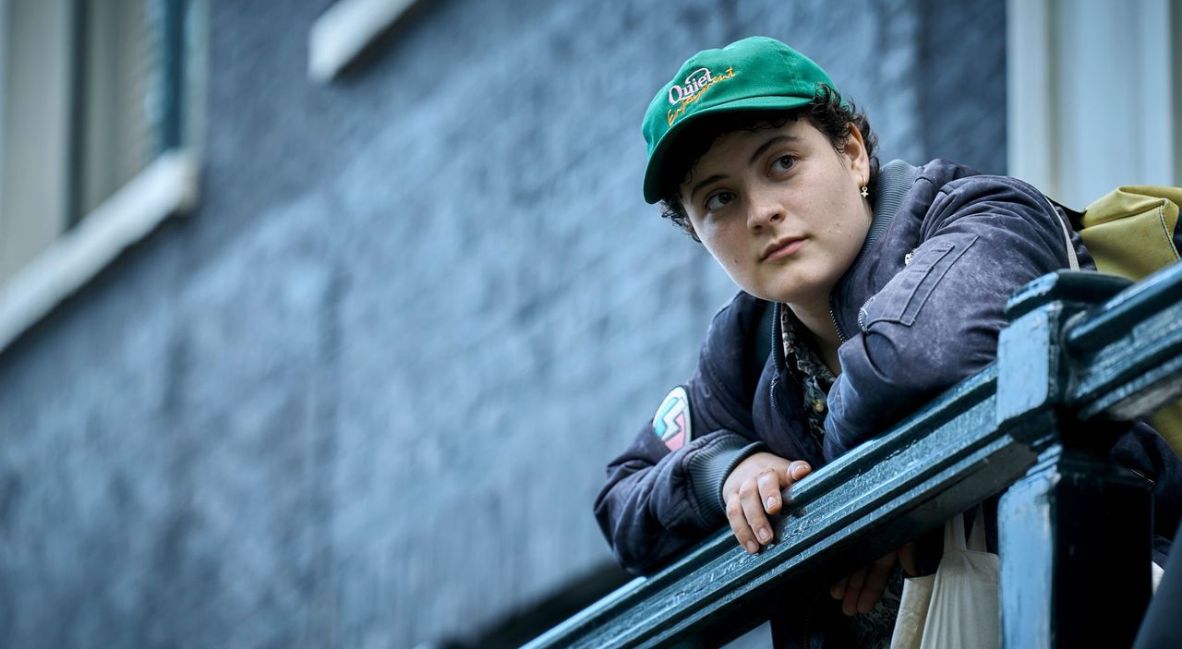
Jimpa follows Hannah (Oliva Colman) as she travels with her husband, Harry (Daniel Henshall), and her non-binary teenager, Frances (Aud Mason-Hyde), from Australia to Amsterdam to visit her estranged father. Her father, Jimpa (John Lithgow), is a celebrated gay rights activist whose presence looms large over both of their lives in different ways.
For Hannah, the trip is about confronting a parent she has kept at a careful emotional distance, even as she prepares to tell his story through her own work. For Frances, Jimpa represents something else entirely: a living connection to queer history and a version of adulthood that once made them feel safe and seen. The possibility that Frances might want to stay in Amsterdam, to step outside the limits of their small-town environment and into a broader LGBTQIA+ community, introduces a quiet but persistent tension before the family even arrives.
A story about acceptance and moving on.
The film opens with a small but telling anxiety. As Hannah prepares for the trip with Frances and her husband, there’s concern that their dog, who has a tumor in their bladder, might not survive their time away. The trip can’t be postponed anymore, but leaving still feels like a gamble. That tension quietly defines the entire film. The film is about moments that can’t be delayed any longer, about choosing to move forward even when something you love might not be there when you return. That tension never leaves the film, even when it goes unspoken.
One of Jimpa’s greatest strengths is its trust in form over explanation. Director Hyde repeatedly uses brief, impressionistic visual flashes, sometimes lasting only seconds, to establish emotional history. These moments aren’t ornamental. They do the work dialogue usually does: situating relationships, revealing vulnerability, and reminding us who these people were before identity became something they had to defend.
When the film cuts from older queer activists to images of them as children, it reframes every ideological conflict as something rooted in lived survival, not abstract belief. The result is a film where words carry more weight precisely because so much has already been shown.
Jimpa highlights a generational divide.
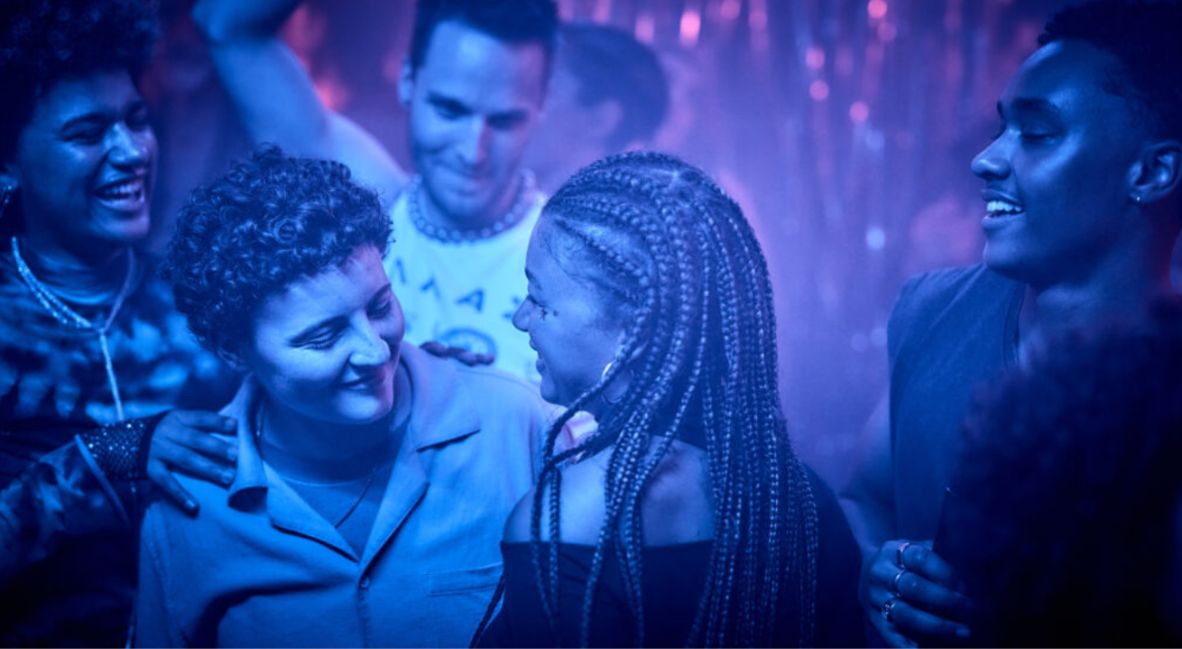
That visual honesty becomes essential to how Jimpa handles generational divides within queer communities. The film is unsparing in showing how progress does not move evenly, and how liberation in one era can harden into gatekeeping in another. Lithgow’s performance as Jimpa is not portrayed as malicious; he is portrayed as limited.
His belief that he understands queerness, because he fought for it, collides painfully with Frances’s lived reality as a nonbinary teenager navigating a world that demands clarity while offering little safety. The film’s refusal to soften that clash is what makes it feel truthful. Respect does not equal understanding, and history does not guarantee empathy.
Jimpa’s declining health places a quiet but constant pressure on everything left unsaid. The film reveals a man deeply afraid of being alone, even as he avoids naming that fear. A contradiction that is sharpened by how respected and needed he remains within the queer community. When Hannah is confronted with the idea that she no longer needs her father in the same way, it lands as both relief and reckoning, forcing her to consider what responsibility remains once obligation is gone.
Director Sophie Hyde nails the balancing act of comfortable discomfort.
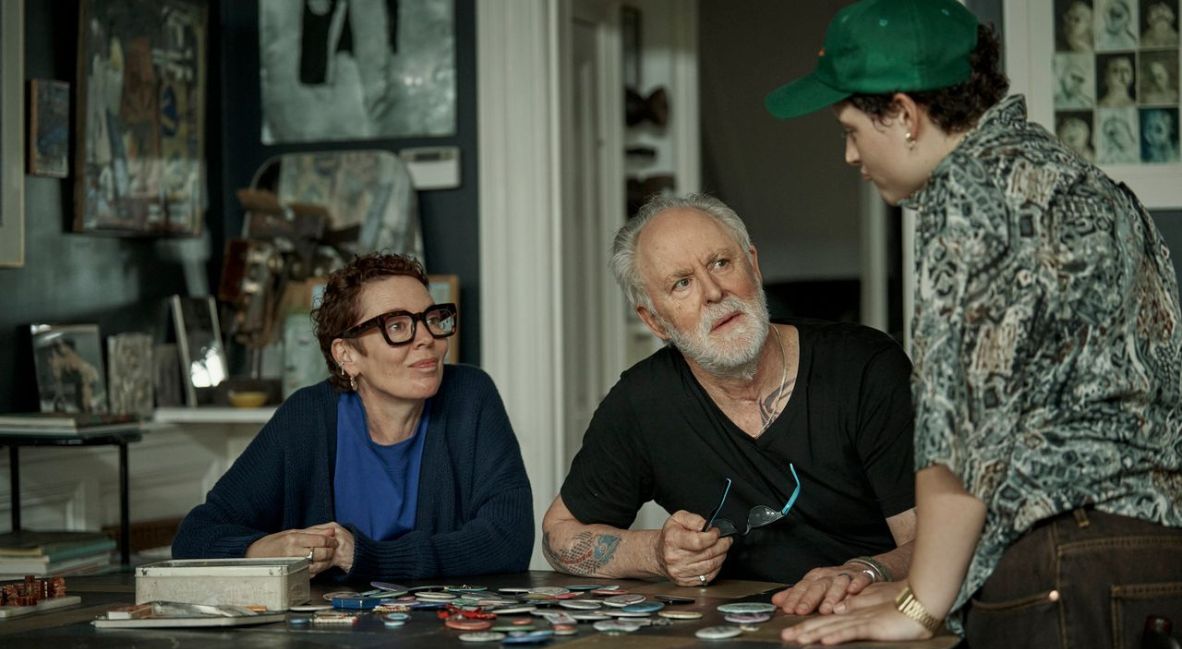
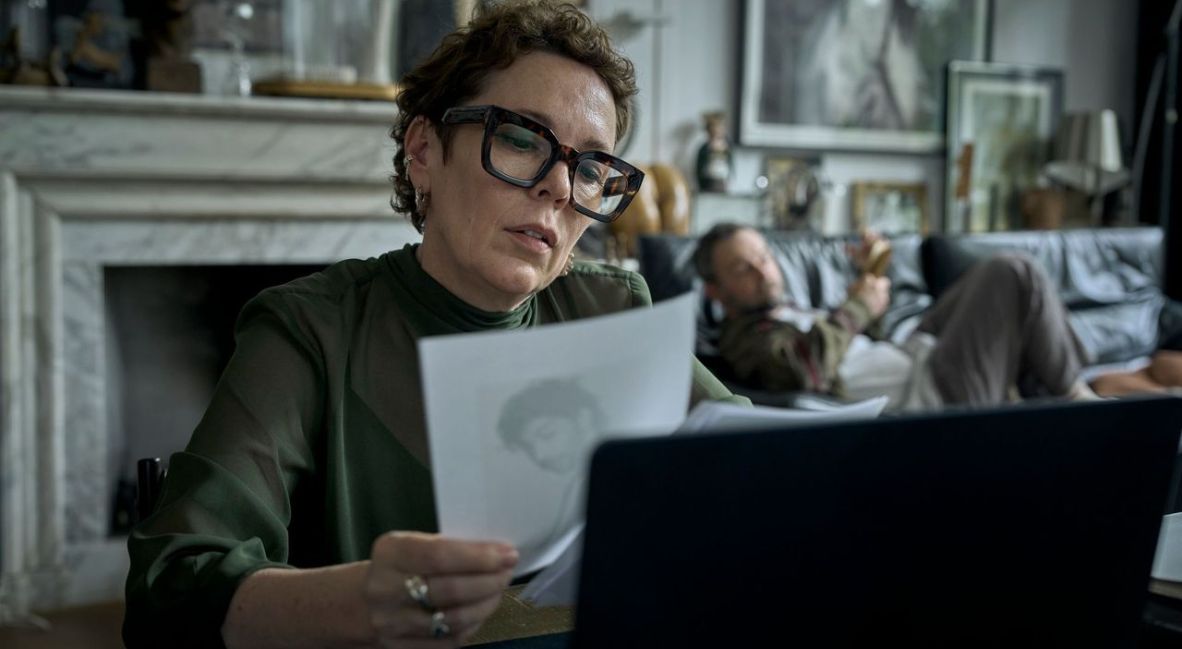
Hannah’s arc is where Jimpa quietly does its most complex work. Her insistence on telling a story “without drama” isn’t naivete; it’s self-protection. As a filmmaker, she wants to preserve love by sanding down conflict. As a daughter, she has survived by doing the same. Watching that strategy fail, especially as actors challenge her own story, forces her to confront the cost of emotional curation. Jimpa is ultimately less interested in whether her film gets made than in what she has to admit once she stops controlling the narrative.
Frances’s journey is especially effective because the Jimpa never frames their disillusionment as betrayal. Instead, it treats it as a form of maturation. Seeing Jimpa clearly doesn’t erase what he gave them; it contextualizes it. The younger queer spaces Frances enters aren’t depicted as utopian; rather, they are shown as environments where boundaries, desire, and uncertainty coexist without interrogation. That contrast says more about generational trauma than any speech could.
What Jimpa consistently asks of its audience is to accept discomfort. That includes physical nudity, emotional exposure, and historical reality. Conversations around the AIDS crisis are treated with lived specificity, not reverence from a distance.
The family drama demonstrates how history repeats itself.
People talk about loss, about recognition, about the necessity of quilts and blankets to ensure the dead were remembered as they deserved to be. These moments don’t pause the film; they ground it. They reinforce the idea that queerness, across generations, has always required a confrontation with mortality and erasure, even as language and identity continue to evolve.
That same discomfort extends to family dynamics beyond Hannah and Jimpa. The arrival of Hannah’s sister Emily (Kate Box) brings with it a quiet but potent contrast. Two daughters raised by the same parents have experienced entirely different versions of them. The film doesn’t arbitrate between those truths. It allows them to coexist, just as it allows Jimpa’s quiet lies about his choices, motivations, and selfishness to sit alongside his genuine contributions. The damage he causes isn’t loud, but it’s cumulative.
Crucially, Jimpa also recognizes how patterns repeat. Hannah becomes her father in ways she resists acknowledging: prioritizing work, shaping narratives, managing distance. The difference is that she chooses vulnerability, where Jimpa chose control. Her relationship with Frances is built on openness rather than expectations, allowing Frances to be herself without the pressure to become who Hannah wants them to be. That distinction matters. It’s the film’s clearest argument for progress: not as perfection, but as intentional change.
The film refuses easy resolution.
If Jimpa stumbles, it’s in how it sidelines Hannah’s husband, Harry. For a film so invested in openness, he remains largely an emotional anchor without interiority. He absorbs strain, offers steadiness, and navigates Hannah’s vulnerability with patience, yet the film rarely grants him space to articulate his own emotional cost. It’s not fatal to the film, but it’s noticeable, especially given how generously every other character is explored.
Jimpa ends without resolution, and that choice matters. Frances doesn’t leave with answers so much as perspective, and Hannah doesn’t find peace so much as clarity. The film closes on a moment of recognition between mother and child, one that feels earned, not because everything has been fixed, but because something has finally been seen clearly. That’s enough.
What lingers isn’t resolution, but understanding. Jimpa asks its audience to remain present with disappointment, affection, anger, and gratitude all at once, trusting that those emotions can coexist without being reconciled. In choosing clarity over comfort, it finds a form of love that doesn’t rely on illusion to survive.
Jimpa is in theaters out now in limited theaters.
Jimpa
-
Rating - 8/108/10
TL;DR
Jimpa asks its audience to remain present with disappointment, affection, anger, and gratitude all at once, trusting that those emotions can coexist without being reconciled.