The Sound of Falling (In die Sonne schauen) echoes hauntingly across a hundred years of history on the same northern German farm. Through an expressionistic work of beauty, director Mascha Schilinski and writers Louise Peter and Mascha Schilinski stitch together the tragic and silent suffering of women across multiple generations.
The story is non-linear, disparate film stocks that aren’t bound to specific time periods, and the slow drip of characters’ relationships to one another makes The Sound of Falling a challenging piece to follow, but a deeply moving experience nonetheless.
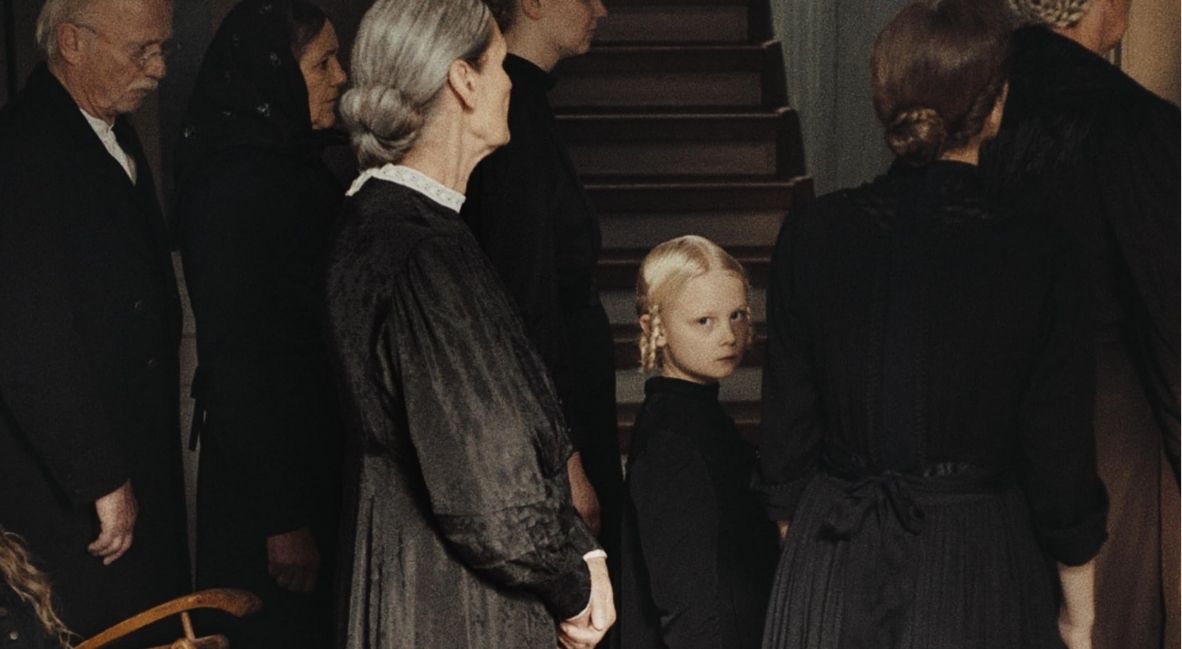
The film takes place in four time periods: the turn of the 20th century, the 1940s, the 1980s, and the present. As the movie courses through its 2.5-hour runtime, it seemlessly flows back and forth between the generations. At first, it’s difficult to fully distinguish between the eras. Certain characters look similar to one another, and everything takes place in the same house, barn, and nearby river.
Four generations suffer silently from generational trauma in The Sound of Falling.
While the dress and technology slowly start to help parse the timelines, there is no doubt from the beginning that the fate of the young women, Alma (Hanna Heckt), Erika (Lea Drinda), Angelika (Lena Urzendowsky), and Nelly (Zoë Baier) at the center of each era is somehow bound to one another. Primarily, what binds them is how the culture and family around them force them to suffer in silence.
Each central character offers occasional voiceovers about their own and each other’s lives in absolute melancholy. These are people who are suffering from depression and suicidal ideation, describing the lives around them and leaving the audience to writh over the pain they endure for the sake of silence. It’s learned behavior and generational trauma all wrapped together during summers that should be bright with youthfulness.
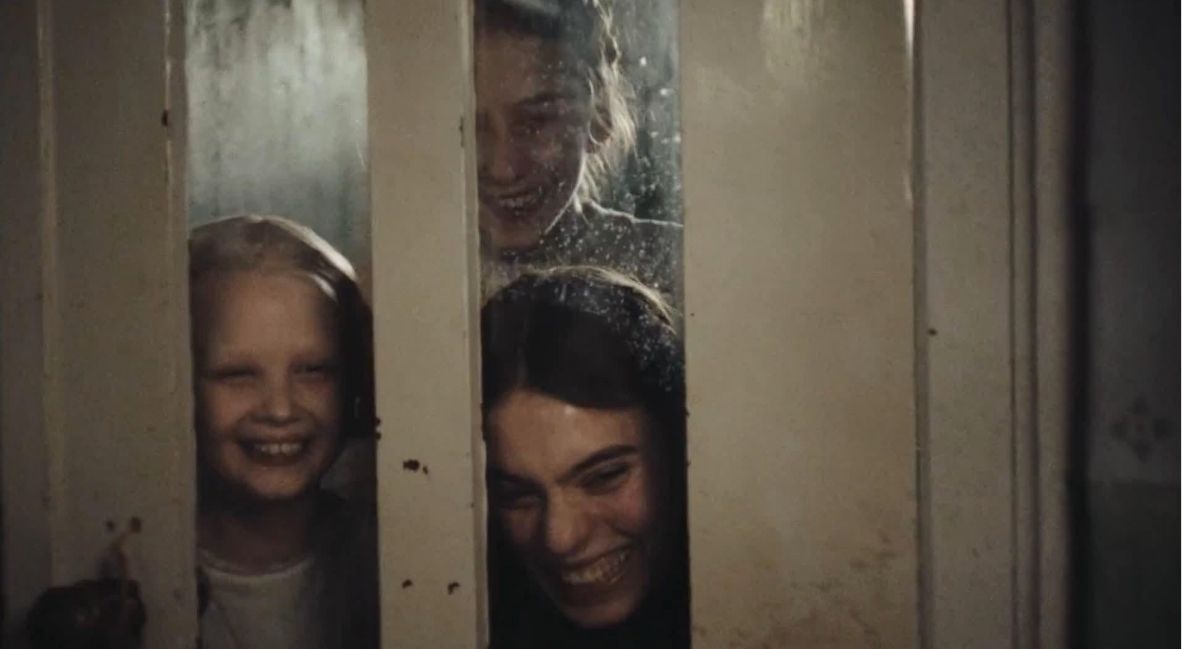
Alma’s scenes, the most frequent, show the young child watching her elders closely through cracks and peepholes. She explains in voiceover how death was common, ailments were ignored, and forced sterilization was a normal course of business. She talks about her own desire to die like it’s nothing, and it’s clear that she’s been taught not to even consider vocalizing these thoughts.
Despite the pain undergirding the movie, The Sound of Falling still makes room for joy.
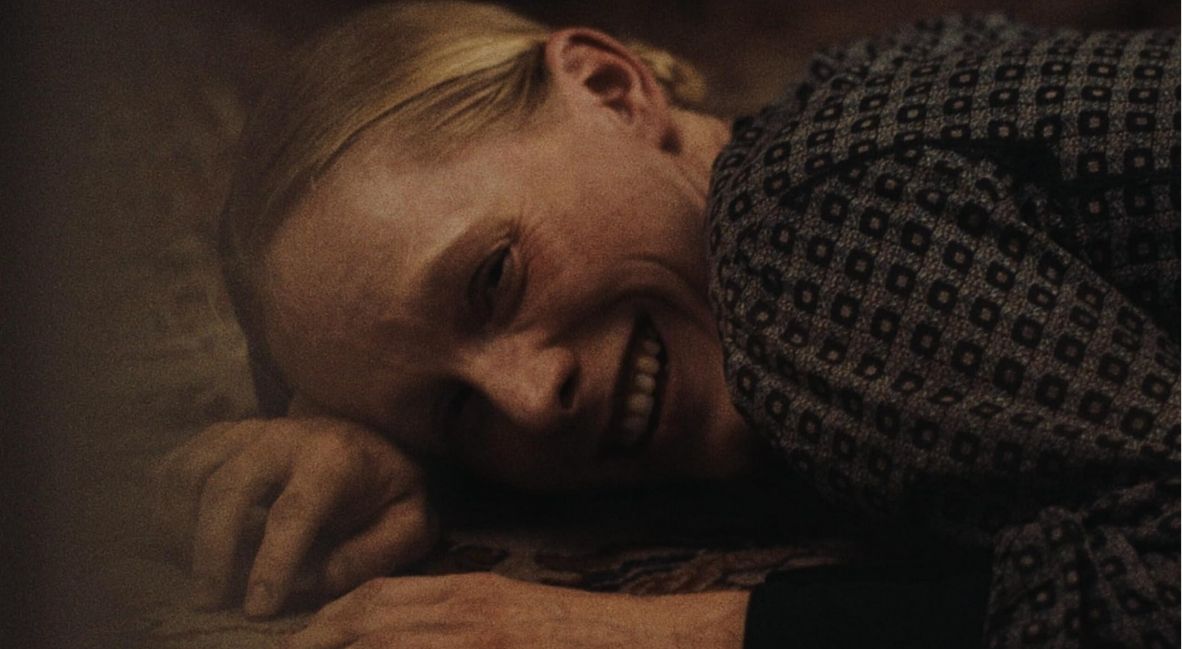
It’s not just the four main characters. It’s not even just the women. Mothers, sisters, neighbors, and even brothers are victims of the culture of silence. Not a single person in all of The Sound of Falling can escape the pain of it all. And yet, the movie itself isn’t marose. Its subject is dire, but somehow, it finds beauty in persevering without ever glorifying the sadness itself.
The camera runs in circles around the old house as it chases Alma and her sisters in a brief moment of play. Angelika is never shamed for her sexuality, despite the unsavory circumstances. Instead, the movie lets her forwardness be an asset to her personality. Nelly finds camaraderie in her desperation in a way that doesn’t seem to be a spiral of mutual misery. Terrible fates befall the people who live on this land over the film’s century and change, and yet, it still feels as though perhaps the next generation could finally break that cycle.
A tantalizing score puts the whole affair on pins and needles. It lends The Sound of Falling the feeling of a ghost story. The repeated imagery and dialogue across time periods compound the ghastly experience. Some footage is used more than once, while at other times, different characters enact the same scene.
The Sound of Falling is an approachable, modern take on expressionism.
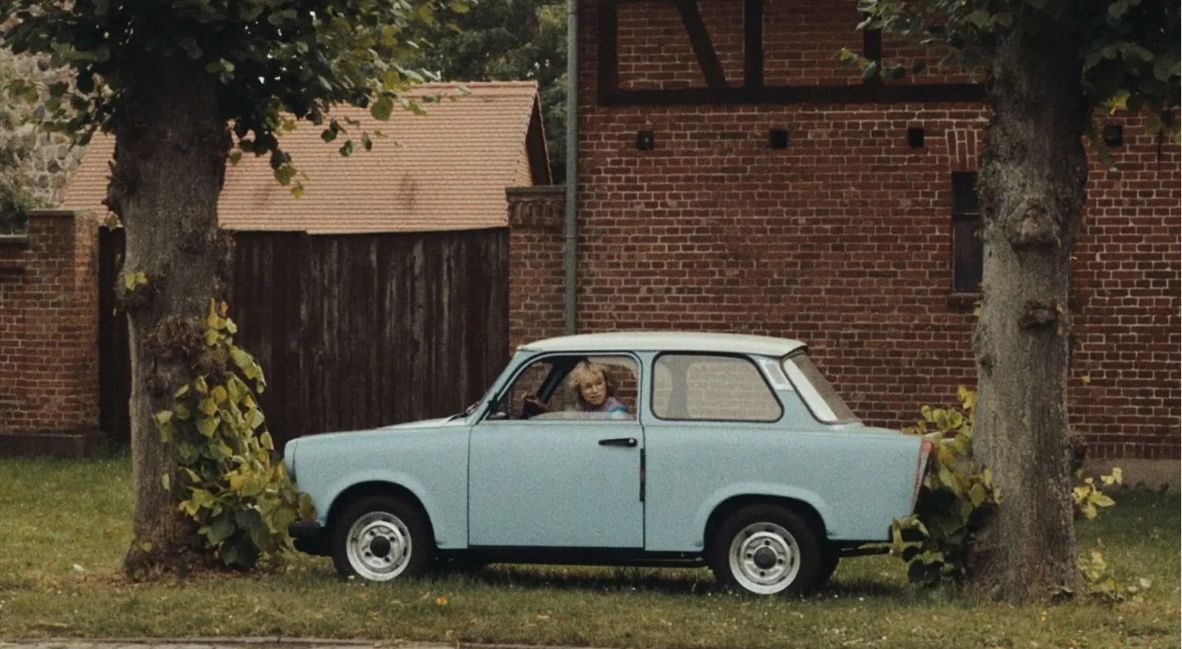
Because the film looks and feels so abstract with its ever-shifting film stock and occasional use of blurring, The Sound of Falling is a rare occasion where being overly obvious in the film’s attempt to draw parallels between the different characters’ experiences elevates the experience. As a modern take on the exaggerated and indirect style of expressionism, it’s an approachable, if not challenging, film to fully grasp in one viewing.
Its approachability would not be possible without the completely laudable performances of The Sound of Falling’s young principal actors. Each brings something distinct to the affair. All four time periods feel equally welcome upon their returns. Hanna Heckt and Zoë Baier should be especially commended as the youngest actors with the most harrowing parts to play. Heckt, in particular, has to carry the largest share of the load and does so with ease.
Equal parts challenging, upsetting, and beautiful, The Sound of Falling is as much a cry for help on behalf of everyone, especially women, who were raised to suffer in silence, as it is a love letter to the fellowship between those who do suffer. It sits in the pain without worshiping it, knowing there is still hope that the cycle can be broken.
The Sound of Falling is playing in theaters now.
The Sound of Falling
-
Rating - 8/108/10
TL;DR
Equal parts challenging, upsetting, and beautiful, The Sound of Falling is as much a cry for help on behalf of everyone, especially women, who was raised to suffer in silence as it is a love letter to the fellowship between those who do suffer.