
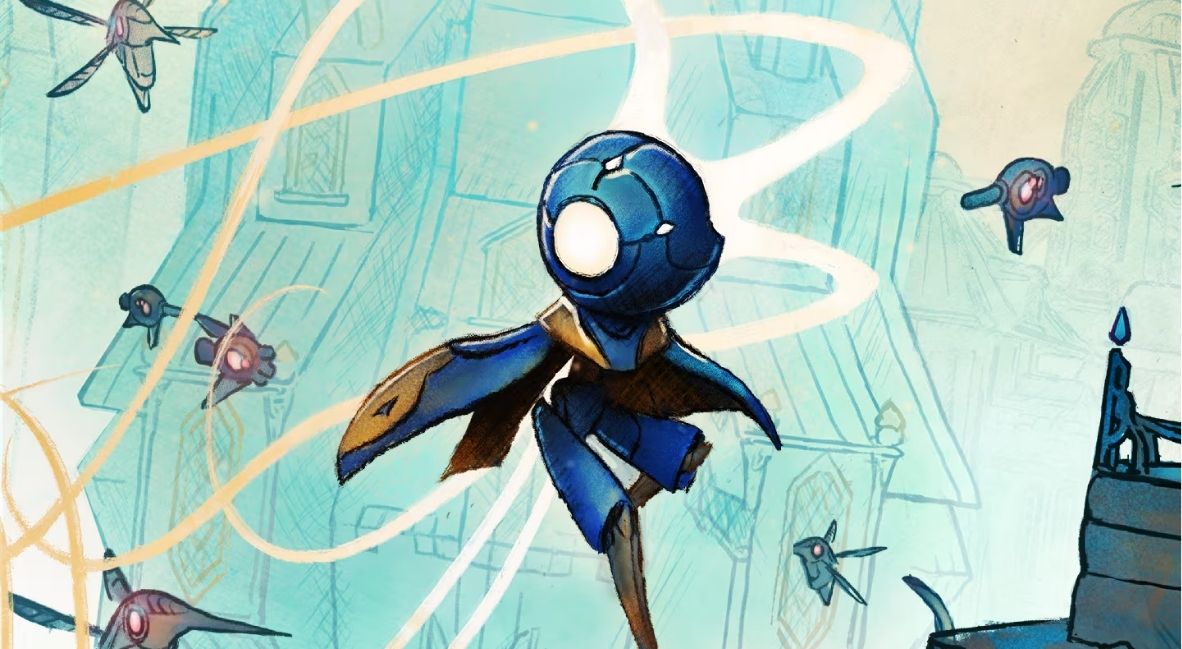
Metroidvanias, the classic genre, tend to have one glaring issue: exploring too much could lead to the hardest content becoming trivialized. MIO: Memories in Orbit, by Douze Dixiemes and Focus Entertainment, has found the solution. Make you more brittle as you get stronger.
Even if fans enjoy overpowering any challenge, Douze Dixiemes’s approach feels revitalizing. It doesn’t just force you to get better; it also encourages even more exploration to discover everything Memories in Orbit has to offer.
MIO: Memories in Orbit has you control a little robot, MIO. Waking up in a foreign, greying area where things aren’t quite right. Inoperable and unrepairable robots litter the world. A speaker and detached voice speak to you to unite the Pearls.
The story always feels pertinent in MIO: Memories in Orbit.
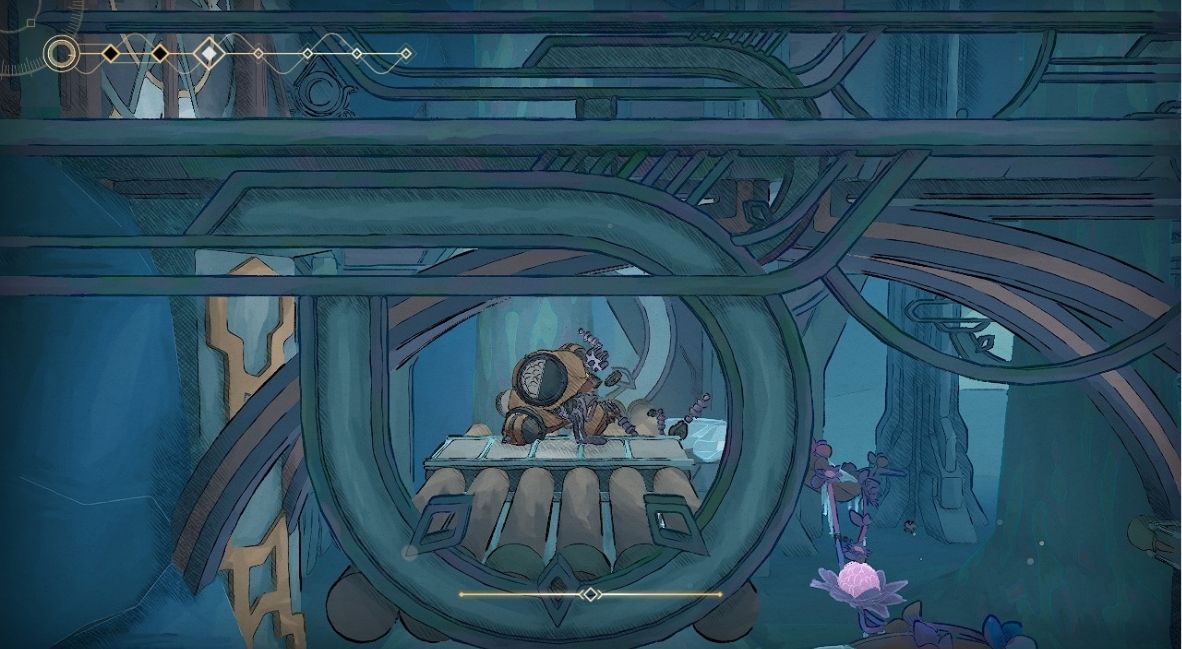
What quickly becomes clear is that this world is dying. And you’re no exception. Whatever is behind this place is draining everything, including MIO. It’s up to you to discover the cause, the solution, and execute on it before even you yourself are taken out of commission for good. At that point, all hope would truly be lost.
Where Memories in Orbit excels is making the story feel ever-pertinent. No matter how much you explore, there’s always the reminder that time is running out. Whenever the drain hits you, it’s like getting hit again and again with a bucket of ice, reminding you to focus up. It also reminds you to explore. The world is stunning and full of secrets. Those secrets and hidden mysteries could be what help you put up more of a fight to save MIO’s world.
What’s also impressive is how Memories in Orbit presents numerous perspectives on leaders trying to overcome the collective eventual downfall. The Pearls, or integrated programs elevated to a higher purpose, are all unique. They each have their own domain, emotions, and voices to elevate themselves above the common robots.
The Pearls are all well-written, making you feel for them right away.
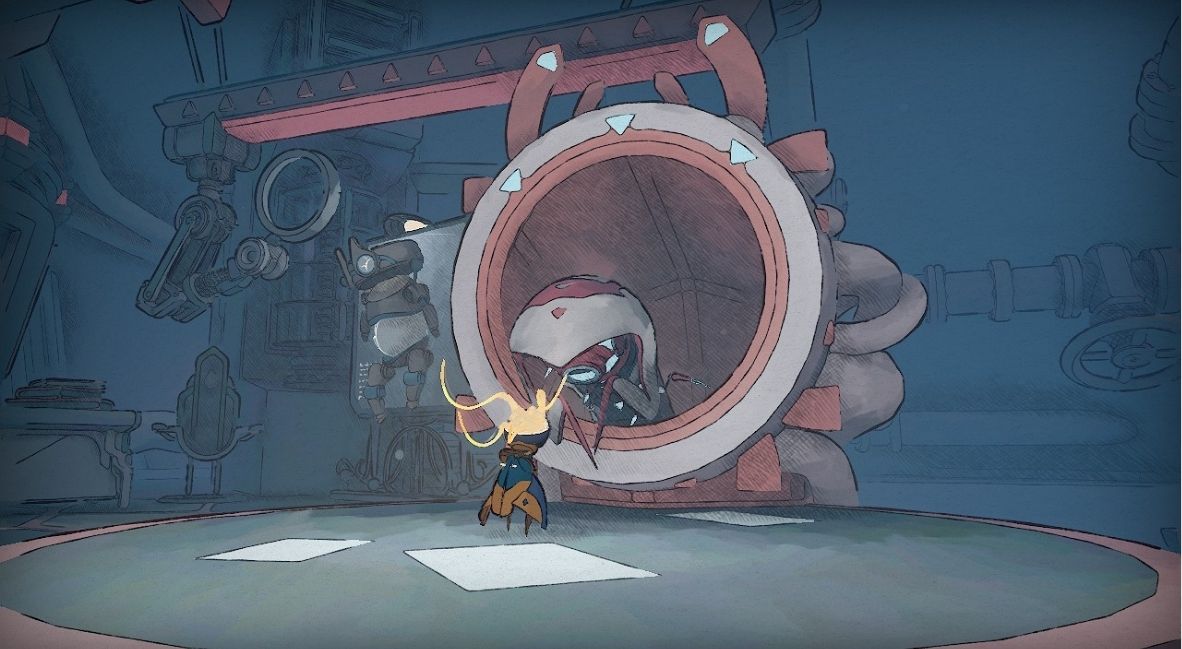
Each Pearl you discover quickly makes you feel for them. They are well written, showing reason and understanding of their approach to saving their world. But one thing is true. Separately, they are each failing. MIO’s goal is to bring them together. United, there is a much better chance of coming out on top. Alternative threats do exist to get in MIO’s way. Yet they aren’t unreasonable.
Take, for instance, the Pearl, Halyn. She is one you encounter later in the game, focused on building and knowledge. She’s a ‘knowledge is power’ type of entity. She is strongly opposed to MIO’s meddling. Mostly because she believes that MIO’s success means her efforts will be in vain and all will be lost.
After lots of persistence, she is convinced that MIO may actually be right. This snowballs into her accepting that she, alone, may not be able to save the world. She’s had several hundred years and hasn’t made progress, so maybe MIO’s way could lead to success.
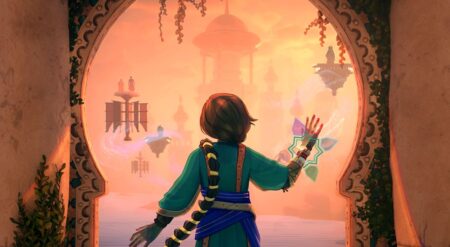
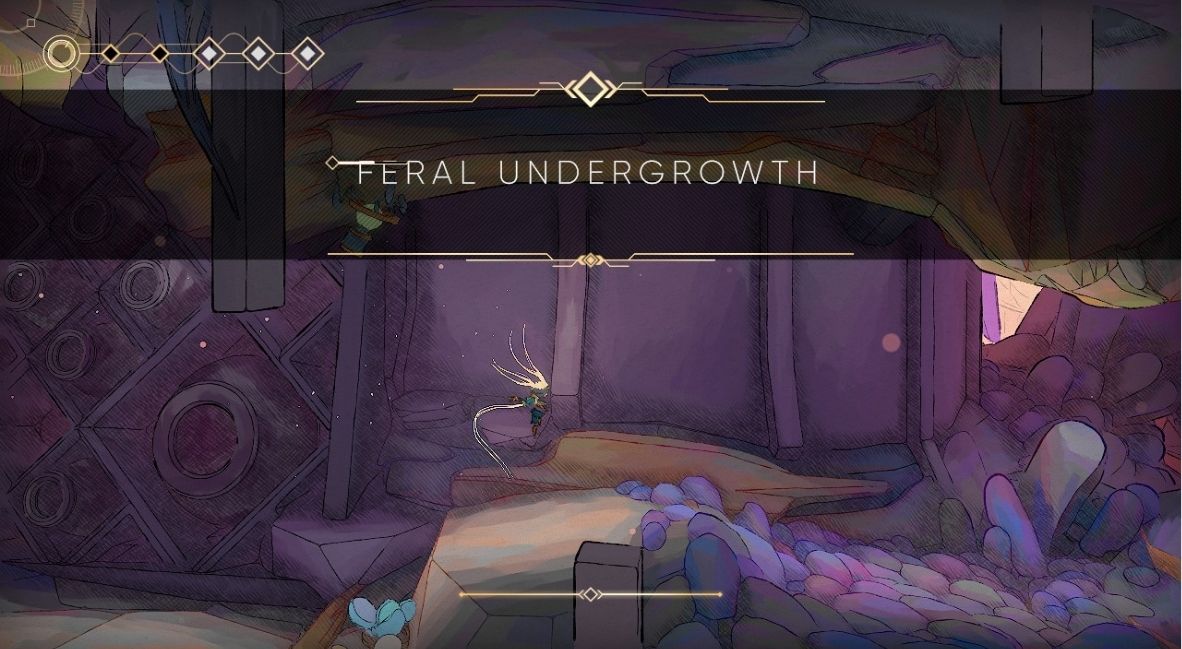
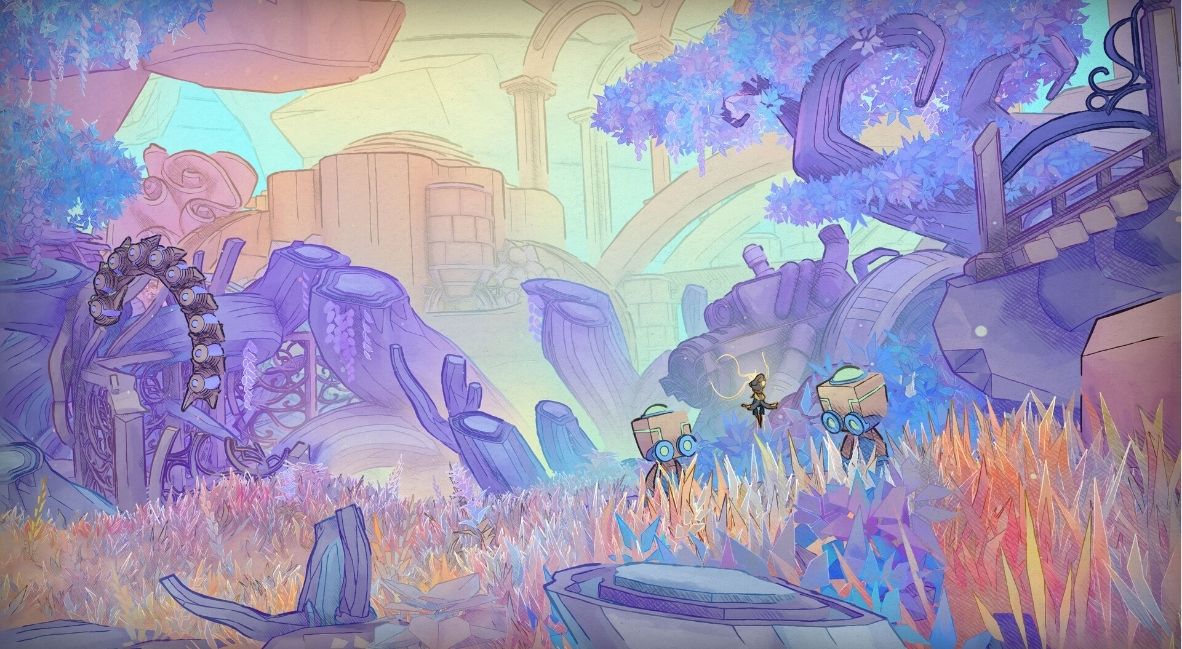
Yet what really brings the gloomy, yet hopeful, story to life is the stunningly beautiful world. With a watercolor art style, the colors pop. And for such a robotic world, life flourishes in surprising ways. Like plantlife that is either there for aesthetics, to assist you with platforms, or as a danger. Additionally, each Pearl domain is distinct and represents their true inner self.
The art style imbues MIO: Memories in Orbit with a sense of hope.
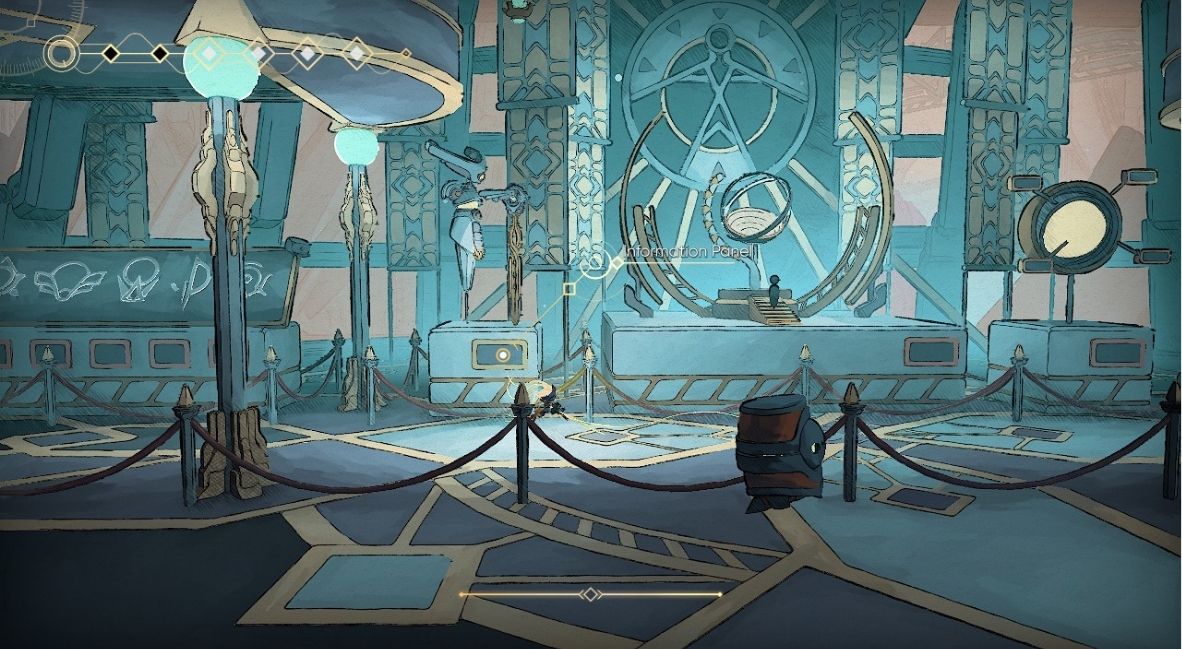
The art style too, serves as an exemplary way to show hope. Where there are dark underbellies full of danger, there are also wonders and moments of serenity. Even the NPCs throughout the world (outside of the Pearls) are living their best lives. They have not a care because they know more powerful, smarter beings are handling the situation, no matter how dire.
They are happy. They go about their own business. They still love and keep on until they can’t anymore. It’s tragic to come across a bot you interacted with previously, only to see a message that they are beyond repair and deactivated on the ground—a lifeless husk.
Their life and memory are still there, though. Any minor impression an NPC left on you will remain with you. Others, those who hold themselves to a higher esteem, grow more and more depressed over the course of the story as their worlds are overturned due to MIO’s actions. In other words, just as the artstyle gives this world brevity, the NPCs breathe life and convey the feeling of time passing and how it affects us all.
Time always feels like it’s running out.
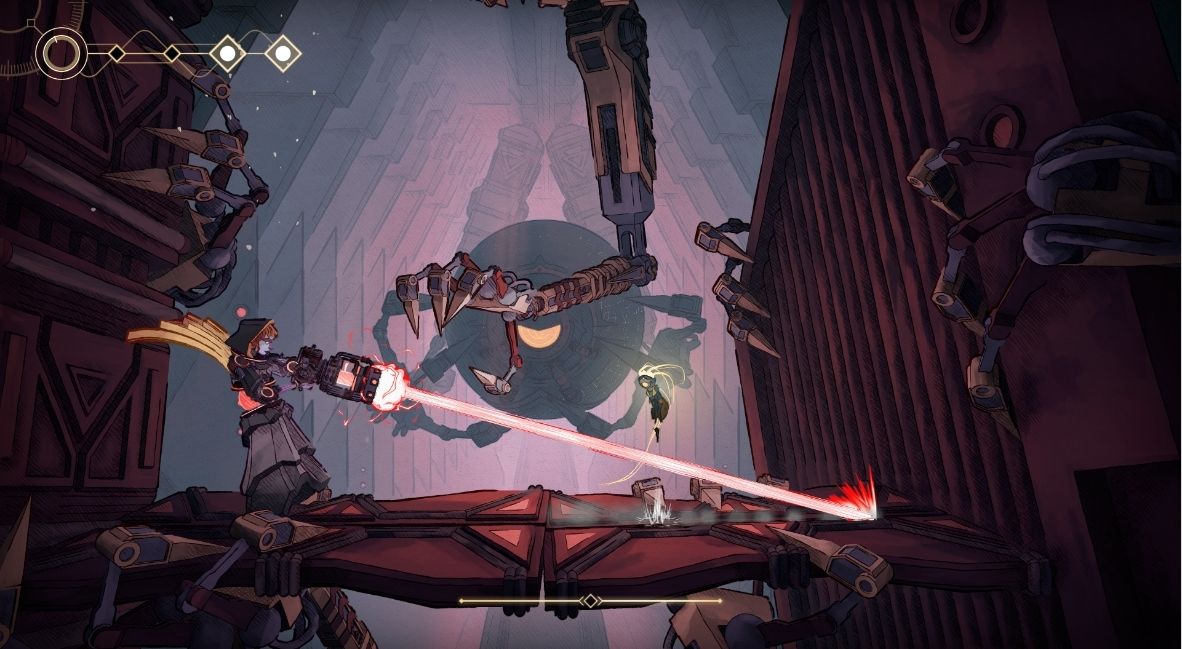
The feeling of time running out is most importantly translated to the gameplay. MIO takes an alternative approach to the common metroidvania start. Instead of being at a powerful level at the start, you are immediately knocked down a couple of pegs. Four health nodes are reduced to two, with the others changed to black diamonds on your health bar. This health is gone for good.
It’s disheartening at first, but leaves you wondering whether MIO is fixable. It’s not until you look around (and equip an ability that lets you see healthbars) that you see that MIO isn’t the only one experiencing this phenomenon. The phenomenon saps MIO’s health permanently while temporarily greying the world.
MIO is slow, almost to the point of failing, but pushes on. As they do, the world regains its color, and you move on. No matter how many times MIO gets drained, they have to keep going, and so do you. Yet going back to NPCs previously interacted with, their health as well has decreased.
With exploration, you can overcome the ever-strengthening limitations on MIO for just a bit longer. Scattered throughout the four main biomes are numerous secrets to discover. One of those is a way to strengthen MIO’s shell. Finding four adds one node of health permanently… until the next phenomenon. Like a game of cat and mouse, MIO, and you by extension, are doing all you can to stay ahead of eventual death.
Negative modifiers add a layer of complexity to the gameplay.
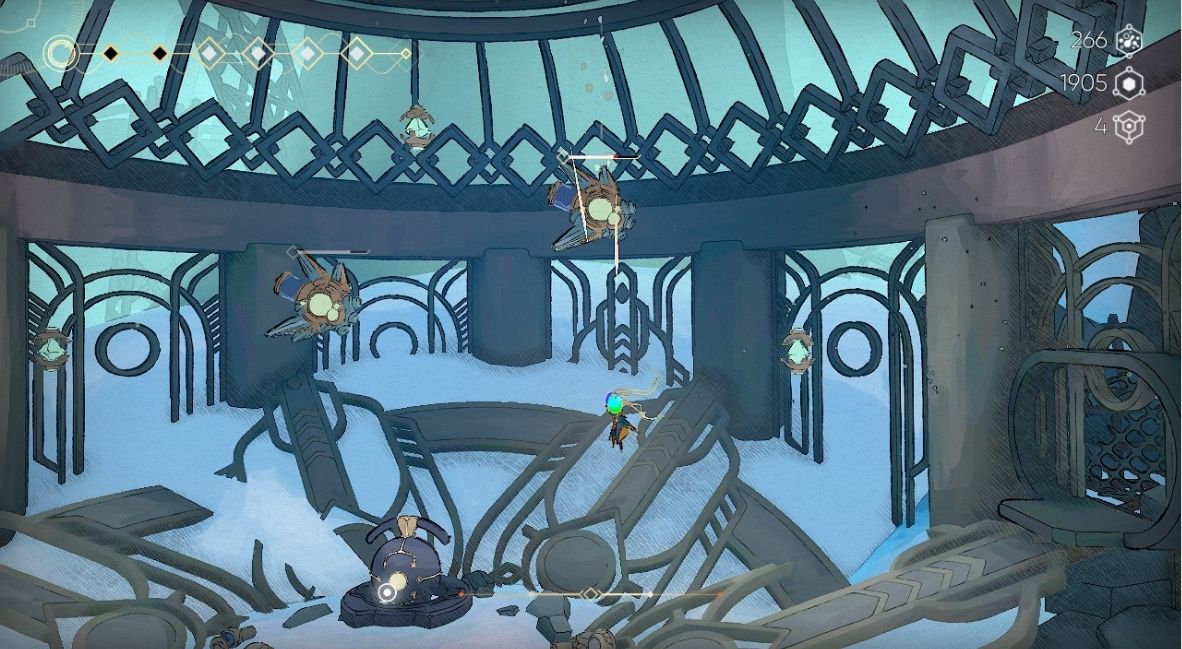
Another way to get stronger is with modifiers. MIO has only a set number of modifier slots (this game’s skill points), which can be allocated to found modifiers that drastically change the gameplay. As a concept, this isn’t new. But what is unique is the option to equip negative modifiers, like less health, slower energy recharge rates, and so forth, to gain more points to spend. Taking one that reduces your health can be good if it means you can equip a modifier that lets you recharge an extra point of health while on the ground.
Many of these improvement items can be purchased with nacre, Memories of Orbit’s form of currency. What makes MIO‘s currency so different from the slowly growing blend of souslikes and metroidvanias is that if you die, ALL of your nacre is gone. The liquid nacre goes back to zero, and what was lost is unrecoverable. On the other hand, the world, like a soulslike, regrows its enemies whenever you die. It also reforms any piles of scrap on the ground to harvest that same nacre from once again every time you rest.
Additionally, there is a pretty handy way to always keep nacre if you die. That’s by turning it into solid nacre. With certain active robots, they can convert all liquid nacre on you to solid. These always appear right when you need them, and are permanent fixtures of the map. This makes grinding for purchasing good upgrades much more manageable, as death becomes less punishing after completing a conversion.
But a Metroidvania wouldn’t be complete without exploration and detailed areas full of secrets, and Memories of Orbit has that in droves. MIO gets new abilities gradually throughout the playthrough, and each one greatly expands the explorable world. Eventually, MIO gets a wall climb, a glide, and a grappling hook added to their kit. Mixing the three of them will unlock numerous nooks and crannies full of goodies that you wish you’d found earlier.
The discoverable items are pretty varied, from forgotten solid nacre, to collectibles that explain more of this world’s past, to even health and attach upgrades. Attack upgrades particularly ended up being in areas where, if curiosity won out over the sense of survival, they would’ve been found earlier. And later bosses would’ve fallen much more quickly. Speaking of bosses, it’s rare for a game to have a list of bosses that all rarely miss in execution.
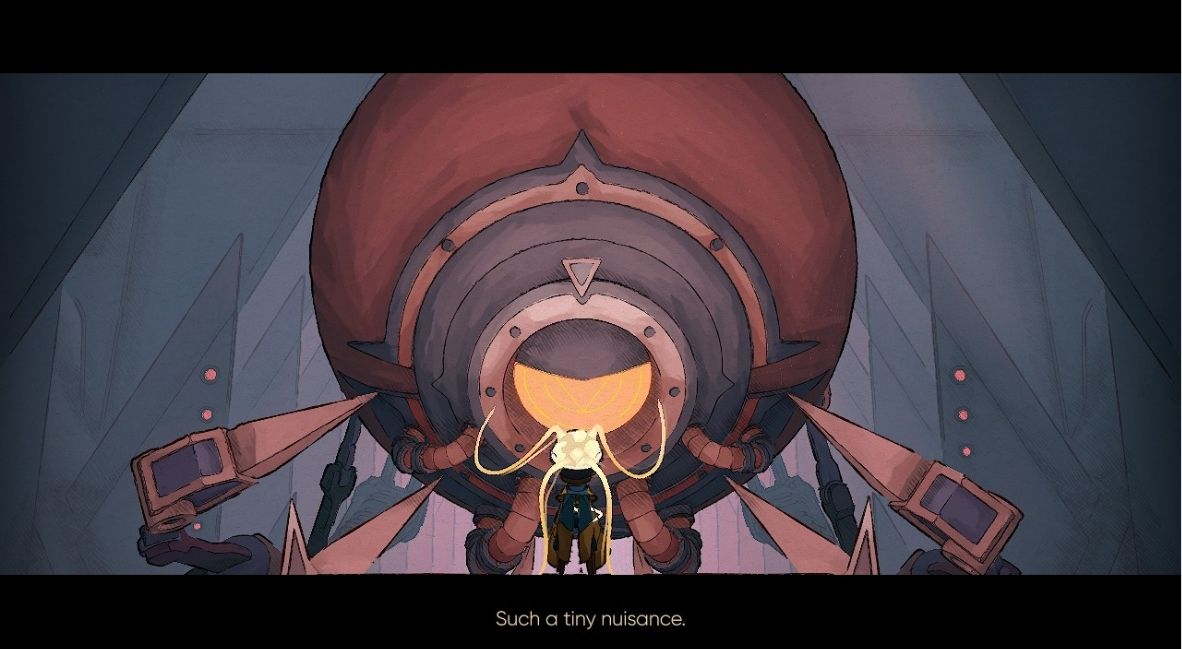
MIO may have some of the most fun Metroidvania bosses to exist. Making an already great game even better. Many are even hidden, off the beaten path, and you may stumble upon the most unique ones randomly. Each boss not only has their own moveset but also their own soundtrack, which really sets a great mood during fights.
With about 15 bosses, it’s impressive how different they all are. One, especially, without spoilers, was a fight that pushes platforming skills to a new level to win, all without landing a single hit on the boss. None of them are overly difficult. None of them are too punishing in the sense that they take more health, or require unfathomable reaction times. They are all just fights that make you learn quickly and learn on the fly as the enemy’s moveset changes as they get weaker and weaker.
Memories of Orbit is full of secrets waiting to be discovered.
Finally, what can be the most annoying part of a metroidvania, the runback, isn’t nearly as bad as it was in similar releases. Memories of Orbit finds a good balance between forcing you to learn and adapt in these deep areas, but rewarding you for succeeding. Like how exploration is key to survival, shortcuts are also bountiful. Even when you’re being told to go left to continue on, simply going right would unlock a way that’d save a lot of time if you die moments later.
There are also numerous secret shortcuts that seem so obvious once you observe their locations. For instance, just using a grappling hook in one part of a screen may be fruitful in discovering a hook that was always there, but you just didn’t see it yet.
Similarly, health refills are bountiful and always appear right when you need one. Even if they themselves can cost nacre, there’s always more than enough enemies on your path to that point to make sure you have enough to buy some health back.
Even after hitting credits, Memories of Oribit isn’t done just yet. The ending felt a little empty. Not because it was bad, but because it was a little depressing. Yet, like the hope MIO delivers while on their journey, there is a secret that may deliver more, and maybe a happier outcome for all.
When you beat the game, keep playing.
When you beat the game, keep playing. Those secrets you’re missing can be around any corner. And one may be the key to unleashing a cascade of unlocks that ultimately lead to the game’s true ending. What helps is a fantastic game that doesn’t need to convince one much to not put it down after the credits roll.
MIO: Memories in Orbit presents an ever-present challenge that is truly a blessing in disguise. Thematically and gameplay-wise, the constant threat of losing more and more of your most vital resource, your health, is always in the back of your mind. With fantastic bosses in the least-expected places, and a stunning, dying world full of secrets, MIO pushes you to be better, whether it be to try new modifiers to change your playstyle, or find ways to be even more aggressive to overcome this game’s numerous challenges.
Even after finishing the game and getting the sense that much has already been discovered, there is still so much to explore. And as a continuation of how good 2025 was for metroidvanias, 2026 is starting off very strongly with this one.
MIO: Memories in Orbit is available now on Xbox Series X|S, PlayStation 5, Nintendo Switch, Nintendo Switch 2, and PC.
MIO: Memories in Orbit
-
Rating - 9/109/10
TL;DR
Even after finishing the game and getting the sense that much has already been discovered, there is still so much to explore.