
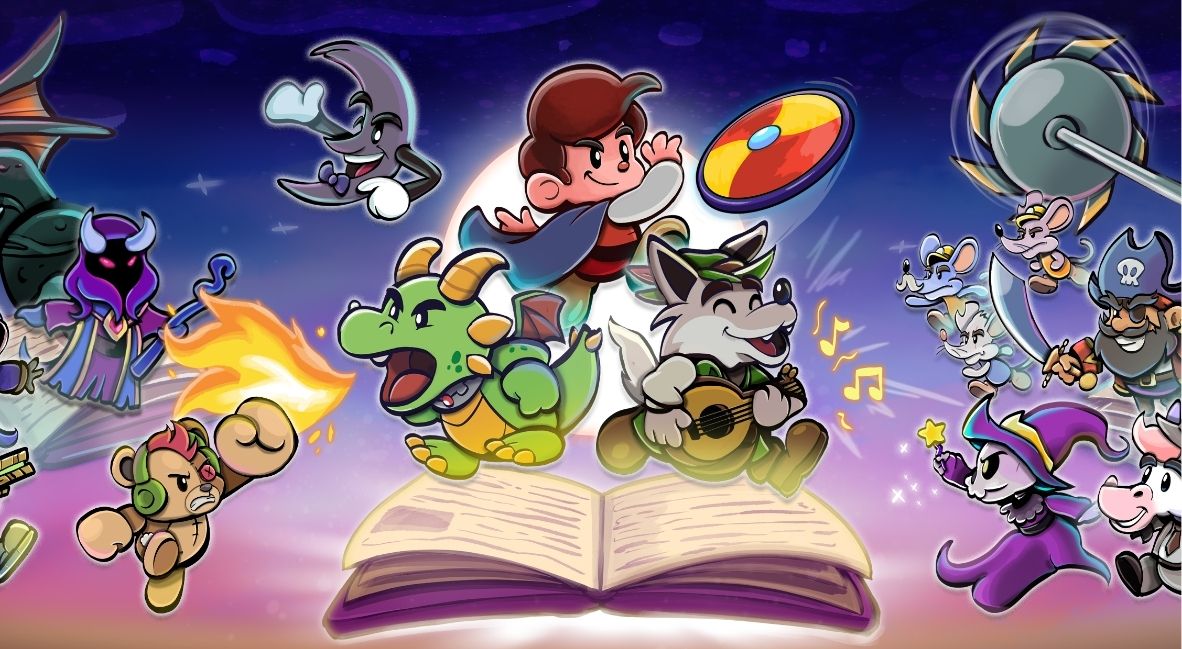
In the pages of a novel is a world with its own history, characters, ecosystems, and more. Escape from Ever After, the new adventure RPG by Sleepy Castle Studio and Hype Train Digital, connects those worlds and gives the residents a 9–5 office job.
There’s no real point to fighting the evil dragon if profits are to be made. True love can be found by the most unlikely characters, especially those from completely different genres. Opposites attract after all. Escape from Ever After gives these paper-homed worlds and lets you explore their pages with a Paper Mario style, and every inspiration is worn on its dust jacket.
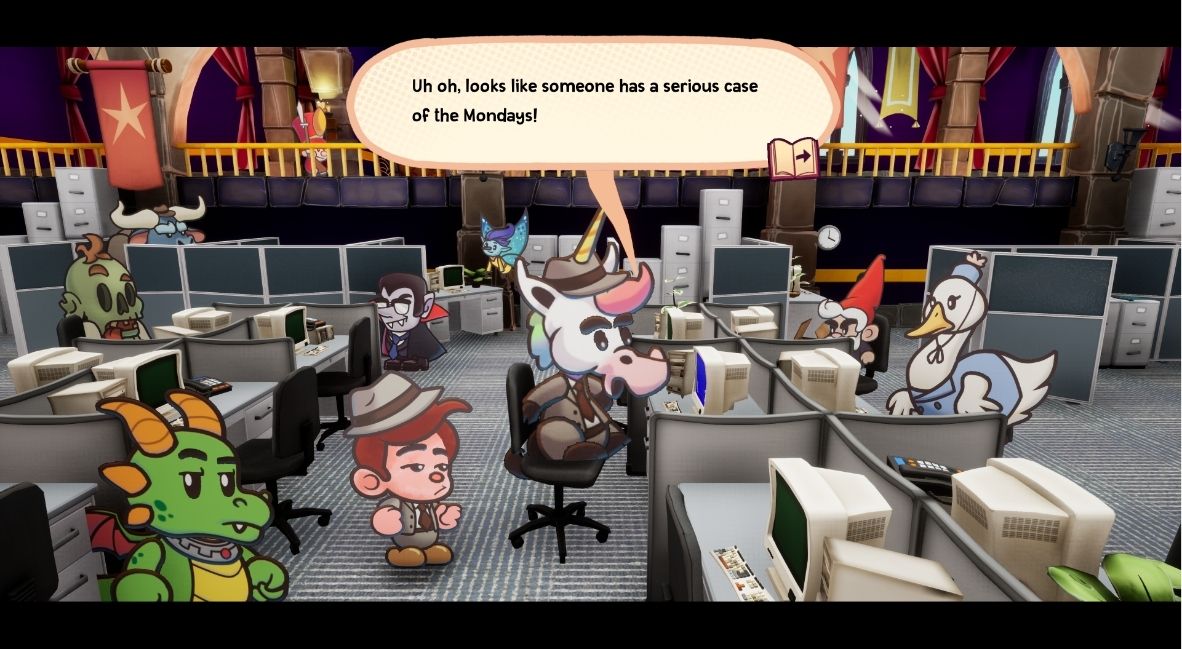
Escape from Ever After begins in the Adventures of Flynt Buckler. Flynt is like any other classic hero. He must storm the castle, defeat the dragon, Tinder, and return peace to his land. Yet something’s not quite right. Tinder’s castle is nothing like a dragon’s lair. It’s full of cubicles, pencil-pushing fairies, and guard toy soldiers. When Flynt refuses the new call-to-action of raising the stock price for the shareholders, he teams up with Tinder to take back her castle and ruin Ever After Inc. from within.
The overarching narrative in Escape from Ever After is a touching story about being forgotten.
For a game whose title involves “Ever After,” the amount of non-fairytale stories deeply involved in the game’s narrative was shocking. Particularly when you go from a classic children’s fantasy book to the Three Little Pigs to an H.P. Lovecraft-esque novel. That amount of whiplash could be a lot, yet how each novel is used works pretty well.
The overarching narrative feels very basic, though. Its whole premise is about two enemies-turned-allies putting their differences aside to retake their world. The main story feels for a significant amount of time more akin to a McGuffin. Even when it was driving the main characters’ actions in worlds like The Three Little Pigs, the more pertinent story of what exactly Flynt and Tinder are doing there is much more interesting.
That is, until the near end of the game. When the true stakes are revealed, every action that foes took to stop Flynt actually make sense. The books you explored up to that point were about how a mega-corporation corrupts all it touches. The overarching narrative turned out to be a touching story about being forgotten, doing all you can to save your world and those you love as it deteriorates.
Each ally has their own unique uses for fights.
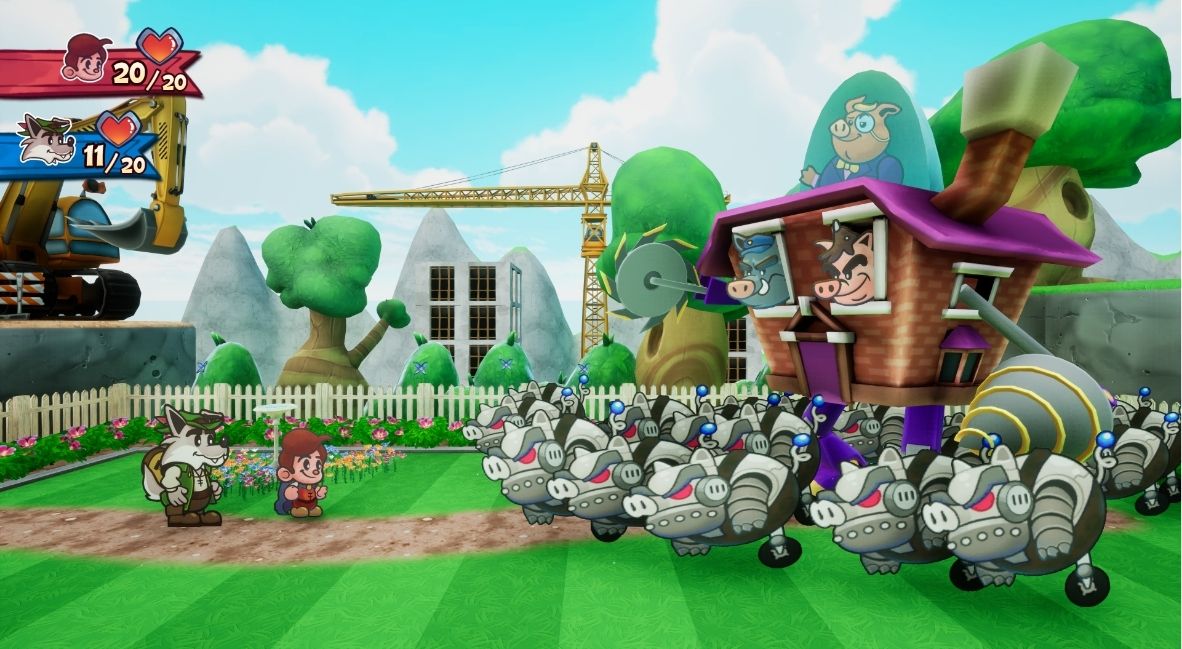
Similarly, the way Flynt and Tinder recruit allies is on that same basis, but from the perspective of “Why does a mega corporation decide what is best for me and my community.” Each new party member seems content at first with their new life. It’s not until they discover Flynt and Tinder’s honest intentions, and the progress they’ve made so far, that they learn there is actual hope for change.
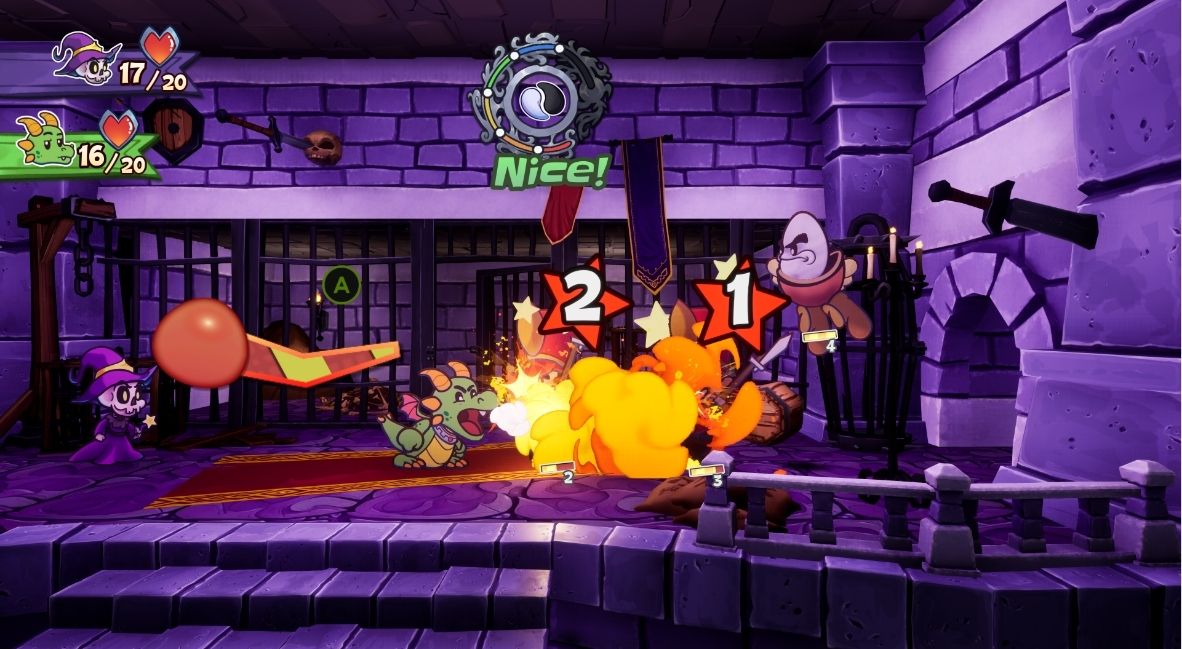
The gameplay especially reflects a group of unlikely allies working together to achieve the same goal. Combat, while basic, requires a good bit of strategy to come out on top. Similar to its primary inspiration, Escape from Ever After is turn-based, with two of the five party members on screen at the start. Each ally has their own unique uses for fights. Planning which attack could cascade into the next to quickly take out enemies made simple fights more like a puzzle.
For instance, Eva, the skeleton witch, is a former HR rep who joins Flynt and Tinder. If Tinder or Flynt attack a line of enemies, they’ll attack the first one up front (unless you use a skill). Eva, with her magical powers of transformation, can transform into a kangaroo and jump on an enemy anywhere in the line-up. This is key when enemies begin using shield-bots or metal shields that can’t be burnt by Tinder’s attacks.
Fights aren’t complicated, but the stat numbers are small.
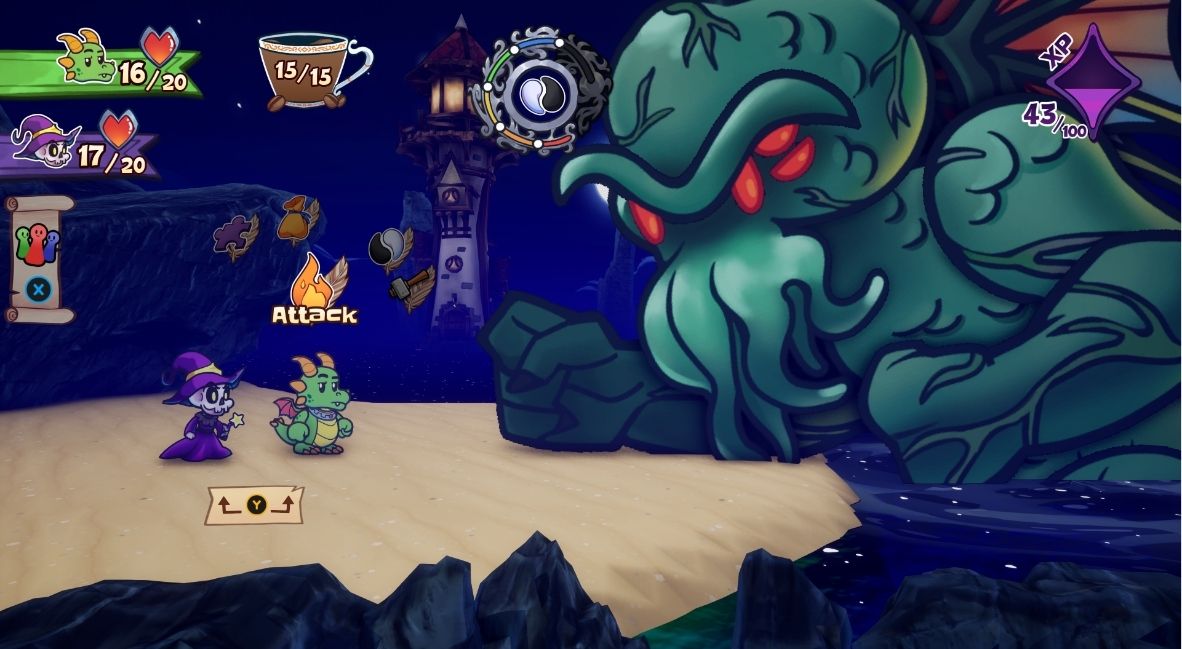
The difficulty of the game’s fights really comes from how small the stat numbers are. By the end of the game, party members had only about 30 HP each, and each was doing about two to three damage for their initial attacks. Later bosses, especially, tend to take much longer to defeat. Not because they’re harder, but they just have so much health. A two-damage attack is like a tickle to a foe with over 100 HP. When enemies incorporate defense values, that slows down everything even more.
But again, the fights are more a puzzle about staying alive, finding and exploiting weaknesses, and capitalize to come out on top. What really helps is the way each attack can be strengthened. Just about every attack has a caveat that if an action is timed right, it can be repeated or deal more damage. What is needed changes for each party member.
For Tinder, it’s a simple button hold until the charge gauge is full. For Flynt, it’s hitting the attack key right when their buckler gets caught. The same goes for receiving attacks, too. Timing a hit just right will negate a good chunk of damage.
When mixed with the equippable skills, having a tankier person up front, like Patches, equipped with a spikey shield, can help with taking down an enemy’s onslaught. Particularly when you find combos like a defense increase and that aforementioned spikey shield that deals one damage to an attacker. Yet, the windows for defending and some of the attacks is shockingly tight.
Even understanding when exactly you need to hit the right button can be hit-or-miss, just by being off by a split second. At times, it feels more advantageous to turn on one of the accessibility features that auto-triggers attack follow-ups or defense, given how small the associated windows are in some parts of the game.
The major trade-off here is how unique many of the bosses are. More specifically, how they play into every mechanic offered during combat to win. During the H.P. Lovecraft book, you fight an evil butcher duck who’s empowered by a corrupted heart. You must deal at least 3 damage to the heart per turn to prevent the big duck from becoming overpowered and insta-kill you. Another boss fight requires you to take out four enemies at once. Each one has a different ability, and they all don’t have the same amount of health.
Each world is fun to explore, filled with deep secrets.
Strategizing who is performing what, like who specializes in stunning or putting negative effects on foes to chip away during certain windows is brain-ticklingly fun. Each was a great way to keep the player on their toes at all times during those moments while introducing caveats that prevent one from simply brute-forcing their way through the encounter.
Fighting isn’t the only thing these five are doing. Each storybook is very detailed and looks lived in. Like the stories you’re jumping into has history, and Ever After Inc. has disrupted that in some way. The H.P. Lovecraft book, one that replaces all the people with peeved birds, was a book about cults and Cthulu being summoned. Ever After Inc. showed up and decided to use their Old God rituals for their own benefit.
Each world is fun to explore. They are deep with secrets. Many are even similar to a metroidvania, where you can only get said secret by coming back later with a to-be-unlocked party member. Each ally has their own unique skill that can be used in worlds to help with navigating around.
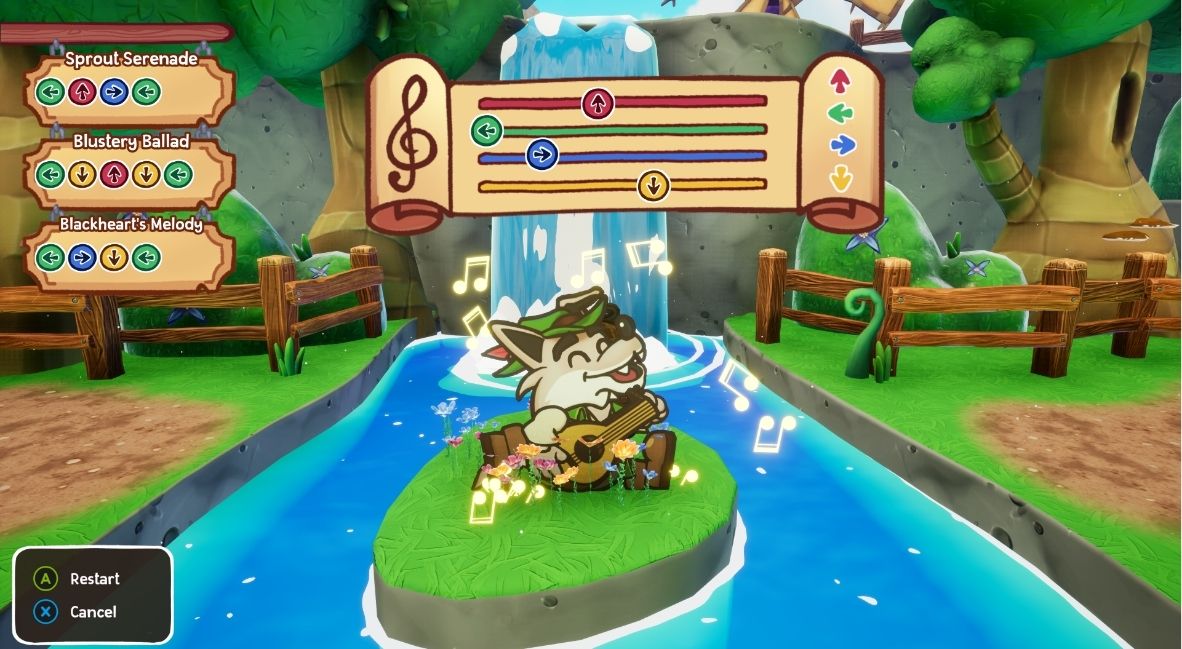
Wolfgang, the wolf who cried moneybag pigs, is a musician. One whose music can influence the environment, like growing plants or playing tunes to trigger specific events. Eva, on the other hand, can transform Flynt into a Loch Ness Monster creature to swim around the water.
It’s clearly telegraphed who is needed where. Plus, switching between your active party member and Flynt is snappy. The main obstacles to advancing the story are pretty straightforward. It’s when you want to go off the beaten path, or reach a tantalizing collectible in the worlds, that can be tricky.
The endgame needs a bit of tweaking in Escape from Ever After.
Some require precise jumps that can be hard to pull off with 2D characters in a 3D environment. Others require using certain abilities in one area to affect another in a different part of the story. For the most part, most things aren’t missable. Even after passing the point of no return, you can go back after advancing to the end of the game to explore more. Except for one area.
The last book before the finale needs to be fixed. In its current form, the way the story advances there, if you don’t backtrack when you think you can’t but actually can, you’re locking exploration of most of that area away. Even returning to the book later plops you into the starting area of the story. One that you cannot get out of to roam the rest of the planet as you did at the start of that chapter.
This means that if you’re not on top of things and don’t do every side quest available there, you can miss out on a lot of skills, collectibles, and more. Hopefully, this does get fixed in a future patch, or at least adds a warning to players that they are about to be locked out if they don’t unlock another teleporter before leaving.
NOTE: The developers informed us after this review was published, confirming the issue noted with the last book of Escape from Ever After was due to a bug in the pre-release review build. This issue was fixed in the release version of the game.
Escape from Ever After wears its inspiration on its dust jacket. If you’re missing the classic Nintendo RPG-style games, Sleepy Castle Studio delivers to scratch that itch. While not revolutionary, it takes its settings and introduces a wholly unique, fun, and evocative story that finds new ways to keep you engaged.
Just like its literary inspirations, Escape from Ever After has found ways to not only make them lived-in but flesh them out with unique enemies and bosses. Now, if only in our own reality we could also find the courage to fight back just like Flynt and the gang do.
Escape from Ever After is available now on Xbox Series X|S, PlayStation 5, PC, and Nintendo Switch.
Escape from Ever After
-
Rating - 8/108/10
TL;DR
Just like its literary inspirations, Escape from Ever After has found ways to not only make them lived-in but flesh them out with unique enemies and bosses.