
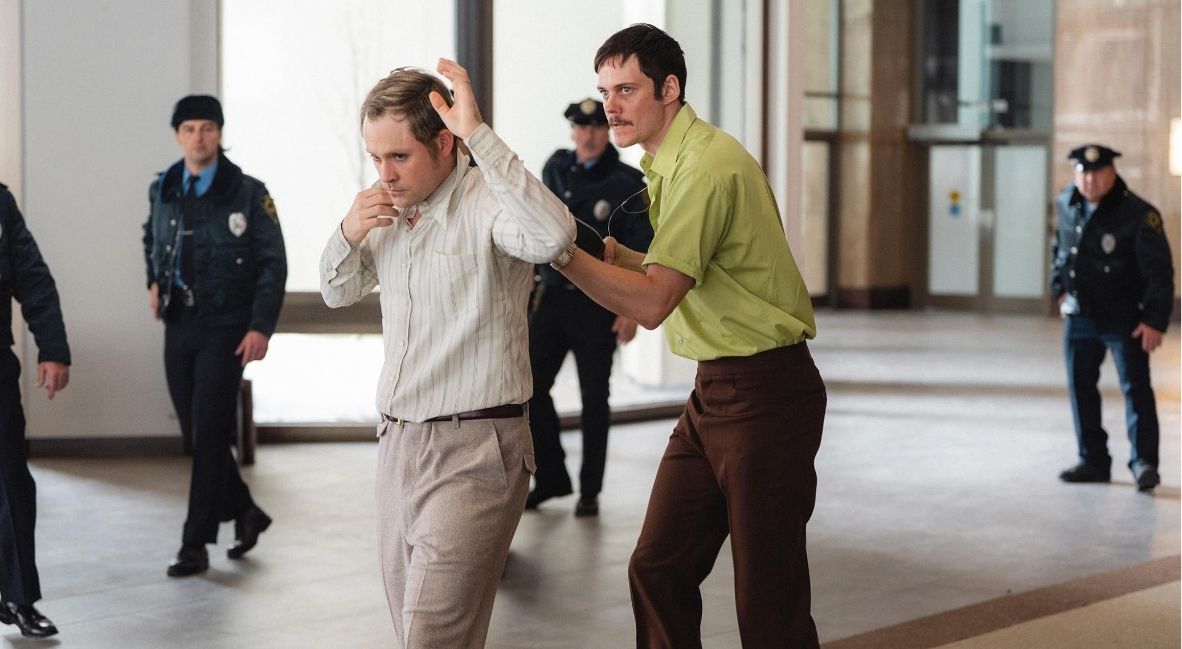
With great verve, Dead Man’s Wire director Gus Van Sant and writer Austin Kolodney bring to life the true story of Tony Kritsis (Bill Skarsgård), a disgruntled individual who kidnapped Dick Hall (Dacre Montgomery) on live television in 1977 to make a point about how his family’s lending business treated him. Detective Mike Grable (Cary Elwes) is the first responder to the hostage situation and walks a tight rope between Tony’s explosive emotions and the shotgun tied around Dick’s neck.
Dead Man’s Wire is the best crime thriller in a good while. Even while fairly straightforward, its path from beginning to end is exciting, well-acted, and entirely worth the ride. The movie is immediately reminiscent of the ’70s crime and spy thrillers it’s inspired by.
While it never reaches the upper echelons of that era’s success, the pastiche is a greater work for trying to fit into the fold than if it felt newfangled or modern. The characters ease into their roles, letting you wander freely in nostalgia without overdoing it or bogging the movie down with overt references and gimmicks.
Every character in Dead Man’s Wire is a mix of complicated characteristics.
Bill Skarsgård treads the line between misunderstood and evil. His desperation and indignity are belted out in his many diatribes so well that you can hardly help but root for him to win. Whatever winning might mean, in a no-win situation, anyway.
But then, he is always balanced by Dacre Montgomery, who is at once terrified and empathetic. It’s a bizarre mix of emotions. It feels almost unique. Dick is constantly aware that Tony could trip and kill him by accident, let alone slay him in a fit of rage if the police negotiations don’t go perfectly.
But yet, as Tony and Dick spend more time sequestered together, it becomes clear that Dick may just hate his father (Al Pacino) as much as Tony does. Every time the elder Hall scorns Dick, it’s unclear if he would rather survive to face his ruthless father or have Tony kill him after all. It’s altogether a spectacular feat of acting and screenwriting, making it impossible to discern what the morally right end to the scenario might be.
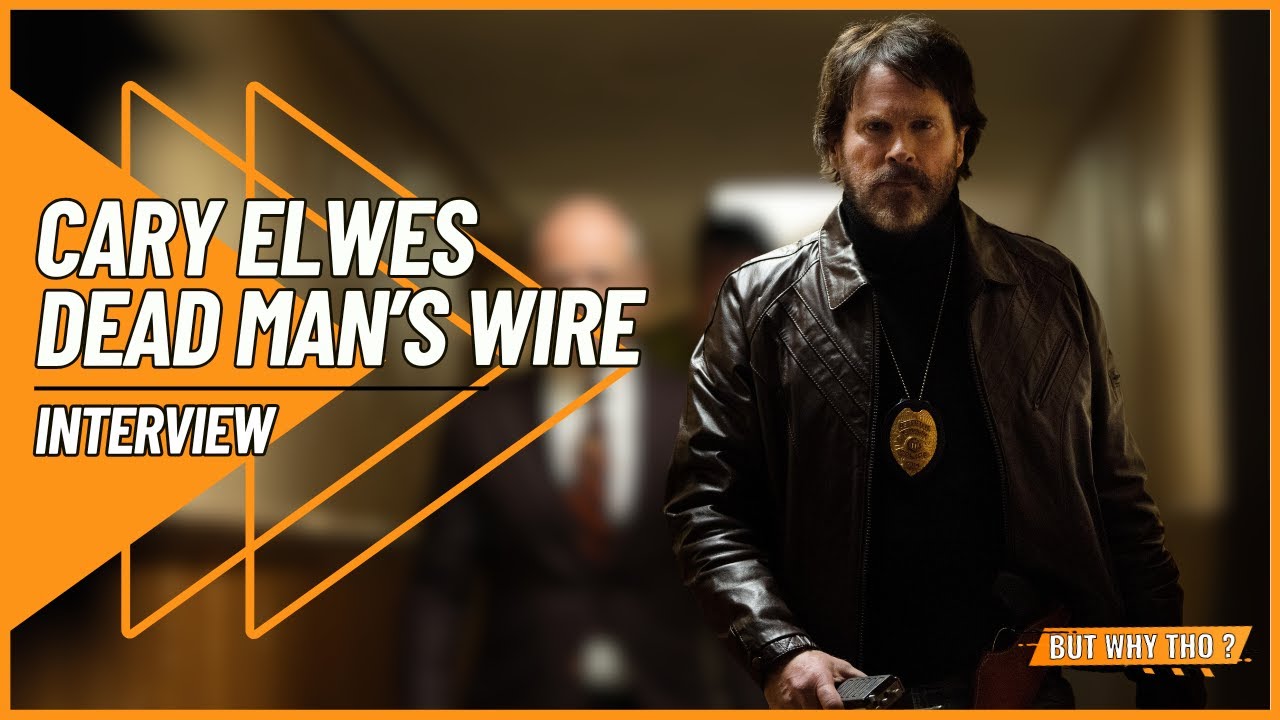
Cary Elwes transforms into Make Grable for Dead Man’s Wire.

Perhaps most spectacular is Cary Elwes’ transformation into Mike Grable. Foremost, the actor is unrecognizable in the role, between the brown wig covering his iconic blonde hair, the facial scruff covering his usually bare face, and the very particular accent that Elwes developed by listening to tapes of the real Mike Grable. This role is quite unlike Elwes’s usually swashbuckling or upright spy roles.
As Grable, Elwes inserts a dose of reality into Dead Man’s Wire. His street-wise detective grounds the moral quandary flapping around Tony’s apartment by cutting right to the chase. His out-of-place presence is somehow a reminder that what’s going on has real-life consequences and needs a real resolution with expediency.
By grounding the stakes and ratcheting up the tension, Grable becomes the most essential cog in the whole machine of the film. He also stands as the voice of reason once the feds get involved and dehumanize the whole situation. He helps keep Dead Man’s Wire feeling like a thrilling human-interest story rather than a cookie-cutter crime-and-cop drama.
Adding the perspectives of those who captured Tony’s story makes the movie even richer.

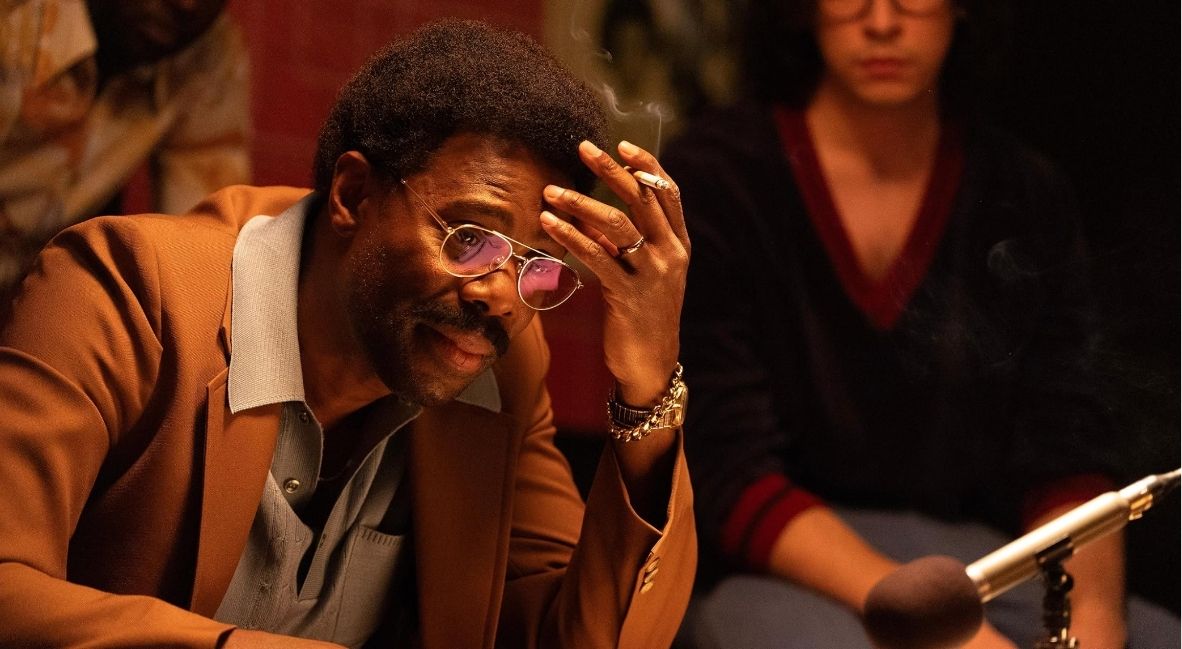
The ending is well-stuck, too. An impossible situation ultimately has an impossible ending that leaves all the moral questions unanswered at the same time. The movie is partially framed through the lens of the TV reporter who broke the story, Linda Page (Myha’la), and the radio jockey through whom Tony made his statements and negotiations, Fred Temple (Colman Domingo). Both characters add an extra dimension to the film by exploring the role of traditional media in shaping public perception of a story, while also maintaining their individual humanity.
While their plots often feel tacked on, especially Linda’s, the muddying they cause in Dead Man’s Wire’s morality is critical. Watching the news reels or listening to radio recordings of the real-life incident can only tell you what made it to air. Editorializing the decisions individual reporters made about what to record, how to record it, and why they did so complicates how the entire scenario feels as it plays out and its conclusion is revealed.
Dead Man’s Wire is a very solid crime thriller built upon strong performances and an opaque sense of justice. Each character is developed with complexity, and the blurring of moral lines across each side of the plot makes you wonder what justice really is supposed to look like.
Dead Man’s Wire is in theaters now, nationwide.
Dead Man's Wire
-
Rating - 7.5/107.5/10
TL;DR
Dead Man’s Wire is a very solid crime thriller built upon strong performances and an opaque sense of justice.