

Communication is an essential component of a successful relationship; yet if you can’t understand a person’s language, connection is almost impossible. This is something Netflix’s latest kdrama, Can This Love Be Translated? (I sarang tongyeok doenayo?) aims to explore. Taking the cast and the viewer to incredibly scenic parts of the world, visually, the immersion into romance seems guaranteed to succeed. Unfortunately, an unnecessary dramatic character twist and sluggish pacing make this romantic comedy a little lost in translation.
The series opens in media res, the pivotal point in the relationship among its main characters: polyglot language interpreter Joo Ho-jin (Kim Seon-ho), worldwide celebrity actress Cha Mu-hee (Go Youn-jung), and the Japanese actor Hiro Kurosawa (Sota Fukushi). After opening with such an emotional high, the series goes back in time to show what has happened leading up to this moment, more specifically, before Mu-hee became famous and incredibly messy.
Written by the Hong Sisters and directed by Yoo Young-eun, Can This Love Be Translated? immediately establishes who everyone is, a reminder that the Hong Sisters are incredibly adept at crafting strong characters from the jump. Mu-hee is insecure and lonely, carrying an unknowable pain that resonates in her eyes. Ho-jin is helpful and kind, and his approach to translation reflects this, refusing to translate anything that might hurt anyone in the moment. The two are practically opposites.
The visual language in Can This Love Be Translated? sets both scene and tone.

The chemistry between actors Kim Seon-ho and Go Youn-jung resonates onscreen, making it easier to buy what will no doubt be an emotionally turbulent romance later on. The connection is almost instant, yet the two go their separate ways early on. Jumping a little forward, Mu-hee sustains an accident on set, putting her in a coma for a long time. However, when she wakes up, she learns she’s become an overnight success for her role as Do Ra-mi in a hit zombie film. This revelation offers plenty to work with in the story, especially as the stress weighs heavily.
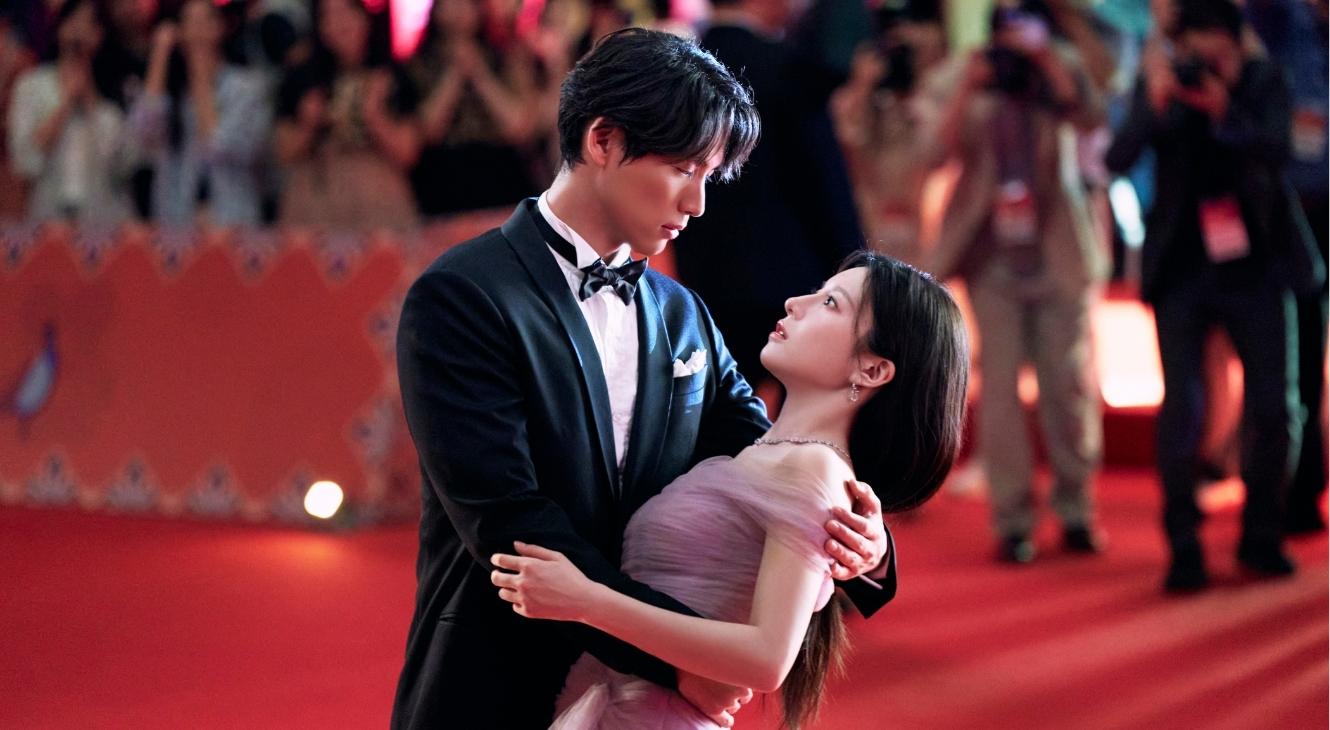
How does Hiro come into play? A near-miss fainting spell on the red carpet is thwarted when Hiro catches Mu-hee, producing a viral moment that leads to her inevitable casting on the reality show he is set to star in. However, a language miscommunication between the two occurred after the encounter, making the sensitive Hiro angry at Mu-hee. This leads to an uncomfortably tense and awkward environment once shooting begins on the show later on in Can This Love Be Translated?
Clocking in at twelve episodes, Can This Love Be Translated? takes its cast of characters across a wide array of locations, from Japan to Canada and Italy, sparing no expense or visual detail in capturing these stunning settings. While it raises the question of how much investment was received from Tourism Bureaus in these places, particularly Canada and Italy, the locations ground the romance that the production team, both offscreen and onscreen, is trying to evoke, especially for the reality-dating TV show being filmed in the series.
Sota Fukushimi is left on the backburner from the middle of the series onward.

The first half of Can This Love Be Translated? delves deeply into its theme of everyone’s personal language, beyond mere translation. While Ho-jin’s purpose on the reality TV show is to translate everything Hiro and Mu-hee are saying, he struggles to understand Mu-hee as a person. Her personality is hot and cold, making her difficult to read. Yet, as one character so eloquently puts it, everyone has their own language. Mu-hee speaks a language that Ho-jin doesn’t quite grasp just yet. Once he does, there are other obstacles to deal with.
This brings me to a frustrating development in Mu-hee’s journey that, honestly, pushed things too far for the sake of drama. As a fan of the Hong Sisters, they do have a pattern of a lighter first half to their works, with the second half being darker and more dramatic. Can This Love Be Translated? follows this pattern by making Mu-hee’s inner critic into a split personality, which ultimately makes additional plot developments far more complicated than necessary and contributes to the pacing bloat the series was already struggling with.
While I can’t speak for the accuracy of the portrayal of the split personality, the way that it’s employed as a plot device is clumsy. The explanation of her creation, Mu-hee’s trauma, and an additional twist towards the end negatively impact the series’s overall messaging and theming. For what it’s worth, Go Youn-jung does great work distinguishing between the two personalities, making it easier to tell who is who through her command of body language and voice. Still, she was handling this fine before the inner critic evolved into something more.
A shorter episodic order might have fixed its pacing issues.

With more focus on Mu-hee’s psychological developments and Ho-jin’s attempts to grasp the situation, Sota Fukushimi’s Hiro kind of gets put on the back burner in the middle. Sure, this is par for the course when it comes to the second male lead in a love triangle. However, his inclusion almost becomes disjointed in the second half of Can This Love Be Translated? making his attempts to connect with and understand not only himself but his feelings towards Mu-hee and her alter flounder as a result.
Where the series struggles the most, though, is in its flow and pacing. Much is packed into each episode, with time taken to rightfully build up the relationships between this wide cast of characters. This makes the relationships read more authentically, giving the actors more to work with. However, by the time the series reaches the halfway point, the story loses momentum, almost stalling before the Mu-hee twist. Sure, the twist captures attention, but it adds bloat to what quickly becomes a meandering storyline.
A shorter episodic count might have addressed the pacing and bloat issues mentioned previously. Case in point, by the time Can This Love Be Translated? reaches the end of Episode 10, it almost seems like a natural stopping spot. Yet there are two more episodes after, and as if to fill in the time, they introduce additional drama that the story really didn’t need to keep things going. This includes that final-hour twist concerning Mu-hee that, in all honesty, almost made me throw my remote.
Can This Love Be Translated? does succeed in relaying its messaging despite its many bumps.

Where Can This Love Be Translated? succeeds best at capturing the nuances of translation and conveying its points about communication across its overarching storyline. As someone whose done translation and has worked with other translators, there are many unspoken things seen onscreen here. Translators are not simply translating what’s being said. There’s a build-up of relationships between the translator and the speaker. There’s the constant studying to keep the language fresh and up to date, as language is constantly evolving.
That’s part of what makes Ho-jin’s trajectory across Can This Love Be Translated? fascinating to watch. As a student of languages, it’s not just the language but the culture of the people inhabiting it that he takes on. And when confronted with Mu-hee, he’s forced to reconcile with the fact that this is not a person he can easily translate into digestible parts. He has to know her before he can even truly begin to understand her, an apt sort of metaphor for the language learning process.
Still, it’s a long journey to truly get to that point in the story. How actor Kim Seon-ho navigates the nuances and languages he has to take on as Ho-jin is almost seamless. The touches surrounding the editing translators might do on the spot, whether to save face for the one they’re translating for or to prevent someone from being hurt, these are things that happen. This ultimately proves to be one of the series’s stronger parts.
This leads us to the question of whether or not love can be translated after watching this series. Can This Love Be Translated? gets lost in its quest to answer that question, but through some miracle, finds its way mostly back on course in its final episode. However, the struggle to get to that answer is undeniably hard to ignore, and makes this viewing experience less than romantic overall.
Can This Love Be Translated? is streaming now on Netflix.
Can This Love Be Translated?
-
Rating - 6/106/10
TL;DR
Can This Love Be Translated? gets lost in its quest to answer that question, but through some miracle, finds its way mostly back on course in its final episode.