
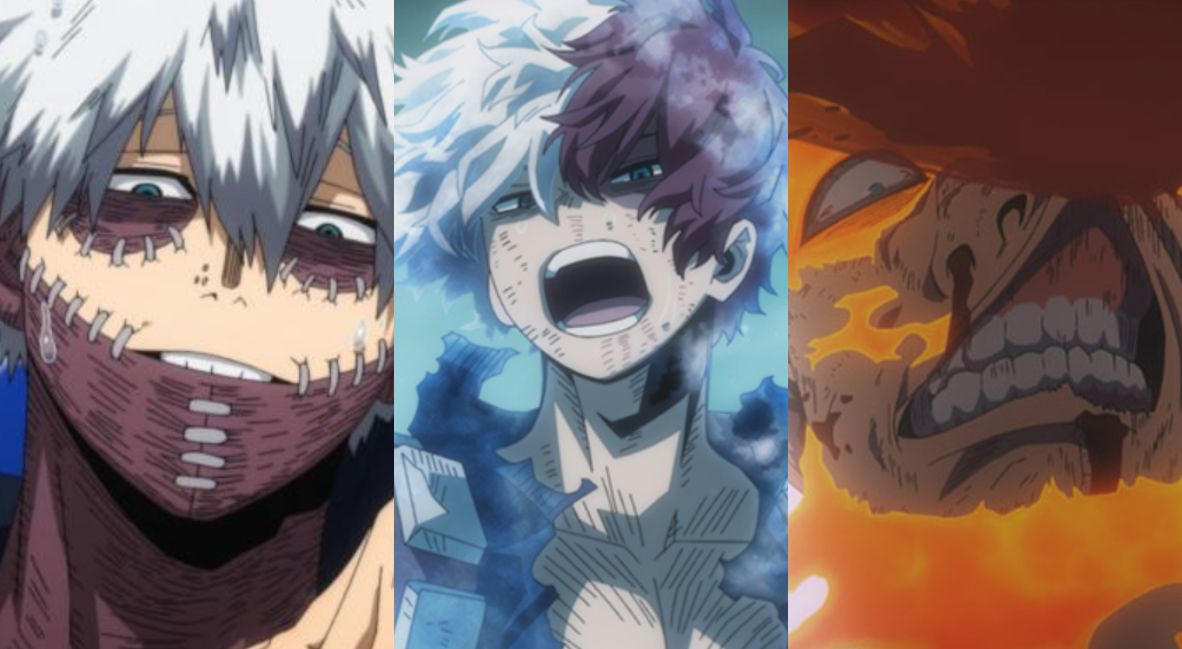
There are boundless examples of rich storytelling throughout the eight seasons of My Hero Academia. But of all of them, barring the central dynamic between Midoriya and Bakugo, it’s the familial tension, drama, and the Todoroki family’s battle for atonement that perhaps sneaks up on us.
In many ways, there’s a soap opera element to it—the missing son who fakes his own death to destabilize his absentee and abusive father. There’s the youngest son, who rebukes his father’s efforts and seeks his own path to power, rejecting the familial legacy. There’s a torn-apart family after a violent event that splinters them, only for them to come together to save the lost soul among them.
But those soap opera threads lead to very human and cathartic sequences of character development. Dabi isn’t simply a renegade villain seeking vengeance through mindless violence. He’s a lost child seeking the attention – if not approval – from his father.
The Todoroki family drama brings surprising depth to My Hero Academia.

Endeavor isn’t simply a maniacal, ego-driven villain who’d scorch the earth around him for the sake of his legacy. Instead, he’s afflicted, hard to root for, yet sympathetic as he tries desperately to set up a world where he won’t have to be in his children’s lives to spare them the pain of his actions. He’s a tool – but he gets his comeuppance, from the scar that mirrors his sons to loss of limbs in the final battle.
And even Shoto Todoroki eschews the typical prototype for his kind of aloof character. His immense, cool-factor powers have their drawbacks due to the baggage they carry. As he grows closer to Midoriya and then to the rest of his class, we learn more about his genuine personality, not just a front to protect himself.
The development of the Todoroki family over the course of the series both as part of a familiar unit and on their own is one of the series’ strengths, highlighting the distinctions of who gets to be a hero and why. We spoke to David Matranga, Jason Liebrecht, and Patrick Seitz about their characters Shoto Todoroki, Dabi, and Endeavor, the journey from their introductions, and looking ahead past the end of My Hero Academia.
BUT WHY THO: The Todoroki family story goes to very unexpected places over the course of My Hero Academia, and there’s such a tragedy baked into the narrative. Could you talk about what’s been the most interesting part for you playing these characters throughout their journeys?

JASON LIEBRECHT: I always say that Dabi is my most therapeutic character. I get the most catharsis playing him. The trauma that he’s dealing with, the motivating factor in his story, is not dissimilar to the trauma I experienced as a child. And so I relate to him on that level. Thusly, whenever I get to perform as him, especially in these last couple of seasons, it’s been very much like getting to relive certain moments or confrontations with my parents when the relationship was on the line.
But when I’m recording and working on the show, I know I’m in a safe space. I’m getting this kind of redo where no one gets hurt, even though I have way more ownership and the ability to respond in kind, and I’m not a helpless kid. That’s unlike anything else I’ve ever performed.
I’ve definitely taken pieces of my life, and it’s helped in other parts that I’ve played. Not just in anime but on stage and on screen as well, but nothing that’s been so on the nose like this one was. In addition to being able to do it for the duration I did, it is just crazy, amazing, and a rare gift.
BUT WHY THO: Endeavor is such an intriguing character with some of the best writing in the series. Because he’s not a character you’re meant to root for at the beginning, but his battle for atonement makes for such a rich character. How has it been playing this character?
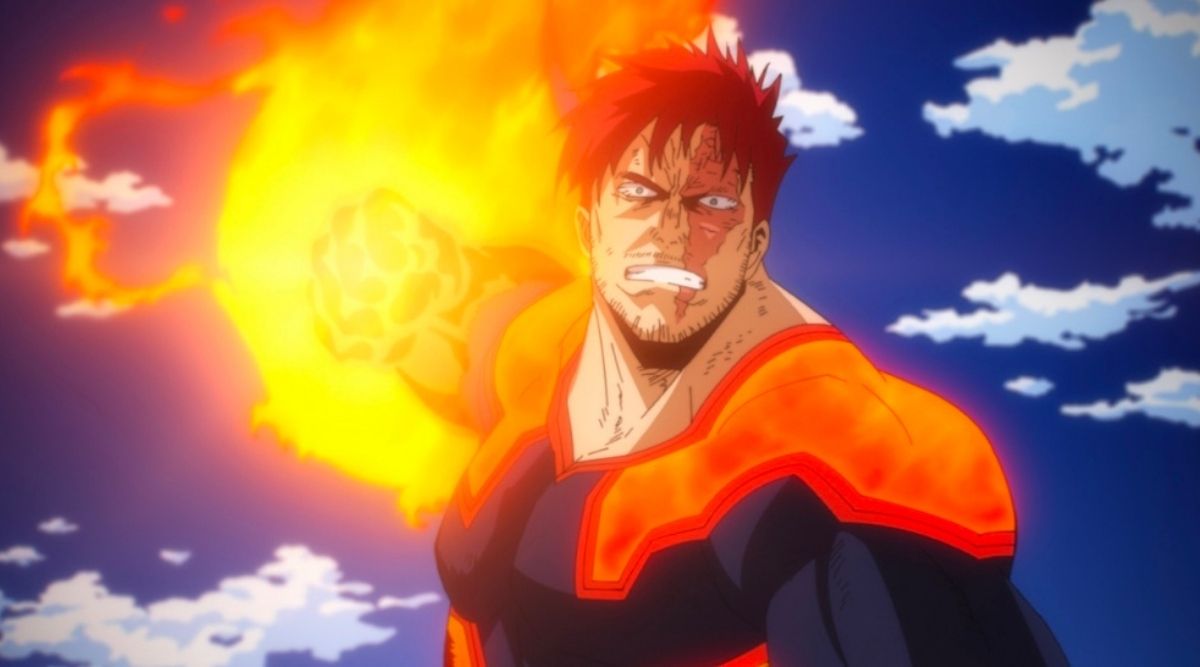
PATRICK SEITZ: I’ve loved every minute of it. It was so unexpected because I wouldn’t read ahead. Coming into the show at the top, it was like, okay, he’s Number 2, wants to be Number 1, and has a chip on his shoulder and kind of a stage dad to his kid. But I didn’t realize how deep we were going to go and how much trauma there’d be to explore.
And I don’t say that in a catastrophe tourism kind of way, but the more we have to work with, be it happy, sad, and everything in between, the more we can do, the less hindered we are in our performance. To be able to voice a character who is slanted right in the vocal tropes I’m often called on to play, but also had all of this work and darkness, I wasn’t expecting it. What a gift it was.
We all know people like that. People who are great at their job but maybe just catastrophic in every other element of their life. It asks the question – not to be too twee about it – but who is a hero, who is a villain? Who is within the parameters of that? Who makes that call? Because you look at all the damage that was wrought by him just wanting this thing so badly and needing to impose his will via his kids, which is already horribly problematic and toxic, and I felt the responsibility of it.
No matter what it is, I try my best. But this definitely felt like one of those things where, if I could not pratfall while I’m getting from point A to point B, that would be great. Because this is important to a lot of people, myself included.
BUT WHY THO: My Hero Academia is really going out on an emotional high. How has it been to say goodbye to the Todoroki family?
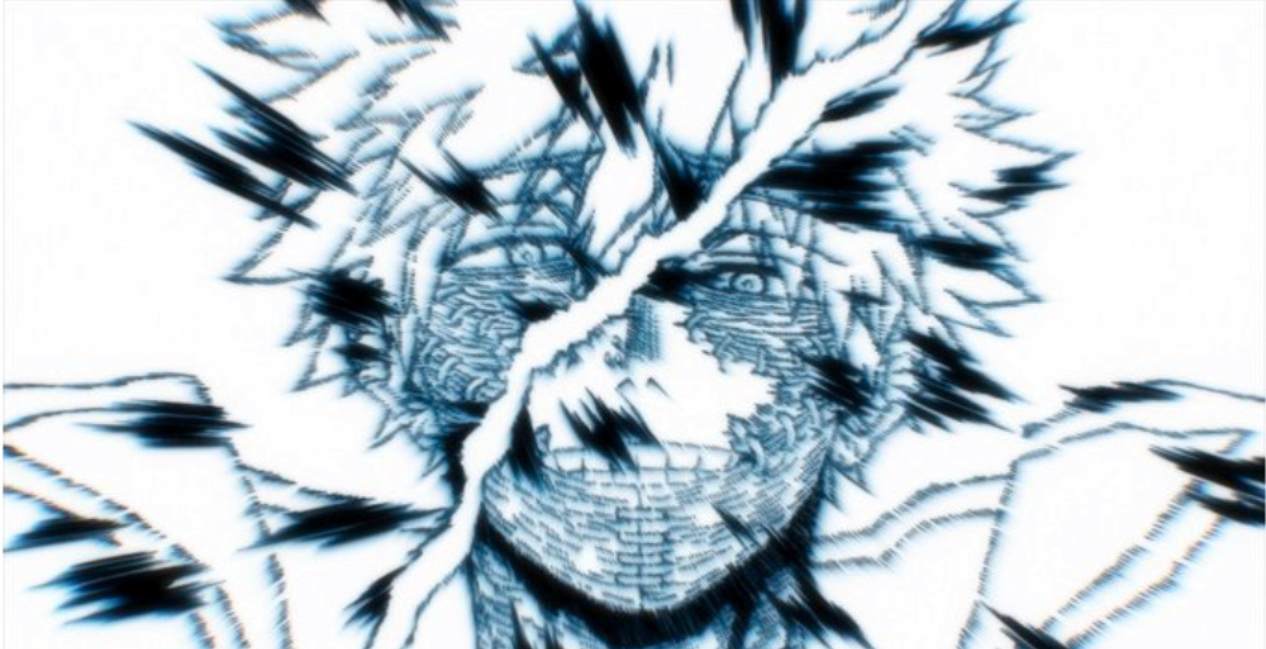
DAVID MATRANGA: It’s complicated for me. I’ve lived enough life to know that it will keep on moving forward, no matter where I’m with it or not. So I accept it on that level. I’m very proud of it beyond what I can describe. I think I’m in a certain level of denial. I’m still in a place of feeling how much responsibility I have for these characters. I’m still really in that mode. I think it will hit me pretty hard when it’s done. I’m definitely in the beginning stages of grief, but it’s going to be a loss for me, I’ll put it that way. It will feel like a loss.
JASON LIEBRECHT: We’ve all grown up with this or through this. It’s truly remarkable. It’s a testament to how well-crafted it is, and I don’t mean us necessarily, but I feel like we have a hard time remembering these guys aren’t real. These situations aren’t real because the emotions are real, you know, at this point.
DAVID MATRANGA: And the people we get to interact with at conventions. When people come to us and are like, ‘We were eight when we started, and now I’m 18 and going to college,’ it impacts me in a way I’m not quite sure how to describe. To be a part of that for someone or a lot of someones is an unbelievable privilege. We’ve grown together, and it’s a testament to the story that we feel it as part of the storytellers, and that viewers feel it in the same way.
BUT WHY THO: Did you learn anything from playing these characters or take away some element from the series?
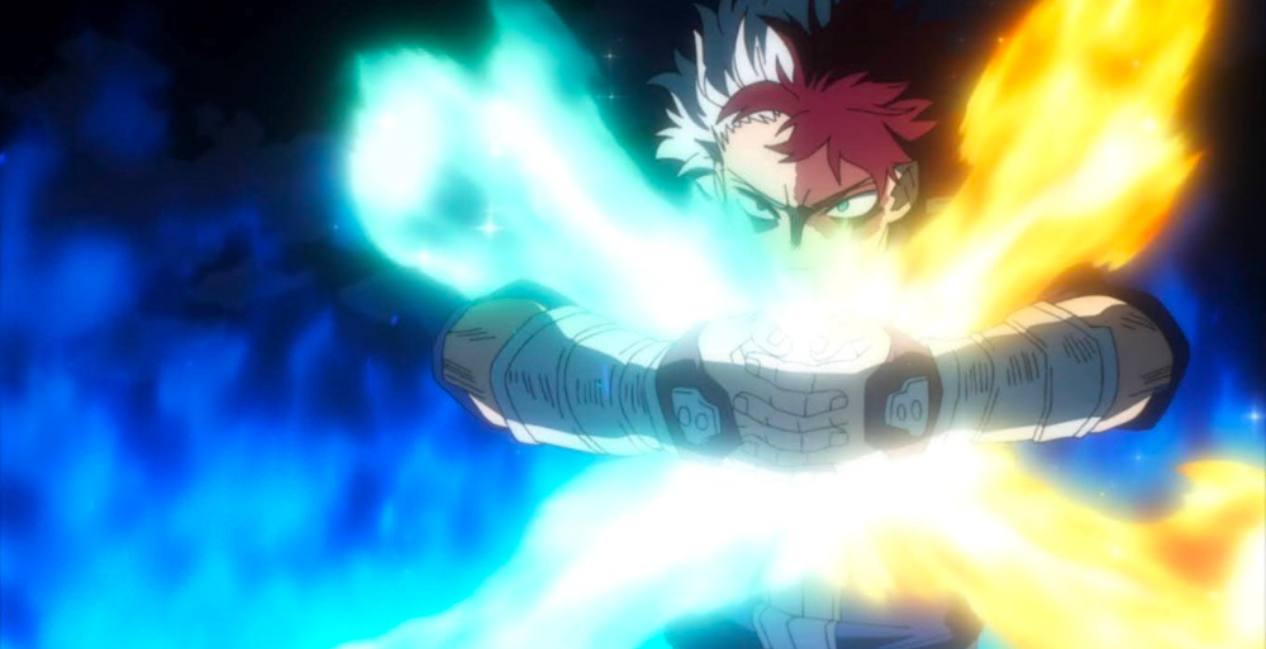
PATRICK SEITZ: I think if we’re doing it right, we always do. It’s what draws us to this profession because we’re greedy and we want to live more facets of life than what we’d just naturally encounter in our day-to-day. We want to know people. Whether that means being in their shoes…there’s a desire, greediness there. I’m not a dad, I’ve never been on that side of things. But I’ve been on the kids’ side of a fraught father-son relationship, and I think working on this show and portraying Endeavor in English really made me think about it in a way that nothing else in my life did.
Because nothing else in my life required me to take the time, be very still, and think about what it means to be this grown adult in a position of authority who is out of their league and out of their depth. Not to say they didn’t do anything wrong, because they did, but it humanized people in my life. It didn’t absolve them, but it humanized them because I realized I’m 47 years old and I definitely know what it’s like to not know what I’m doing. Maybe I’m not the first person in the world to feel like that.
JASON LIEBRECHT: Oddly enough, I think I’ve learned to come to terms with the situation with my mother. I don’t know if I’d say I’ve fully forgiven my mother for giving me up, but we do have a relationship, and I have a son, and I want him to know her. It’s been an interesting little reminder, like, hey, you can do better.
DAVID MATRANGA: I think as a younger person, I wanted to be perfect and do everything a certain way in order not to be vulnerable and to armor up. I didn’t want to go to the party unless it was exactly right. I feel like when you first meet Shoto, it’s the same way where he’s armored up, and that slowly falls away, and he learns that being vulnerable will not make him weak and that he’ll actually reap rewards from that connection and friendships. Things that will sustain him. And I’ve learned that over the course of my life, and this series has hammered it home even more.
My Hero Academia Seasons 1-8 are streaming now on Crunchyroll and Hulu.