
Of all the recent anime compilation films, Jujutsu Kaisen: Execution shows its stitching most apparent. The Demon Slayer franchise has seemingly forgone seasons for the sake of film (and profited from it), and Chainsaw Man: The Movie – Reze Arc successfully condensed an arc into something cinematic.
Execution struggles to achieve the same narrative flow. Even the series’ previous film, Jujutsu Kaisen: Hidden Inventory / Premature Death – The Movie, worked better because the five episodes, on their own, were so much their own story that they worked together to create something cinematic. In contrast, Execution works as a prolonged, tidied-up montage before getting to the good stuff: The Culling Game.
Jujutsu Kaisen: Execution plops us in the middle of the Shibuya Arc.
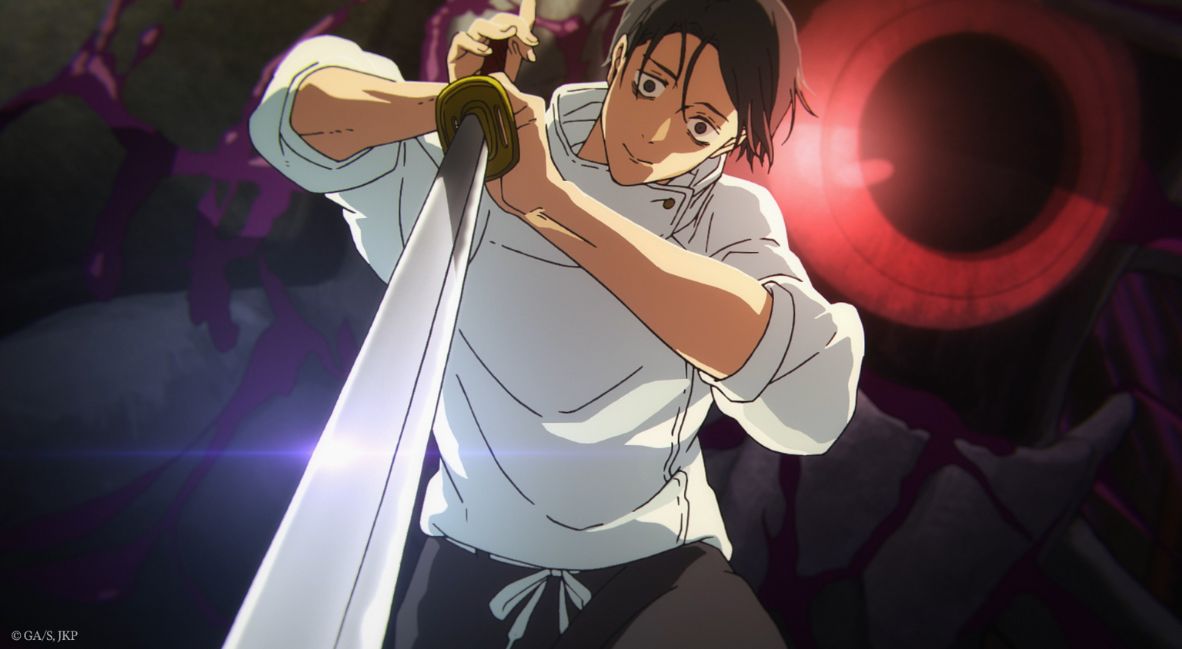
Based on the manga written and illustrated by Gege Akutami, Jujutsu Kaisen: Execution plops us straight in the middle of the Shibuya Arc with a sequence of some of the greatest hits (and kills). There’s sense to wanting to put the arc on the big screen because the work that the artists at MAPPA do here to convey the utter, devastating wreckage is beautifully, hauntingly rendered.
But that destruction only comes through in bits and pieces, and some of the season’s highlights—most notably, the fight between protagonist Yuji (Junya Enoki) and Choso (Daisuke Namikawa)—are given mere seconds of spotlight. But that’s what happens when you try to squeeze an entire 18-episode season into 45 minutes. Things get glitchy and lose their impact.
So yes, seeing glimpses of Sakuna leveling the city and the touch-up fight between him and Mahoraga is undoubtedly effective. Breathless, even, in the sheer, spectacular, and hellish beauty of it. But it lacks the series’ impact because there’s no time allotted to these individual moments.
The Shibuya Incident gets a rushed treatment.
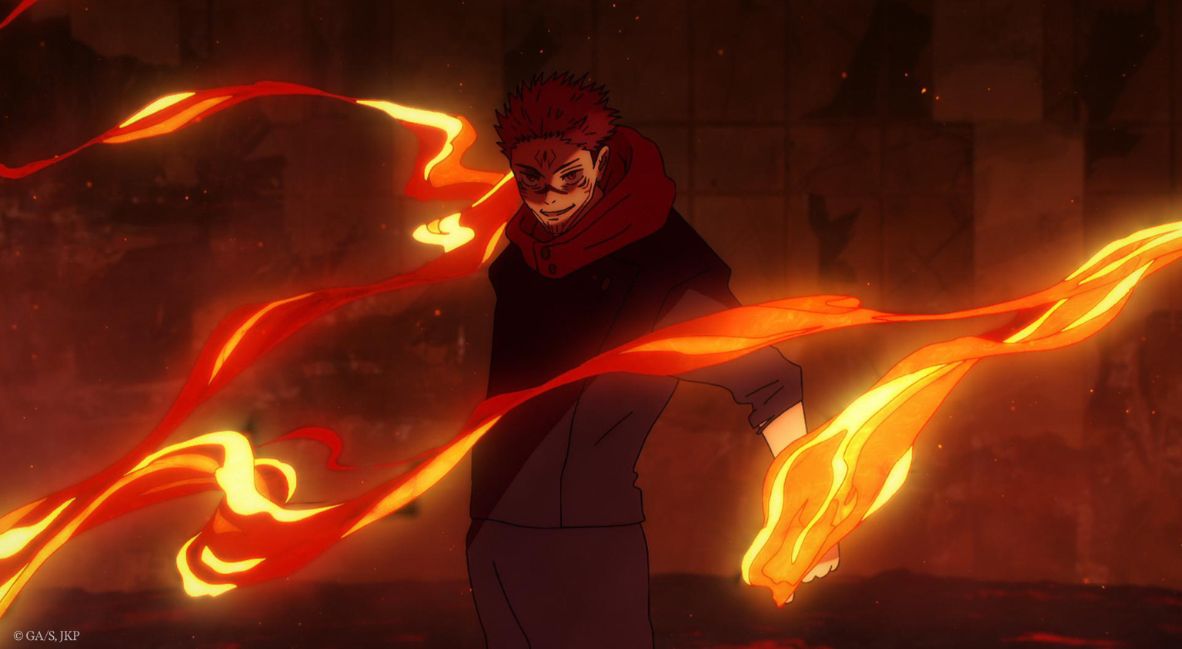
As the film rushes through the main story points, it spends the most time on what happens after Nanami’s (Kenjiro Tsuda) death. Already riddled with immense, stomach-churning survivor’s guilt, Yuji, having recently been handed control of his body back to revel in the horror Sakuna (Junichi Suwabe) caused, takes pursuit of the culprit, Mahito (Nobunaga Shimazaki). But even from there, the film is still working in a bullet-point structure.
While the theatrical experience will amplify some of these dizzying sequences that truly demonstrate the best animation in the medium, it doesn’t matter when the emotional throughline and the tension are sacrificed to profit from the recent boom in these cinematic anime releases. Instead, it feels like a cash grab so much that it’s almost distracting.
There’s no flow, no sense of rhythm in the first half of Jujutsu Kaisen: Execution. Instead, it amounts to a highly rendered supercut. A “here’s what happened last time.” And that misunderstanding of cinematic pacing weakens the story’s relentless blows.
Which is why when the series pivots into the new story that adapts the Culling Game arc, Jujutsu Kaisen: Execution immediately improves. Yuta Okkotsu (Megumi Ogata), one of Gojo’s (Yuichi Nakamura) former classmates and a special grade sorcerer, has been approved as Yuji’s executioner. Yuji is on the run, aided now by Choso, making it his mission to exorcise cursed spirits lingering following the events of the Shibuya Incident.
Yuji suffers under the weight of Sakuna’s actions and his guilt.
Elsewhere, the plot begins to complicate due to the death of the head of the Zenin Clan, Naobito. With his son, the misogynistic Naoya, who believes a woman’s place is walking behind the men in the clan, primed to take the head role, his ascension is threatened by the news of Megumi being possibly in line now that his guardian, Gojo, has been sealed.
As with most things in the series, the setup for the plot is overwritten and overwrought, but it doesn’t lessen the overall impact once these stories all converge. Two elements immediately strengthen this shift: the weight of Yuji’s guilt and a lot of pretty colors.
Directed by Shōta Goshozono, the tone shifts from the expansive black skies to ones that maintain a dewy, sunrise hue. Thematically, it makes sense. Because this is Yuji in a new day, facing the realities of what Sakuna did and the near-unbearable survivor’s guilt and PTSD he carries due to it.
The camera framing adds extra depth to the biggest scenes.
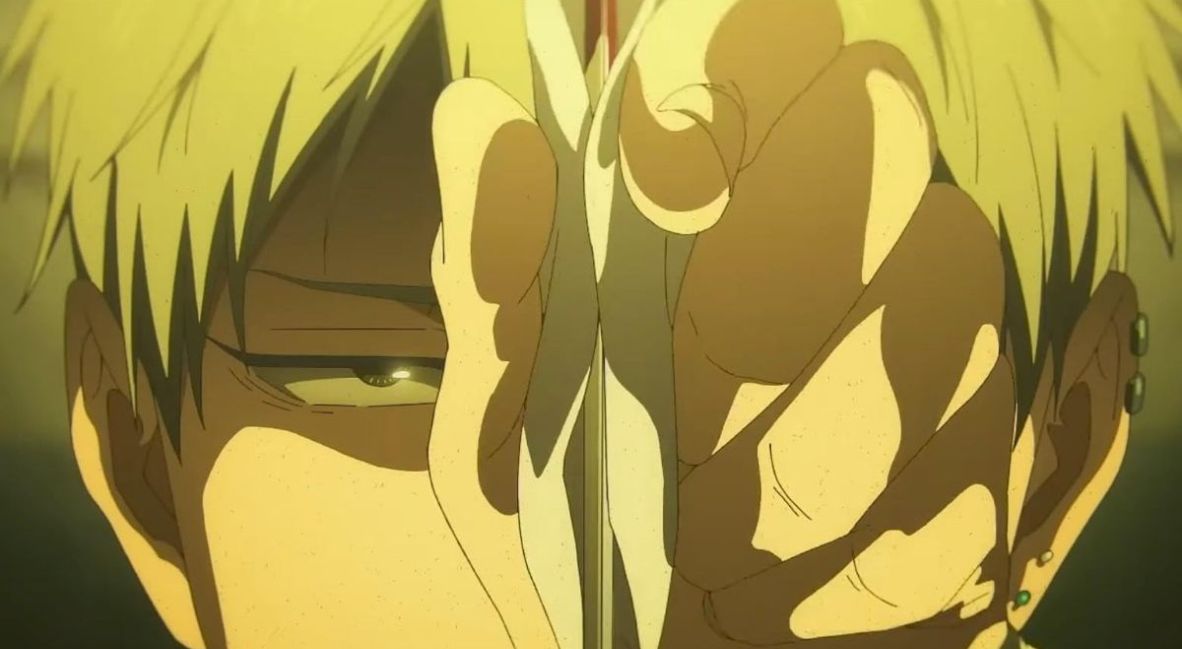
The bruising skies that burn in the background as he washes his bloodied hands in a tireless effort set the perfect backdrop for this leg of the story. It’s not so much that Yuji is seeking atonement. Instead, he has a promise to uphold and is set on fulfilling it, rather than a self-oriented goal of redemption.
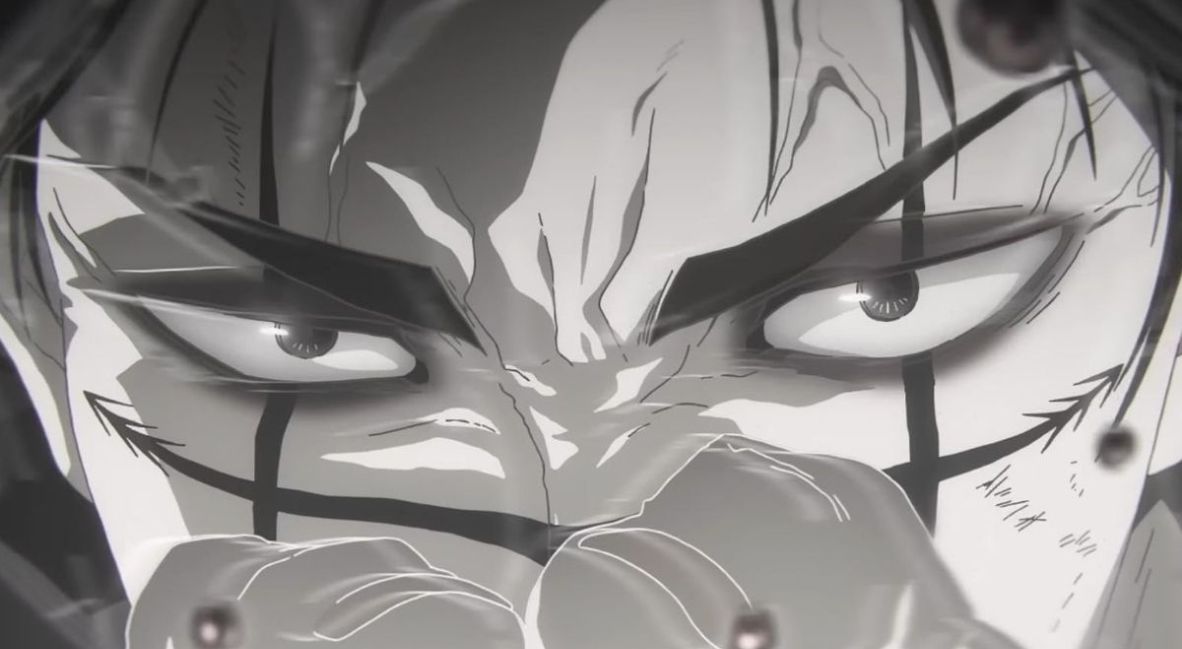
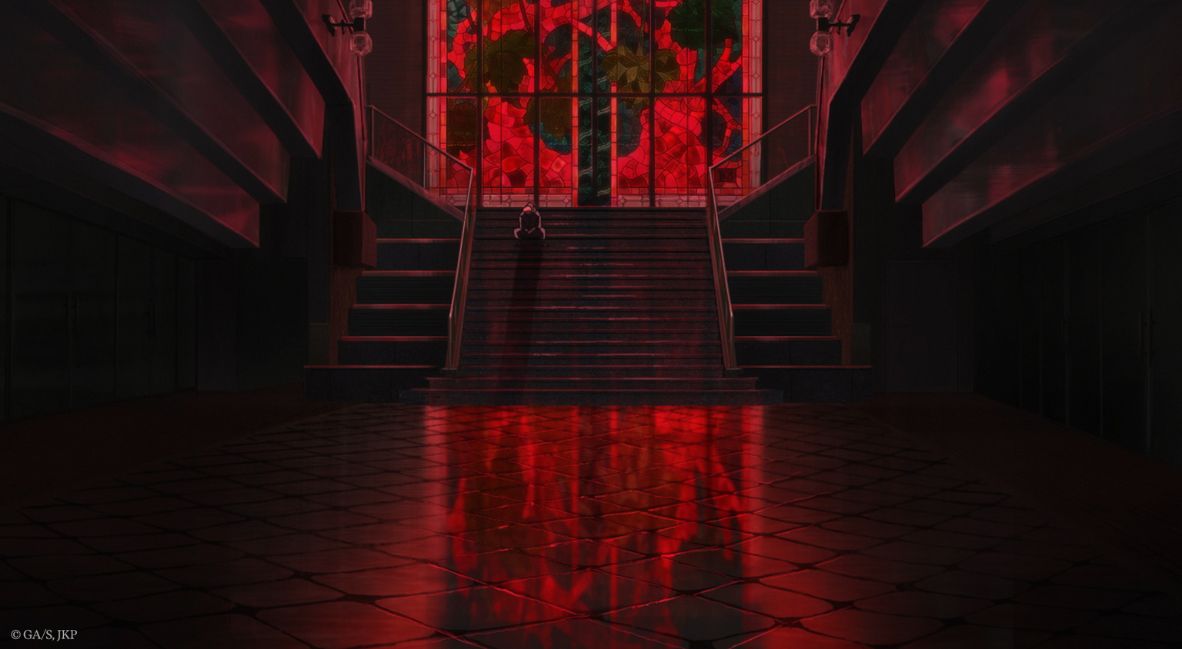
The direction highlights this through bleak, macabre imagery. From the detailed lines of bloodied hands that refuse to be cleansed, to the length of time it takes Yuji to descend a set of stairs, backdropped by similarly bloodied stained glass.
Putting one step in front of another is hard won, and he’s having to do it at a sprint. Even the scene in the Zenin clan meeting knows how to position a frame, with a swinging light causing a ripple of shadows as all contend with their inner greed and power-seeking desires.
The weight of the action in Jujutsu Kaisen: Execution is spectacular.
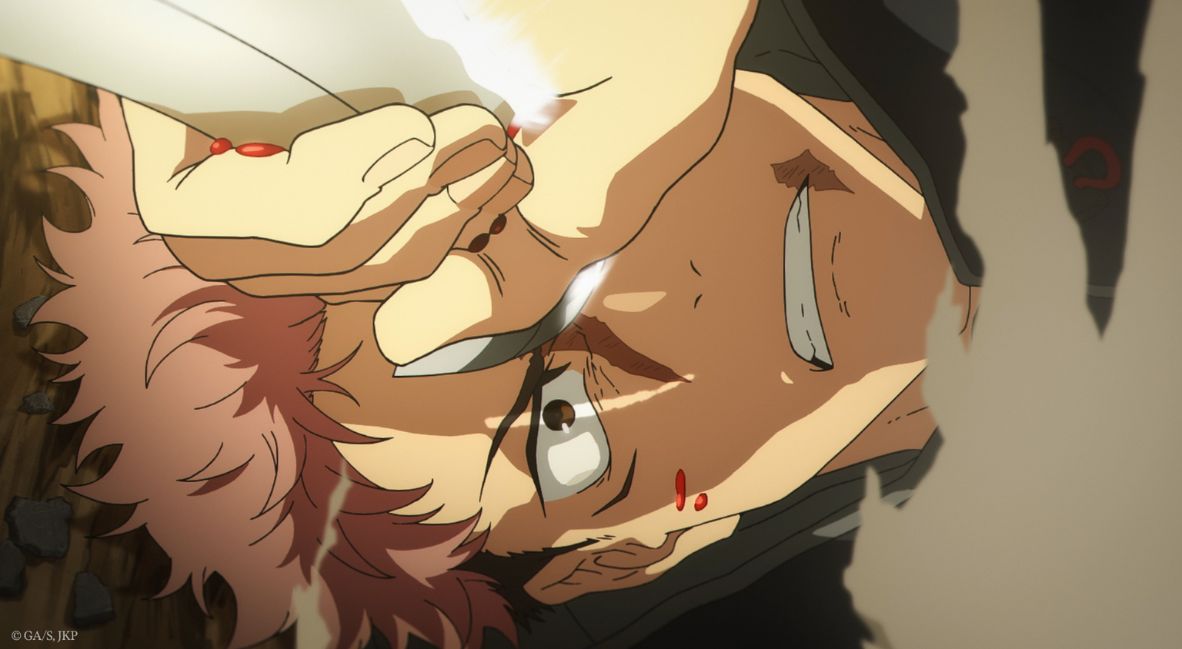
The direction constructs a world that is both limitless in action and carries real weight, as Yuji launches himself through the city in pursuit of the cursed spirits. One of the best elements of this character in the series has always been his physicality, with animation that highlights the sheer athleticism.
It’s one of the elements that works in contrast to Yuta, who has less physical strength but is overpowered by cursed energy. But as the opening moments of the Culling Game arc take flight, we too are caught in this balanced, weightless plummet.
There’s clearly some study of parkour in how Yuji races through the city, and it’s that sense of weight and the pull of gravity that marks strong animation. It doesn’t matter how good a sequence looks or its cool factor if there’s no sense of the ground rushing towards them or impact through kinetic character acting.
Between the unusual color stories that blanket the narrative and the visualization of Yuji’s internal struggles, manifesting in colors that spring to life like freshly bruised skin, Jujutsu Kaisen: Execution finds balance in these two episodes.
The arrival of Yuta, the unlikely way his story intersects with Yuji’s, and the expected way their duel ends, primes us for a thrilling Season 3. This is especially true with the arrival of Megumi and the (albeit sped-up) rules of the game itself.
Execution delivers a strong two episodes, but it isn’t a movie.
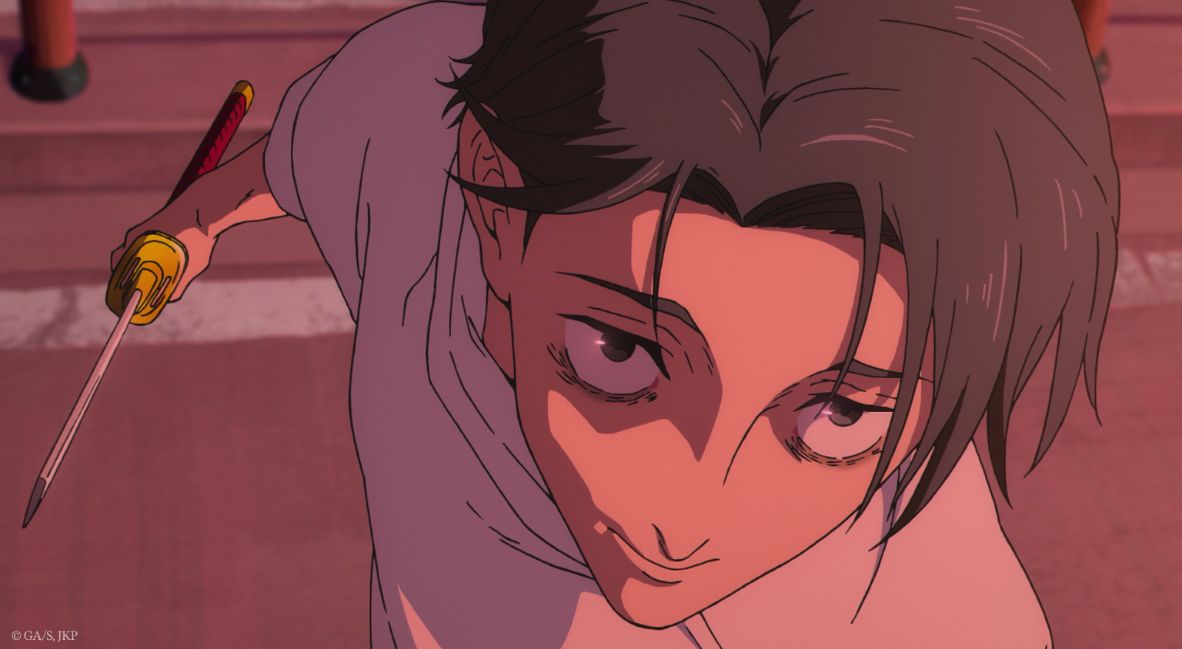
There’s a lot of lore dropped, which is, unfortunately, Akutami’s weakest skill as a writer. But there are definite threads of interest. From a pivotal flashback of Yuji’s grandfather that hints at Yuji’s familial ties, to how Megumi’s half-sister is involved in this so-called culling game.
Jujutsu Kaisen: Execution is gorgeous. That was a given. But there’s simply no reason for it, given how it’s structured. Because this isn’t a film. It’s a montage stitched together from two new episodes that ends at a cliffhanger meant to be followed by another episode, not another film. There’s no sense in releasing these films without any interest in making them cinematic.
It all looks great; the animation is spectacular, the performances are uniformly intense, and the score is melancholy as it adapts to Yuji’s emotional state. But it’s unnecessary. Just wait until the beginning of Season 3 instead, unless you’re looking for a rushed, strung together sequence of Season 2’s greatest hits.
Jujutsu Kaisen: Execution is playing now in theaters.
Jujutsu Kaisen: Execution
-
Rating - 6/106/10
TL;DR
Jujutsu Kaisen: Execution is gorgeous. That was a given. But there’s simply no reason for it, given how it’s structured. Because this isn’t a film.