
In one of her many poems, Palestinian photojournalist Fatma Hassona wrote of wanting a “resonant death” – one that couldn’t be glossed over or included in a simple tally in our destructive pursuit of global apathy. In the ruminative film Put Your Soul on Your Hand and Walk, filmmaker Sepideh Farsi documents the last year of Hassona’s life in a manner that both eulogizes the living, mourns humanity, and fulfills Hassona’s wish. Her life resonates with her radiant smile, making it all the more shameful that it would be cut so violently short.
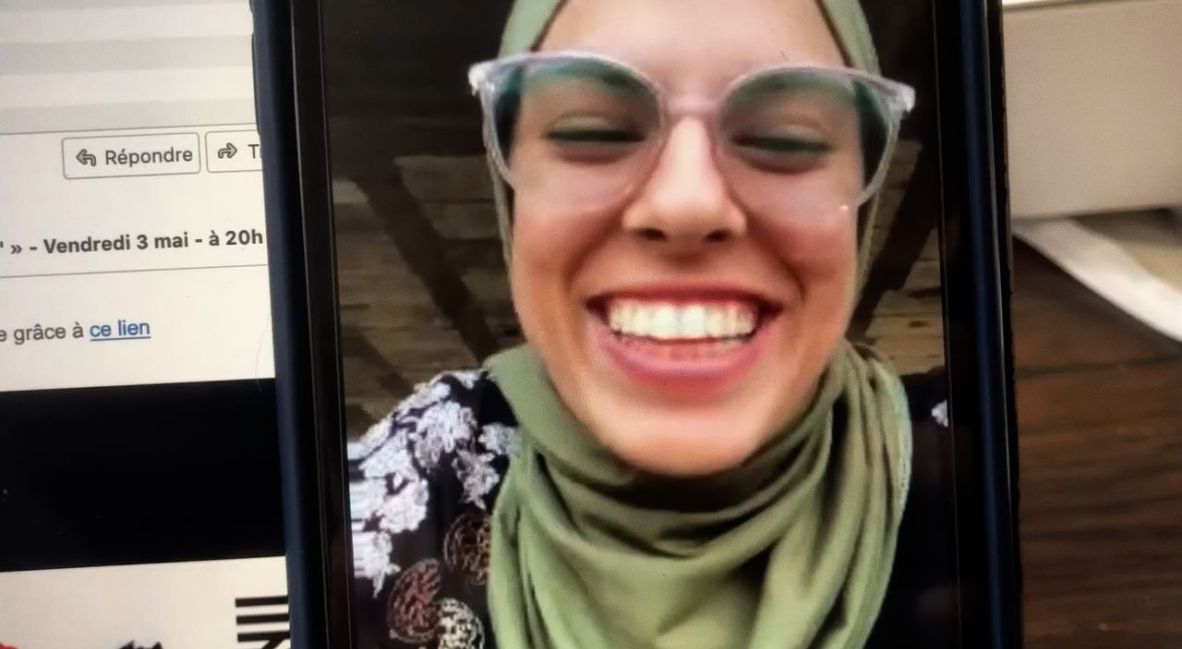
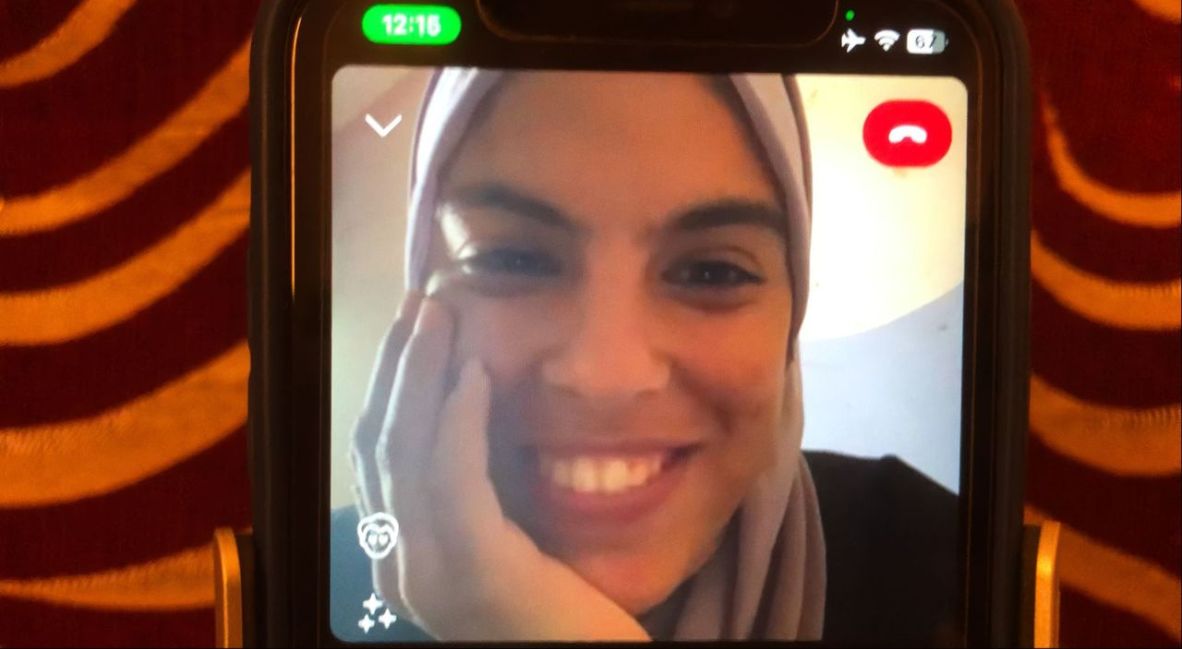
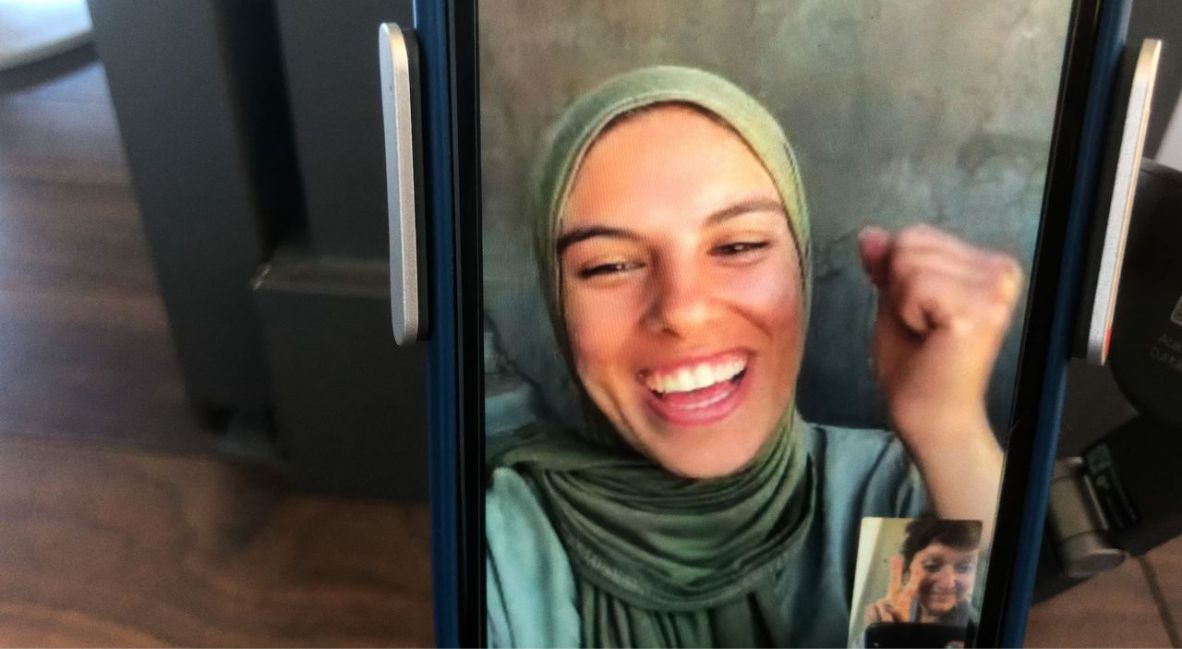
Farsi adopts a stripped-down effect in the documentary as she captures the day-to-day minutiae of Hassona’s life. At first, it may seem too barren to be cinematic, with Farsi using her phone to record the shoddy video calls that are frequently interrupted by poor internet service. However, that ultimately becomes the point as Farsi connects with Hassona as the latter endures the ongoing genocide in Gaza.
Hassona lives in a small apartment in Northern Gaza with her remaining family, many of whom have already been killed. Through these phone calls, we see glimpses of her brother, hear her recite her poems, learn of her early dreams and aspirations while bearing witness to Israel’s ongoing aerial bombings and military activity nearby.
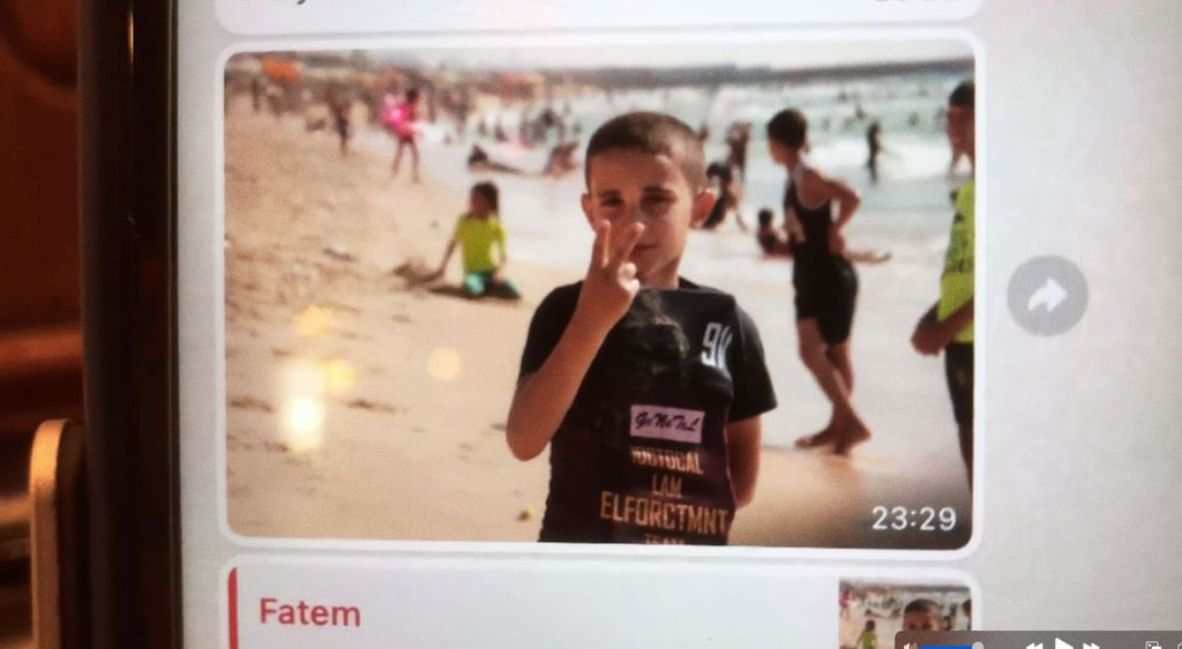
The footage of their phone calls weaves together Hassona’s own work, making her an active participant in her own story. Her photographs document her current everyday life and capture her surroundings, including the children who suffer around her, with a steady gaze. They’re suffering, but she instills life into each photo.
Fatma Hassona tells her own story in Put Your Soul on Your Hand and Walk.
This is what makes Farsi’s direction click. At first glance, Put Your Soul on Your Hand and Walk could seem too laid-back, too simplistic a method to be worthy of Hassona’s vibrant spirit that pierces through the grainy calls. For a woman who wanted to visit Rome, to see the Vatican, and to travel the world to learn more about photography before returning to the Gaza she loves, surely she is worth something more grandiose and epic – a cinematic vision that lights up just as surely as her face does.
But to do so would diminish the evil she endures—a shiny, palatable veneer on a story that necessitates ugly truths. Instead, Farsi allows Hassona’s face to tell the story, to lead where it goes through her thoughtful words and ever-shifting expressions. The result is as devastating as it is enraging. Because this young woman – just like the unthinkable, countless others lost to this genocide – deserved so, so much more.
The conversations are as revealing as the on-the-ground footage. They allow for a level of intimacy that, sometimes, images of widespread destruction steal away as we grow upsettingly accustomed to such gruesome images. Instead, Hassona’s plight strikes because of the small details. She talks about missing her mom’s home-cooked meals, items such as chicken and chocolate, which have been so long absent from her life that they’ve become unlikely luxuries.
Put Your Soul on Your Hand and Walk should weigh heavily on you.
When Farsi speaks of her travels for work, Hassona admits to wanting her life to be different, to be able to leave and see faraway places. Although she always makes sure to add that a dream of travel always includes a round trip, she wants to go so that she can return home. One she’d proudly show off to Farsi if she were to visit.
We also see the weight of the violence she’s surrounded by through how she carries herself. Her world shrinks, and so too does her smile, as she faces the sense of dehumanization being thrust upon her by oppressors and onlookers alike. Farsi, a very present documentarian, notes the shifts in Hassona throughout. Through these plainly spoken discussions, Farsi refuses to negate the pain her subject undergoes while also acknowledging the surreal disconnect that allows her to turn off her phone and go about her day. In contrast, Hassona is stuck in this specific hell.
Put Your Soul on Your Hand and Walk is a haunting portrait of one woman stuck in a cyclical state of destruction. Guided by her voice, her facial expressions, and the ebbs and flows of hope that line her journey, it’s a deliberately stifling experience. Because we watch with the knowledge that she’s been murdered. How it’s shot through the screen both grants the film a necessary reality while also reminding us that the least we can do is talk to others and hear their stories when we’re so forcibly separated from those in most dire need of aid.
Farsi maintains Hassona’s humanity; she is never a simple number or statistic. A name in an ever-growing list of the deceased. She has, like all those who have been killed, integrity and spirit. Had dreams and aspirations and a deep-rooted desire to live in their homes on the land they knew. Her wish in the face of death was to have a loud one, and, considering the lengths her story has traveled, it’s an upsetting success.
The global spotlight begs for more action.
For over two years, we’ve been inundated with footage of mass death and decay – of injured, bloodied, and lifeless bodies. Of war crimes and human atrocities; of cities felled and ravaged. In these two years, I’ve seen more images of distressed and dying children than I ever imagined I would in my lifetime.
None of this seems to make a global difference. The lives of Palestinian victims and martyrs are documented in films such as the Oscar-winning No Other Land, or the emotionally devastating The Voice of Hind Rajad. Put Your Soul on Your Hand and Walk is selected for Cannes, and, momentarily, suggests a cracking of a window to welcome Hassona back to her lighter dreams, which have nothing to do with abating starvation.
Hind Rajad died scared and alone. Fatma Hassona was killed a day after the news of the Cannes selection. One of the filmmakers of No Other Land, Hamdan Ballal, was beaten and detained the same month of the Oscar win. What documentation, or visual proof of life and the right to peaceful existence, is enough to incentivize change?
Tellingly, Put Your Soul on Your Hand and Walk forgoes an answer. Despite their many conversations, there’s never an easy solution to the tireless problems and dehumanization that Hassona faces.
Put Your Soul on Your Hand and Walk eschews easy platitudes and avoids inserting the viewer into the story. Instead, it begs us to see, and do, and listen more. To carry the voices of those we could not help and strive to resist volatile regimes and highlight those whose voices could have – should have – been able to carry from their own chest, their own mic, their own self-woven story.
Put Your Soul on Your Hand and Walk is out now in theaters.
Put Your Soul on Your Hand and Walk
-
Rating - 9/109/10
TL;DR
Put Your Soul on Your Hand and Walk is a haunting portrait of one woman stuck in a cyclical state of destruction. Guided by her voice, her facial expressions, and the ebbs and flows of hope that line her journey, it’s a deliberately stifling experience.