
Starfleet Academy Episode 10 turns the entire season into a question of accountability. Nus Braka doesn’t just attack the Federation physically: he puts it on trial.
What begins as a confrontation between rivals becomes a quadrant-wide trial where Chancellor Ike and the Federation must answer for the consequences of their past decisions. By bringing Caleb’s mother, Anisha Mir (Tatiana Maslany), forward and exposing the events that shaped her life, Braka attempts to prove that the Federation’s ideals are hollow, arguing that an institution claiming moral authority should be judged by the harm it allowed.
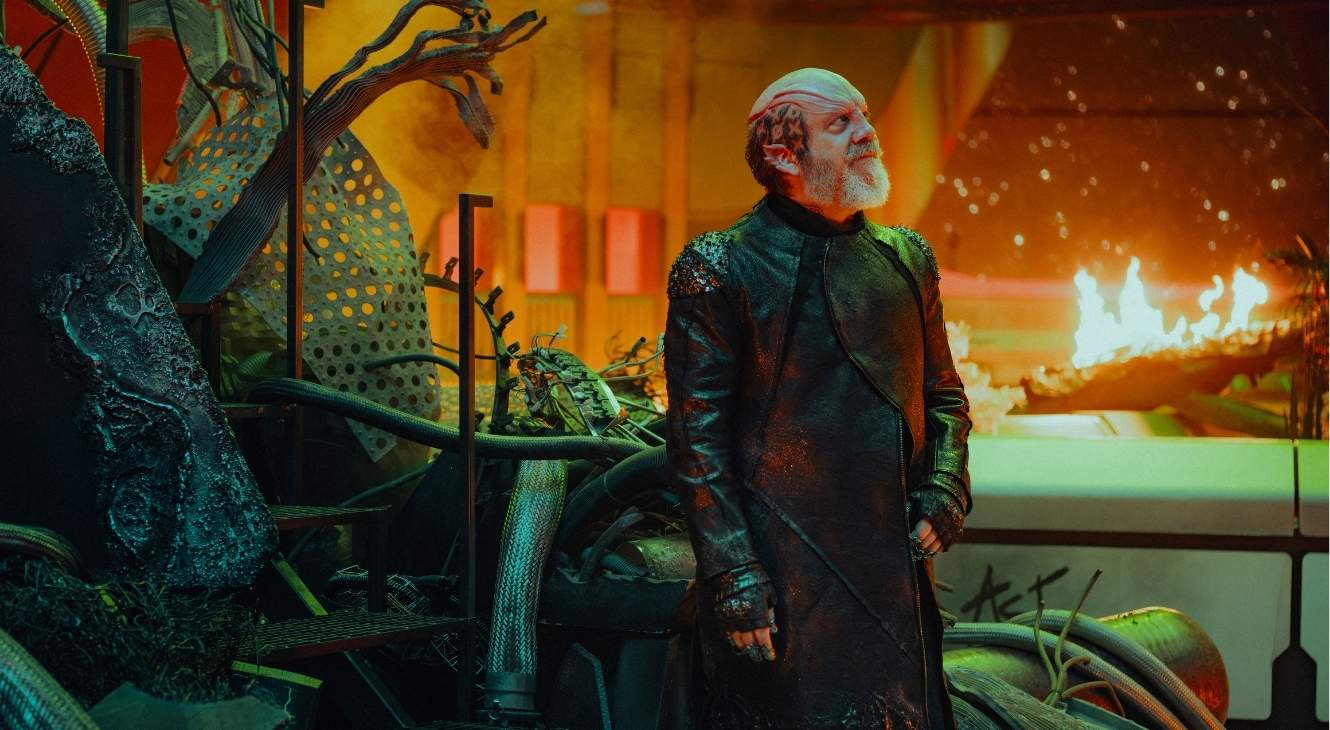
Braka’s accusation is rooted in personal history. His resentment traces back to a childhood spent on a mining colony where he believes the Federation failed him, abandoned him, and allowed suffering to continue unchecked. That experience becomes the foundation for his worldview. If the Federation claims moral authority across the galaxy, Braka (Paul Giamatti) argues, then it should be judged by the harm it has allowed to happen in its name.
The Federation is put to the test in Starfleet Academy Episode 10 to answer for the wrongs it’s committed.
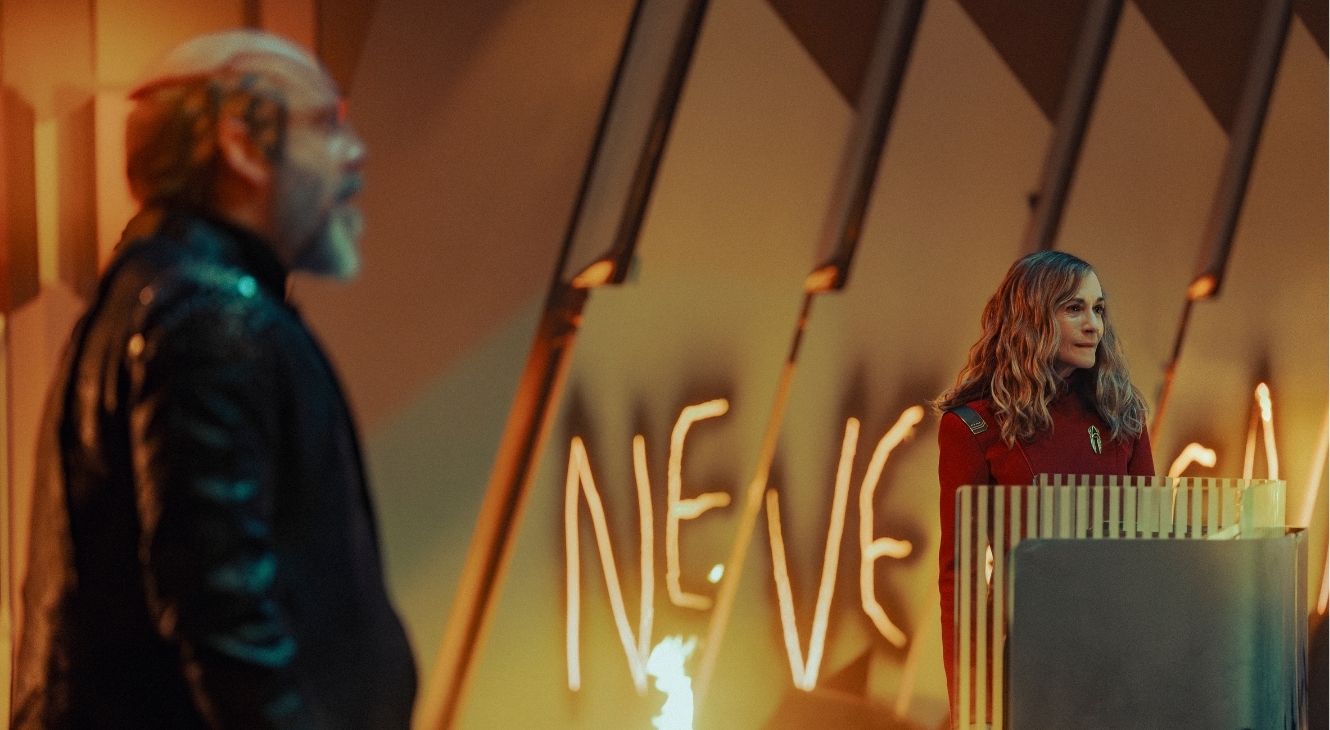
The strength of Starfleet Academy Episode 10 comes from refusing to dismiss that argument outright. Instead, the trial forces Chancellor Ike (Holly Hunter) to confront her role directly. Throughout the exchanges, Ike does not claim the Federation is perfect. What she defends is the idea that the Federation is always trying to become something better than it was before. The ideals Starfleet represents, exploration, cooperation, and service, are not proof that the Federation never fails. They are proof that the Federation believes failure should lead to reflection and change rather than permanent retreat from responsibility.
At one point, Ike cuts to the heart of Braka’s perspective with a blunt observation: he is still seeing everything through the eyes of the child who was hurt. It’s a line that reframes the entire conflict. Trauma may shape someone’s worldview, but Starfleet Academy Episode 10 asks whether that trauma should define every choice that follows. That thematic tension brings the season’s emotional focus back to Caleb.
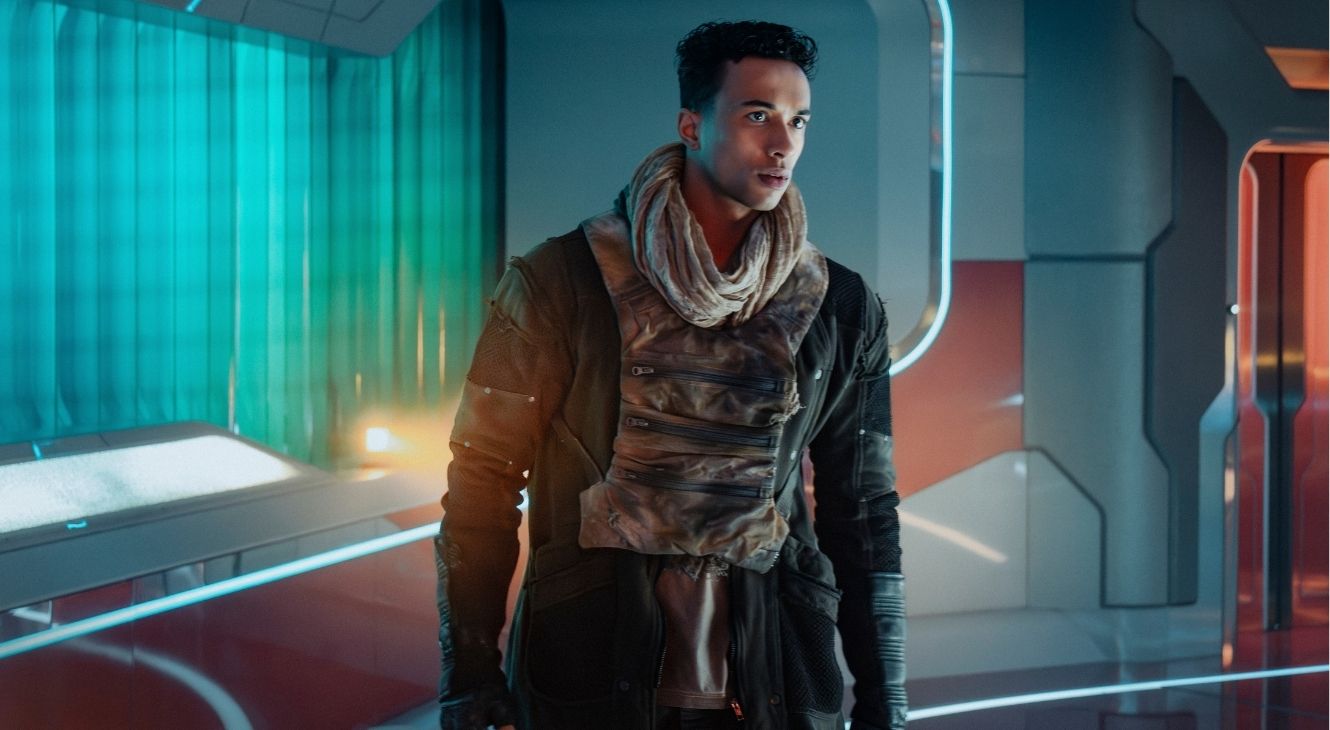
While the trial unfolds on a galactic stage, Caleb’s struggle remains intensely personal. His mother’s anger toward the Federation is rooted in real trauma, and for most of the season, Caleb (Sandro Rosta) has lived between two identities. The person who raised him represents the life he lost, while the Academy and the cadets beside him represent a future he is only beginning to believe in.
Caleb has spent most of the season living between two identities – a conversation finally changes that.
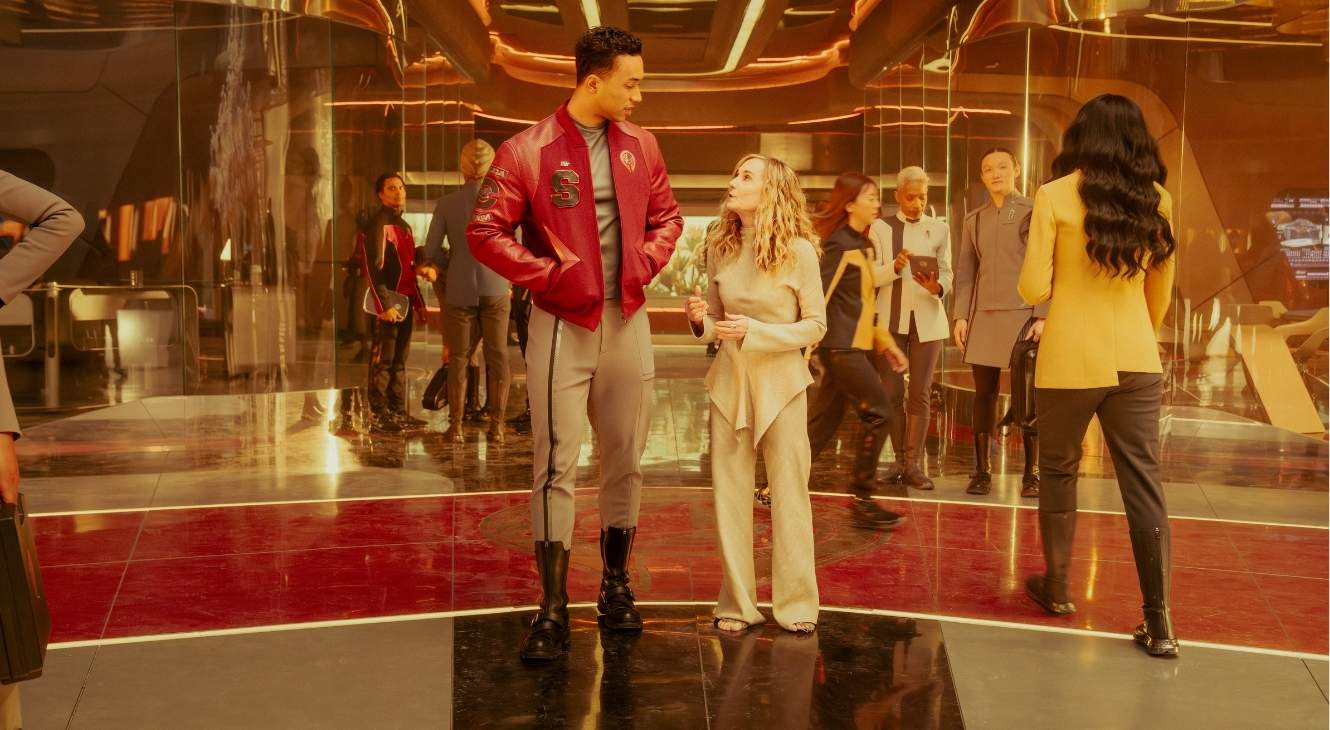
The moment that ultimately shifts that conflict isn’t a grand declaration meant to sway the trial. It’s a conversation between a son and the mother who shaped him as a child, but not as an adult. When Caleb tells his mother, “I can be a part of this world without forgetting where I come from. Without forgetting you,” he finally articulates the emotional balance he has been struggling to find all season. Joining Starfleet does not mean abandoning the past that shaped him. It means deciding that his future does not have to be trapped by it.
That growth places Caleb in direct contrast with Braka. Both men were shaped by environments where the Federation failed to live up to its ideals. Both carry the scars of those failures. But where Braka allows that pain to calcify into resentment and isolation, Caleb chooses to move forward with the support of the people around him. ”
Starfleet Academy Episode 10 frames them as mirrors: two people shaped by similar wounds who ultimately respond to those wounds in completely different ways.
While that emotional conflict plays out during the trial, the cadets themselves face their own defining moment aboard the saucer section of the Athena. With Braka’s mines threatening to isolate Federation space, the cadets must coordinate a real operation to neutralize the threat. This is no longer a simulation or a controlled training exercise. Every decision carries genuine consequences.
Caleb and Braka contrast each other in Starfleet Academy Episode 10. It all comes down to choice.
The cadets fully step into the roles they have been training for in Starfleet Academy Episode 10. Science officers analyze the problem, pilots execute delicate maneuvers, medical officers manage unseen risks, and command decisions suddenly determine whether the mission succeeds or fails. When Genesis (Bella Shepard) finally takes the captain’s chair, the moment does not feel ceremonial; it feels earned, even with an added bit of humor. Everything the Academy has been building toward finally converges in a situation where the cadets must trust both their training and each other.
Sam’s presence adds another emotional layer to the mission. Still adjusting to the empathy and emotional understanding she gained after her journey with the Doctor, Sam (Kerrice Brooks) finds herself navigating both the tactical demands of the operation and the complicated feelings that remain between her and Genesis. Their friendship has been one of the season’s emotional anchors, and Starfleet Academy Episode 10 allows that relationship to remain present even in the middle of a life-or-death mission.
The cadets’ instructor, Commander Reno (Tig Notaro), drawing on experience that spans centuries, helps stabilize the chaos by grounding the students in the lessons they have spent the year learning. Starfleet training was never only about knowledge or technical skill. It was about learning how to stay calm, compassionate, and thoughtful when the stakes suddenly become real, so when the time comes, you can find yourself.
Away from the trial, we watch the cadets finally come into their own and step forward toward their future.
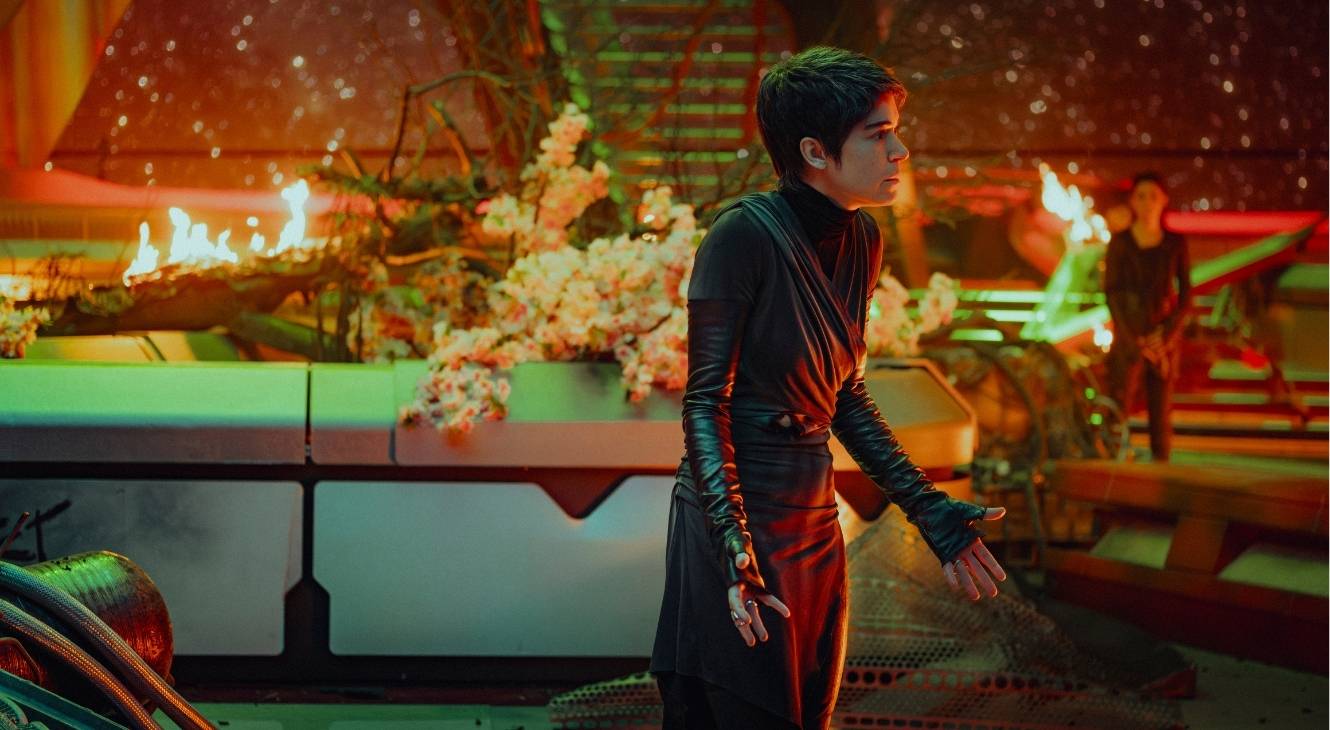
By intercutting the trial with the mission aboard the Athena, Starfleet Academy Episode 10 quietly reinforces the season’s central idea: Starfleet’s ideals only matter if someone is willing to live them. While Braka questions whether the Federation deserves to exist, the cadets are actively demonstrating what those ideals look like in practice.
In that sense, the finale becomes less about defeating Braka and more about exposing the flaw in his argument. His plan assumes that the Federation’s values are fragile and that, if tested hard enough, they will collapse under the weight of their own contradictions. Instead, Starfleet Academy Episode 10 suggests the opposite. The ideals of Starfleet endure not because they are perfect, but because people continue choosing them, even when doing so is difficult.
Starfleet Academy Episode 10 ends with proof of growth for most of our characters.

Starfleet Academy Episode 10 closes by tying that idea back to Caleb, whose growth has defined the season from the beginning. His yearbook quote, “I’m not lost, I’m right around the corner from knowing where I am,” captures the sense of direction he finally begins to find.
Anisha Mir’s own reflection, “There are no other lives, make this one count,” echoes that sentiment from a different perspective, grounding the series’ message in something deeply human. The cadets may not yet know exactly who they will become in Starfleet Academy Episode 10, but they finally understand that the future is something they will have to choose for themselves.
Ultimately, Starfleet Academy ends its first season by reframing what Starfleet is meant to represent. The Federation isn’t flawless, and the trial makes clear that its ideals only matter if they are continually questioned and defended. What gives those ideals weight is the next generation choosing to live by them anyway. By the time the credits roll on Starfleet Academy Episode 10, the cadets are no longer just students: they are the proof that Starfleet’s future will be defined by people willing to learn from the past and still try to build something better.
Star Trek: Starfleet Academy Episodes 1-10 are streaming now on Paramount+.
Previous Episode |
Starfleet Academy Episode 10
-
Rating - 9/109/10
TL;DR
By the time the credits roll on Starfleet Academy Episode 10, the cadets are no longer just students: they are the proof that Starfleet’s future will be defined by people willing to learn from the past and still try to build something better.