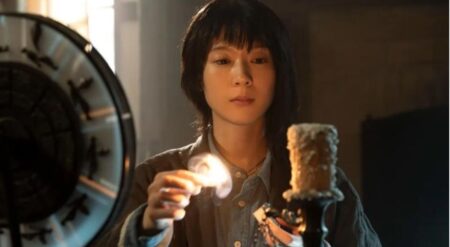

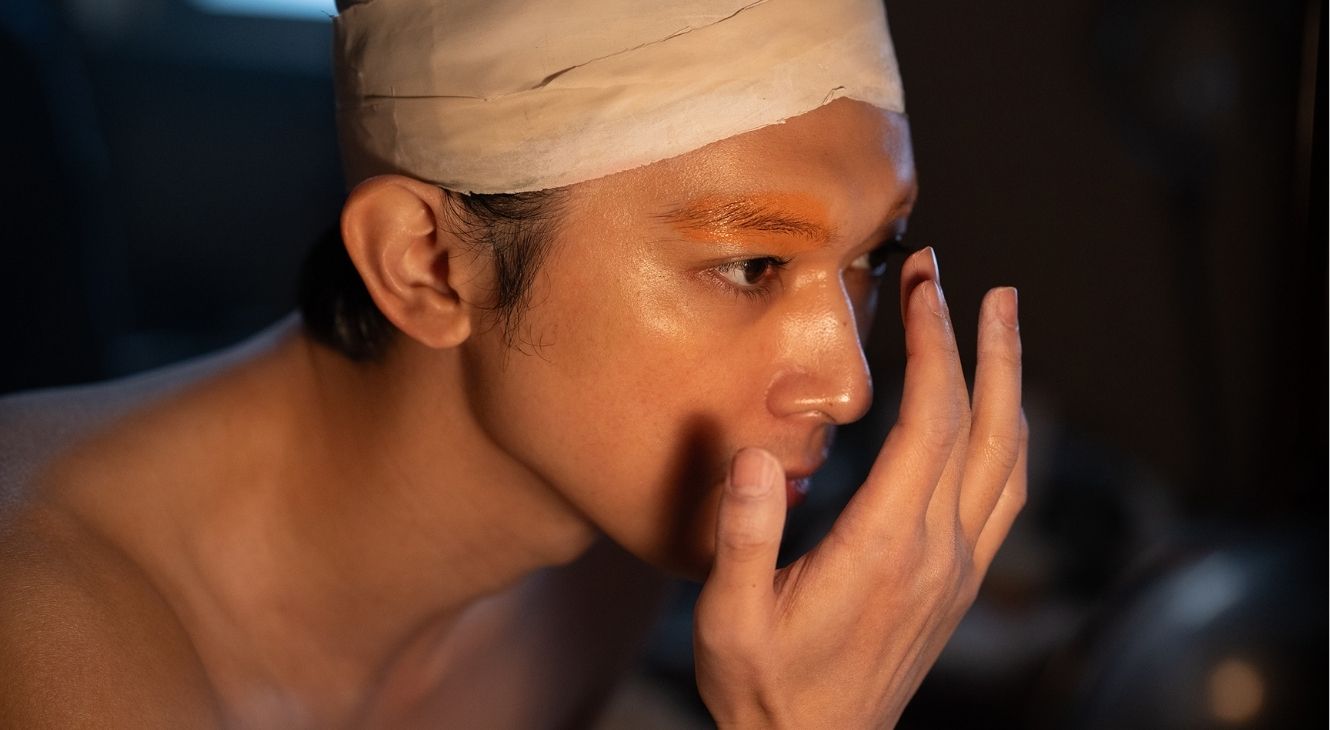
Kokuho translates to ‘Living National Treasure,’ immediately bringing the film’s exploration into focus: “What does it take to become a national treasure?” Based on the novel of the same name by Shuichi Yoshida, this nearly three-hour epic spans decades, following an outsider’s complex journey into the world of Kabuki and illustrating the lengths one will go to in pursuit of passion and the ultimate cost for everyone involved, including the protagonist, Kikuo Tachibana (Ryo Yoshizawa).
The lure of Kabuki, particularly onnagata (female) roles, is present in Kikuo’s life from the first moment we meet him in Kokuho, performing a variation of the role in his youth (Sōya Kurokawa) for his yakuza father’s New Year’s celebration. This puts him face-to-face with the renowned kabuki actor, Hanai Hanjiro II (Ken Watanabe), who is in attendance for the celebration. Unfortunately, that night marks a pivotal change for Kikuo when a rival clan guns down his father. The moment, marked by wistful snowfall, is an image Kikuo chases after for the rest of his life.
A year later, Kikuo is taken in by Hanai and begins training in the art of Kabuki. Bringing in an outsider like Kikuo is unprecedented and frowned upon, as blood means more than anything in the world of Kabuki. Even after receiving a new name, Toichiro, his outsider status follows him throughout his journey in Kokuho. Complicating matters is his learning experience alongside Hanai’s son, Shunsuke Ōgaki (Ryusei Yokohama), who doesn’t fully love Kabuki and takes the lessons for granted. The differences between the two are obvious and make much of what follows in the film more damning and emotionally riveting.
Every performance on stage ties directly into the inner workings of our characters’ minds in Kokuho.
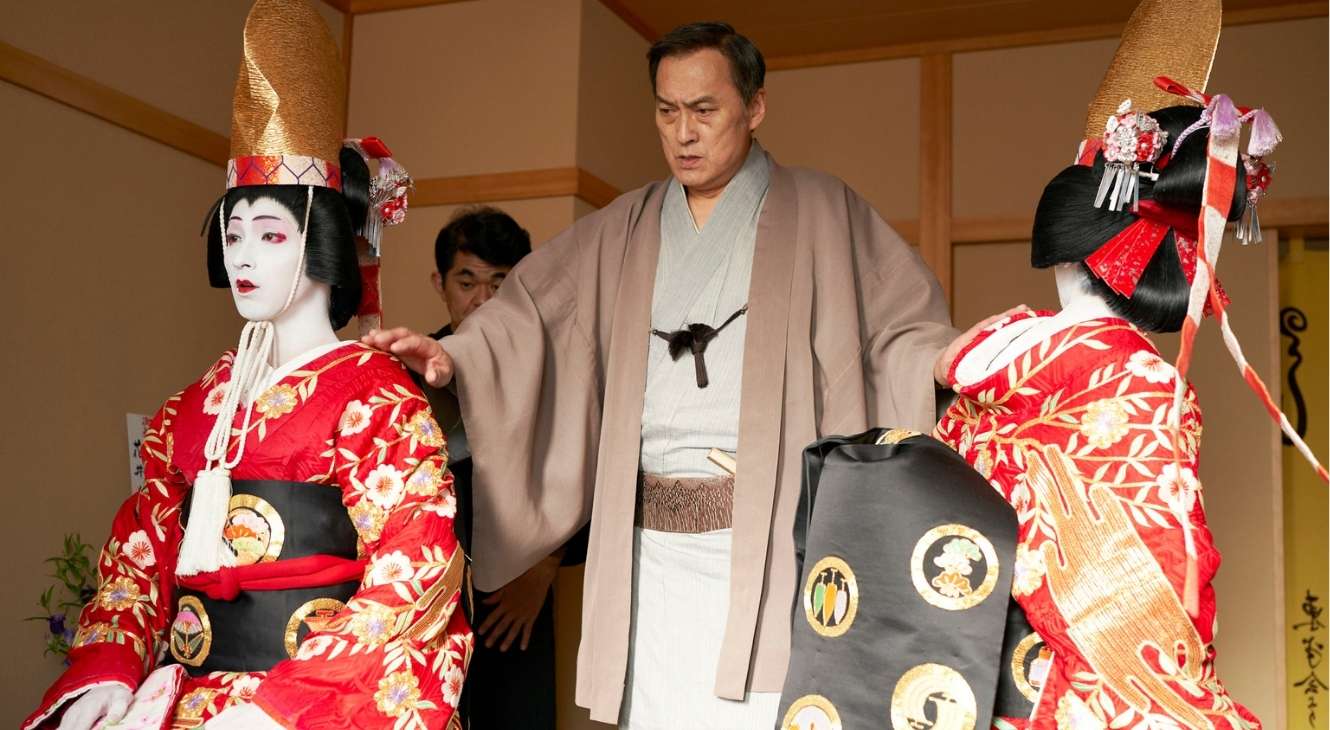
Watch closely every time one of our characters goes on stage in Kokuho. With each Kabuki performance, it’s almost like a glimpse into where they are in their lives, and each one marks a point of significance. This is most notable in the editing of scenes during individual performances of The Love Suicides at Sonezaki, where the camera homes in on Toichiro’s and Shusuke’s faces, capturing every nuance of their underlying emotions.
No one can deny, however, that in a sea of seasoned veteran actors who deliver their all onscreen, Kokuho is Ryo Yoshizawa’s moment. As we watch Toichiro navigate the decades in pursuit of his craft, subtle changes to how Yoshizawa carries himself reflect the wear and tear on not just Toichiro’s body but also his soul. When Toichiro finally loses control later in the film, we see the true depths of his vulnerability, as well as the ugliest parts he’s been trying to deny.
Ken Watanabe and Ryusei Yokohama are equally formidable as father and son in Kokuho. The complexities of their relationship and the subsequent fracturing when the pressure builds offer much for both to work with. Watanabe, in particular, better portrays the passage of time’s impact on the body, moving with a learned frailty that comes with age, conveying volumes without learning what’s devastating Hanai’s body. Comparatively, Yokohama is a little less believable when his Shusuke reaches a certain age, not helped by a wig he wears later on.
There are no easy answers in Kokuho, because the path to becoming a national treasure is complicated.
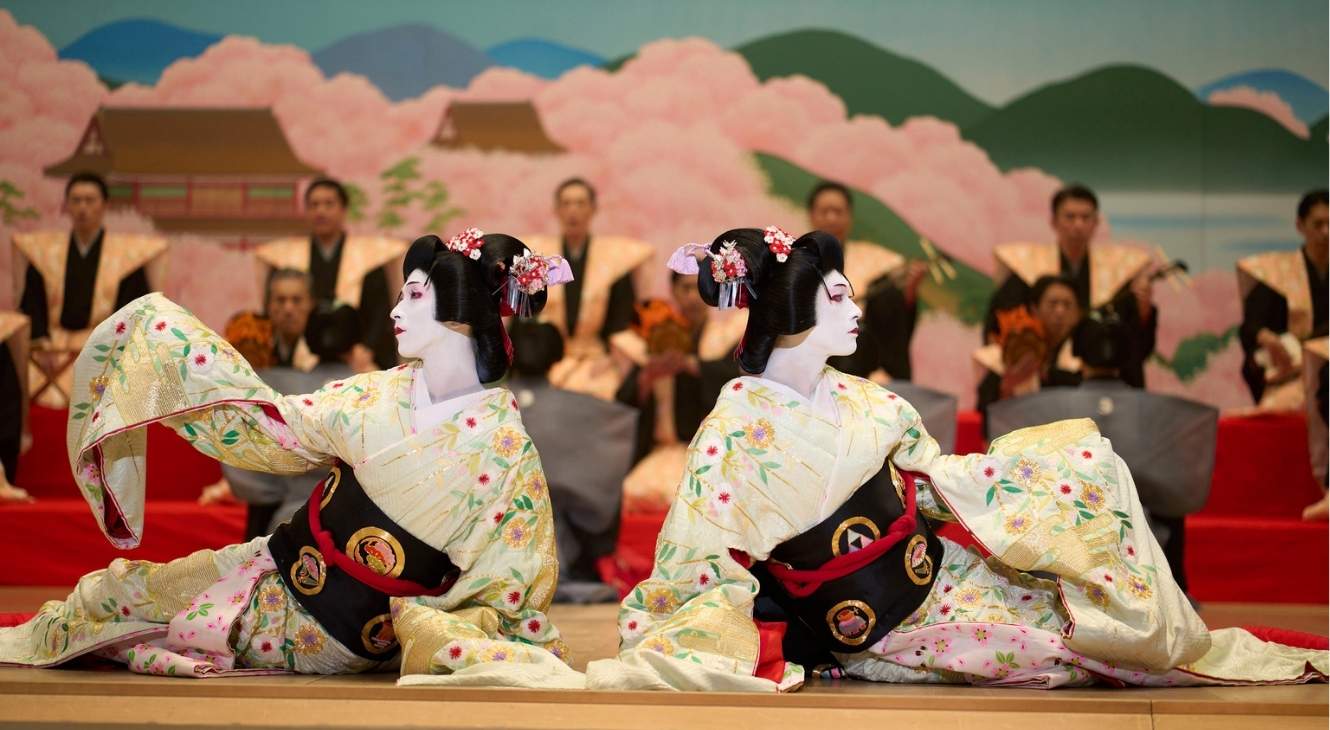
Aside from some aging makeup and later wig choices, the costuming in Kokuho, especially in the Kabuki performances, is phenomenal. As the film journeys through the decades, subtle shifts in contemporary attire aid immersion, particularly in the smaller female roles onscreen and in larger crowd scenes. Yet the attention to detail pays off most in the Kabui sequences, with the makeup, patterns, and color choices fleshing out the stories the actors tell.
With Kabuki such a central part of the story and Toichiro’s journey, blurring the line between theater and the cinematic becomes all the more important. It could have been easy enough to create a visual degree of separation between the Kabuki performances on stage and the audience. Yet, under Lee Sang-il’s direction and keen eye, we’re immersed in the world of the characters on stage, with distinct use of close-ups and wider shots that capture every element of the numbers. Through this, we better understand what draws Toichiro to this art form.
Kokuho is nothing short of astounding. A story of a complicated man navigating the world of Kabuki as an outsider is a fascinating premise, and the utterly captivating performance from Ryo Yoshizawa is nothing short of career-defining. Seeing this at home doesn’t do the attention taken to the theatrics justice. Go see Kokuho in theaters and witness a legend being born.
Kokuho is now playing in select theaters in Los Angeles and New York, before releasing nationwide on February 20, 2026.
Kokuho
-
Rating - 9/109/10
TL;DR
Kokuho is nothing short of astounding. A story of a complicated man navigating the world of Kabuki as an outsider is a fascinating premise, and the utterly captivating performance from Ryo Yoshizawa is nothing short of career-defining.