
You’d be forgiven for thinking The Love That Remains shares plenty of DNA with Bradley Cooper’s most recent dramedy, Is This Thing On?. For one, both follow families with twin sons in the aftermath of the parents’ separation. For another, each parent pursues a wildly different career to cope with the changes in their lives. And somehow, there is still a thread of love that remains evident, amidst the pain.
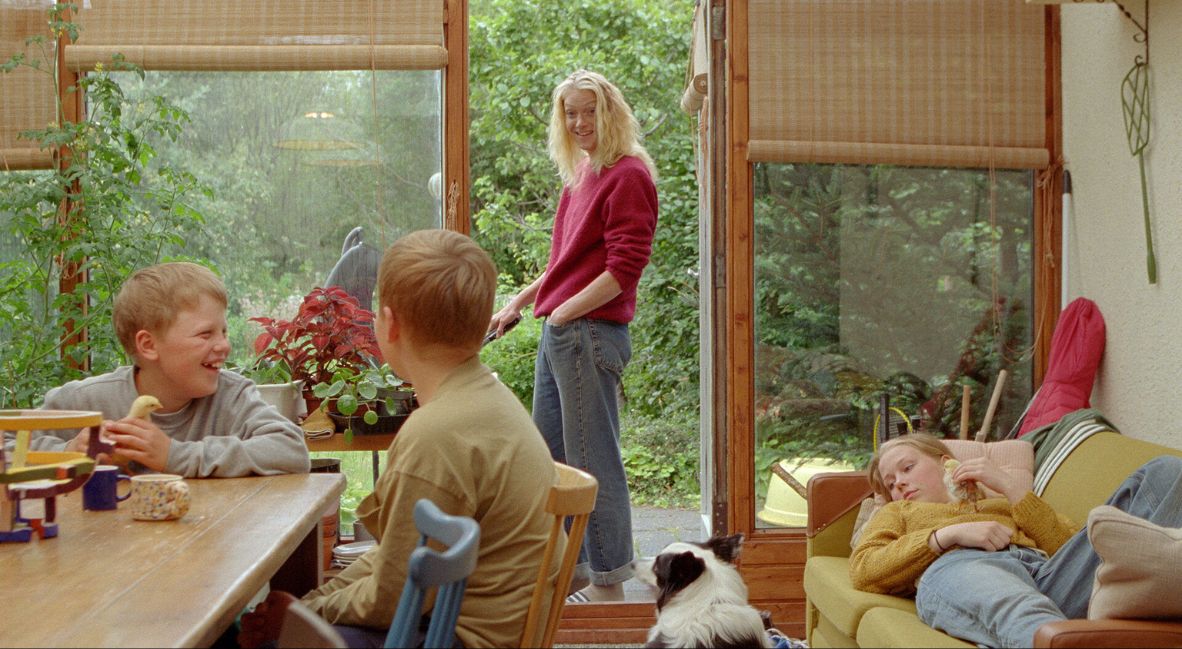
The similarities end there. There are no NFL cameos (or Laura Dern) in The Love That Remains, the new film by Godland director Hlynur Pálmason. Anna (Saga Garðarsdóttir), an artist, cares for the children—twin boys, plus a teenage daughter, all played by Pálmason’s real-life children—while soon-to-be ex-husband Magnús (Sverrir Guðnason) is away on fishing expeditions. Magnús is keen to keep the spark alive in some capacity, fooling around when the kids aren’t looking, but Anna’s ready to move on. She’s kept company by the family dog, Panda (credited as herself, and winner of Cannes’ Palm Dog award).
The Love That Remains is shot at times like a home movie. Perhaps that’s the strength in casting Pálmason’s own children in the film, shooting their adventures and mundane escapades through the eyes of someone who has truly watched them come into their own.
A down-to-earth look at complicated relationships.
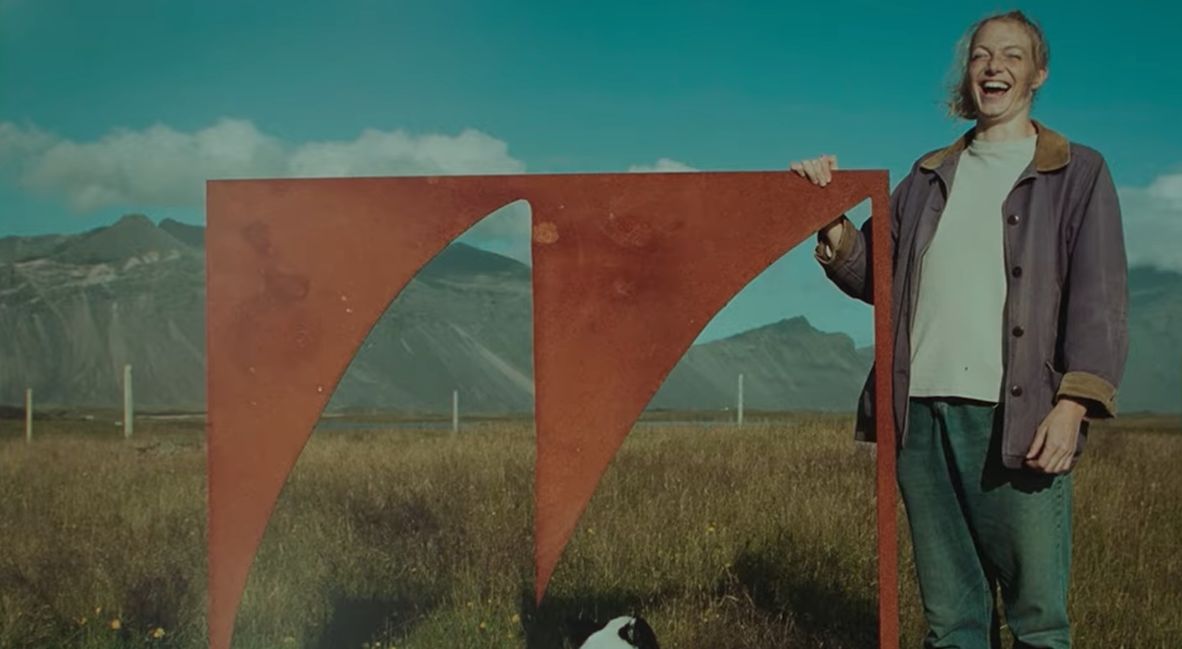
The grounded realism of the film’s emotions is strongest in moments like these. Pálmason, serving as his own cinematographer, captures his native Iceland with the picturesque style of a postcard. It’s hard not to fall in love with Iceland in the film, depicted in greens, grays, wind, and sun in one beautiful backdrop.
The Love That Remains is equally gentle as it is rough around the edges. Scenes are allowed to breathe and the conversations between characters feel real. There’s no moment that is overly drawn out or monologued to oblivion. Ruminations on life are not cloying but are instead punctuated by the genuine sadness of life taking unexpected directions and the ways in which we position ourselves.
Anna pours her heart into her art, working with scrap metal and other materials to create patterned, purposeful pieces, even as her days are unpredictable and she is grasping for meaning. Magnús’s fishing expeditions on the open water feel as clear a metaphor as any for the changing tides of life. They’re both going through the motions and finding new ways to purpose their love.
The Love That Remains deconstructs the intricacies of processing emotions.
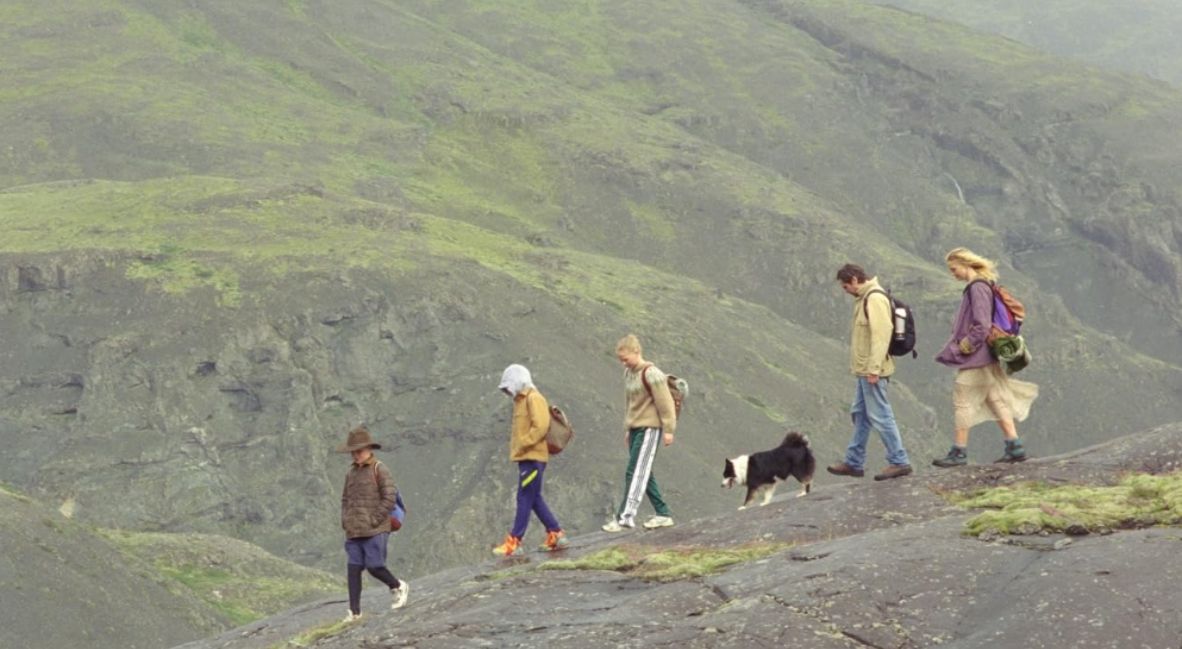
Pálmason often relies on visual metaphors to convey what is happening—or what will happen—in the film. It opens with the deconstruction of a house; a roof being removed in one piece. What began as one home is now two whole, yet entirely separate, parts. Anna and Magnús are the film’s most-realized characters in a film more keen on observation and internal turmoil than openly processing its emotions.
The children are seen running and playing more than they are becoming full characters of their own, but the sense of being affected by their parents’ divorce is palpable. But that’s its home-movie-like charm manifesting through each frame. At times, it feels as though Pálmason dropped in on a random family in Iceland, pulled out a camera, and started pressing record. Art imitating life, and so on.
The Love That Remains is as gentle as a whisper, and as loud as a storm. Pálmason’s keen eye for observation makes him a genuinely compelling directorial voice in European cinema. Long may his camera roll on, observing the complexities and simplicities of everyday life.
The Love That Remains is out in limited theaters January 30, 2026.
The Love That Remains
-
Rating - 7/107/10
TL;DR
The Love That Remains is as gentle as a whisper, and as loud as a storm. Hlynur Pálmason’s keen eye for observation makes him a genuinely compelling directorial voice in European cinema.