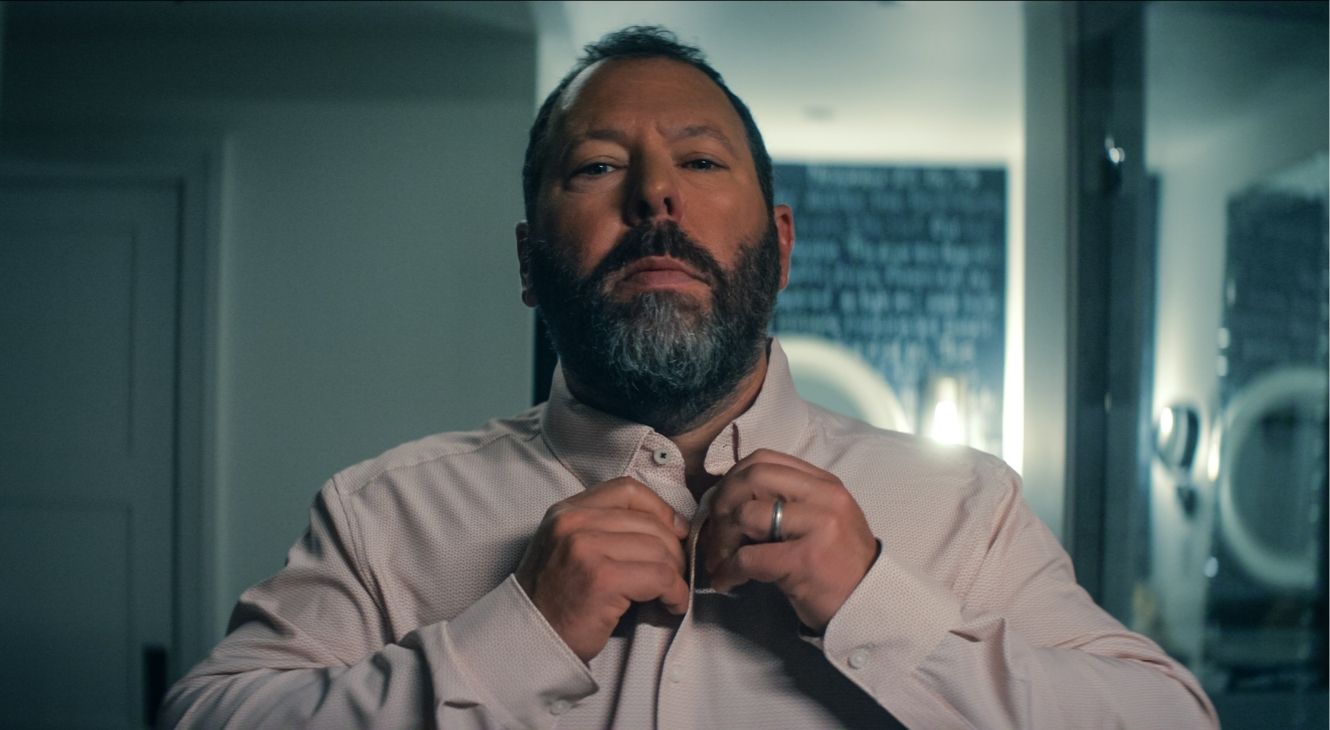
From the jump, Netflix’s Free Bert tells you exactly where comedian Bert Kreischer is in his life. The show opens with Bert, playing himself, shirtless at a Rob Lowe birthday party, doing the thing everyone expects him to do, and you can already feel the tension. He’s getting laughs, sure, but there’s also a sense that he knows this is all people see him as now. Not a dad. Not a husband. Just the guy who takes his shirt off and commits to the bit harder than anyone else in the industry.
That feeling carries through the rest of the series. Bert isn’t struggling because he isn’t successful. He’s struggling because success has locked him into a version of himself that leaves little room to grow. Free Bert doesn’t frame this as a crisis so much as an irritation that keeps resurfacing. Bert wants to be taken seriously, but he doesn’t know how to exist without turning everything into content.
Free Bert’s central arc, in which Bert tries to be more involved in his daughters’ lives, immediately exposes that problem. Bert’s involvement in the show, as much as its structure, isn’t subtle. It’s loud, public, and driven by instinct rather than listening. When Bert realizes his oldest daughter, Georgia (Ava Ryan), isn’t popular at school, he doesn’t sit with him. He tries to fix it. And because Bert’s only real tool is attention, that fix comes in the form of a livestream with T-Pain, turning his daughter’s social life into a viral joke.
Committing to the bit can only get so far in Netflix’s Free Bert.

That plotline is messy on purpose. The joke that spreads is absurd enough to function as comedy, but Free Bert is clearly more interested in what it says about Bert than the punchline itself. He’s not malicious. He genuinely thinks he’s helping. That’s what makes it uncomfortable. Bert equates visibility with protection, and the show repeatedly shows how wrong that assumption is.
As things spiral, secrets start moving faster than they should. Bert learns private information, convinces himself he’s justified in using it, and then acts shocked when it inevitably blows back on him. That cycle repeats throughout the season, and it’s one of the clearest ways Free Bert shows how Bert confuses involvement with control. He doesn’t see himself as meddling, and the show is smart enough to let that contradiction sit there without trying to soften it.
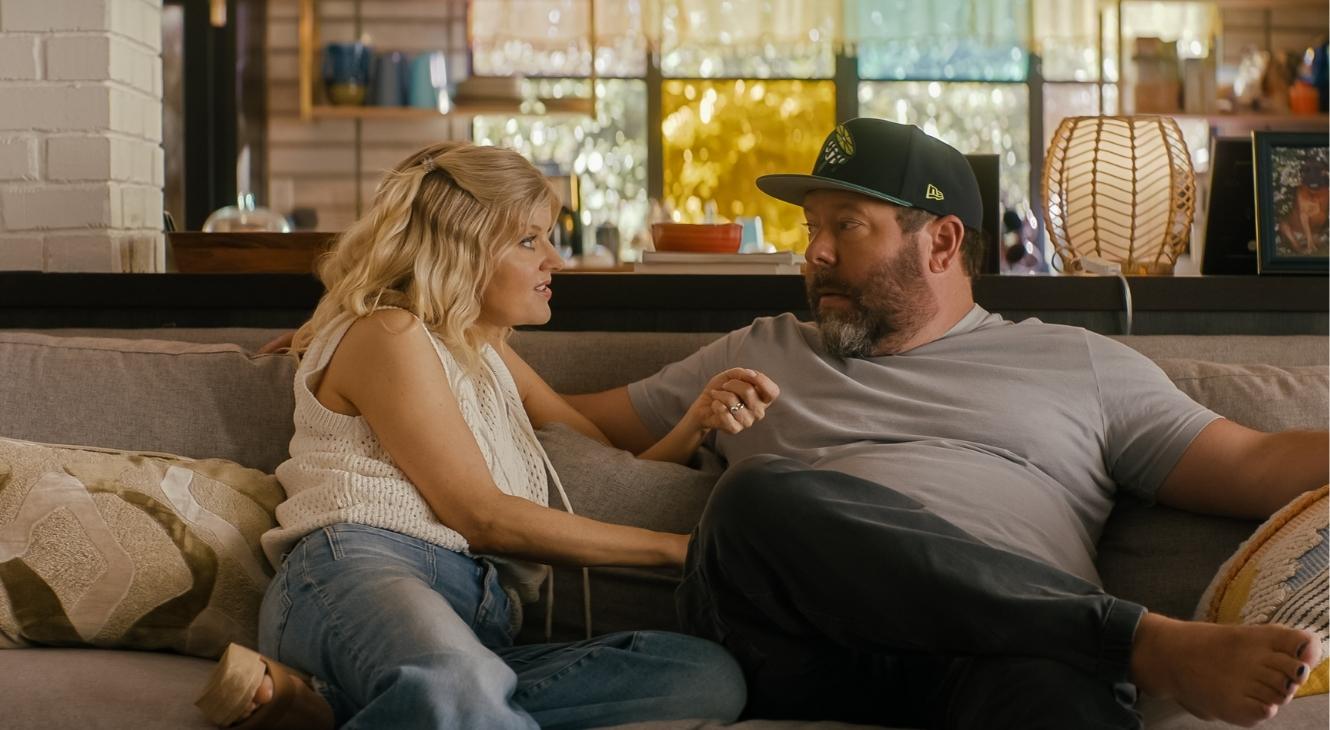
What Free Bert gets right in these moments is that it doesn’t isolate blame or turn Bert into the sole problem. LeeAnn, played by the always hilarious Arden Myrin, makes bad decisions too, sometimes out of frustration, sometimes out of self-preservation. Other parents are manipulative, selfish, and more than willing to let gossip do the work for them.
Some comedic moments work, particularly when it leans into an emotional truth.

When everything finally comes out, the show resists the urge to stage a big moral reset or hand out permanent fault. Instead, it treats these blowups the way real family and community conflicts often play out: people screw up, people talk it out, apologies are imperfect, and life keeps moving. That messiness feels honest, and it’s one of the few places where the show fully trusts its audience to sit with discomfort rather than rushing to clean it up.
Where Free Bert really shines, though, is in the performances, especially the kids. It’s important to be clear here: these are not literally Bert Kreischer’s real-life daughters. They’re characters: versions of his kids as filtered through how Bert tells stories and understands his family at this point in his life. That distinction matters because the show isn’t aiming for realism so much as emotional truth, and the young actors sell that better than the writing sometimes does.
Both daughters feel real, not sitcom written. Georgia carries the emotional weight of being talked over and turned into a punchline she didn’t ask for, and the performance never leans into melodrama. But the standout by far is the youngest daughter, Ila (Lilou Lang). Ila’s consistently the sharpest person in the room. Lang’s timing is excellent, her reactions feel the most natural, and she has a way of delivering quiet truths without sounding precocious or scripted.
One of the highlights of Free Bert is its child actors and what they bring to their characters.

It’s genuinely one of the better child performances I’ve seen in a long time; not because it’s flashy, but because it feels grounded. Ila isn’t written as a joke machine or a moral compass; she’s observant. She sees Bert clearly, and Free Bert trusts that enough to let her moments land without underlining them. If these actors continue working, it’ll be interesting to see where they go, because they’re already doing more believable work here than a lot of adults do in similar roles. Unfortunately, that’s also why some of Free Bert’s worst instincts are so frustrating.
There are jokes scattered throughout Free Bert that feel completely unnecessary, and they don’t just feel outdated; they feel lazy. They don’t deepen the satire or sharpen the commentary. They just stop scenes cold. What makes those moments worse is that some of them are delivered by the kid actors themselves, who are otherwise doing genuinely good work.
It feels cheap and indicative of an out-of-touch writing room. And more importantly, it feels disconnected from the show around it. Free Bert clearly wants to talk about generational shifts, responsibility, and listening instead of dominating the conversation. Those jokes do the opposite. They drag the show backward into a version of comedy that doesn’t match what it’s trying to be.
Some comedy, however, falls short, feeling dated rather than punchy and relevant.
You can feel the limits of perspective here. Not because the cast isn’t diverse, it is, but because the writing doesn’t always reflect that diversity of experience. It’s not malicious. It’s narrow in 2026. The kind of narrowness that happens when jokes survive out of habit instead of intention.
Still, there’s real growth on display. Bert Kreischer is better here than he was in The Machine, the comedian’s first delve into the medium. His timing has improved. His quieter moments land more often. He’s more comfortable sitting in discomfort without immediately detonating it into a punchline. There are scenes, especially with his on-screen daughters, where you can see him trying, genuinely trying, to listen instead of perform.
By the end of the season, Bert doesn’t reinvent himself, and that feels right. The realization isn’t that he needs to become someone else. It’s that he needs to slow down, stop assuming he’s the smartest or funniest person in the room, and actually hear the people he claims matter most.
Free Bert shows how far Bert Kreischer has come and what he should do next.

Free Bert isn’t trying to redeem Bert as a person, nor is it trying to tear him down. It’s a snapshot of where the actual comedian is, at a point where success has stopped clarifying and started limiting. There’s a lot to like here. There’s also a lot holding it back.
If you like Bert Kreischer, Free Bert is probably his most self-aware project yet. If you don’t, it won’t change your mind. What it does show is a performer who knows something needs to change: even if he hasn’t fully figured out how to get there yet. And honestly, the fact that the best performances in the show belong to the kids might be the most telling part of all.
Free Bert is streaming exclusively now on Netflix.
Free Bert
-
Rating - 6/106/10
TL;DR
If you like Bert Kreischer, Free Bert is probably his most self-aware project yet. If you don’t, it won’t change your mind.