
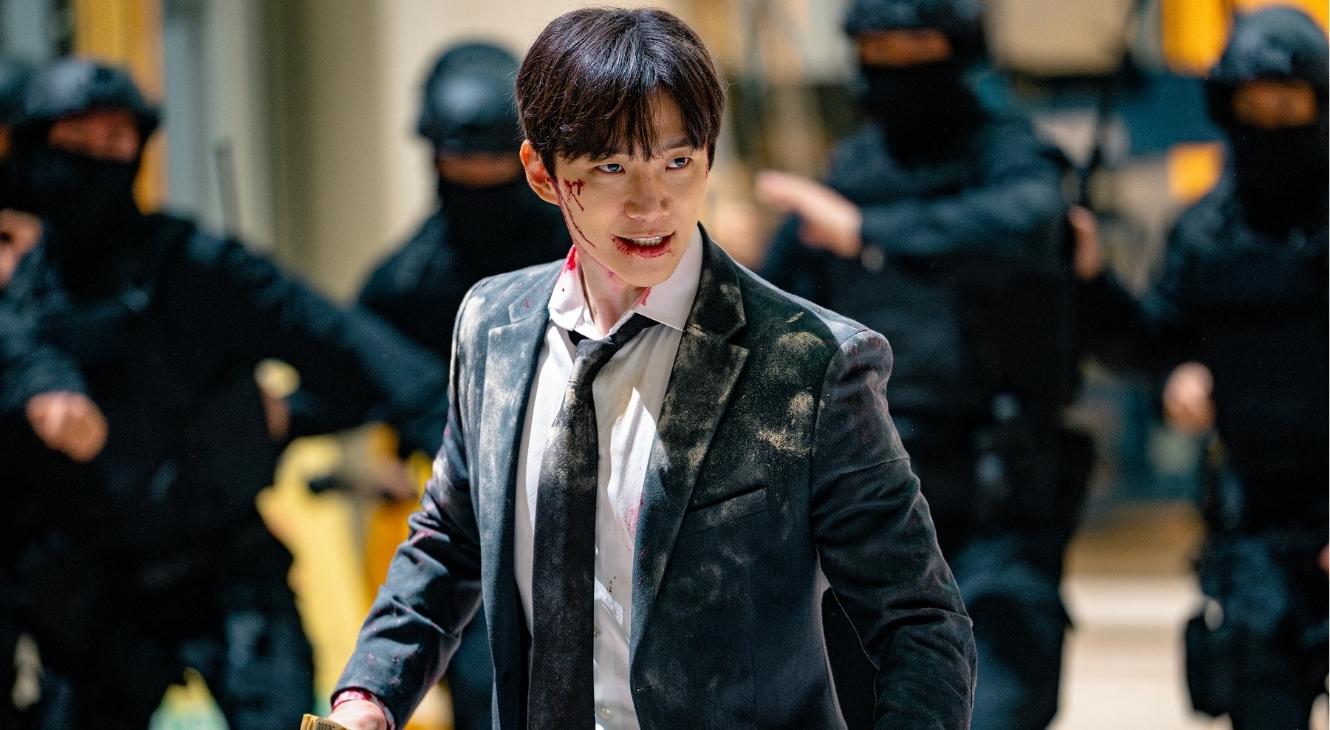
In a media landscape now overrun with superhero stories, it can be tough to do anything new and exciting in the genre. In Netflix’s latest KDrama series, Cashero, adapted from the webtoon by team befar, there’s a huge embrace of familiar genre tropes. Adapted by screenwriters Lee Je-in and Jeon Chan-ho, the KDrama plays things a little too safe, leading to an air of predictability on top of its overall lack of subtlety surrounding money and power. Not even Lee Jun-ho can save the day, despite his charisma and commitment to the bit.
Cashero follows Kang Sang-un (Lee Jun-ho), a cash-strapped civil servant who is hoping some miracle will grace him so that he and his longtime girlfriend, Kim Min-suk (Kim Hye-jun), can buy an apartment. Just when he’s getting ready to make this big life move, his dad (Jung Seung-gil), through a monetary exchange, gives Sang-un his power. The catch? To use his power, he needs money. The more money he has, the stronger he is. Yeah, the metaphor is pretty obvious here.
Surprisingly, his girlfriend is mostly supportive of this new development, albeit with some rules about how Sang-un needs to handle his cash moving forward. This offers an all-too-brief glimpse into how willfully choosing not to do good can manifest as bad karma and itchiness, but it doesn’t last long. Nor does his anonymity. He plunges into the viral video sphere when he uses his power (well-funded by his mother’s savings) to save a group of people on a bus from falling off a bridge. This is, unfortunately, the high point of the series.
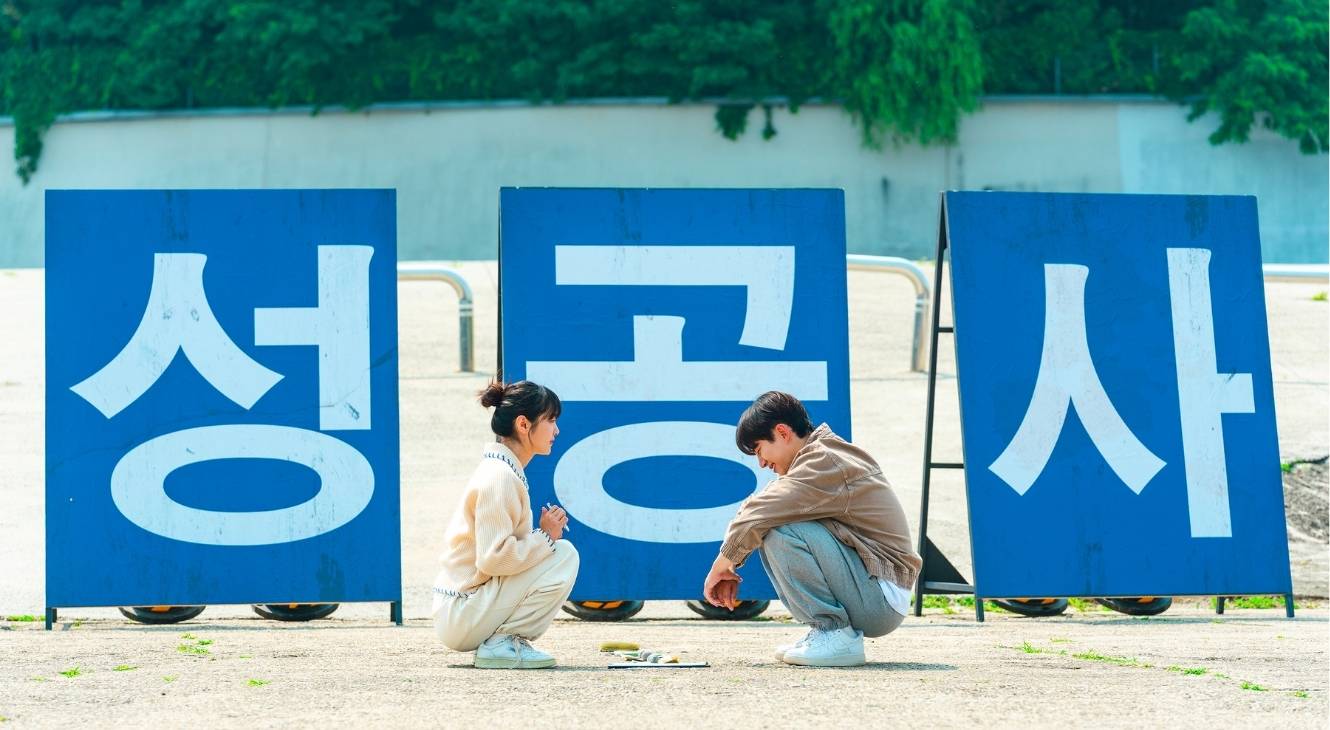
Cashero starts minutely promising, with Sang-un and Min-suk figuring out how to work around his powers.
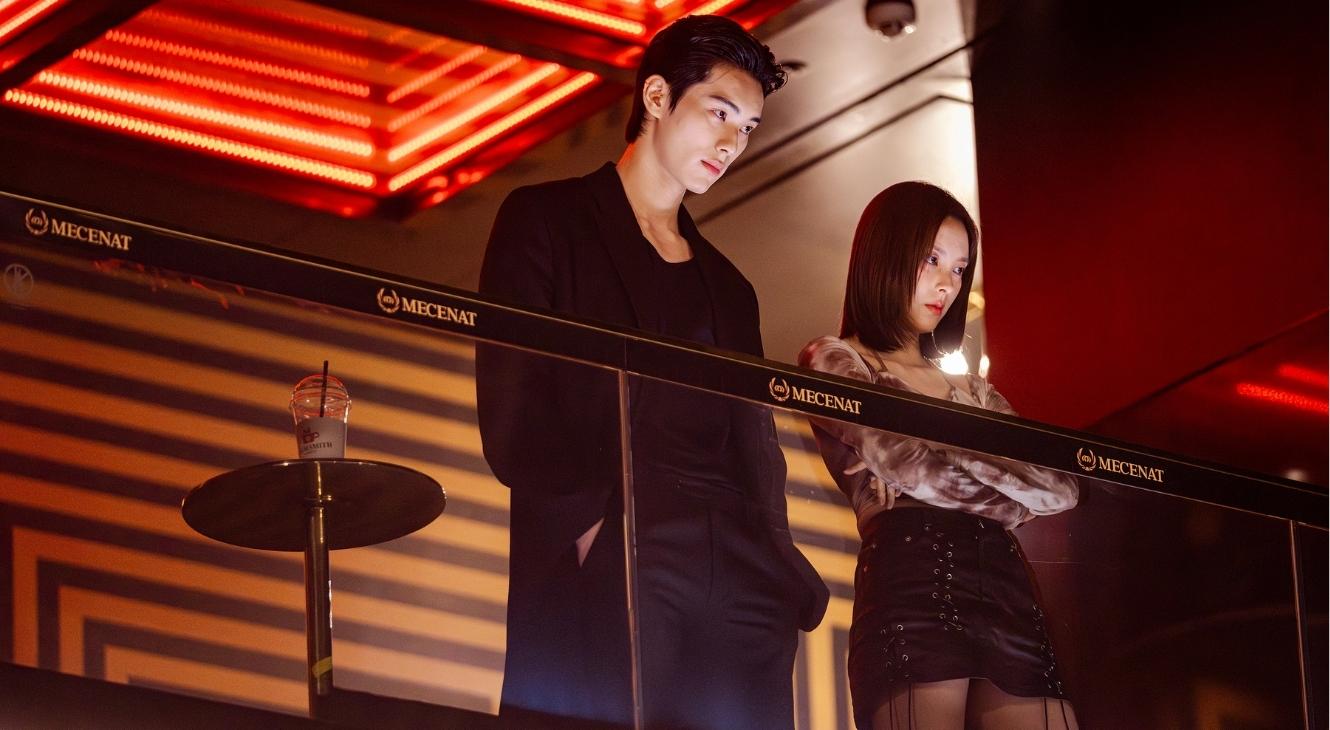
From here, Cashero moves through a checklist of plot-based tropes that are in dire need of depth. There’s a clearly evil group (the Mundane Vanguard) kidnapping other superpowered individuals for experiments, and a counter-group working to try to survive and stop them. Both groups are trying to find Sang-un first, with the Mundane Vanguard stopping at nothing to ruin Sang-un’s life in the process to get what they want. If you’re well-versed enough in the superhero genre, you can predict where the story will go before it gets there.
The Society of Korean Superhumans, aka the group trying to save Sang-un, features some notable cameos, including Cho Bo-ah and Kim Won-hae. Kim Won-hae, in particular, makes the most of his screentime, leaning into his innate comedic side to maximize the kookiness of his Old Man Do. While the cameos are fun, characters Byeon Ho-in (Kim Byung-chul) and Bang Eun-mi (Kim Hyang-gi) take centerstage in this group, acting as both deliverers of exposition and support for Sang-un as he takes his hero’s journey.
Character groups introduced, such as the Jeongja Loans group and the Mundane Vanguard, are poorly fleshed out, with the former becoming increasingly unnecessary to the plot the further the story goes beyond monetary convenience. The villains themselves, in particular Jo Anna (Kang Han-na) and Jo Nathan (Lee Chae-min), are painfully generic, with the writing giving neither actor much to work with. And with Cashero reuniting the two after Bon Appetit, Your Majesty!, their range has been proven. It just isn’t present here at all.
The villains in Cashero are woefully generic and, frankly, kind of boring.
As the main character, Lee Jun-ho gets more to work with, imbuing Sang-un with a natural kind of confusion and resilience that someone thrown into this situation would need. Even with some questionable CGI moments in the action scenes, his natural charisma and ease shine through. Especially in the expected one-on-one battle Cashero was always leading towards, where he genuinely looks like he’s having a blast.
Still, not even Lee Jun-ho can save Cashero from its poor writing and dialogue. In case the audience isn’t smart enough to grasp the overwhelming connection between money and power, Lee has to deliver some matter-of-fact zingers via voiceover, waxing poetic about money that literally spells out what the writers want the takeaway to be. It’s about as subtle as a brick to the face.
That’s not to say that there aren’t shining moments. How Sang-un and Min-suk navigate this sudden change in their lives offers some of the more genuine moments in Cashero. With a real monetary value attached to his power, a couple exploring the ins and outs of that honestly would have been enough of a lure for a series itself. There’s also more baked-in focus on the characters, as they are merely two of the handful who actually have some semblance of substance.
Prioritizing its by-the-numbers plot over character development renders the show forgettable.
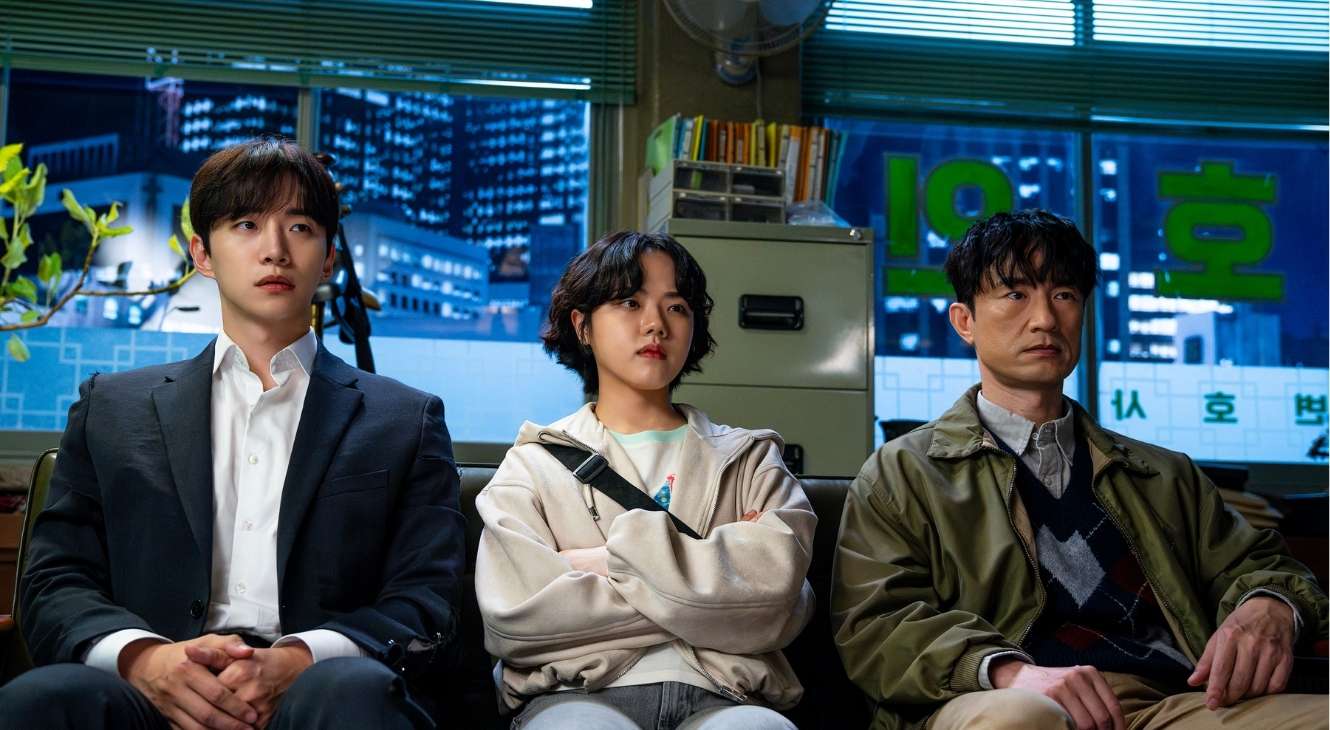
Instead, the couple’s relationship, along with that of Byeon Ho-in and Bang Eun-mi, gets weighed down. With many characters introduced, many of whom are one-dimensional at best, and some generally okay fight sequences, it’s clear that the plot is prioritized over the characters to fulfill the unspoken promise of the genre’s high-intensity energy.
Generally, this is not a bad thing if the plot is executed well. Unfortunately, plot holes arise in some secondary characters, like Lee Su-eun (Shin Soo-hyun), who undergoes a complete 180-degree personality shift and suddenly gains powers. For a series that has prided itself on obvious answers, this proved to be one of the most glaring omissions to arise. The underdevelopment of Jeongja, among other things, offers little in the end, but messes up pacing and confuses what, for all intents and purposes, is a rather by-the-book plot.
While the series itself is short, Cashero can’t make this series worth sitting through with its storytelling. Despite featuring a relatively strong cast of performers, the writing itself offers most with little to work with. Not even Lee Jun-ho is spared, though he tries his hardest to lift the material off the ground and give it what he’s got. And, in an ever-growing market of superhero fare, it just can’t lift off to make its mark with the rest of the pack.
Cashero is now streaming exclusively on Netflix.
Cashero
-
Rating - 3/103/10
TL;DR
While the series itself is short, Cashero can’t make this series worth sitting through with its storytelling. And, in an ever-growing market of superhero fare, it just can’t lift off to make its mark with the rest of the pack.