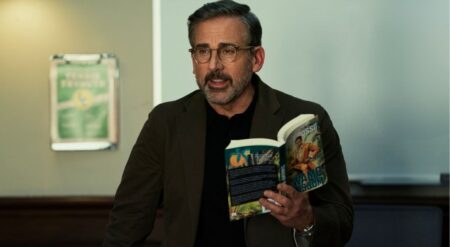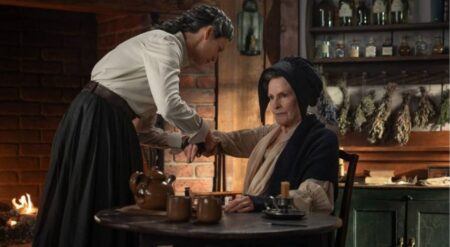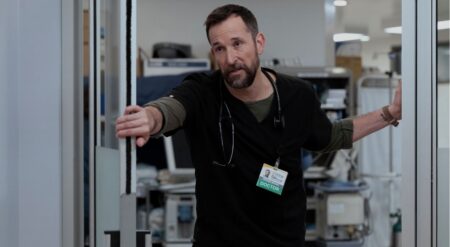

IT: Welcome to Derry Season 1 is just the start of a three-season prequel series from co-showrunners Andy Muschietti, Barbara Muschietti, and Jason Fuchs. The series follows Will Hanlon (Blake Cameron James), Lilly Bainbridge (Clara Stack), Ronnie Grogan (Amanda Christine), Richie Santos (Arian S. Cartaya), and Marge Truman (Matilda Lawler) during one of its cycles.
When a group of kids goes missing (well, murdered in a theater), a chain of events begins to unfold. With the adults around them having their own selfish motives, the teens are left to figure out how to survive the killer clown on their own.
Set in 1961, IT: Welcome to Derry Season 1 primarily focuses on three separate areas, bringing them together in its final two episodes. The first narrative focus is squarely on the children, who are trying to rescue their friends who have been taken, and later, just survive.
The second is about Hank Grogan, Ronnie’s father, who is framed for the murders and disappearances of the kids’ friends. And the third, and most absurd, is that General Shaw (James Remar), Major Leroy Hanlon, and Dick Hallorann (Chris Chalk) are all searching for Pennywise so that the US Government can weaponize him.
With four directors across the eight-episode series, Muschietti, Andrew Bernstein, Emmanuel Osei-Kuffour, and Jamie Travis, the series’ tone changes repeatedly. The series we start with isn’t where we end, and while part of that can be chalked up to visual development from the candy-colored town of Derry to the murder and violence it becomes, how each episode highlights the emotional beats is handled drastically differently as well.
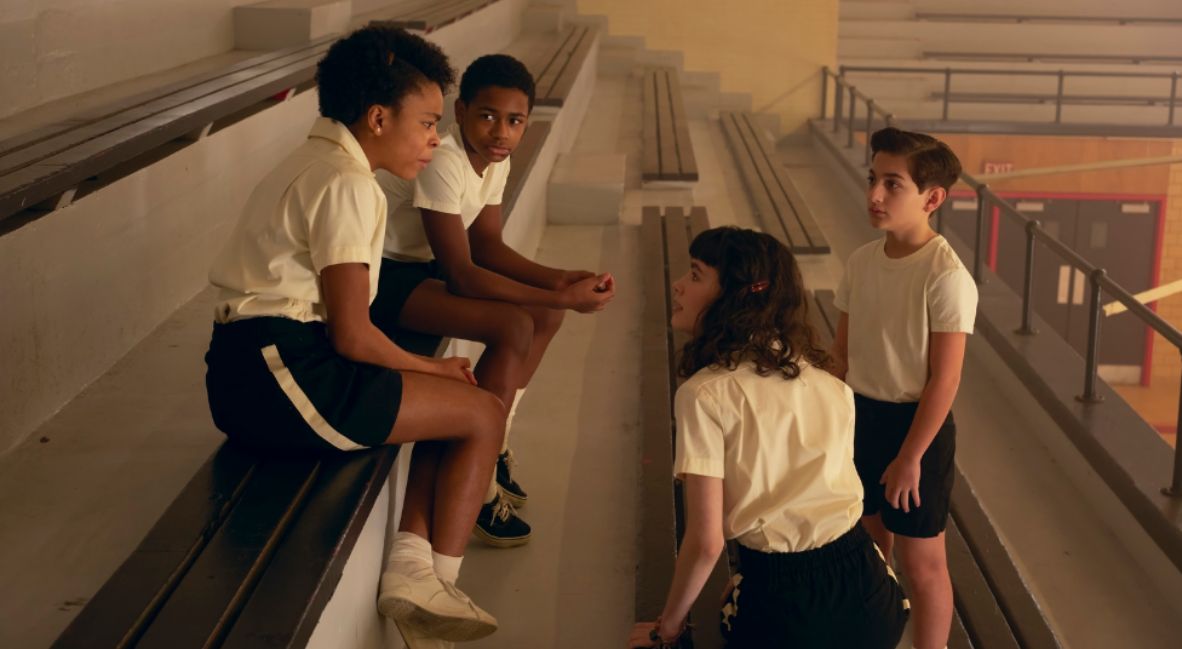
IT: Welcome to Derry Season 1 has a large ensemble that thrives when it focuses on their heart.
Hallorann’s shine is used as a deus ex machina, allowing conflict to develop and the children to stand a chance against the monster. While his gift feels entirely out of place, it does create weakness for Pennywise, one for the kids to exploit, even if it doesn’t make sense. While the inclusion of adults in this narrative gives the series the balance that we don’t see in the films, between experiencing the clown as a child and as an adult, they are not as seamlessly connected as one would hope.
More often than not, the approach to Pennywise between the groups of characters is so out of tune with each other that the tonal whiplash makes it hard to remain engaged. Each episode features some of the most jarring editing I’ve seen on television, and not in a way that drives tension or fear in the series. With such a large ensemble, IT: Welcome to Derry Season 1 struggles to keep its footing, and as the backstory for Pennywise the Dancing Clown comes into focus, it just gets harder to navigate.
The largest bit of lore that IT: Welcome to Derry Season 1 constructs is the Native American history shared about him. Rose, a woman in 1961, is also a key part of the military’s attempt to weaponize it. As a child, she met Francis Shaw, and she told him about the legend, about the galloo that stalks the dead forest and how to avoid it.

As with many Stephen King stories, Rose is the harbinger here, as is her nephew Taniel. Through them, we see how Pennywise came to be, the meteorite he came on, and the cycle. More importantly, though, how her tribe caged him to the land that would become Derry.
As a part of the lore, this all works. However, when it comes to the characters receiving any sort of development, the showrunners aren’t interested. Rose, Taniel, and their tribe are there to serve the narrative, merely existing as movable pieces that get no growth, and in Taniel’s case, are thrown aside.
It’s frustrating to see a series so focused on highlighting racial injustice repeat some of horror’s negative treatment toward Native characters. Rose is there to warn the people of Derry, to protect them, to be the wise elder. And Taniel is there to die.
IT: Welcome to Derry Season 1 handles race in different ways, some good, and others ham-fisted.

At the same time, the showrunners are deeply concerned with mapping out Derry’s racism and ultimately showcasing how even a town in the North is capable of hate crimes. Still, the ham-fisted nature of many moments makes it hard to get behind, and, more importantly, the trauma the Black characters in the series experience outweighs their joy. This is especially prevalent because other characters escape it.
From Hank Grogan to the massacre at The Black Spot, the Black characters in this story are meant to suffer. At times, it’s difficult to see the meaning or the necessity. However, it’s Charlotte Hanlon (Taylour Paige) and her comments about the town that showcase something that few other stories do. She is a minor character, she’s Will’s mother, and the Major’s wife. But she is also the most grounded of all of the characters we see in Welcome to Derry Season 1.
In one scene, she confronts the racist police chief (who will later be a part of the racist violence at The Black Spot), and he tells her that Derry isn’t the South. He tells her this to make her relax and back off from trying to support Hank Grogan. But throughout the series, Charlotte points out how much harder life is in Derry, and the camera reinforces this by showing the whiteness of its residents in every Main Street shot and every conversation.
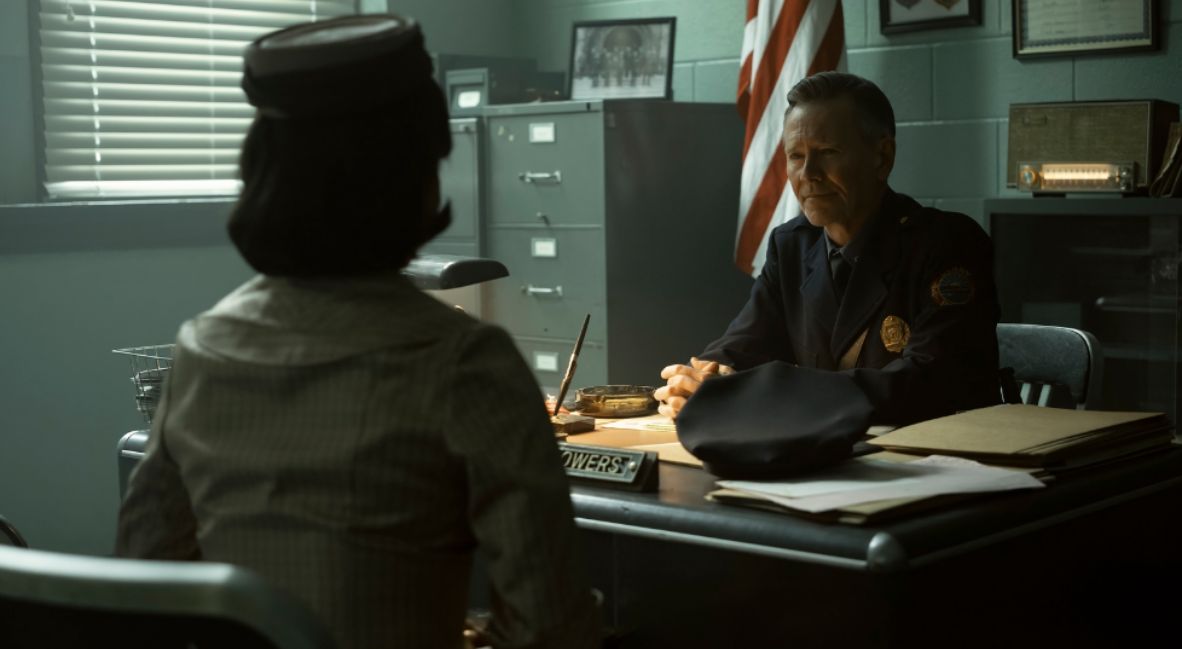
Charlotte was a teacher in Louisiana, but now she has to belittle herself by taking a lesser job or just staying home. She may not experience people calling her slurs, but the gazes thrown her way say it all. She sees Derry as a place just as bad as the South, only it refuses to admit it, and with that, the racist violence festers even more, only each and every person in Derry refuses to acknowledge it.
That is one of the main takeaways from how IT: Welcome to Derry Season 1 engages with race, and it’s what the series does best in the conversation the showrunners are having. It does more than the hamfisted moments we see throughout the series.
At the same time, Charlotte’s husband, Major Leroy Hanlon (Jovan Adepo), is struggling with his military service. A proud airman who fought in the Korean War, he is content to go along to get along and urges Charlotte to stop all activism. He is about respectability and authority; Charlotte is not. But their son Will is a reflection of them both. Will is in love with science, but he’s also one of the most courageous kids in the entire group.
The way kids come together in IT: Welcome to Derry Season 1 keeps the show afloat even when it’s struggling.
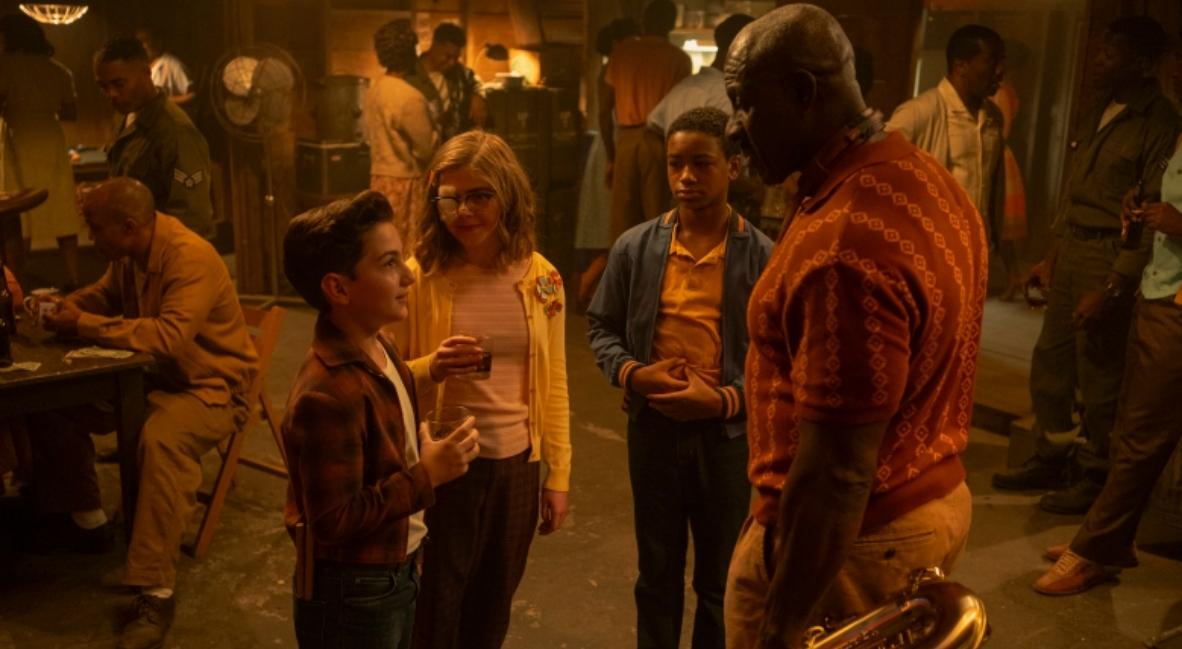
As for the rest of the young group we follow, Lilly is self-centered on her own grief that she often winds up harming others, accusing Hank Grogan (Stephen Rider), and putting him in a lynch mob’s crosshairs and Shawshank. Ronnie is scared for her father, but she’s also well aware that they need to be together.
Richie is a kid who offers bravado and care for his friends, the best among them, despite how racist kids are to him at school. And Marge goes from a kid desperate to be accepted by the mean girls in the school to a girl who tries her hardest to keep everyone together.
Throughout the series, convoluted choices made by each of the characters muddle their growth, but thankfully, their friendships stand above most of it. Balancing heart and shock is always the hardest thing for this series. Too often, scares that show poor taste overwhelm emotional moments, but after the first five episodes, the series finds its footing, which only improves with each episode.
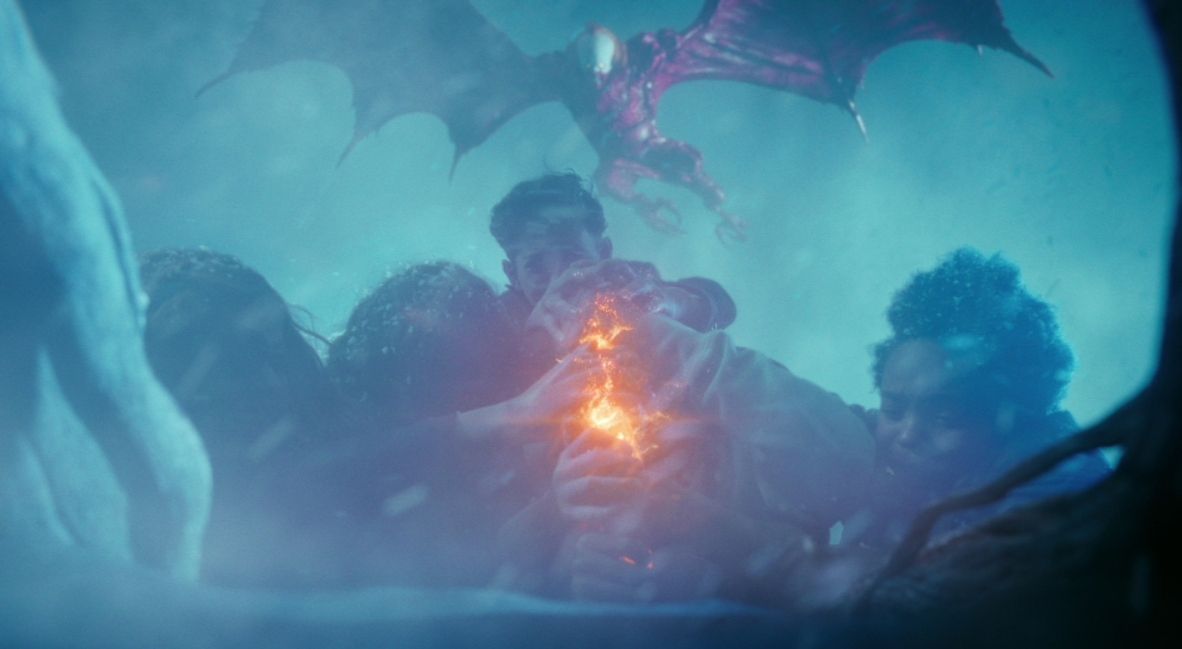
Much of this comes from better execution of special effects. At the beginning of Welcome to Derry Season 1, the effects work is comical when it should be terrifying. A mixture of practical and garish computer-generated effects refuses to mix well, and it’s frustrating.
That said, in the final episodes of the season, the effects work begins to sing. The effects become bigger, louder, and somehow, more grounded. The finale, “Winter Fire,” sets a high bar for other horror television series, but it also highlights just how bad the front half of the series was.
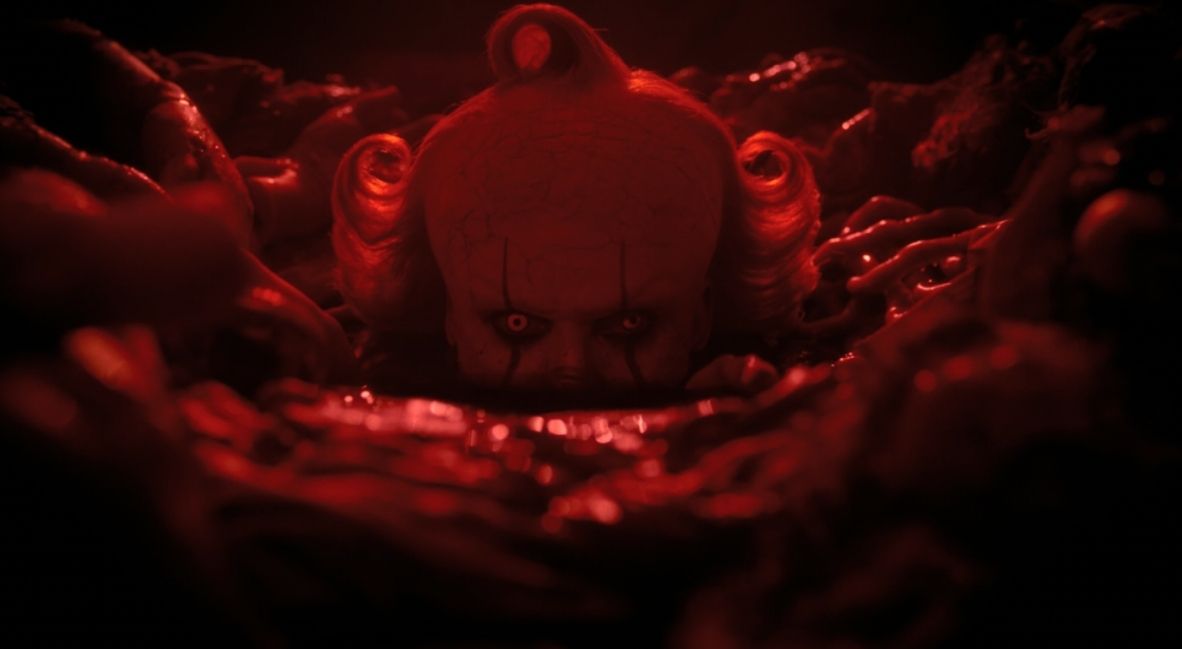
The success of the effects work also comes from Bill Skarsgård‘s performance as Pennywise the Dancing Clown. His costume, his movements, his voice, everything moves through an uncanny valley. Where the beginning of the series constantly reaches to cause scares, Skarsgård’s Pennywise exists as a menace.
Bill Skarsgård’s performance as Pennywise is what makes this new HBO Max series hit the right notes in the end.
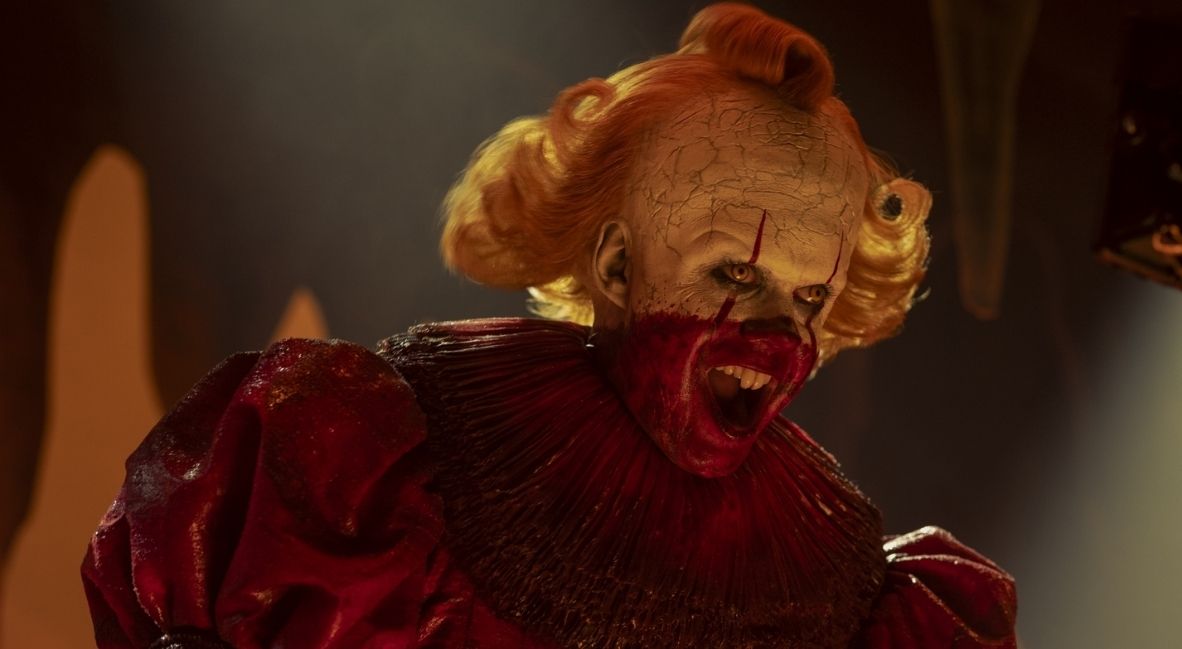
From cracking make-up to sardonic deliveries, this is the quintessential Pennywise, and when the series stops trying to hide him, it excels. You don’t need to do much to cause mayhem and fear, and when it shows up, its pure sarcastic and exploitive nature makes everything worse for every character.
Much of the way that Pennywise interacts with the characters is about not just scaring them, but grinding their safety and confidence into dust. He wants to humiliate as much as he wants to tenderize his dinner with fear, and it’s all made better by Skarsgård’s performance.
Still, IT: Welcome to Derry Season 1 tries to constantly do too much, aiming for spectacle over substance, episode after episode. While the back half of the series offers much stronger storytelling, the need to weave in every bit of Stephen King lore drags the narrative down. Much like The Mist, a military base messes with something they shouldn’t, and Pennywise’s power becomes unchecked.
The reliance on other King works is either something viewers will love or, if you’re like me, something you feel beaten with. With every reference, the showrunners hit their audience over the head, again and again, and while some land more than others, the takeaway is that Derry is the center of it all.

With all that said, IT: Welcome to Derry Season 1 connects to itself effortlessly in the end. The loops that close in the season finale pull Muschietti’s work in the films and the television series into focus. Bloodlines are established, and backgrounds become something to cheer for, making for a grand story to watch one after another.
Still, having been greenlit for two more seasons, IT: Welcome to Derry Season 1 does such a good job at connection that there is no wiggle room in between. So, the series will more likely than not go back to before the events of Season 1. But how far back is up in the air.
Ultimately, though, after a rough start, Welcome to Derry winds up being more good than bad, and if the showrunners can learn to focus on emotion over spectacle, what’s coming next will be something Stephen King fans are excited for.
IT: Welcome to Derry Season 1 is streaming now, exclusively on HBO Max.
IT: Welcome to Derry Season 1
-
Rating - 6.5/106.5/10
TL;DR
Ultimately, though, after a rough start, Welcome to Derry winds up being more good than bad, and if the showrunners can learn to focus on emotion over spectacle, what’s coming next will be something Stephen King fans are excited for.