
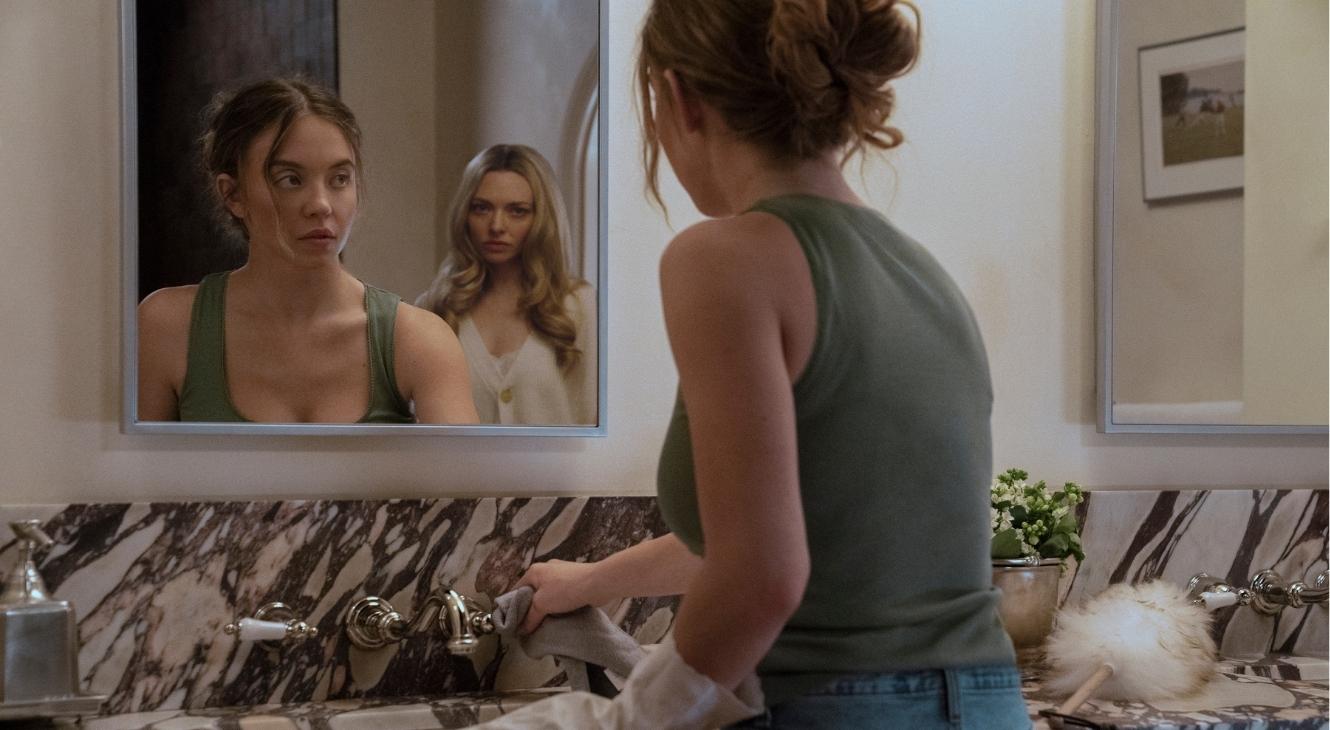
Tension is in short supply in Paul Feig’s woefully stilted The Housemaid. A would-be psycho-sexual thriller which, across a flurry of tepidly staged scenes and achingly stilted, unnatural dialogue, wears down any sense of edginess and intrigue it portends to wield. In fact, Feig’s film is so dysfunctional and clumsily constructed that it unfolds as one of the most unintentionally funny films of the year.
While that stiff, awkward quality may be an attempt to foster unease, the result is a film caught in an uncanny liminal space between a TV soap opera and a glorified Lifetime movie. Despite its attempts to shock and draw blood, it’s a poppy, cutesy affair that goes down so easily and unassumingly that it often feels like it forgets it’s supposed to be unnerving.
Full of clunky hot-100 needle drops and hilariously awkward sex scenes, The Housemaid manifests as a campy comedy caught in the shell of a straight-faced thriller and, in turn, unleashes one of the hottest messes in recent memory.
Misguided tonal imbalances and story bloat do little to elevate what should be a thrilling venture.
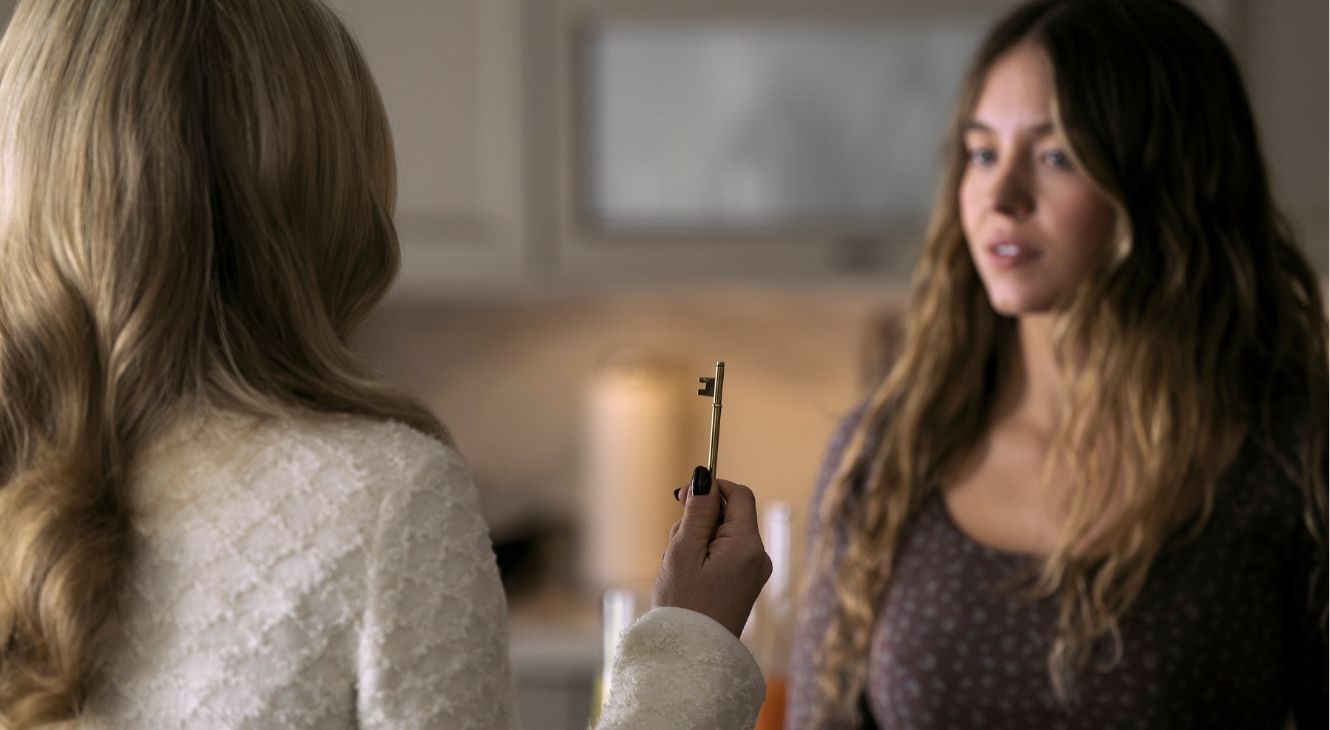
Opening with lifeless, needless narration—a narrative crutch that robs the film of tension across its bloated 131-minute runtime—The Housemaid centers on recent parolee Millie (Sydney Sweeney), who is desperate to outrun her troubled, mysterious past. She thinks she’s found stability when Nina (Amanda Seyfried), the matriarch of the wealthy Winchester family, hires her as a live-in housemaid.
Yet, something sinister bubbles beneath the Winchesters’ seemingly picture-perfect life. Prone to deceit, outbursts, and accusations, Nina seems to take perverse pleasure in torturing Millie. Whether it be giving her wrong directions, denying her time off, or threatening to fire and send her back to prison, Millie lives on a precarious edge, especially as she fights to hold back her feelings for Nina’s hunky husband, Andrew (Brandon Sklenar). Though the tension between them soon gives way to greater evil than Millie could have ever imagined.
Except that The Housemaid never becomes shocking or unbelievable in the ways it hopes to. Instead, as a product of minute-to-minute interactions that are so absurd, unnatural, and unconvincing—especially as banter continues to eschew logic and enter the uncanny valley—once characters finally go berserk and wild, it never feels like a distinct departure from the moments leading up to it.
Sydney Sweeney delivers a one-note performance in The Housemaid.
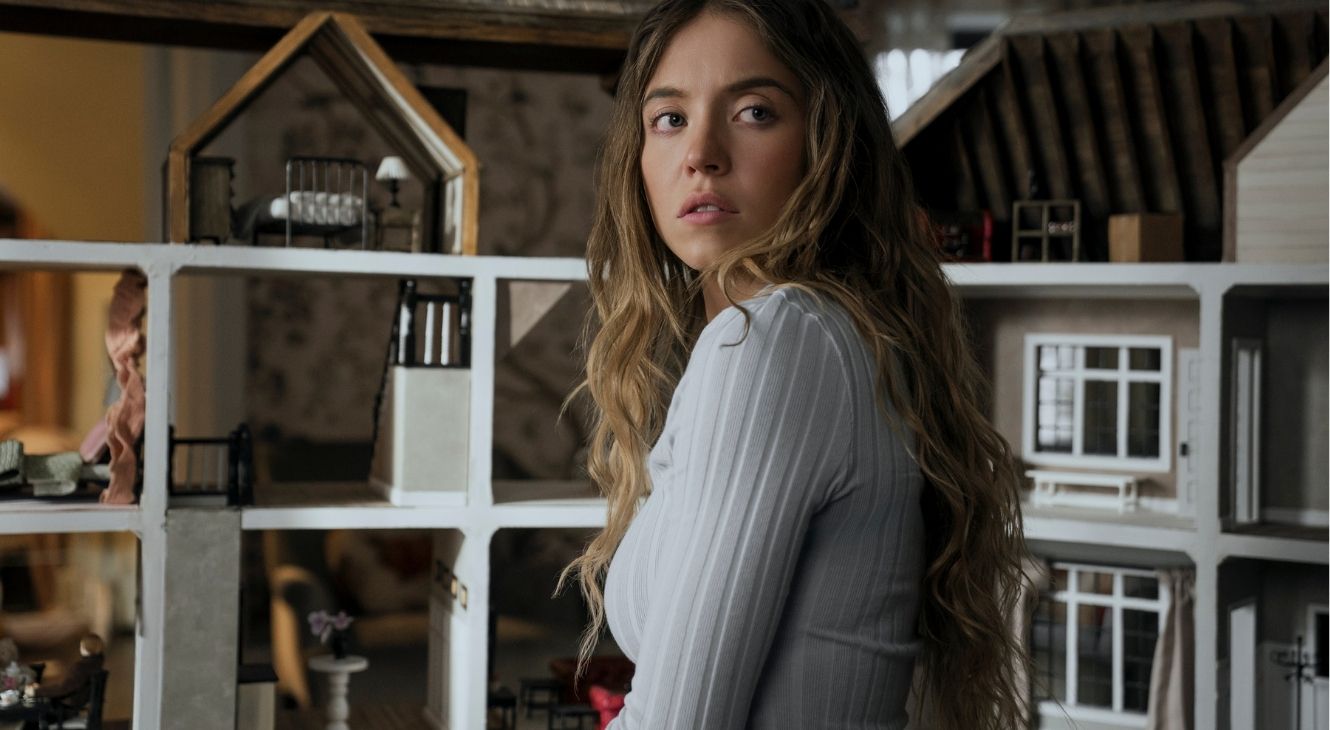
It’s a film that consistently operates at eleven, where characters don’t speak like people, and the spaces often reserved for subtlety or emotion are filled with overwrought confrontations. In lacking that human touch, The Housemaid renders itself a completely uninvolving and flaccid thriller.
Yet, for all its monumental failures, it finds quasi-success as an unintentionally hilarious comedic gem that, while entertaining in its own right, never completely becomes so bad that it’s good (maybe, so bad it’s entertaining). Feig’s film routinely teeters on the edge, doing everything it can to get us to invest in its hammy, slight mystery, even if it’s for the wrong reasons.
Much of the film’s laboured attempts to instill dread and excitement are the product of haphazard pacing and editing. Feig never affords sequences the time to breathe or develop, often hastily cutting to the next or choppily criss-crossing between flashbacks. Moments that dare to become intimate are drowned out by tension-eradicating pop needle drops. It’s a quality that also weaves its way into the film’s skin-deep attempts at class commentary and exploration of abusive power dynamics.
The Housemaid is rendered into a comedy despite its thrilling basis.
It’s all a symptom of a film that tells more than it shows, with its final-act flashback unfolding as a slog that spews revelations and exposition instead of letting them unfold visually. It’s as if The Housemaid is as uninterested in its hollow mystery as its audiences. But perhaps not more than Feig himself, who remains allergic to a full shot, shrouding pivotal sequences in background-blurring close-ups that fail to make the film’s promising domestic setting its own atmospheric character.
The central performances mostly follow in the same feigned footsteps. Sweeney’s turn as the reeling Millie is painfully one note, caught between being histrionic and downplayed, she manifests as little more than a vessel for sex appeal that the film itches to cash in on, and once it does—in two of the most impotently composed sex scenes of the year—it has nowhere to go. While Seyfried and Sklenar inject a tad more nuance into their roles, they’re undone by a self-seriousness that the film has nowhere to place in its tonally discordant cacophony of unintended comedy.
For some, the failure of The Housemaid as a thriller is balanced by its modest “success” as an accidental comedy. But for all its stilted and uncanny pleasures, the body of a far more satisfying experience exists—with greater bite, meaner spirit, and deeper emotional stakes. Instead, what remains of The Housemaid is a film that, despite a handful of unintended laughs, is so desperate for attention that it forgets why it exists in the first place.
The Housemaid is in theaters on December 19, 2025.
The Housemaid
-
Rating - 3.5/103.5/10
TL;DR
What remains of The Housemaid is a film that, despite a handful of unintended laughs, is so desperate for attention that it forgets why it exists in the first place.