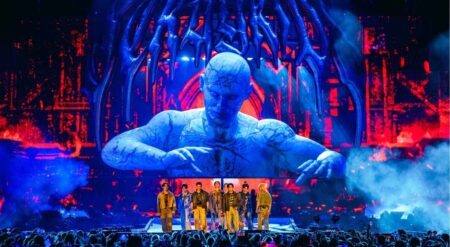


“I am an entertainer!” Words that echo across a film about ordinary, working-class people risking it all to form a Neil Diamond tribute band that prides itself on being interpreters instead of impersonators. Yet, in an ironic turn, Craig Brewer’s Song Sung Blue (2025) unfolds as an aggressively average impersonation of all the cliches, tropes, and cloying beats that have defined the music biopic for the last quarter century.
Across a bloated 132-minute runtime, Brewer crafts a rags-to-slightly-nicer-rags love story that, in its attempt to be the ultimate crowd pleaser, never musters an authentic note. Instead, it manifests as an experience whose loveably cheesy, feel-good fabric becomes its ultimate weakness.
Central character dynamics never cement chemistry, climactic musical numbers fall flat, and ventures into darker, realistic subject matter become trite and trivial. Song Sung Blue (2025) envelops itself in syrupy colour, music, and personality, but never takes the time to render it genuine.
Song Sung Blue (2025) feels devoid of a human touch.
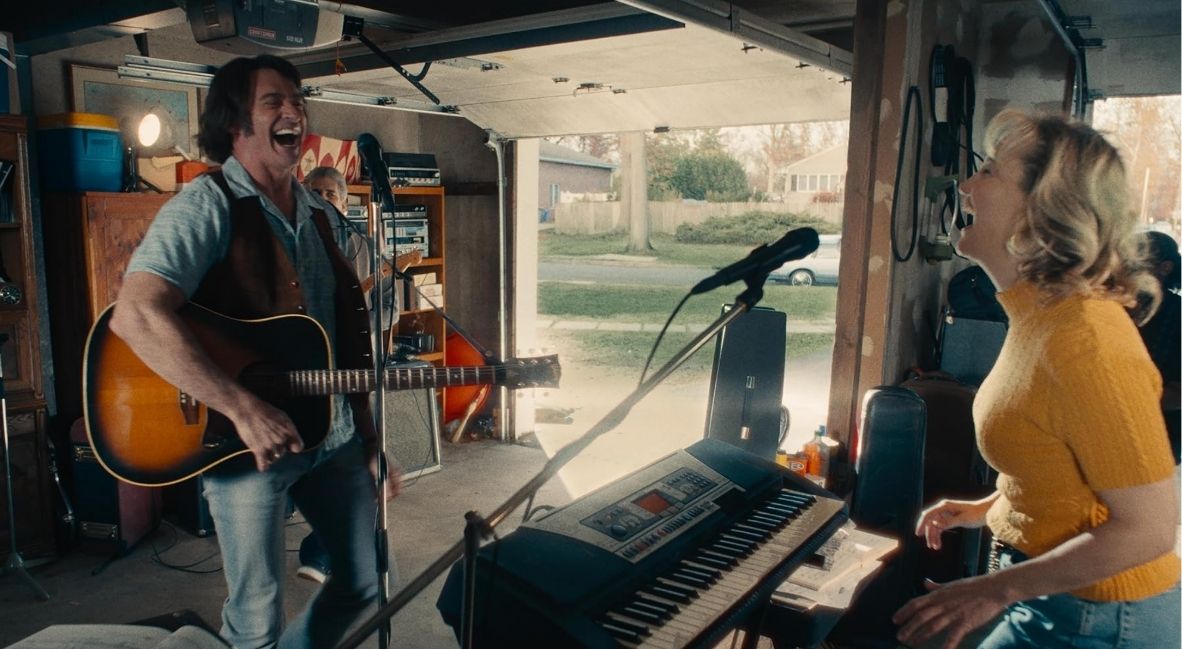
Song Sung Blue is a film that toys with relatable flaws, foibles, and frustrations, but feels devoid of a human touch. As a result, its positive outlook on a life filled with hardships not only feels unearned but also alien and uncanny, as it gestures towards emotional catharsis without meaningfully engaging with it.
Taking place in the 1990s and based on the 2008 documentary of the same name, Song Sung Blue (2025) immerses us in its cheery Midwest milieu of musical impersonators, featuring acts that ape Buddy Holly, Elvis, and James Brown, among others. The only stick in the mud is Mike (Hugh Jackman), a recovering alcoholic who envisions something bigger, better, and more meaningful for his musical abilities.
After a meet-cute with Claire (Kate Hudson), a Patsy Cline impersonator and divorced mother of a teenage daughter (Ella Anderson) and pre-teen son (Hudson Hensley), the two quickly get married and form “Lighting and Thunder: A Neil Diamond Experience.”
Lighting and Thunder don’t feel like a three-dimensional pair.
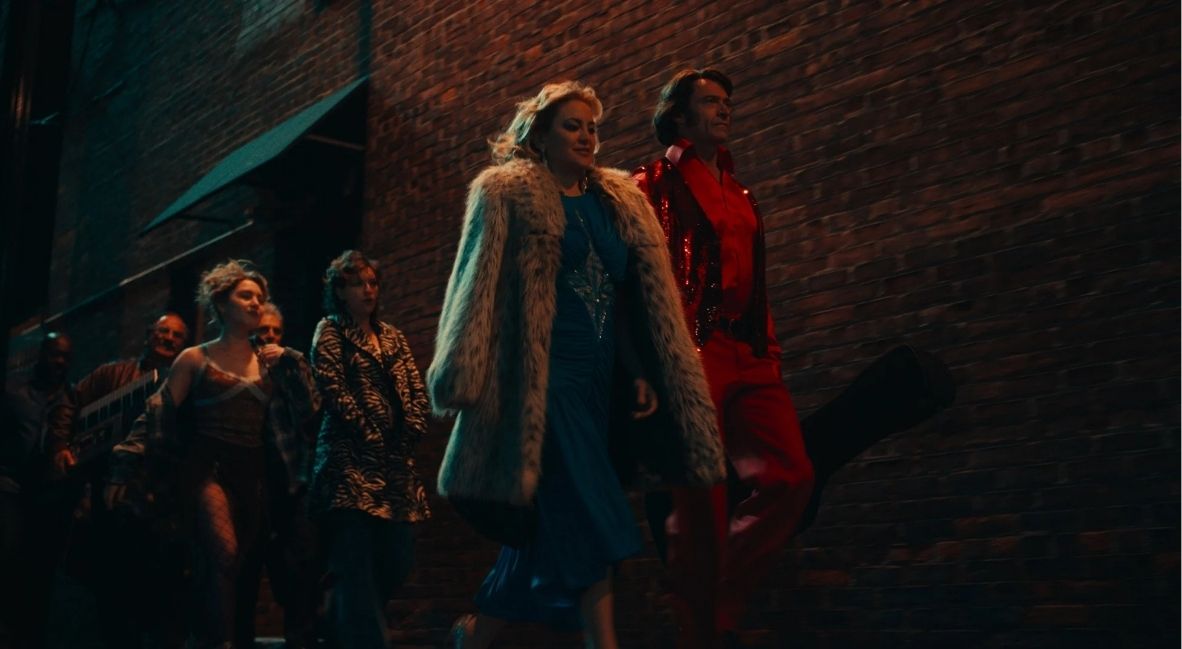
Their tribute act quickly catches on, making them local heroes who become the hottest ticket in Milwaukee. Yet, their newfound success soon gives way to tragedy that not only threatens their act but also their newly formed family.
Despite its over-extended runtime, where characters bicker, banter, and barrage each other with affection, the chemistry—especially between Mike and Claire—is more implied than conveyed. Song Sung Blue routinely rushes through the emotional and musical evolution of the band, suddenly catapulting them to modest stardom and renown without investing the time to earn or build up to such developments.
Brewer, who also pens the adapted script, fosters a thoroughly skin-deep affair that wants audiences to fall in love with these characters without ever lending them the texture and detail to make them three-dimensional. For as charming as Mike and Claire become, they amount to little more than pawns for the film’s sappy and schmaltzy emotional core, who glimmer with depth but eventually become set dressing in their own film. Relegated to being working-class caricatures whose defining traits are their circumstances.
Claire’s dream sequence is the scene with the most identity in Song Sung Blue (2025).

As an accident leaves Claire incapacitated in the second act—effectively stifling the band’s momentum—Song Sung Blue transforms into a completely different film, ill-equipped to meaningfully address its sudden swing towards darker subject matter.
While Claire’s literalized dreams are the only instances in the film that hint at a unique, sonic-visual identity, they struggle to overturn a film that trivializes trauma, rendering them little else but character quirks. It’s an unfortunate quality that infects other characters as they struggle through economic woes or personal crises, often manifesting as minor inconveniences that solve themselves.
While Jackman and Hudson are endearing and lovable, they’re hamstrung by a screenplay that never affords them the space to endow their characters with the authenticity and realism to render their darker turns impactful. In the moments where key characters are suffocated, supporting turns from Michael Imperioli, Jim Belushi, and Mustafa Shakir are not only sidelined but utterly wasted, with their dwindling, one-note comic relief swiftly producing diminishing returns.
Song Sung Blue routinely hits a discordant, disingenuous note.

Couple the shortfalls with a flat, over-lit visual approach that recalls a sloppy wedding video, and Brewer’s film forces audiences to sing their song blue for all the wrong reasons. While there remains a superficial pleasure in seeing salt-of-the-earth people reach for modest stars, Song Sung Blue routinely hits a discordant, disingenuous note.
As A Song Sung Blue’s tepid conclusion literally talks (or sings) down to its audience about the beauty of an average life, we’re left wishing it had a fraction of the same earnestness it holds in such high regard.
Song Sung Blue is in theatres on December 25th.
Song Sung Blue (2025)
-
Rating - 4.5/104.5/10
TL;DR
While there remains a superficial pleasure in seeing salt-of-the-earth people reach for modest stars, Song Sung Blue routinely hits a discordant, disingenuous note.