
After 25 years of the Anno franchise, Ubisoft Mainz has gone to ancient Rome. In the latest installment of the franchise, Anno 117: Pax Romana, players have the chance to build their very own Roman Empire. Anno 117: Pax Romana is the 8th game in the long-running game franchise and the first since Anno 1800, which was released in 2019.
Anno 1800 was by far the largest and most successful Anno game in the franchise. Over the course of four seasons of downloadable content, the game added numerous new features to go with each of the new regions that were added to explore. Anno 117: Pax Romana continues to build on these new features, while also expanding them in its own unique way.
Anno 117: Pax Romana offers two distinct game modes for players to explore—the familiar and well-known Endless mode, also known as sandbox mode, and the story campaign. I assume most players like myself get the most out of Endless mode, which allows players to build and do as they please and set up their own worlds. However, Ubisoft Mainz did put some work into the new campaign for Anno 117.
Anno 117: Pax Roman gives its players two distinct paths to walk.
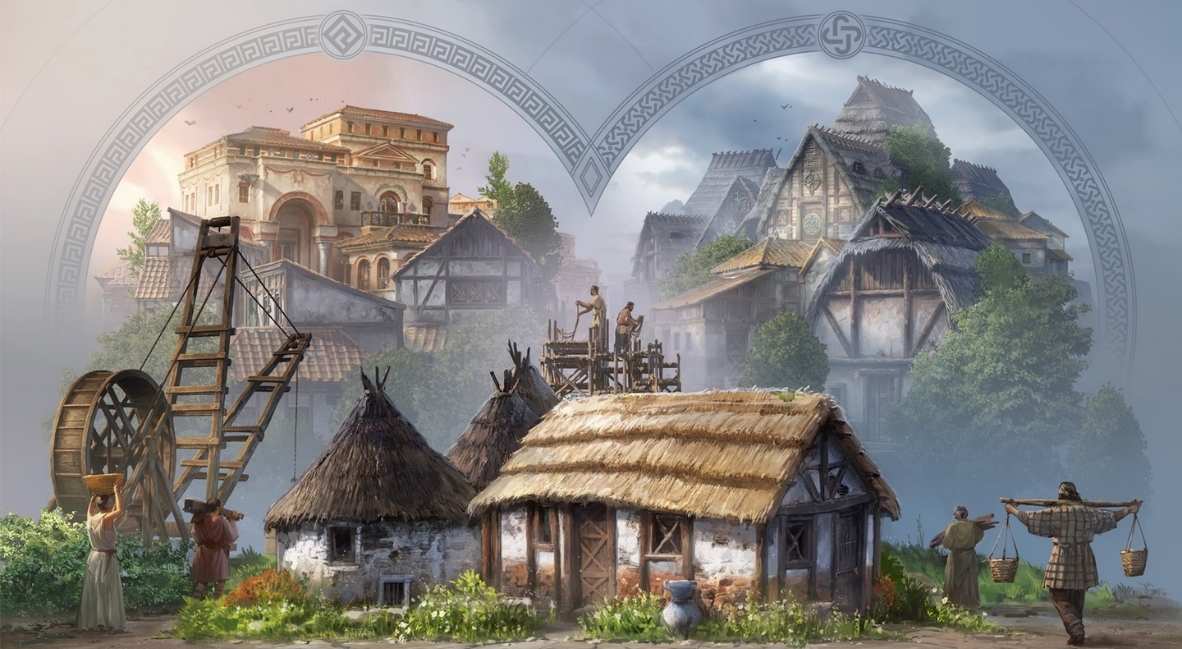
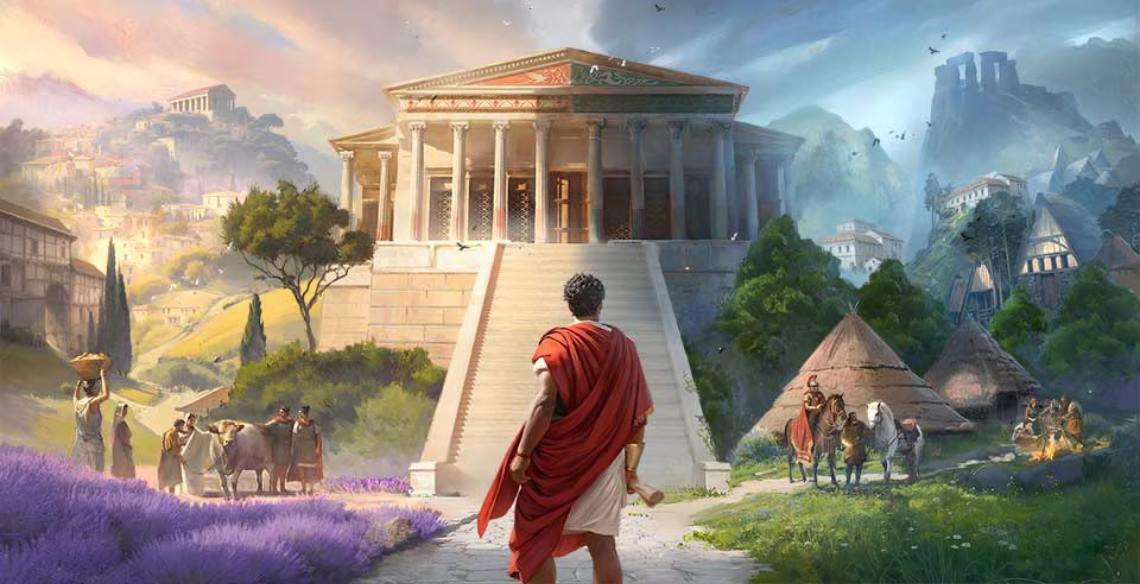
Anno 117: Pax Romana has two distinct regions for players to build their Roman Empire. Latium, which is inspired by Italy and what people think of as a “traditional” Roman city of the era, where you serve the Emperor. The other is Albion, a Celtic-inspired province that stands in defiance of joining the Empire. Each of these regions presents its own unique challenges and aesthetics for players to explore.
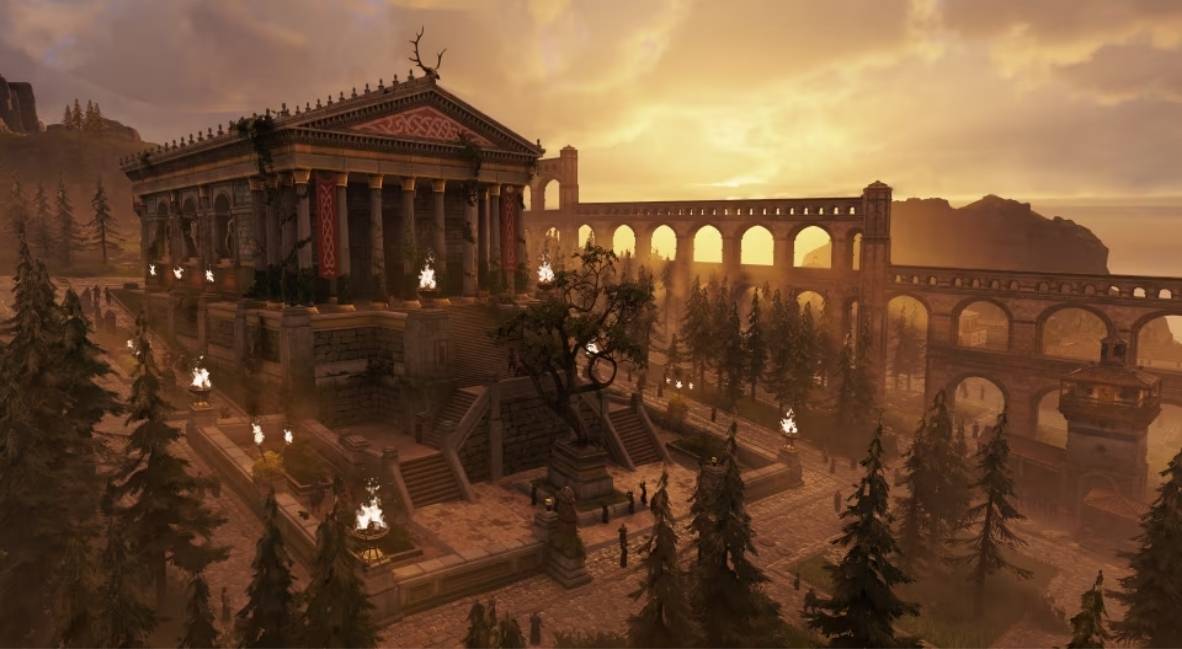
Latium really makes you feel like you are building your own Roman Empire between the buildings and their design. Making aqueducts run throughout your city really brings in that Roman feel as well. Latium does have the challenge that to settle on an island, you must build a villa immediately, which really makes settling a little more difficult than before, especially for smaller want-to-be farm islands.
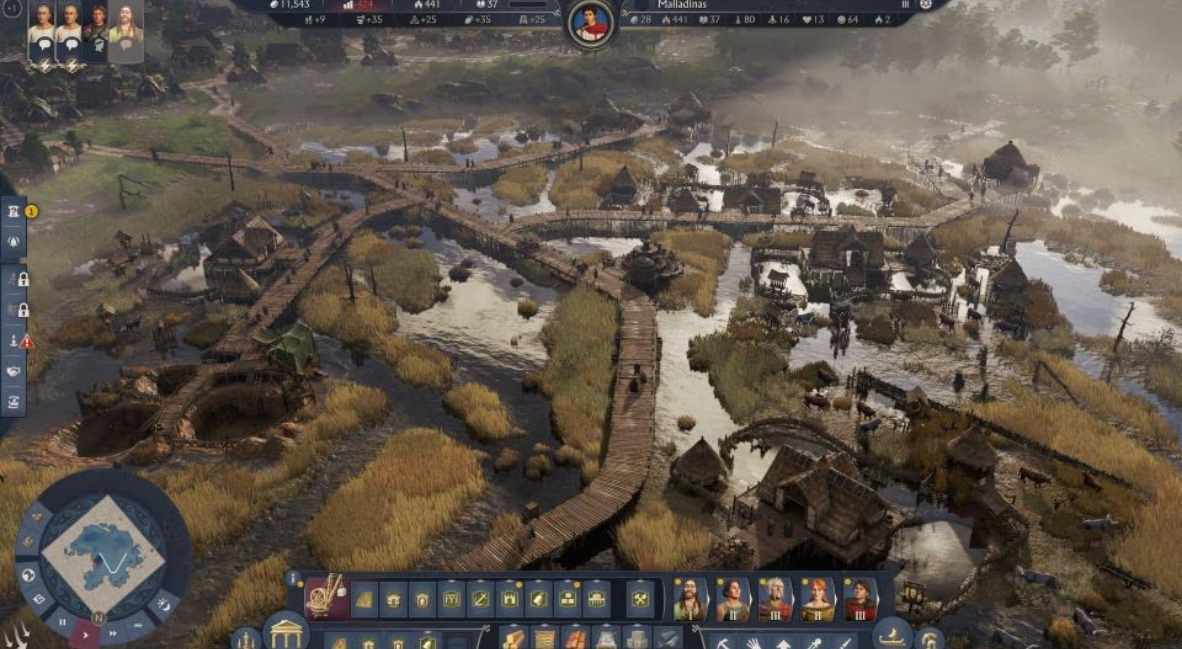
Albion is essentially a 180-degree turn from Latium, as it is the Celtic-inspired province that is more run-down, both in terms of its people and buildings, and also in terms of the island. It is very swampy and rainy in Albion, so everything is dark and muggy-looking.
This can lead to some issues. There were times when we had little trouble seeing through all the fog that could be found within the region. Albion gives players unique challenges and playstyle choices, such as the Marshlands that can be found on islands.
Albion offers a unique challenge for players, even if building in Latium comes with ease.
These marshland areas can only accommodate specific types of buildings, so players must figure out not only how to build around the marshlands but also within them. This can be challenging not only due to the space constraints, but also because everything in Anno must be connected to a road. Therefore, ensuring roads can access and exit these marshlands can be tricky. These marshlands can also be drained to allow all buildings to be built within the marshland areas.
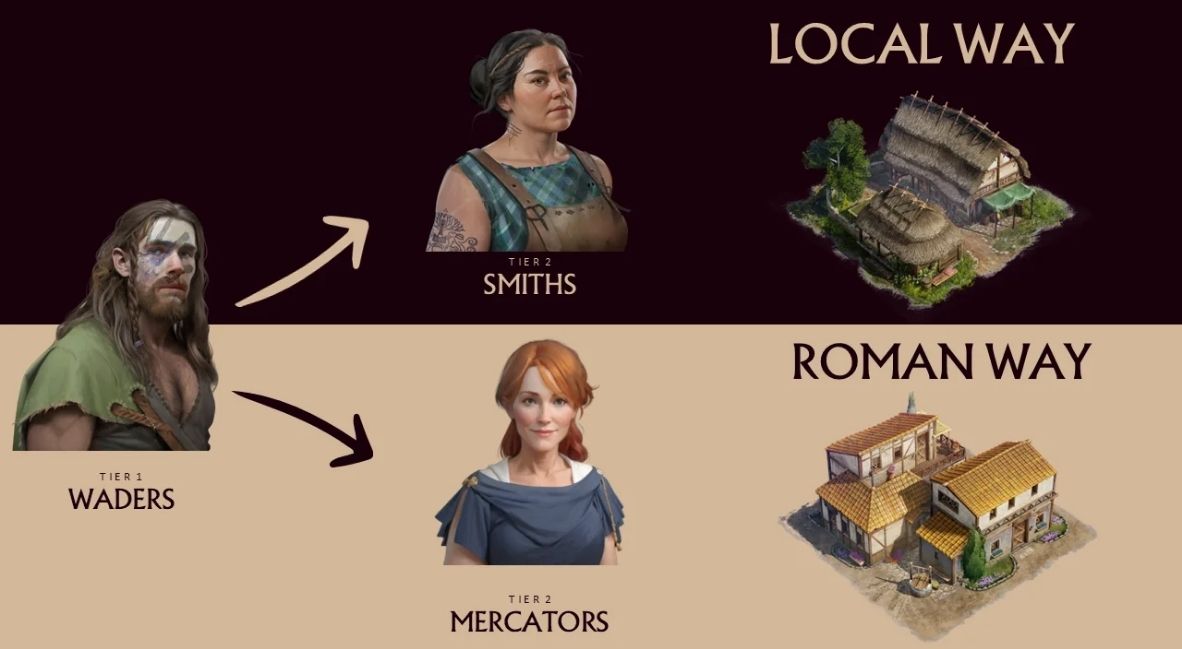
Albion is part of the Roman Empire, but its people, the Waders, are not Roman, well, at least at the beginning. Players get to choose whether they would like more local Celtic people, called the Smiths, or Roman people, called the Mercators, to occupy their islands. This determines not only the aesthetics of that island, but also the residents’ needs and buildings for that island.
We talked with Anno 117’s creative director about player choice earlier in the year, and that is definitely something that runs throughout the game. As mentioned earlier, there are choices happening all the time in Anno 117.
Whether you are in sandbox mode or doing the campaign, there are plenty of choices to be made. This is very apparent in sandbox mode, as players are now given a choice in which of the two regions they would like to start their game in.
Choosing your population in Albion offers a significant impact on how you expand your Governorship.
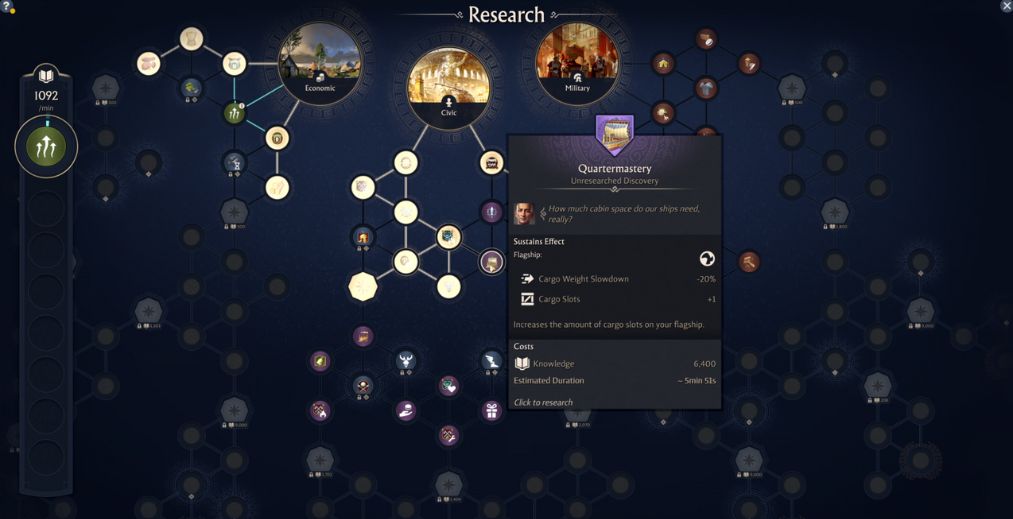
Player choice is really at the forefront with the new Discovery Tree. Unlike Anno 1800, where players just unlocked things as they raised their populations and population tiers, Anno 117 is taking the research route. The Discovery Tree allows players to pick and choose what they wish to unlock. There are three trees that players are able to choose from – Military, Civic, and Economic
Economics focuses on storage limits and trade, as you’d expect, while the Civic branch focuses on Religion, part of the Belief attribute, diplomatic options, and public services. The Military branch of the Discovery Tree focuses on the military aspects of the game, which include new ship models and fortifications.
These discoveries encompass a range of items, including buildings, buffs, and units. Some examples of these that we saw in the hands-on exercises were increased ship speed, improved warehouse storage, and enhanced repair cranes.
This Discovery Tree is a new twist that allows players to try to speed run things, along with picking and choosing to fit their playstyle. Since everything isn’t unlocked at once, it does add another challenge element, as not everything is readily available to you. There are also nodes that act as gates, requiring players to complete specific tasks or meet certain requirements before allowing them to progress within the trees. I really enjoyed the new Discovery Tree and felt like it allowed me to focus on what I wanted to do.
The new Discovery Tree builds value into playing the same save and adds more thoughtfulness into development.
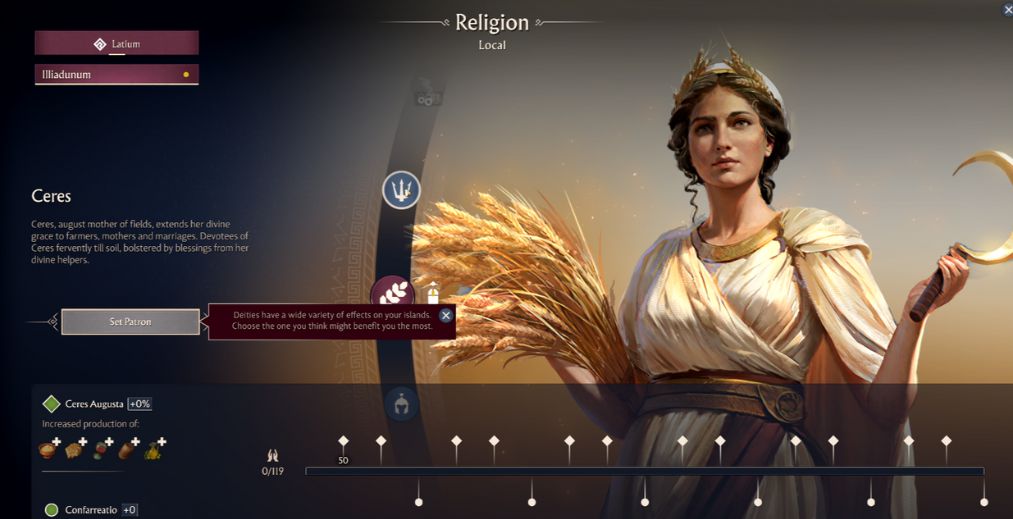
Religion is another new major feature in Anno 117. Romans and Celts worshiped many gods during their time, so it was clearly fitting that they were implemented within the game. Each island a player settles on is allowed to select one deity to worship. These deities give specific buffs and bonuses to that island. Religion operates on both a local and global scale. While only a deity can be chosen per island, if a deity is worshipped on multiple islands, players receive global buffs that affect the entire region.
This is something that can help out players who tend to specialize in their islands and can give a specific buff to match each of their specialized islands. There are seven deities, so players have quite a selection to fit either their playstyle or their island.
Anno 117: Pax Romana is still a city-builder, and players need to build their glorious Roman Empire. For players who are familiar with the series, they’ll notice all the basic bells and whistles that Anno players have become accustomed to. Still, that doesn’t mean there aren’t any new challenges. Player choice is once again a component of building your islands.
Religion is a new Anno 117; Pax Romana, and it pays off.
The first thing I noticed is that the player now decides river and mountain resource slots. Each mountain and river slot, you, the player, get to choose which resource is there, and this is changeable throughout the game, so as your island progresses and you unlock new resources, they will already be readily available.
I personally enjoyed the challenge of designing my buildings and city to fit around locked resource locations in Anno 1800; however, as I progressed, I think this change was for the best. The overall player freedom of this is very convenient and does allow for beauty builders or even optimized builders a more enjoyable way to build their city.
There are so many moving parts in Anno 117 that I think allowing for some customization in the end feels more like a quality of life benefit than making the game “easier.” This option was sort of already available for players in Anno 1800 who played the “Land of Lions” DLC, so this does seem like a natural progression.
This isn’t the only mechanic that was introduced in some way from Anno 1800‘s post-launch content. For Anno 1800 players, there are actually quite a few building mechanics and features that will be familiar in Anno 117. Building buffs is another one of these features, as now almost all buildings have buffs or debuffs. This really not only fits with the time period, but also adds another element to building your city.
Building buffs add to the complexity of Anno 117’s city building.
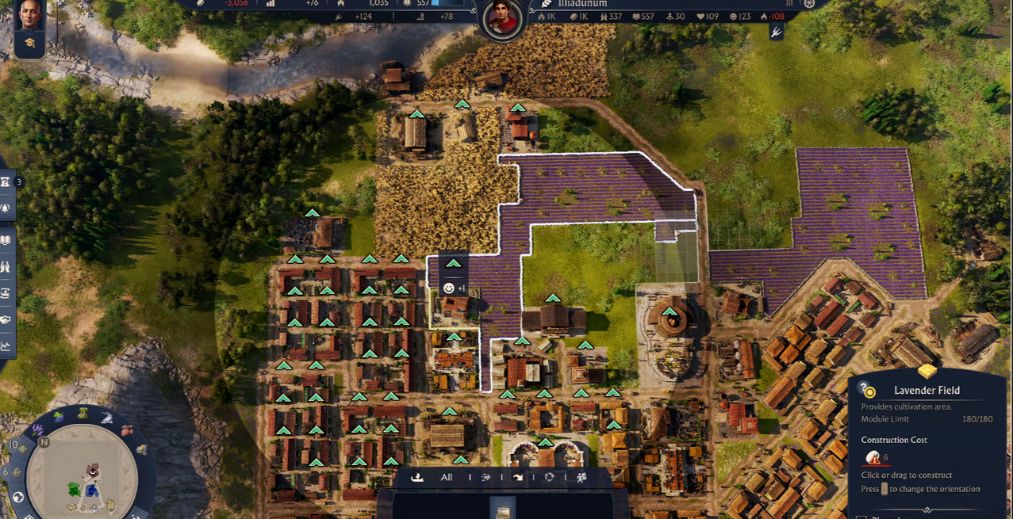
Players can still have specialized areas within their island for production and other spots for residents, but with these new buffs, it is very beneficial to mix and match. Besides, who wouldn’t want to have a bakery as a neighbor so they can smell some fresh bread in the morning? This can be challenging, as players still need to have a warehouse within range of these production buildings. There were definitely times when I would lose a building among all the residential houses and couldn’t locate it.
Aqueducts were a staple in Roman times, and they are one in Anno 117: Pax Romana. Aqueducts provide water, fire protection, and economic benefits to residents and businesses. I knew I had to build them, so I started out by making sure I had ample space within my city, so when the time came, I could just plug and place. I then realized and learned that you can just build aqueducts right over buildings, and you only need space for fountains. Upon learning this, it made integrating aqueducts into my city way easier and saved quite a bit of space in the process.
Not every resource is available on every island, and this is why settling multiple islands and trade are important parts of Anno 117. Your residents have needs to be fulfilled, and it is your job to fulfill them. Well, much like your islands, not every resident needs to be fulfilled now.
In the past, players had to fill all residential needs before they could upgrade their residents; this has changed. The resident needs to be informed of the upgrade work on a threshold. This means if your Tier 2 Resident has four needs, then you need to only fulfill three of them to upgrade them.
Marshlands aren’t to be underestimated in Albion.
Now you want to try to fulfil as many needs as possible, as while you may only need three to upgrade, players get additional bonuses for fulfilling all of them. This is great early on, as you are scaling your city and haven’t quite set up your trade networks or various islands, so you can make the most out of your starter island before having to move on.
This does become quite challenging later on because these needs tend to keep “stacking” as you tier up your populations. Eventually, you may need that basic tier 1 fish for your much higher tier populations.
It is these types of things that I really enjoyed about Anno 117: Pax Romana, because on the surface, it seems like this is going to be easy, and then as you progress and play more, you realize there is more to come. I think the Anno 117 team did a great job of balancing choice vs quality of life vs difficulty. We already know that Season 1 is coming, and you can clearly see that these types of decisions were made with the intention of being like building blocks to allow for the expansion of the base game.
This includes the new modular ships, which allow players to tailor their ships to their specific needs. However, there are drawbacks to specialized ship-making in that these modular items do take up cargo slots. It can lead to some real decision-making: do you wish to have more rowers for better speed to deliver goods faster, or drop the rowers and be able to deliver a higher quantity of goods?
Anno 117: Pax Romana’s modular ship building adapts for conflict and trade.
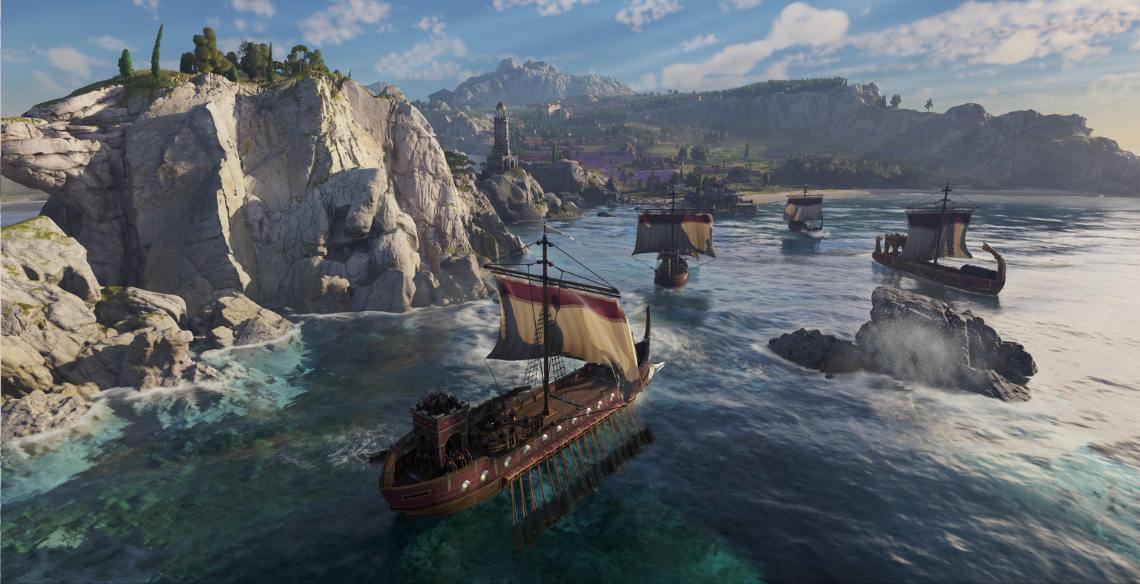
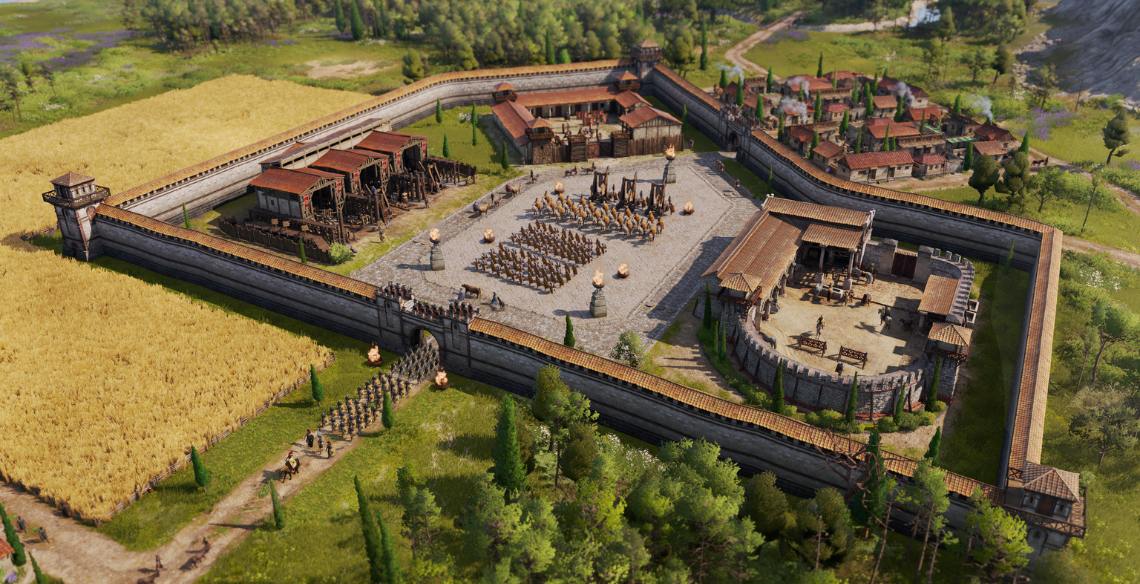
Goods are not the only thing that rides in ships, as land combat has returned to the Anno franchise. This means not only are there new units that players can recruit, but also plenty of defense buildings. For you to take over an island, you need to take over the island’s Villa now. This makes villa placement important, and for anyone wanting to wage war, they must do more than just engage in naval combat. They have to face it on land.
It will be interesting to see what comes of the land combat post-launch, because, outside of a few instances, it is something I did not pursue or really ever felt the need to. I am not a big fan of waging war in games like this. Instead, I am more of an economics player, so for me, land combat wasn’t a big deal for it to be back.
I would say that I most likely acquired more islands through buyouts in Anno 1800 than I ever did through naval combat. Saying that, I am a fan of the defenses as they added some really cool aesthetics to my islands and, of course, protection.
Anno 117: Pax Romana isn’t just sandbox mode; there is a campaign for players to dive into that goes further than any we’ve seen in the past. The Anno 117 campaign works as both a tutorial and a narrative-driven playthrough.
Players start by selecting one of two governor choices to start the campaign. Players will have the option to choose one of a brother-sister duo of Marcus or Marcia. Each governor has their own unique story and their own set of challenges and choices for players to make.
This means players can experience multiple different stories within the campaign, not only between the two governors, but also by playing the same governor multiple times. This is really apparent when it comes to where your loyalties lie within the Roman Empire, and particularly pertaining to the Roman Emperor.
You will need to make decisions on whether to serve him or not and what the benefits or consequences are of these actions. This gets even trickier, involving the people of Albion, as to how you treat them.
The game’s campaign effectively highlights the significance of history in its development.
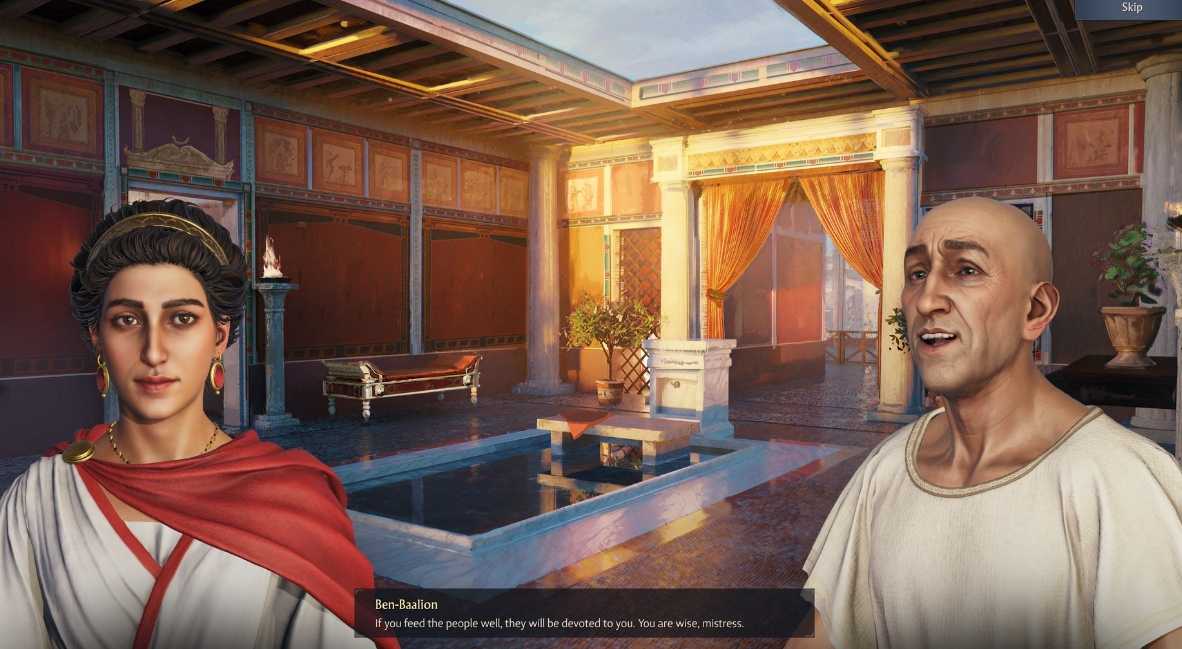
You can clearly see that the development team put a lot of work into the campaign, with multiple storylines, voice acting, and artwork, to create an expansive and robust way to learn the game. I am sure most players will spend the majority of their time and countless hours in sandbox mode; however, the campaign is worth checking out.
Overall, Anno 117: Pax Romana is a remarkably expansive game that I can sit and play for hours, even with its little notifications telling me to take a break. This is one of the best games I’ve played all year. There is a great deal of depth and customization that really showcases player choice and creativity, with an unbeatable replayability.
Additionally, you can see the building blocks that are in place for this game to expand, and yet, Anno 117 itself doesn’t feel like it’s missing any pieces, waiting for that content to come. The Ubisoft Mainz team really hit it out of the coliseum with Anno 117: Pax Romana, and I am excited to see what is in store post-launch.
Anno 117: Pax Romana
-
Rating - 9.5/109.5/10
TL;DR
Anno 117: Pax Romana is a remarkably expansive game that I can sit and play for hours, even with its little notifications telling me to take a break. This is one of the best games I’ve played all year. There is a great deal of depth and customization that really showcases player choice and creativity, with an unbeatable replayability.