Close Menu
  • Support Us
  • Login
  • Newsletter
  • News
  • Features
  • Interviews
  • Reviews
    • Video Games
      • Previews
      • PC
      • PS5
      • Xbox Series X/S
      • Nintendo Switch
      • Xbox One
      • PS4
      • Tabletop
    • Film
    • TV
    • Anime
    • Comics
      • BOOM! Studios
      • Dark Horse Comics
      • DC Comics
      • IDW Publishing
      • Image Comics
      • Indie Comics
      • Marvel Comics
      • Oni-Lion Forge
      • Valiant Comics
      • Vault Comics
  • Podcast
  • More
    • Event Coverage
    • BWT Recommends
    • RSS Feeds
Facebook X (Twitter) Instagram
Support Us
But Why Tho?
RSS Facebook X (Twitter) YouTube Instagram Bluesky
Trending:
  • Features
    BlizzCon 2026 Key Art

    5 BlizzCon 2026 Predictions That Will Most Certainly Come True… Right?

    09/11/2026
    Best Marvel Video Games

    Marvel’s Top 15 Video Games of All Time

    09/11/2026
    Final Fantasy VII Remake Trilogy

    Could Final Fantasy VII Remake Trilogy Reaffirm a post-mortem Anecdote to its Origins?

    09/10/2026
    Mike Tomlin on the Today show

    I Really Want To See Mike Tomlin’s Minecraft City

    09/08/2026
    Bad Seeds Gotham Central Issue 1 But Why Tho 1

    Are We Losing Something Special By Returning to ‘Ghost In The Shell’s Roots?

    09/08/2026
  • K-Dramas
  • Gamescom
  • Game Previews
  • Sports
  • TCG
But Why Tho?
Home » Anime » REVIEW: The Orbital Children is a Look at the Future

REVIEW: The Orbital Children is a Look at the Future

Kate SánchezBy Kate Sánchez01/28/20224 Mins Read
The Orbital Children - But Why tho
Share
Facebook Twitter Pinterest Reddit WhatsApp Email

The Orbital Children - But Why tho

One of my favorite things about anime is the ability to tell a deep story about growth, fear, and uncertainty through children. Netflix Original Anime the Orbital Children does just that. The series is produced by Production +h, directed and written by Mitsuo Iso, and features a rousing score from Rei Ishizuka.

Get BWT in your inbox!

Subscribe to our weekly newsletter and get the latest and greated in entertainment coverage.
Click Here

Get BWT in your inbox!

Subscribe to our weekly newsletter and get the latest and greated in entertainment coverage.
Click Here

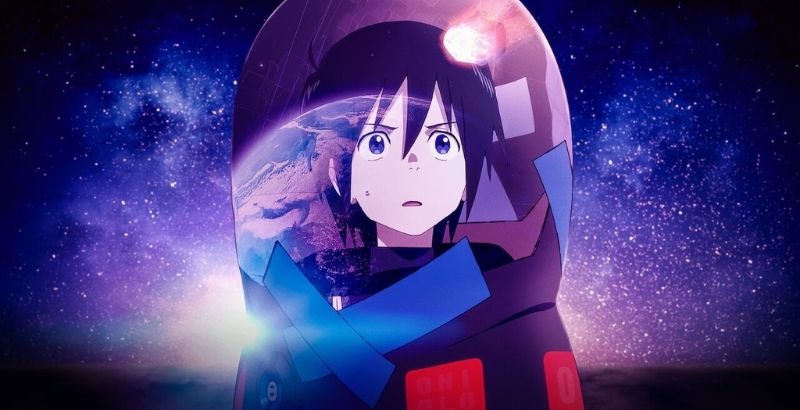
The Orbital Children takes place in the year 2045. While it may be the near future the technological advancement of AI and the internet has made it so that anyone can travel into space. With that ease of travel, children have been born on the moon, but rely on implants to help them thrive in the environment. The tech and ease of travel bring together children born on the moon and children from Earth on their way to the Japanese-built Anshin space station. Following a massive accident at a space station, the children are left alone to save themselves and eventually Earth. Using narrowband and SNS, low intelligence AI, and smartphone-controlled drones, the group of children pushes themselves through fear and uncertainty to overcome the odds.

At just six episodes, the series manages to pull on nearly every emotional string, process the fear of death, and the future in a way that feels real. Through the children’s eyes, The Orbital Children confronts questions about the place technology and AI have in our lives and how it changes our concepts of mortality and the divine. There is care given to situating the narrative from the perspective of a child, including all the assumptions and mistakes they make instead of an adult one told one mapped onto them.

Now The Orbital Children doesn’t go into unexplored science fiction territory. Namely, we see the danger AI poses in human life and potentially the harm it can cause when it and the people engaging with it draw the conclusion that humanity needs to be saved from itself. Instead, though, the conversation about showing AI all of our bad as much as our good is shown to the audience by mapping it onto how children process information.

“Can children really grow up to be good if they’re only shown information that’s been edited and handpicked? And if they’re only shown an unedited world just as it is, does that mean they’ll grow up to be bad?” That simple premise is one that acknowledges the importance of showing children the truth and mapping it onto AI. Children are smarter than we give them credit for, and the truth is always more important.

While the mini-series does have a number of adults, it’s how the children solve their crises with curiosity and compassion that allows them to grow individually as characters as well. The most dynamic character is Taiyo. Deadset on never moving to Earth and ensuring that space is the only future for him and others, he’s forced to confront his own bias and learn empathy along the way. Taiyo evolves from self-centered to the person willing to risk everything to save those he’s never even met.

Now, the film’s story is one that grips you in the last three episodes, but its slow pace makes the two halves of the series seem like a completely different series. That said, even with shifting tone and pace, a constant that ties it all is the emotion that is crafted through the series’ music. Ishizuka manages to pull emotion even without dialogue with a score that rises to meet the action and pulls the viewer down into fear when it needs to.

Finally, The Orbital Children is gorgeously animated. The stark contrast between outer space in the backgrounds and in reflections the visors against the sharp outlines of the animated character helps craft a wonder that isn’t easily described. The awe with which the characters view space and the future is how the audience is pushed to view it as well. Beautiful and dynamic, The Orbital Children’s design and animation is top-notch.

with Netflix Anime expanding its offerings, seeing more small science fiction series on the platform like The Orbital Children and Eden are some of its best. Heartfelt, adventurous, and a wonderful look at humanity and technology, The Orbital Children is a great series to watch.

The Orbital Children is streaming now exclusively on Netflix.

The Orbital Children
  • 8/10
    Rating - 8/10
8/10

TL;DR

with Netflix Anime expanding its offerings, seeing more small science fiction series on the platform like The Orbital Children and Eden are some of its best. Heartfelt, adventurous, and a wonderful look at humanity and technology, The Orbital Children is a great series to watch.

Share. Facebook Twitter Pinterest LinkedIn WhatsApp Reddit Email
Previous ArticleREVIEW: ‘Astrid and Lilly Save the World’ is Awkwardly Campy in the Best Ways
Next Article REVIEW: ‘All Of Us Are Dead’ Is The Jolt of Life for Zombies
Kate Sánchez
  • Website
  • X (Twitter)
  • Instagram

Kate Sanchez is Co-Founder and EIC of But Why Tho? She covers video games, film, TV, and anime. Kate is known for championing international media, animation, and media that tells stories from underrepresented perspectives. Kate is also a member of the Austin Film Critics Association and Hollywood Creative Alliance. As a freelance writer, she has bylines at MMORPG.com, IGN, and Game Informer.

Related Posts

The Ghost In The Shell Episode 10
7.0

REVIEW: ‘The Ghost In The Shell’ Episode 10 — “Brain Drain iii + Ghost Coast + Epilogue”

09/08/2026
The Ghost in the Shell Season 1
7.5

REVIEW: ‘The Ghost In The Shell’ Fails To Find Consistency

09/08/2026
Jobless Reincarnation Season 3 Episode 11 Perugeus
7.0

REVIEW: ‘Mushoku Tensei: Jobless Reincarnation’ Season 3 Episode 11 — “Turning Point 4″

09/06/2026
Boraqchin in Jaadugar: A Witch In Mongolia Episode 11
8.0

REVIEW: ‘Jaadugar: A Witch In Mongolia’ Episode 11 – “An Ungraceful Stone”

09/05/2026
The Ghost In The Shell Episode 9
7.0

REVIEW: ‘The Ghost In The Shell’ Episode 9 — “Brain Drain ii”

09/02/2026
Jaadugar: A Witch In Mongolia Episode 10 
9.0

REVIEW: ‘Jaadugar: A Witch In Mongolia’ Episode 10 – “Wisdom”

08/31/2026

Get BWT in your inbox!

Subscribe to our weekly newsletter and get the latest and greated in entertainment coverage.
Click Here
TRENDING POSTS
Marvels Wolverine But Why Tho 13
6.0
PS5

REVIEW: ‘Marvel’s Wolverine’ Is Too Safe For Its Bloody Lead

By Matt Sowinski09/10/2026

Marvel’s Wolverine has some good in it, but ultimately, feels too safe with repetitive combat, unanswered narrative questions, and uneven pacing.

Brett Goldstein in Ted Lasso Season 4 Episode 6
6.5
TV

REVIEW: ‘Ted Lasso’ Season 4 Episode 6 — “Don’t Jump Around Much Anymore”

By Adrian Ruiz09/09/2026

. Ted Lasso Season 4 Episode 6 gives nearly everyone room to grow while keeping Keeley trapped in a romantic story that should have been left behind.

The Badly in Love Season 2 finale board filled with memories of the cast
9.0
TV

REVIEW: ‘Badly In Love’ Season 2 Delightfully Expands And Entertains

By Ridge Harripersad09/09/2026

For those who crave a more insightful and introspective reality dating show to binge, Badly In Love Season 2 is the one for you.

Challenges of Doom: Spider-Man Issue 1 keyart Marvel Comics

REVIEW: ‘Challenges of Doom: Spider-Man’ Issue 1

By William Tucker09/09/2026

Challenges of Doom: Spider-Man Issue 1 is a glorious exploration of two adversaries who couldn’t be more different, revisiting their first meetings.

But Why Tho?
Facebook X (Twitter) Instagram Pinterest RSS YouTube Twitch
  • CONTACT US
  • ABOUT US
  • PRIVACY POLICY
  • SUBSCRIBE TO OUR NEWSLETTER
  • Review Score Guide
Sometimes we include links to online retail stores. If you click on one and make a purchase we may receive a small contribution.
Written Content is Copyright © 2026 But Why Tho? A Geek Community

Type above and press Enter to search. Press Esc to cancel.

But Why Tho Logo

Support Us!

We're able to keep making content thanks to readers like YOU!
Support independent media today with
Click Here