

The films by Takeshi Koike in the Lupin III franchise form an introspective saga that culminates in The Immortal Bloodline. Lupin III: The Movie – Immortal Bloodline, directed by Takeshi Koike, brings his vision of Lupin III to a climactic turning point for the franchise’s saga. The film is the culmination of Koike’s decade-long creative run, offering a take on Lupin and his comrades through more graphic, brutal action and introspective storytelling.
This guide breaks down Takeshi Koike’s Lupin III entries, how each connects to the latest film, and why they matter. Although each film is an entertaining watch on its own, the larger narrative thread that connects all four and leads into The Immortal Bloodline makes for a more satisfying overall experience.
For maximum enjoyment, it is strongly recommended to watch the previous Koike Lupin III films in chronological order before The Immortal Bloodline. However, fans can still enjoy watching the films after The Immortal Bloodline, as they offer more insight into the characters, themselves, and the plots.
What is Takeshi Koike’s Koikeverse?
The Koikeverse, as the name suggests, is the series of Lupin III films directed by Takeshi Koike. On their own, the films are thrilling adventures that center on Lupin, Jigen, Goemon, Fujiko, and even Inspector Zenigata, respectively. Each film builds and connects to a larger reveal in The Immortal Bloodline.
The first film, Jigen’s Gravestone, premiered in 2014 and kicks off the Koikeverse, which spans across a decade in its entirety. Koike’s take on Lupin III and his crew adopts a far more graphic, dark, and mature tone than some other Lupin III works, while still capturing the charm of the iconic gentleman thief.
Lupin III: Jigen’s Gravestone (2014)
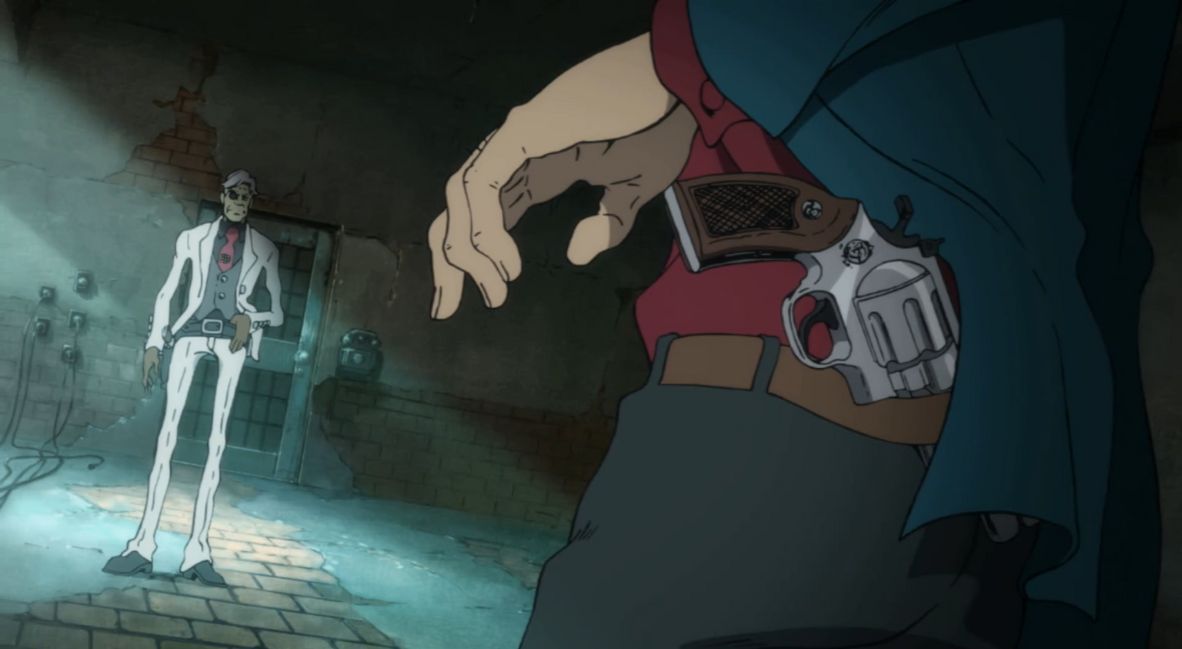
The first entry in Koike’s run focuses on Lupin’s right-hand man and master gunman, Daisuke Jigen. Told in two parts, Jigen’s Gravestone follows Jigen and Lupin after a heist gone wrong.
Suddenly, Jigen becomes the target of the expert sniper and hitman, Yael Okuzaki. Jigen’s deadly face-off with the specialist marksman delves into Jigen’s past, regrets, and moral code.
Jigen’s Gravestone establishes the template for the films that follow, with the idea of assassins specifically designed to counter each member of Lupin’s team. Additionally, Jigen’s Gravestone ties directly into The Immortal Bloodline because Yael Okuzaki makes his return in the film, and his origin as an assassin is directly linked to the plot of the latest addition in the franchise.
Where to watch: YouTube, Google Play Movie, Apple TV
Lupin III: Goemon’s Blood Spray (2017)
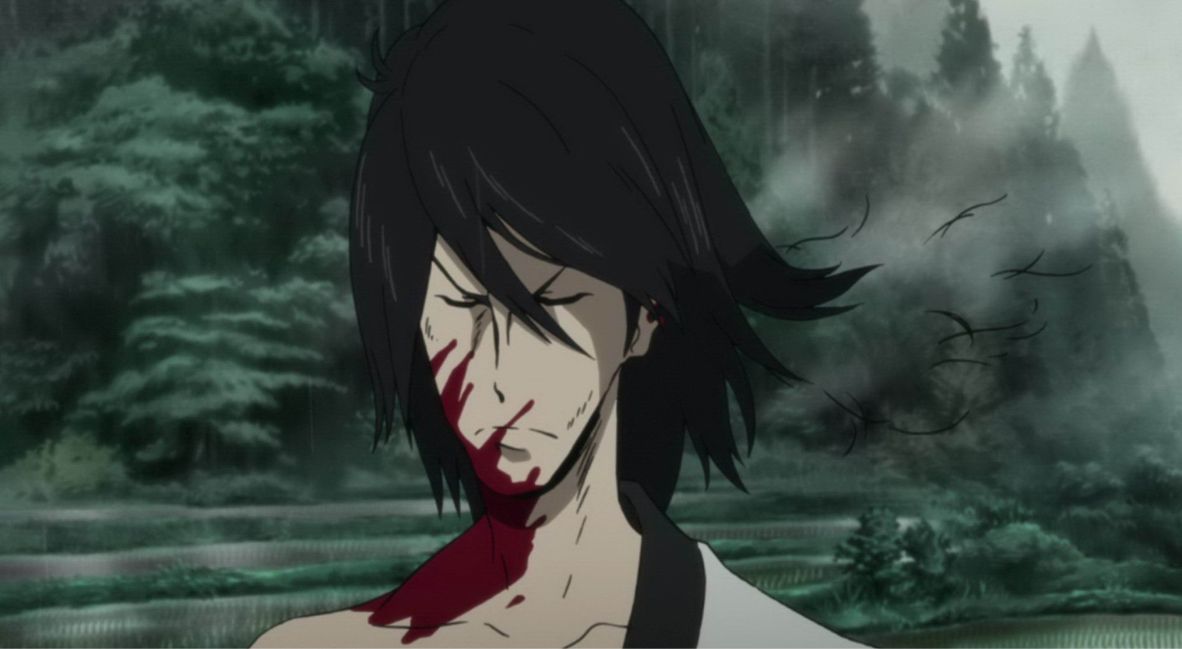
Regarded as the most stunning, graphic, and brutal Lupin film to date, Goemon’s Blood Spray explores themes of honor, humility, and the price of revenge. The plot of Goemon’s Blood Spray focuses on the skilled samurai, Goemon Ishikawa. At the time of the film, Goemon, in his younger years, is more arrogant in his swordsmanship skills than ever, having not faced an opponent that could best him yet.
One day, during a bodyguard job for the yakuza, Goemon crosses swords and axes with the deadly assassin Hawk. In addition to Lupin, Jigen, and Fujiko getting caught in Hawk’s crosshairs, Goemon is honor-bound to duel with this formidable foe. Even if it results in his death.
Goemon’s story explores themes of honor, revenge, and self-discovery. Furthermore, Goemon’s Blood Spray mirrors Immortal Bloodline thematically as they both focus on arrogance, perseverance, and a seemingly invincible foe.
Where to watch: YouTube,Google Play Movie, Apple TV
Lupin III: Fujiko Mine’s Lie (2019)
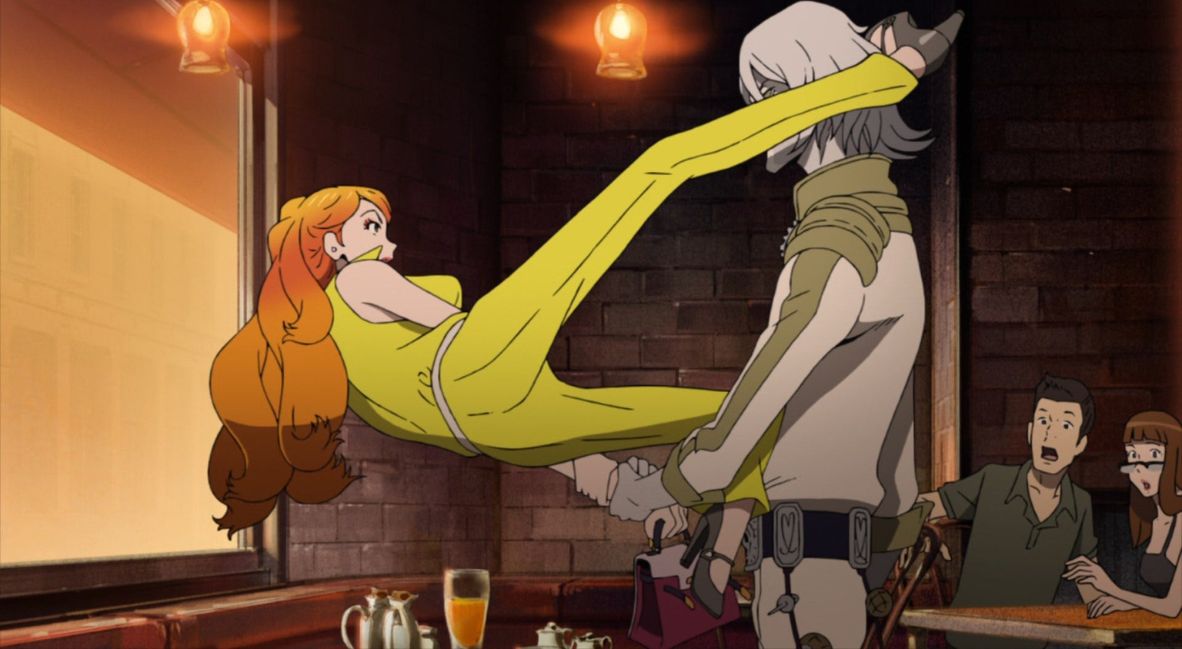
Fujiko Mine’s Lie takes a more introspective approach to its storytelling. Throughout the story the film explores deeper themes such as the ability to trust, manipulation, and survival.
Fujiko is the focus this time. The film follows her as she’s on the run a young boy named Gene, the only lead to finding a secret $500 million fortune. Suddenly, Fujiko finds herself pursued by a seemingly supernatural assassin with the power to manipulate people.
Fujiko Mine’s Lie connection to The Immortal Bloodline lies in its exploration of isolation and reliance on one’s capabilities. Fujiko outwits and overcomes her opponent by relying on herself and her own resources, an idea that is later mirrored when Lupin and his gang are separated on Muom’s island.
Where to watch: YouTube, Google Play Movie, Apple TV
Lupin III: Zenigata and the Two Lupins (2025)
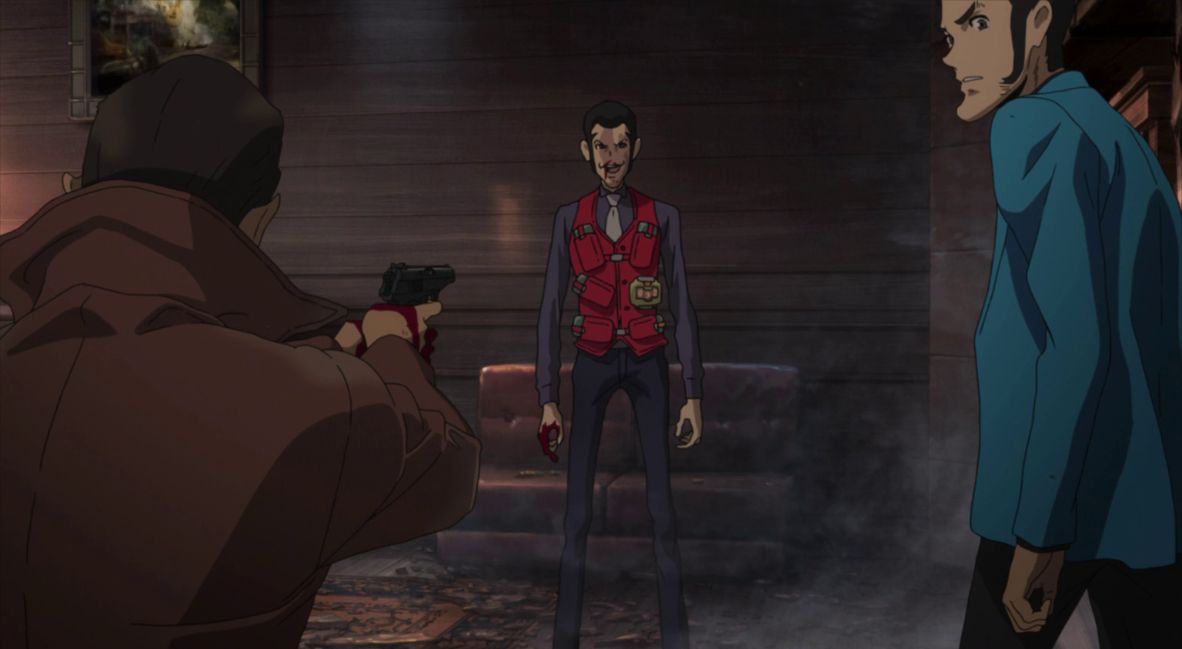
Zenigata and the Two Lupins is a direct prequel to The Immortal Bloodline and is highly recommended to watch beforehand. The film explores themes of cloning, identity, and legacy theft. The film also raises questions about whether Lupin is replaceable and whether history can be rewritten.
Additionally, Zenigata’s complex relationship with Lupin is further explored. Certain events in the film require Zenigata and Lupin to work together. Throughout the franchise’s history, Lupin and Zrnrgata have always had a cat-and-mouse-like relationship and rivalry. Standing on opposing sides of the law, they provide each other with the necessary challenge and motivation.
Granted, this film is not the first time the two men have worked together. Whenever there is a greater threat or force, Zenigata and Lupin have been shown to work very well together because they both trust in each other’s abilities. Koike’s understanding of Lupin and Zenigata’s complex relationship makes Zenigata’s role in The Immortal Bloodline far more impactful and emotionally resonant. Without this film, some of The Immortal Bloodline’s revelations wouldn’t hold as much weight.
Where to watch: Currently not streaming in the US.
How The Immortal Bloodline Ties Everything Together

After watching all of the Koikeverse films chronologically, it becomes clear that each was laying groundwork for something bigger. The Immortal Bloodline pulls all the narrative threads and characters together for one big reveal: the masterminds behind the assassination attempts on the crew’s lives, Moum and Mamo. Although Lupin does not come face-to-face with Mamo in this film, it hints that they are fated to meet in another installment.
Additionally, when watching The Immortal Bloodline on its own, it can feel like a misstep to separate Lupin, Jigen, Fujiko, and Goemon for most of the film rather than have them work as a cohesive team. However, after viewing all the films, it is clear that separating the group is meant to be the culmination of everything Koike has been building since his first Lupin film.
In the Koikeverse films, Lupin, Jigen, Fujiko, and Goemon prove they are more than capable of surviving on their own. In The Immortal Bloodline, the challenge becomes whether Lupin can best an adversary like Moum. Moum is a challenging antagonist for Lupin, someone who challenges him on a philosophical level. Because of his immortality, Moum does not value life or see its meaning.
Moum is void of emotion and obsessed with eliminating people and things he deems failures. In contrast, Lupin refuses to accept a life without meaning, reflecting the lessons from the previous films.
Where to watch: Available on Apple TV and Fandango at Home on March 26, 2026.
The films by Takeshi Koike are impressive and thoroughly crafted works. On their own, the films are enjoyable. But they’re best when watched together, forming a well-woven saga that puts its own flair and thought-provoking storytelling on the gentleman thief and his comrades.
Lupin III The Movie – The Immortal Bloodline will be available for digital purchase on March 23, 2026, on Amazon Prime, Apple TV, and Fandango at Home.